
News & updates
Latest developments from our institute
Stay informed about new research results, awards, events, and collaborations across our scientific community.
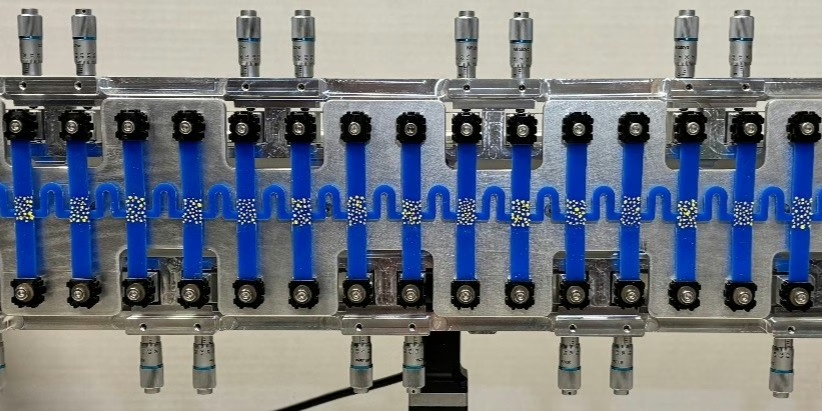
Material that can both store and process information for low-energy computing
Researchers at AMOLF and the University of Konstanz have developed a mechanical material that can store, move, and process information within the same physical structure. The findings, published in Physical Review Letters, could help inspire future computing technologies that use far less energy than conventional computers.
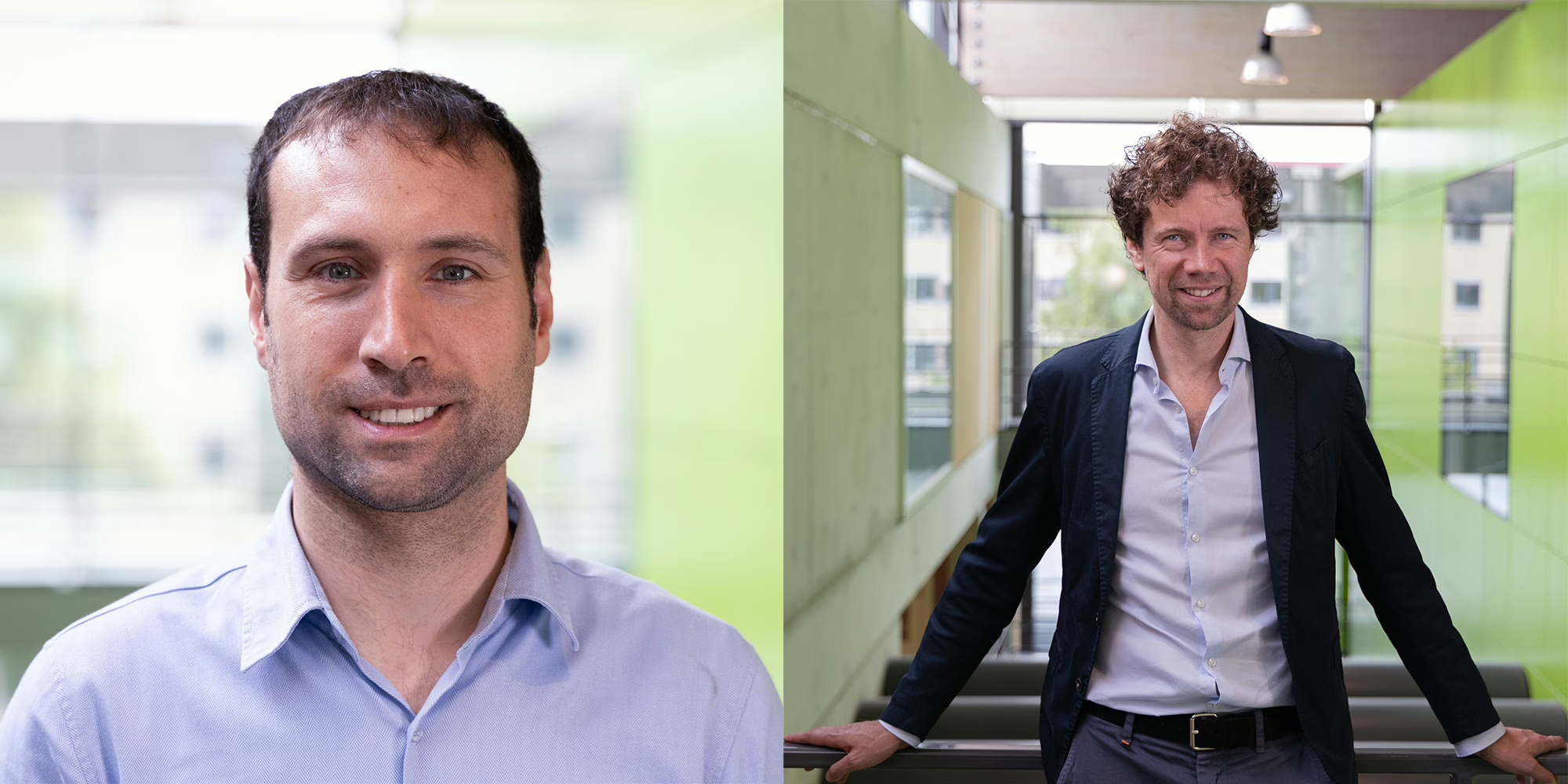
Proof of Concept grant for Wim Noorduin and Marc Serra Garcia
The European Research Council (ERC) announced that AMOLF group leaders Wim Noorduin and Marc Serra Garcia have received an ERC Proof of Concept grant. Together with collaborators they will enable applications that address important societal challenges: the need for single-handed molecules for drug development and a simpler way to monitor damage in wind turbine blades.
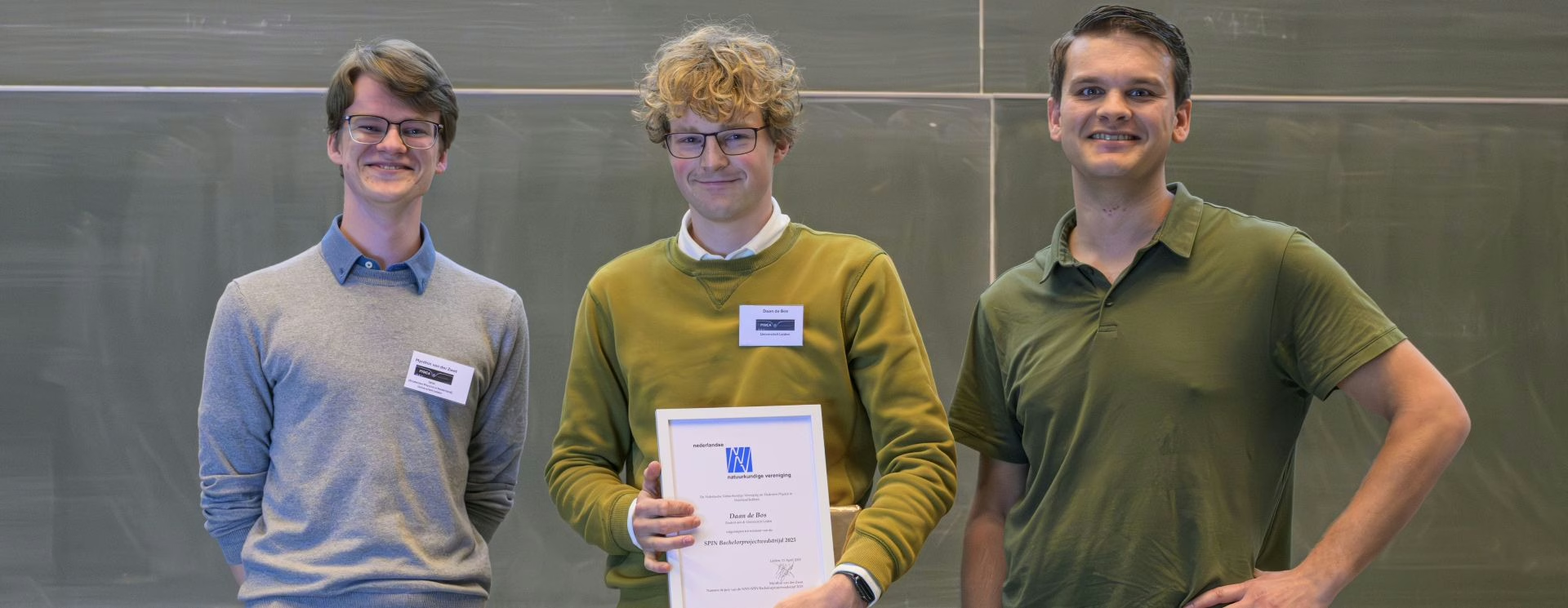
Daan de Bos’s research at AMOLF awarded best physics bachelor thesis
We are very proud to share that Daan de Bos has been awarded the SPIN Bachelor Project Award, for his research on self-learning materials with supervisor Marc Serra Garcia at AMOLF. Organized by the Dutch National Association of Physics Students (SPIN) and the Dutch Physics Association (NNV), the award is presented at NNV’s yearly FYSICA event for the best physics bachelor thesis in the Netherlands.
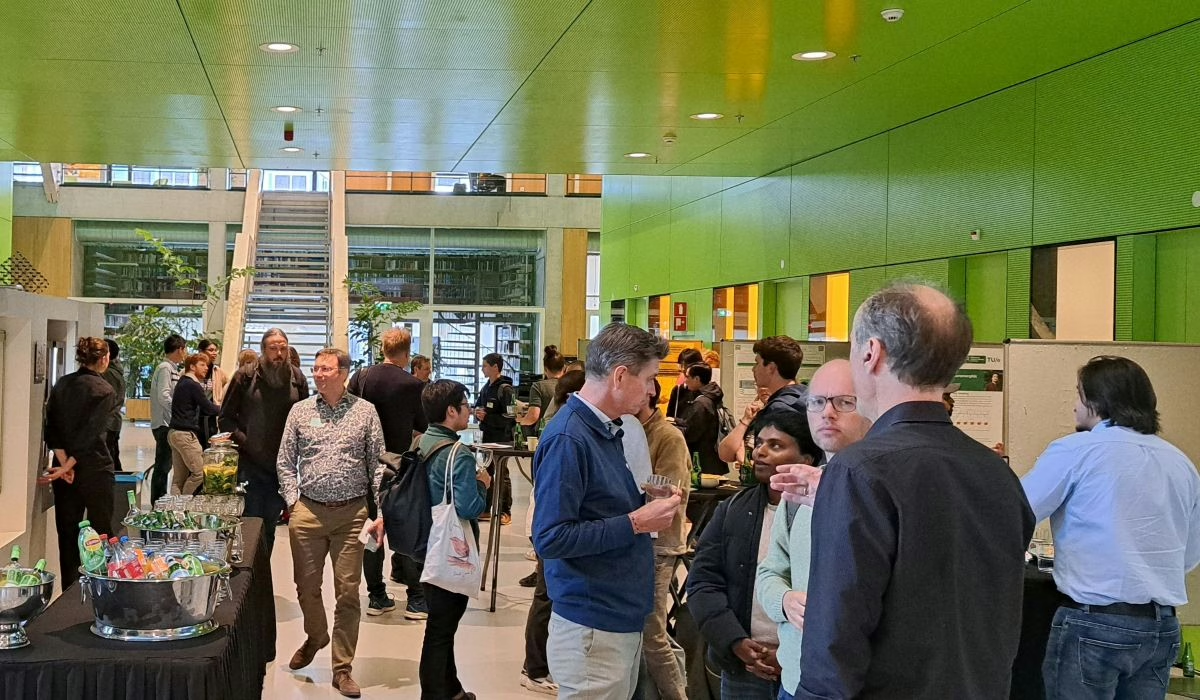
Infomatter symposium: taking advantage of information in a system
On Thursday, May 22nd, AMOLF organized the Infomatter Symposium to discuss exciting developments in information processing — ranging from biochemical to mechanical and optical systems. What these systems share is that they do not rely on conventional computers. This is a significant advantage, given that the energy cost of computing is rising much faster than that of energy production.
Soft materials that compute: can mechanics support AI?
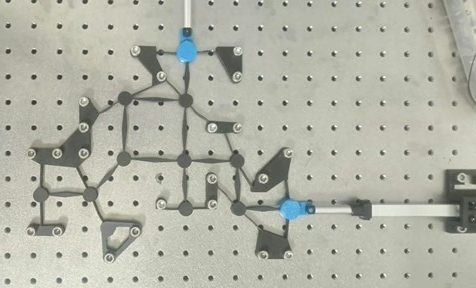
A team of researchers at AMOLF has unveiled a remarkable discovery in physical computing: a soft, flexible material that can compute – not by electronics, but through its very shape and structure. This reprogrammable material, based on so-called “floppy modes”, can carry out matrix-vector multiplications, a mathematical operation fundamental to machine learning and artificial intelligence.
AMOLF researcher Marc Serra Garcia gets NWO Grant for his study on Nano-Computers and Energy Efficiency
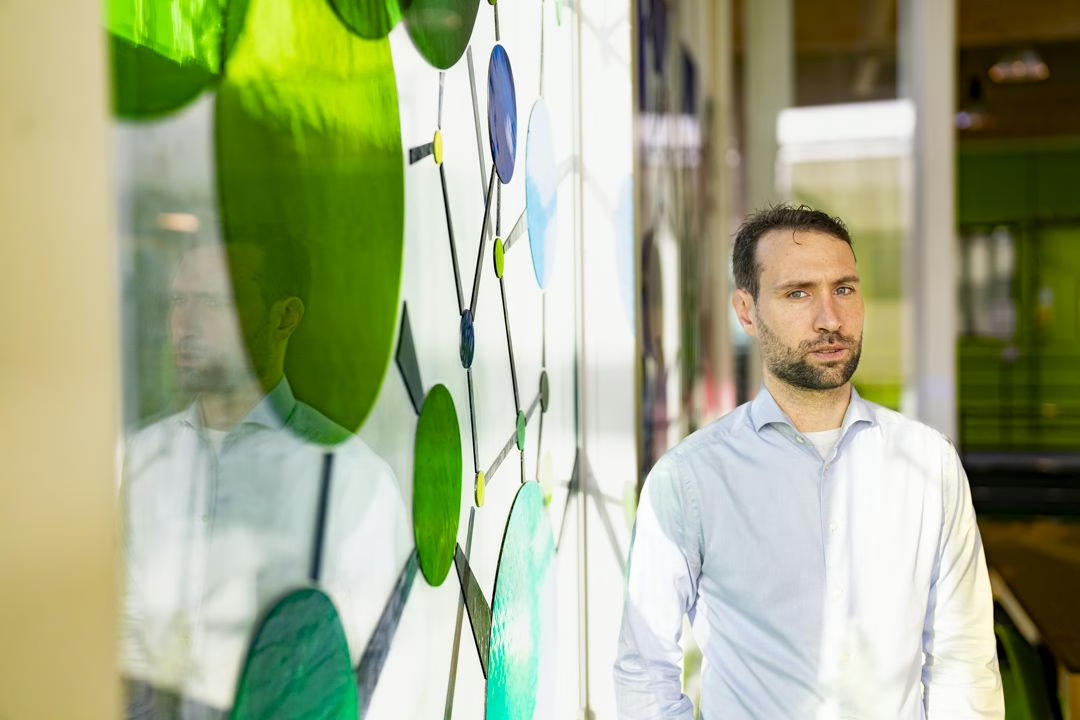
AMOLF group leader Marc Serra Garcia has been awarded a grant of 370.000 euro from NWO (Dutch Research Council) in the Open Competition Domain Science. The grant will fund his project entitled “Autonomous nanomechanical computers near the limits of thermodynamics.” This project aims to delve into the fundamental minimum amount of energy required by computers, using fully self-contained ‘nano-computers’ constructed from nanomechanical elements.
Sound-powered sensors stand to save millions of batteries
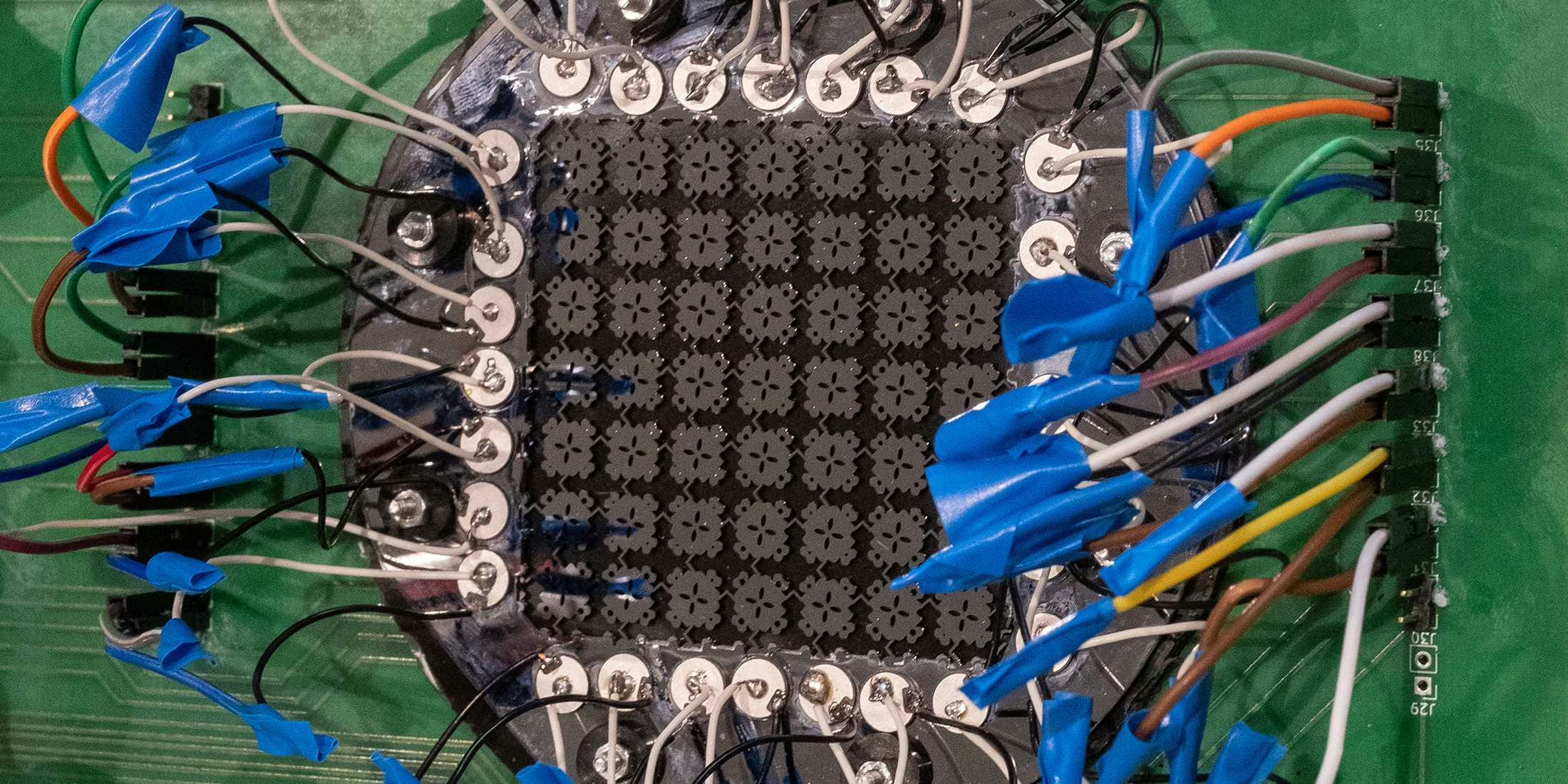
Researchers from AMOLF and ETH Zurich have developed a sensor that utilizes energy from sound waves to control electronic devices. This could one day save millions of batteries. Sensors that monitor infrastructure, such as bridges or buildings, or are used in medical devices, such as prostheses for the deaf, require a constant supply of power. The energy for this usually comes from batteries, which are replaced as soon as they are empty. This creates a huge waste problem. An EU study forecasts that in 2025, 78 million batteries will end up in the rubbish every day.
ERC Starting Grant for Marc Serra-Garcia
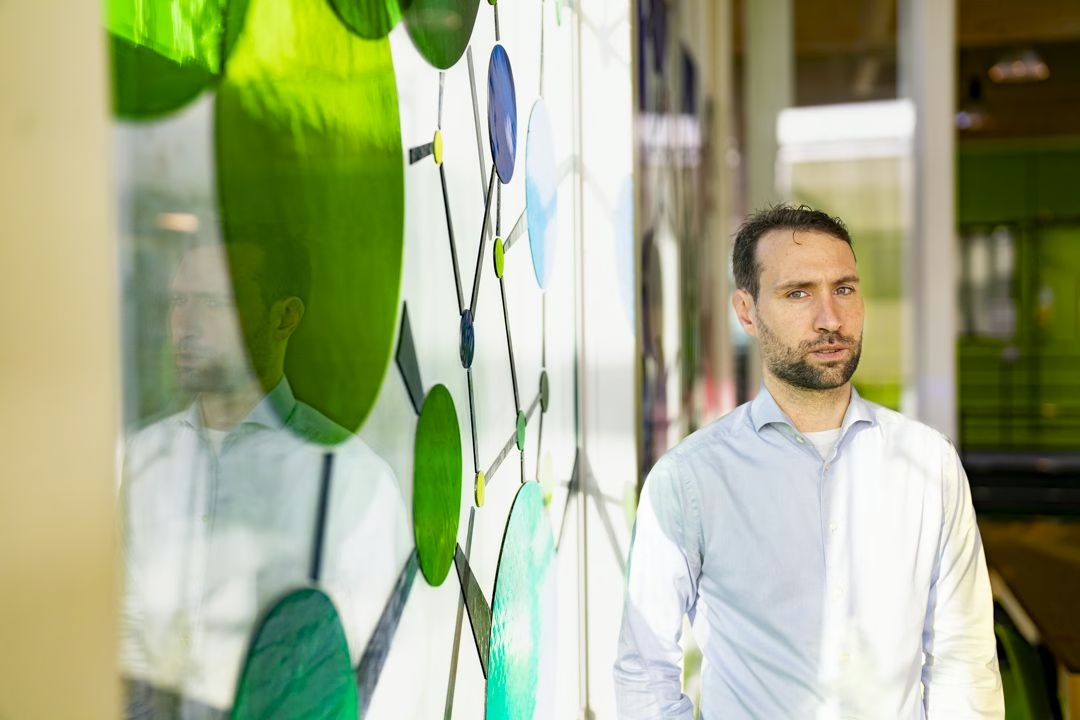
AMOLF tenure-track group leader Marc Serra-Garcia (Hypersmart Matter) has received a Starting Grant of 1.68 million euros from the European Research Council (ERC). With the project INFOPASS he will investigate information processing in passive elastic structures. The ERC uses the Starting Grants to support talented scientists in the early stages of their career in pursuing ground-breaking projects for a duration of five years.