
News & updates
Latest developments from our institute
Stay informed about new research results, awards, events, and collaborations across our scientific community.
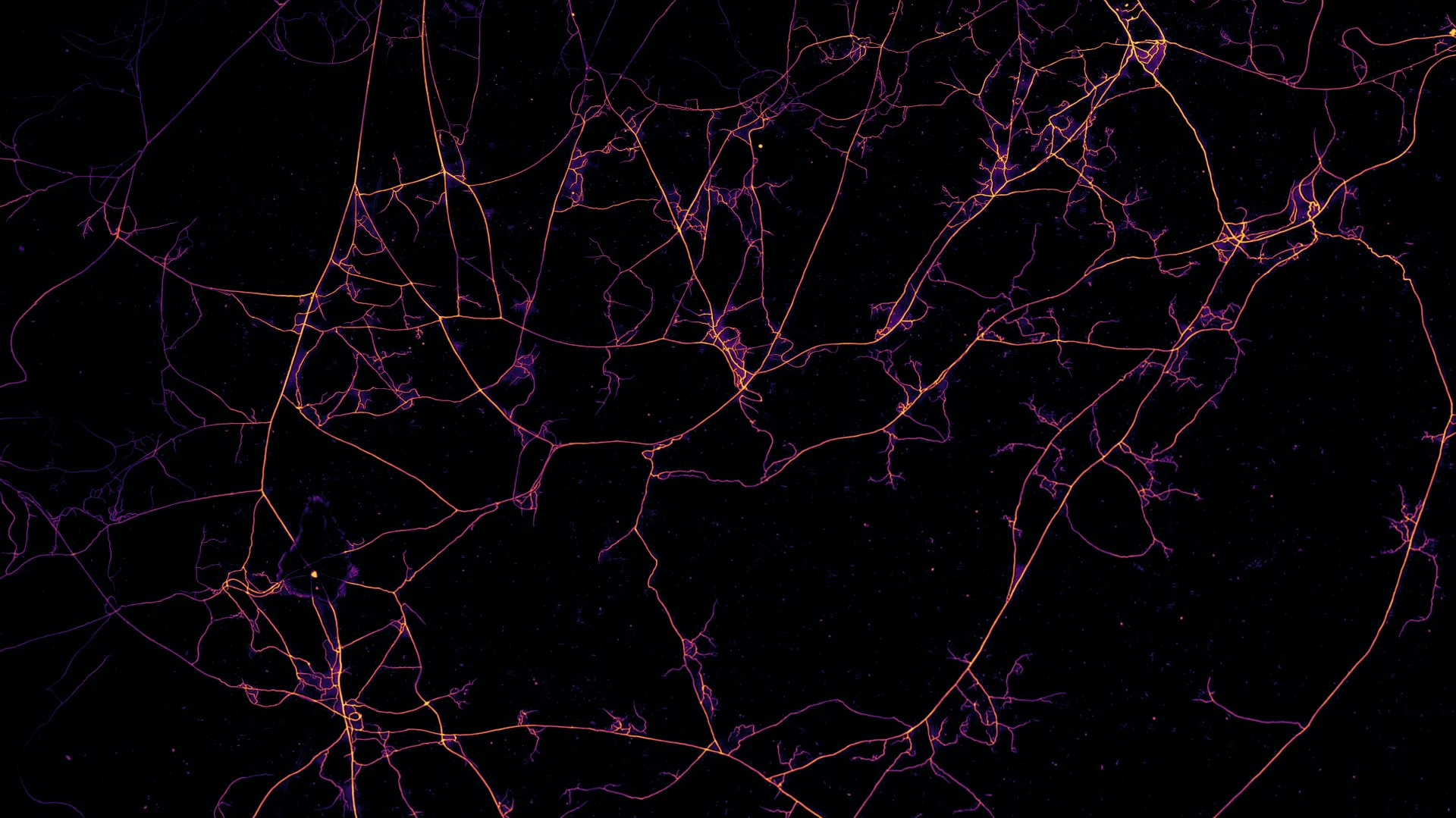
Researchers publish first global maps of the underground networks formed by mycorrhizal fungi
Arbuscular mycorrhizal fungi are soil fungi that form symbiotic relationships with the roots of land plants. Together, they create vast underground networks that sustain plant life and help regulate Earth’s climate by drawing carbon into soils. An international team of researchers has produced the first global maps estimating the distribution and mass of these networks. The study, published on June 11, in Science, includes AMOLF researchers Dr. Corentin Bisot and Prof. dr. Tom Shimizu as authors.
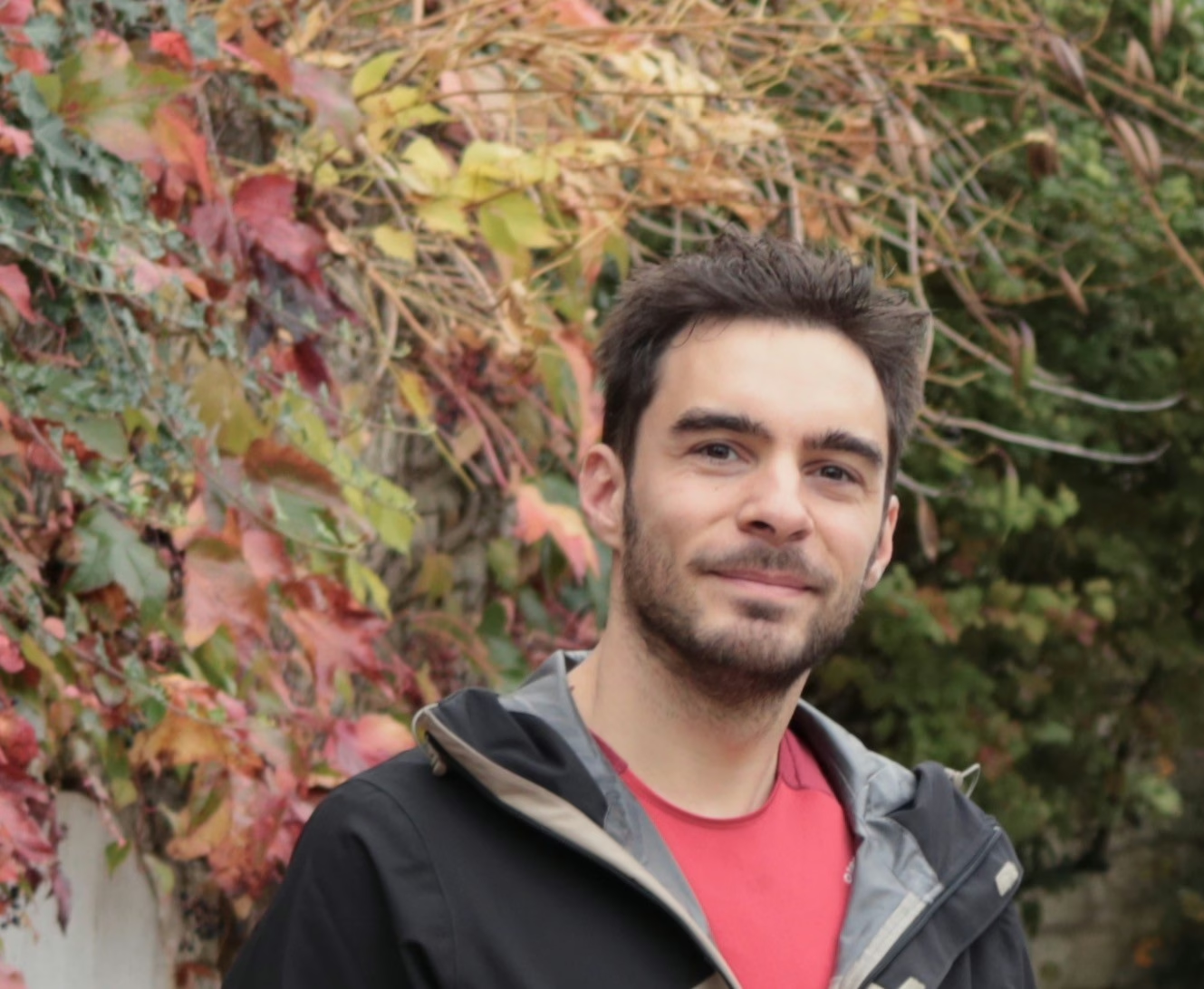
Marie Curie Grant for understanding fungal decision making
In the last year, AMOLF postdoc Achille Joliot uncovered many fascinating details about mycorrhizal fungi. Now, he is able to take his research further as recipient of the Marie Sklodowska-Curie Individual Fellowship. Using the grant, Achille is eager to answer an ecologically important question: how are these fungi able to make sophisticated decisions without a central nervous system. This work will be carried out in the Physics of Behavior group led by Tom Shimizu.
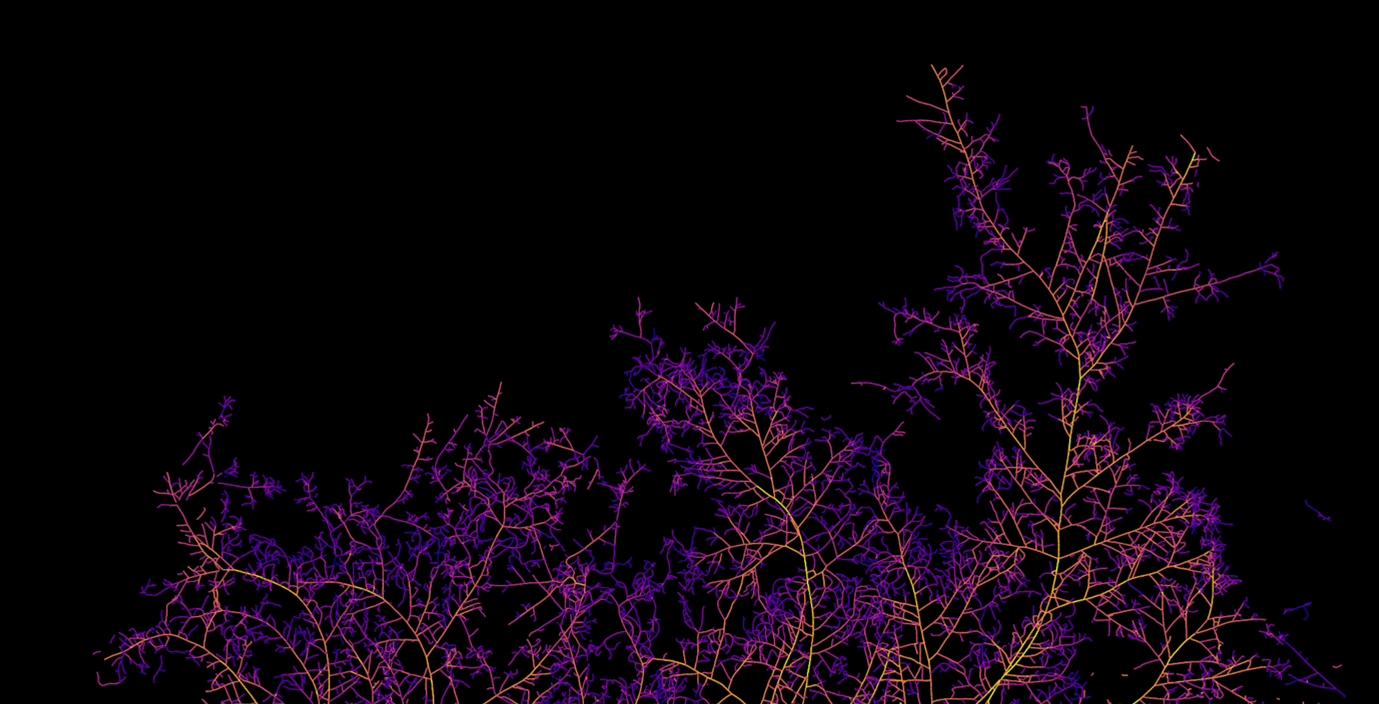
What is the exchange rate in plant–fungi nutrient trade?
Most plants on earth rely on symbiotic nutrient exchange with fungal partners to boost their growth, but what are the exact terms of this trade? AMOLF researchers, together with collaborators from Vrije Universiteit Amsterdam and Ecole Normale Superieur de Lyon, discovered that the ‘exchange rate’ for carbon (from plants) and phosphorus (from fungi) remains remarkably constant over time, but depends on the type of plant involved in the exchange. The findings are published in the Proceedings of the National Academy of Sciences USA (PNAS) on February 6th.

Bacterial ‘brains’ on the brink of order and disorder
The sensory proteins that control the motion of bacteria constantly fluctuate. AMOLF researchers, together with international collaborators from ETH Zurich and University of Utah, found out that these proteins can jointly switch on and off at the same time. The researchers discovered that this protein network operates at the boundary between order and disorder. The findings are published in Nature Physics on January 29th.
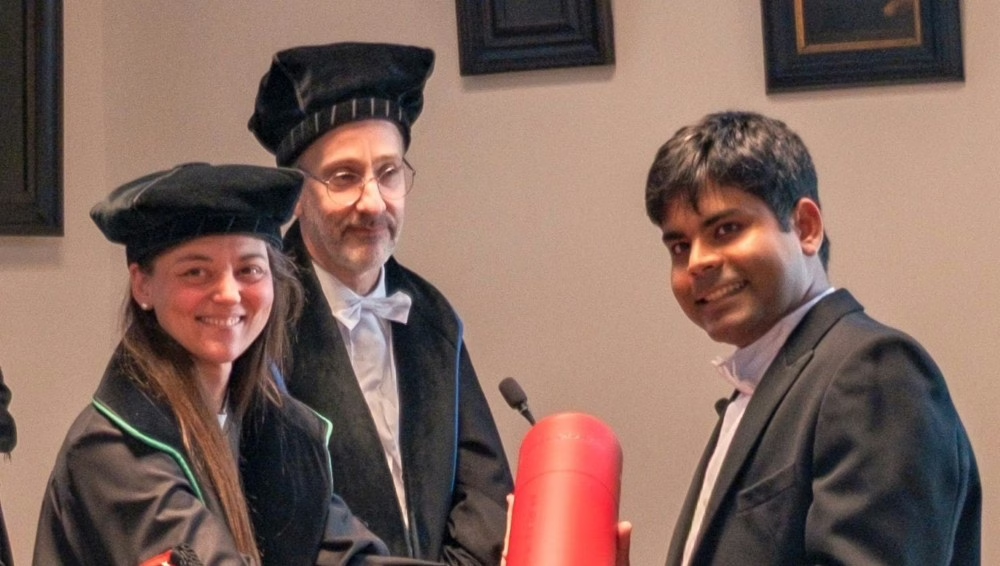
June and July doctorate celebrations
Fotios Avgidis - Criticality and Diversity in a Bacterial Sensory Network – June 6th [caption id="" align="alignright" width="160"] Fotios Avgidis after defending his thesis[/caption] Fotios Avgidis successfully defended his thesis…
Infomatter symposium: taking advantage of information in a system
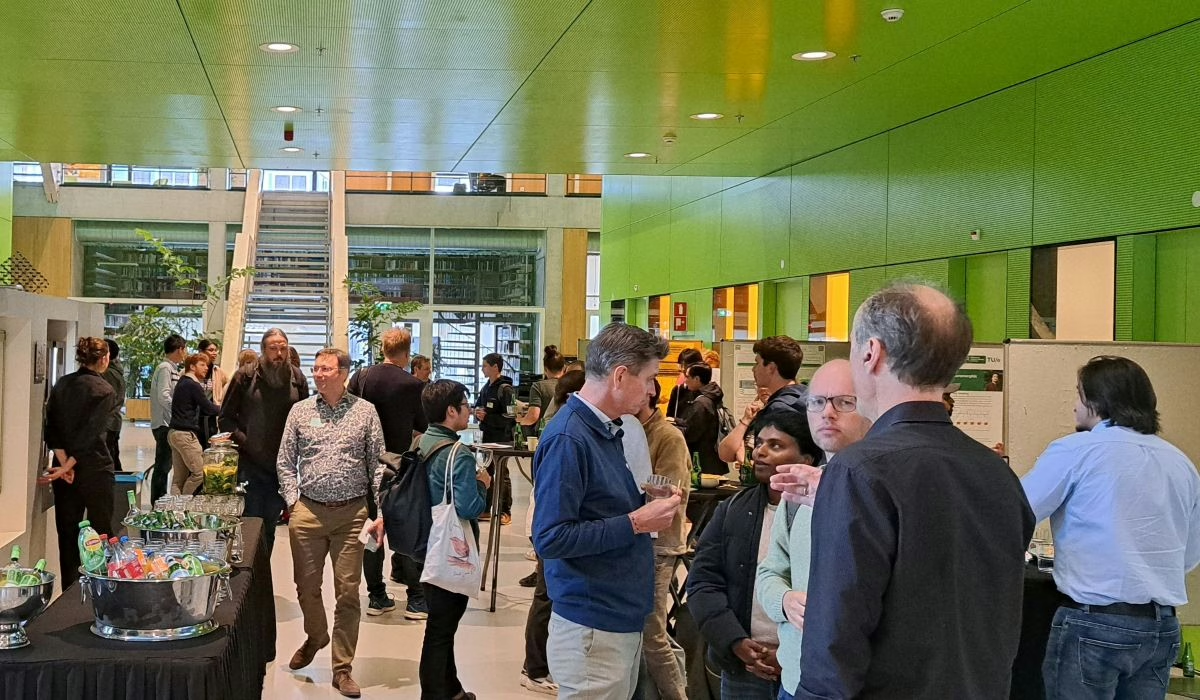
On Thursday, May 22nd, AMOLF organized the Infomatter Symposium to discuss exciting developments in information processing — ranging from biochemical to mechanical and optical systems. What these systems share is that they do not rely on conventional computers. This is a significant advantage, given that the energy cost of computing is rising much faster than that of energy production.

AMOLF researcher Corentin Bisot wins Van Leeuwenhoek Award
Postdoc Corentin Bisot (Physics of Behavior) has won the Van Leeuwenhoek Award, an initiative of the Koninklijke Nederlandse Vereniging voor Microbiologie (KNVM). The award ceremony took place during the Scientific Spring Meeting in Papendal on April 2nd. Corentin received the prize in the category ‘environmental microbiology’.

Max Kerr Winter receives Ammodo Fellowship for fungi research project
On April 3rd, the Ammodo foundation announced that AMOLF/VU researcher Max Kerr Winter is one of the five recipients of the Ammodo Fellowship. The Ammodo Foundation stimulates the development of art, science and architecture. With this new fellowship they want to enable early-career researchers to expand their international networks and to carve out a clear vision for their future academic career. Each fellow receives between 100.000 and 200.000 euros. As an AMOLF/VU postdoctoral researcher, Max will work on getting a better understanding of fungal behavior.