
News & updates
Latest developments from our institute
Stay informed about new research results, awards, events, and collaborations across our scientific community.
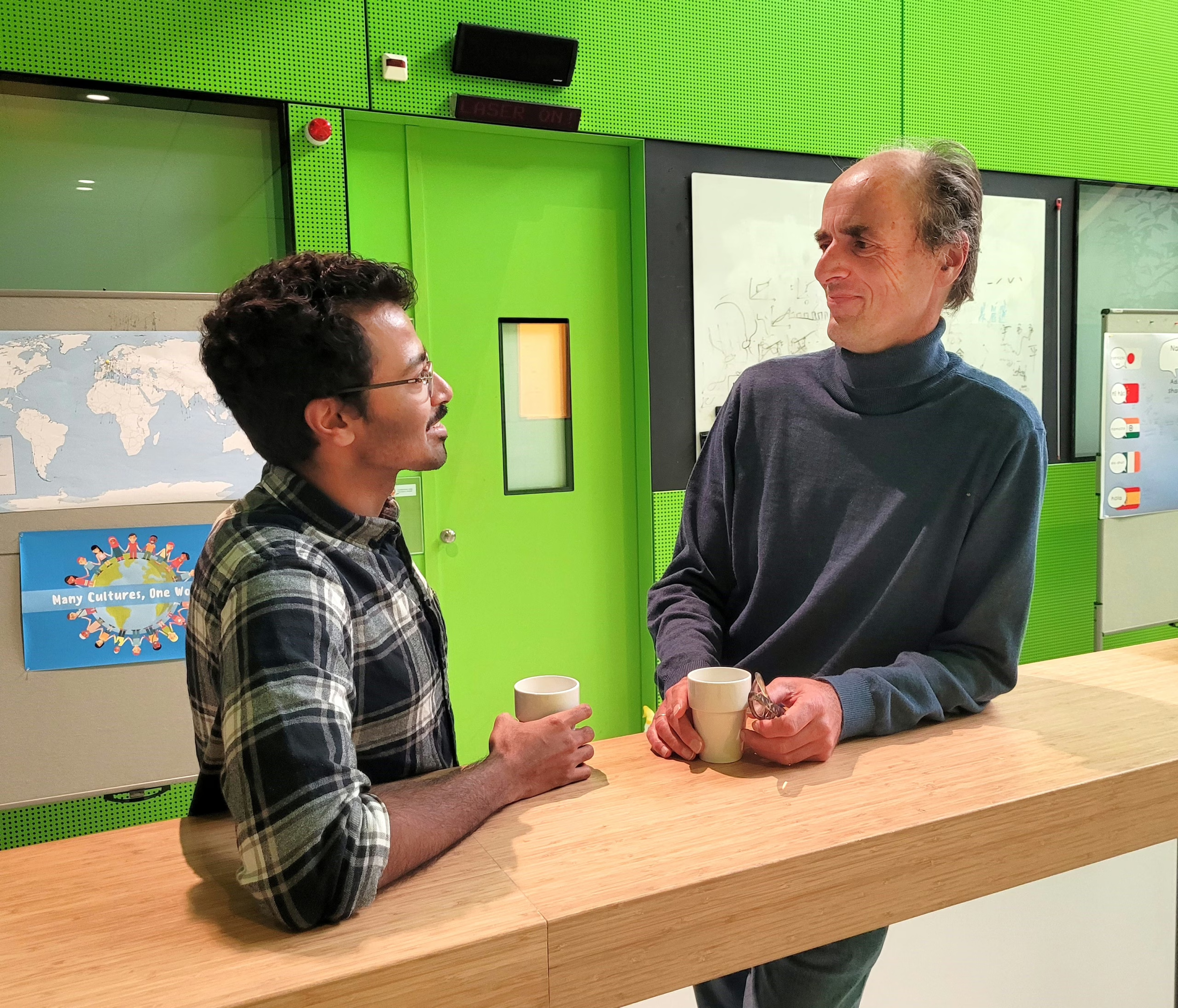
New breakthrough in measuring information flow
We are proud to share that AMOLF researchers have published a new paper in Physical Review Letters, entitled “Exact Computation of Transfer Entropy with Path Weight Sampling.” The study presents TE-PWS, a computational technique that – for the first time – enables the exact computation of transfer entropy, a central measure in information theory. Transfer entropy is used to quantify how information flows from one part of a system to another, and to detect causal relationships between variables.
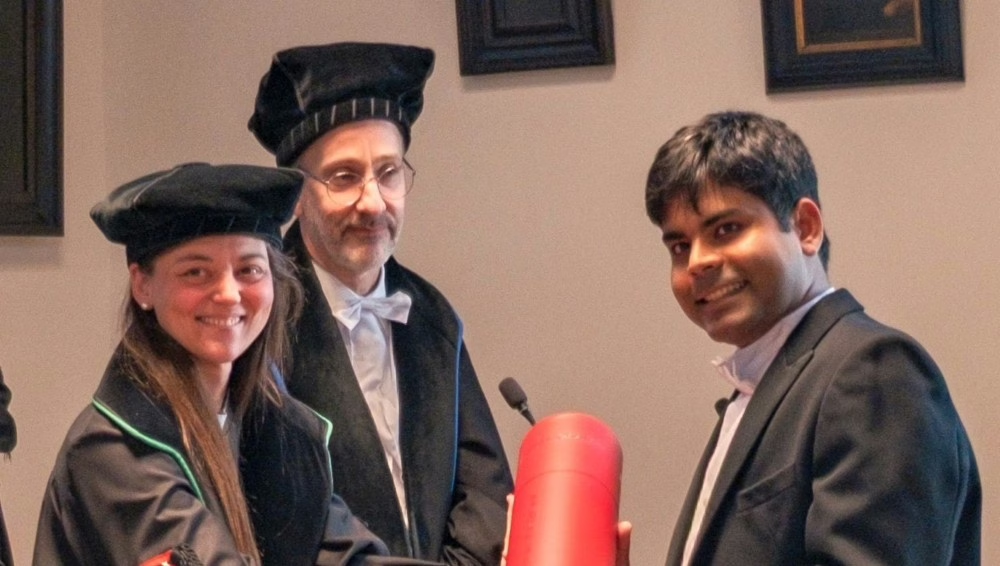
June and July doctorate celebrations
Fotios Avgidis - Criticality and Diversity in a Bacterial Sensory Network – June 6th [caption id="" align="alignright" width="160"] Fotios Avgidis after defending his thesis[/caption] Fotios Avgidis successfully defended his thesis…
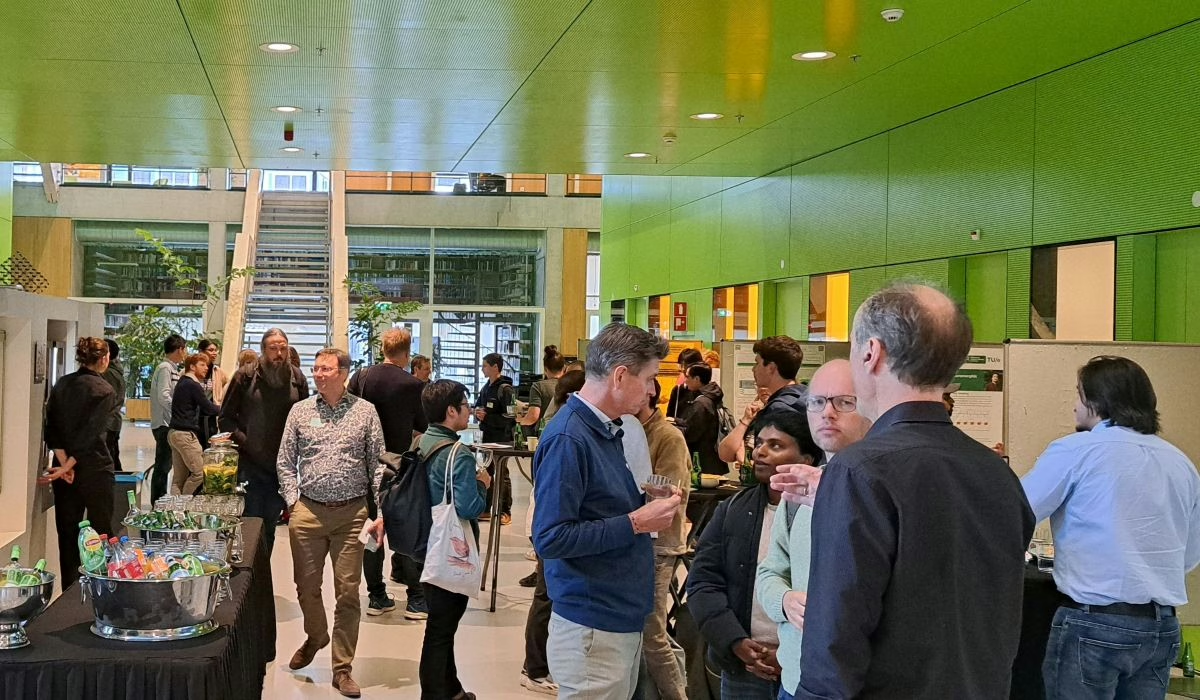
Infomatter symposium: taking advantage of information in a system
On Thursday, May 22nd, AMOLF organized the Infomatter Symposium to discuss exciting developments in information processing — ranging from biochemical to mechanical and optical systems. What these systems share is that they do not rely on conventional computers. This is a significant advantage, given that the energy cost of computing is rising much faster than that of energy production.
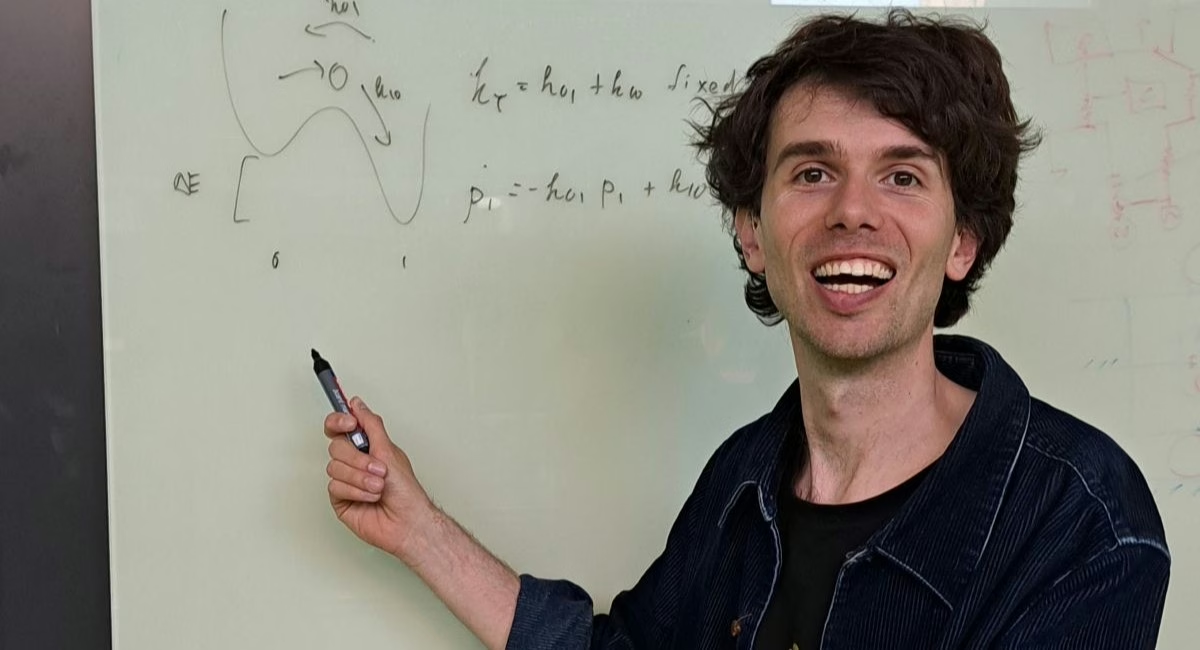
Optimizing bit-by-bit operations for energy-efficient computing
How can we make computing more energy-efficient when nature itself introduces randomness at every step? At the intersection of physics and information science, researchers from AMOLF and Imperial College London explore how thermal noise interferes with the physical switching of bits in computing devices. Their new work, published in Physical Review E, reveals that how we measure these state changes can make a surprising difference in designing the most efficient computational protocols.
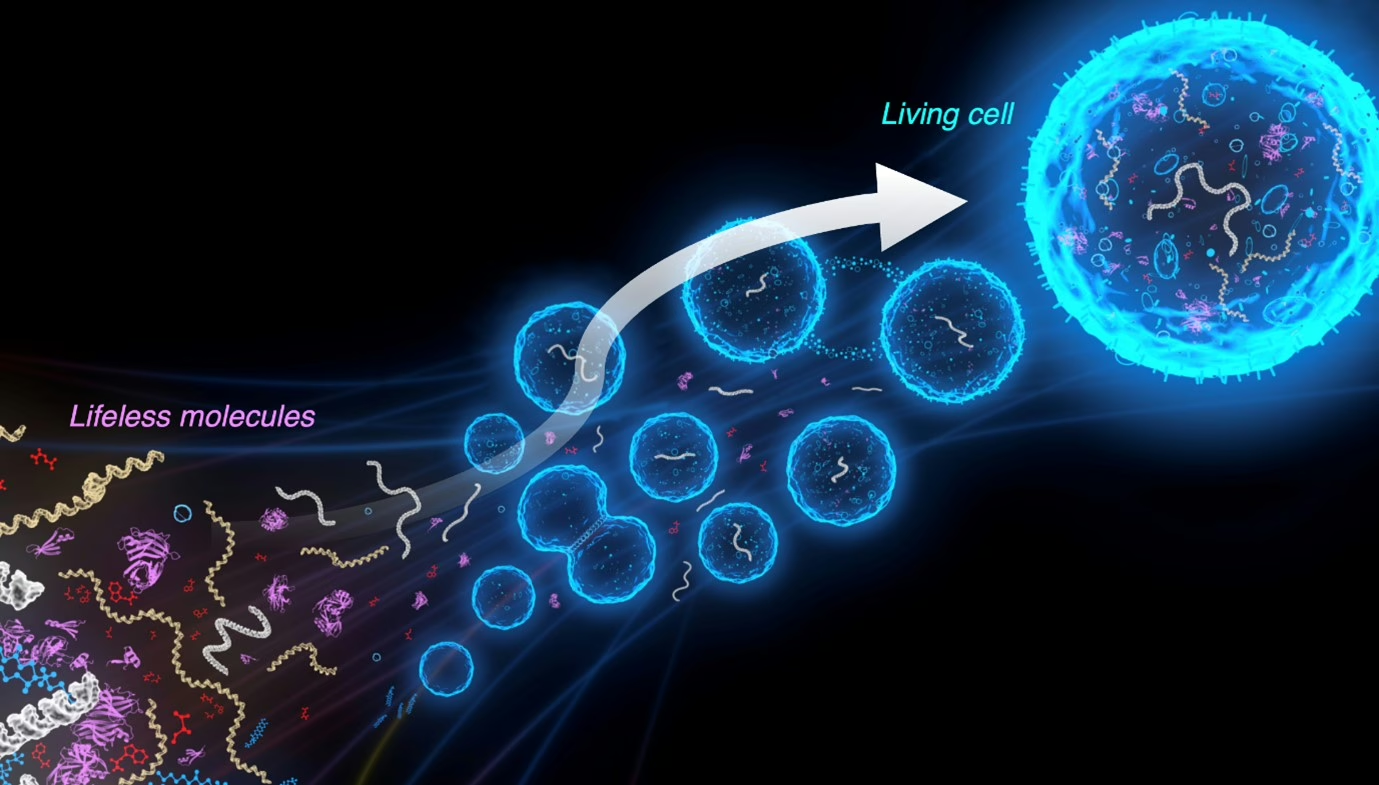
Creating life from lifeless biomolecules with AI and lab evolution
“What is life? How does a living cell emerge from lifeless molecules?” wondered a multidisciplinary team of Dutch scientists. To answer these questions the research team, with three AMOLF research groups and led by TU Delft, aims to build a living synthetic cell from lifeless biomolecules, using laboratory evolution and artificial intelligence for the first time. The ten-year research program to do so, entitled “Evolving life from non-life” or simply “EVOLF”, was awarded 40 million euro by the Dutch Research Council (NWO) as part of the Summit grants scheme.
Algorithm now available to exactly compute information rate
This year it is 75 years ago that Claude Shannon, the ’father of information theory’, showed how information transmission can be quantified mathematically, namely via the so-called information transmission rate. Yet, until now this quantity could only be computed approximately. AMOLF researchers Manuel Reinhardt and Pieter Rein ten Wolde, together with a collaborator from Vienna, have now developed a simulation technique that—for the first time—makes it possible to compute the information rate exactly for any system. The researchers publish the results on October 26th in the journal Physical Review X.
Bacteria opt for the best price-to-quality ratio to predict the future
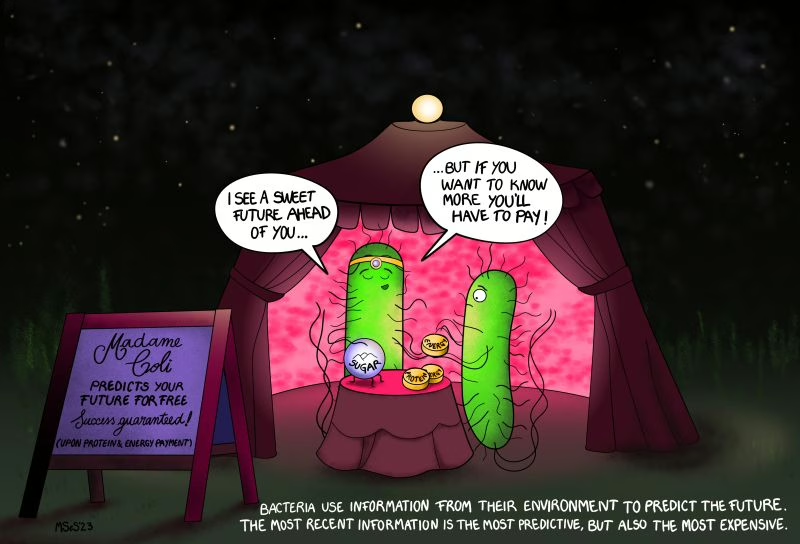
Predicting the future can be a matter of life or death. Just think, every time you cross the street, you predict whether this is possible without being run over. Experiments show that even single-celled organisms such as bacteria can predict the future. The better bacteria can predict changes in their environment, the greater their chances of survival. AMOLF researchers from the theory group of Pieter Rein ten Wolde discovered that E. coli bacteria collect the information with the best price-to-quality ratio to predict the future. The researchers publish the results on October 4th in the journal PNAS.
PhD defense Mareike Berger
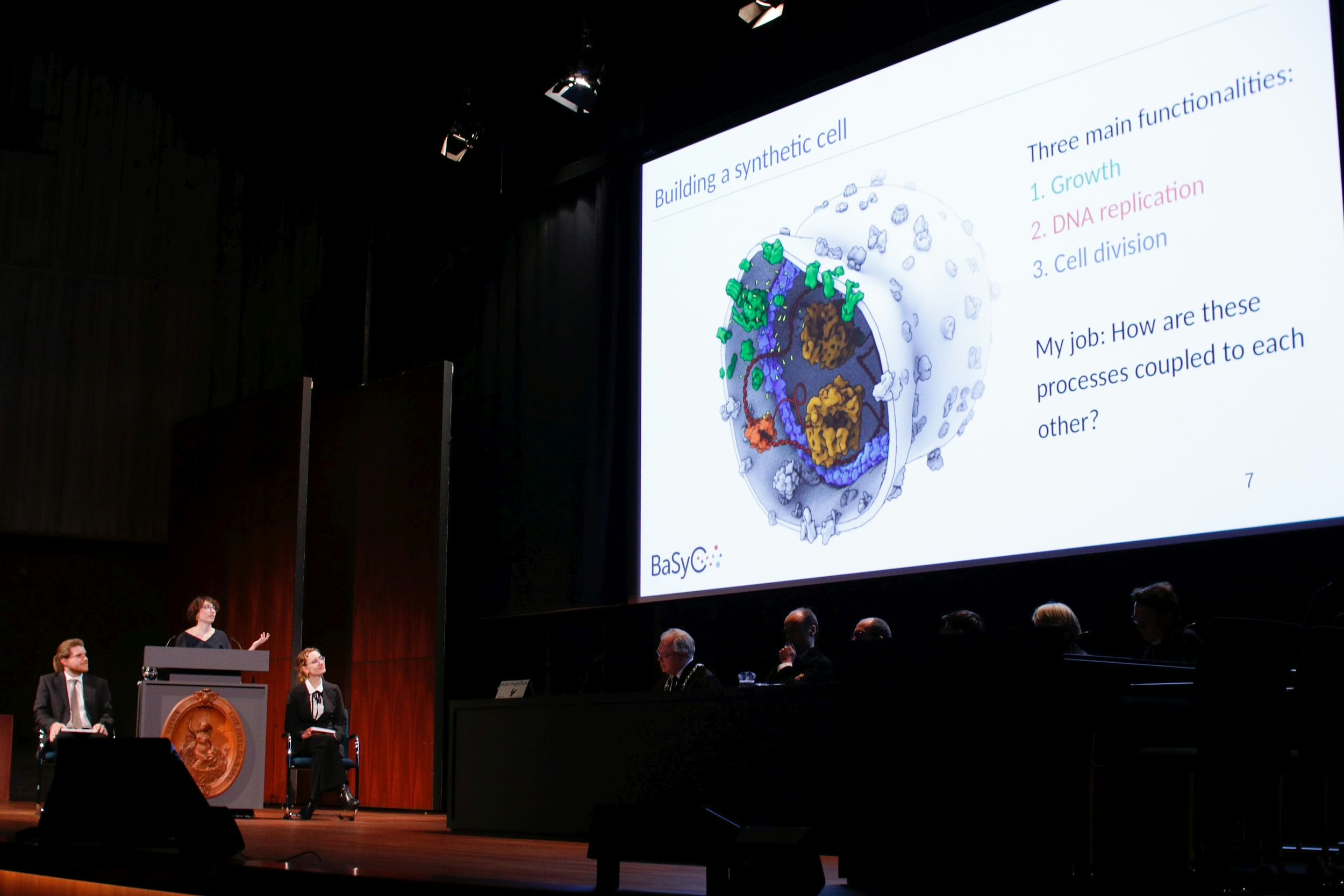
PhD student Mareike Berger successfully defended her thesis ‘Controlling DNA replication initiation: from living to synthetic cells’ at the Vrije Universiteit on May 3rd. Berger carried out her doctoral research in the group of Pieter Rein ten Wolde (Biochemical Networks). With her research Berger contributes to the research program BaSyC (Building a Synthetic Cell), which aims to create an autonomous, self-reproducing synthetic cell with a bottom-up approach.