
News & updates
Latest developments from our institute
Stay informed about new research results, awards, events, and collaborations across our scientific community.

Tiny glass spheres offer a new way to control light
Researchers from the Nanoscale Solar Cells group at AMOLF have developed a new way to control light using tiny glass spheres. The spheres can efficiently capture incoming light and control which color is guided in which direction. This could help make photocatalysis, where light is used to drive chemical reactions, more efficient and ultimately contribute to more sustainable chemical processes. The technique could also be useful for future semiconductor applications. The research was published in ACS Photonics on August 13, 2026.
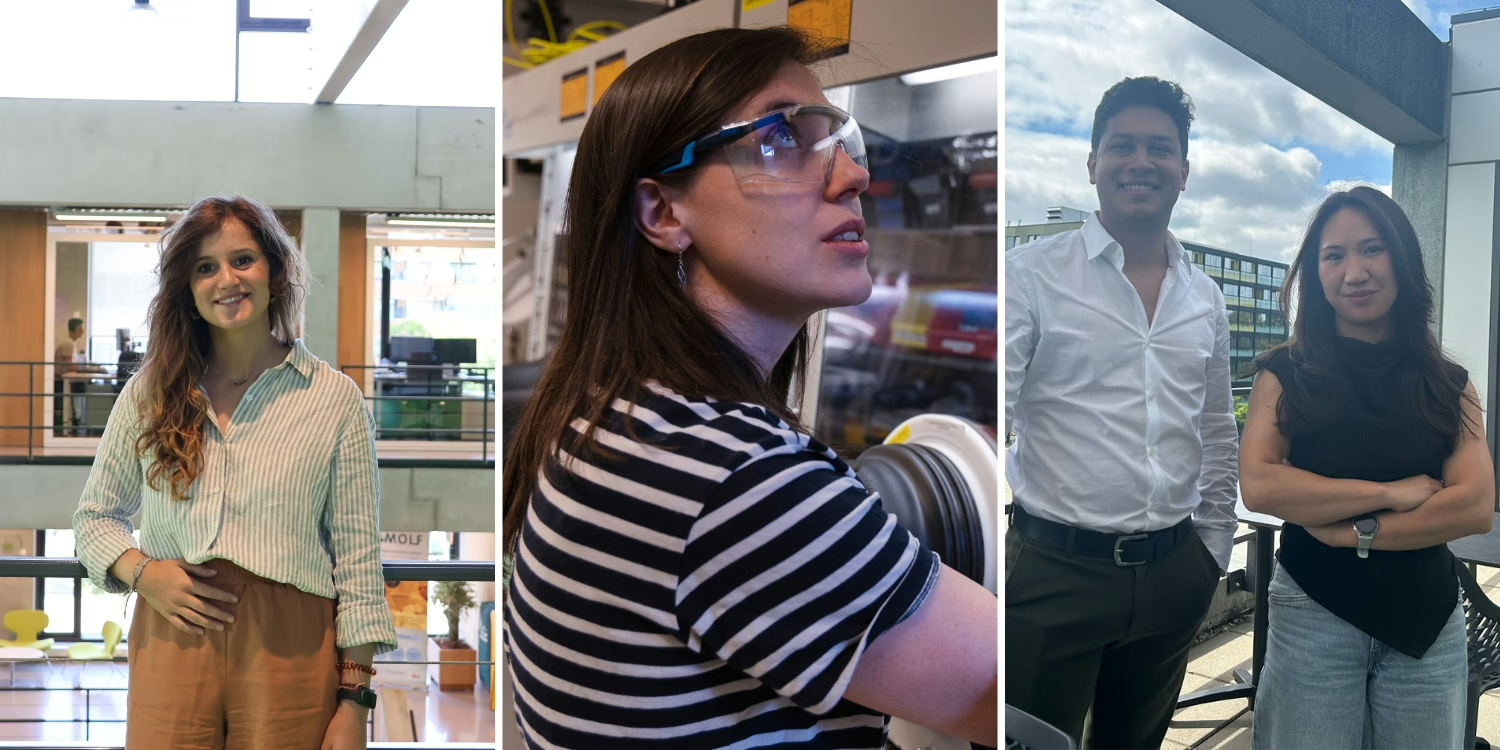
AMOLF researchers with granted NWO XS projects
Last week, three AMOLF researchers learned that their research projects had been awarded funding through the Open Competition Domain Science-XS call. They are Dr. Susanna Eli (Biophysics, Quant. Dev. Biology & Physics of Cellular Interactions), Dr. Sarah Gillespie (Nanoscale Solar Cells), and Dr. Sergio Rey Puentes (Hybrid Nanosystems).
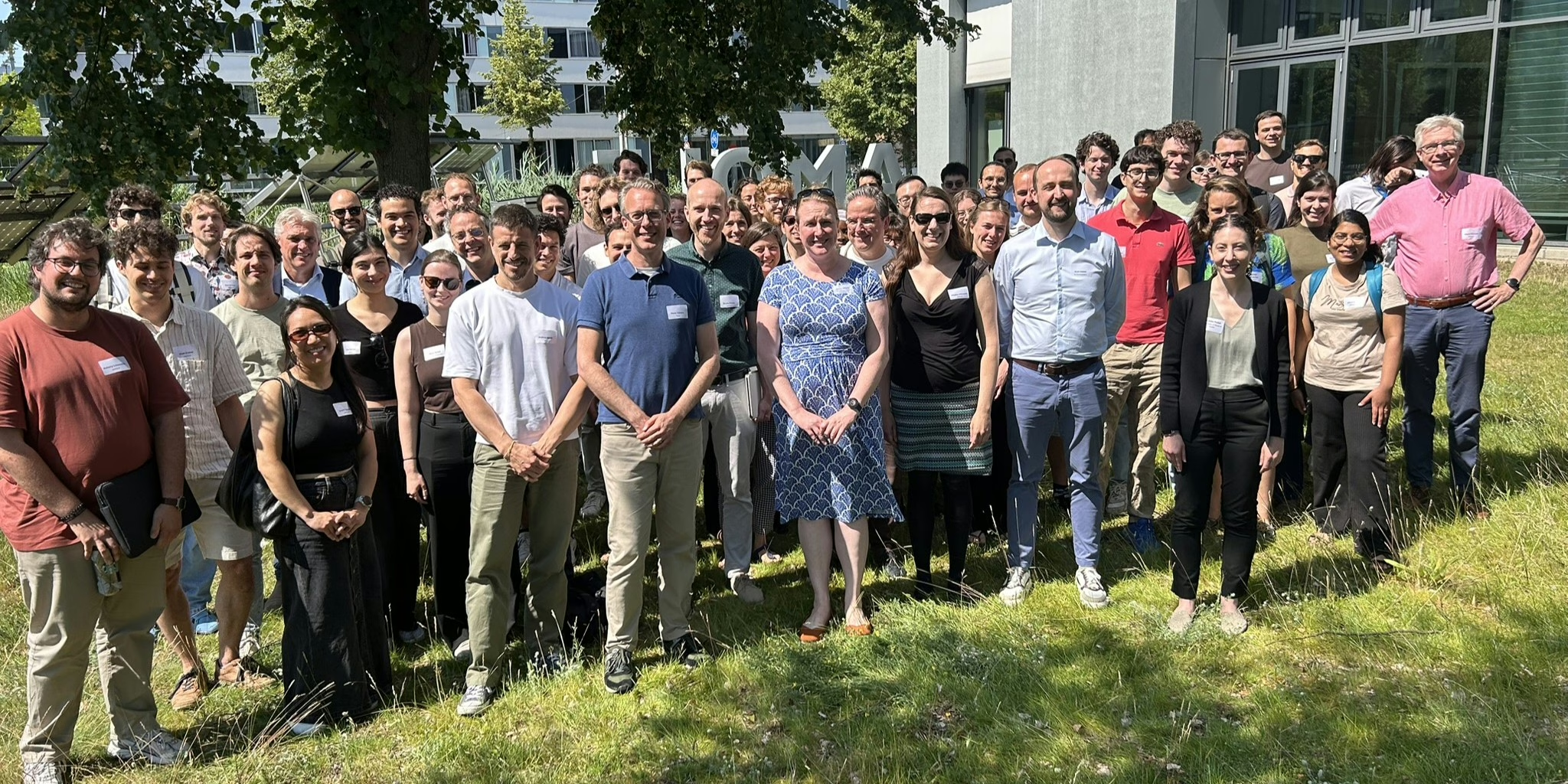
Sustainable Energy Materials research community meets at symposium
On June 19, physicists and chemists in the Netherlands came together to learn about recent discoveries on light for driving and monitoring chemical reactions. Light is a powerful and sustainable tool for steering such reactions with precision. AMOLF organized the bi-annual symposium at Amsterdam Science Park.
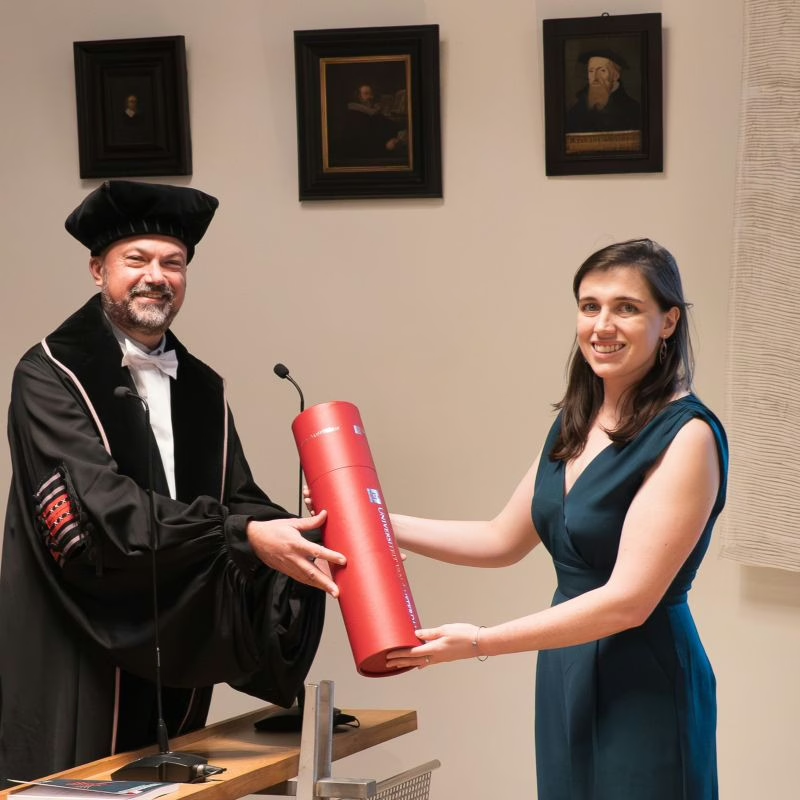
A remarkable run of PhD ceremonies
Giel Keijsers Title: Strong light-matter interactions in coherently driven open-access optical cavities Date: November 4 [caption id="" align="alignright" width="290"] Giel Keijsers after defending his thesis[/caption] How can you influence the…
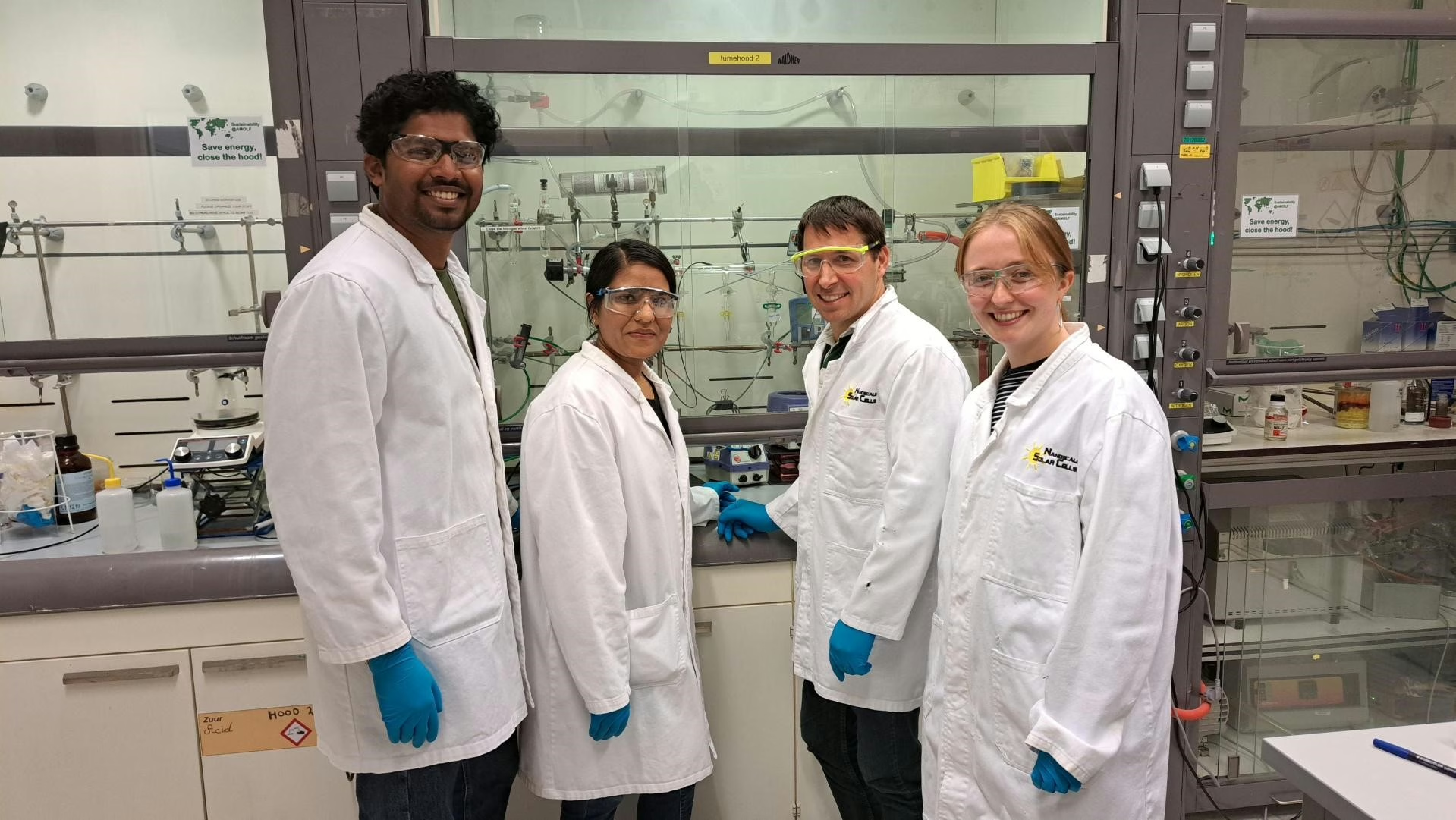
Water molecules under control: AMOLF researchers open new path to sustainable industrial chemistry
Researchers at AMOLF have demonstrated vibrational strong coupling in water layers only a few nanometers thick at metal surfaces. The study, published in Advanced Optical Materials and led by group leader Erik Garnett, shows how metal nanostructures (mid-IR antennas) are used to change the bonding strength of water located directly at the surface of the metal. This breakthrough opens the door to controlling chemical reactions in new ways, with potential impact on sustainable industrial chemistry at a large scale, e.g. making hydrogen from water electrolysis.
Tiny thermometers: measuring heat flow dissipating via nanoparticles
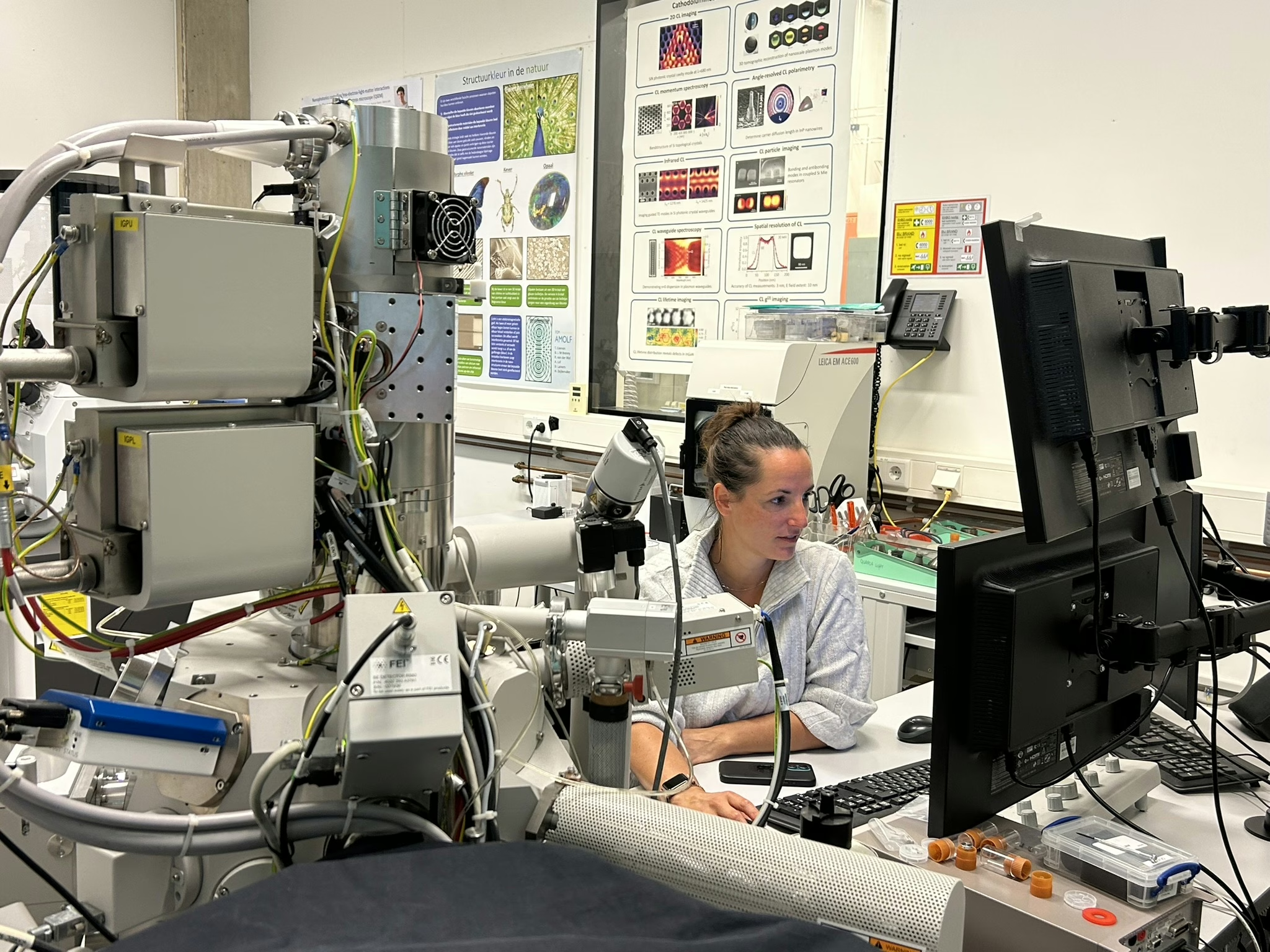
How do materials behave when heated with light at the scale of billionths of a meter? Researchers at AMOLF and Kobe University have developed a method to watch this process with nanometer precision. Their work, recently published in ACS Photonics, reveals how silicon nanoparticles heat up under laser light and how heat escapes from the surfaces. This breakthrough opens new doors for improving electronics, solar cells, and catalysts by giving scientists a sensitive tool to measure and control heat flow at the nanoscale.
ERC Proof of Concept grant to develop measuring technique for halide perovskites
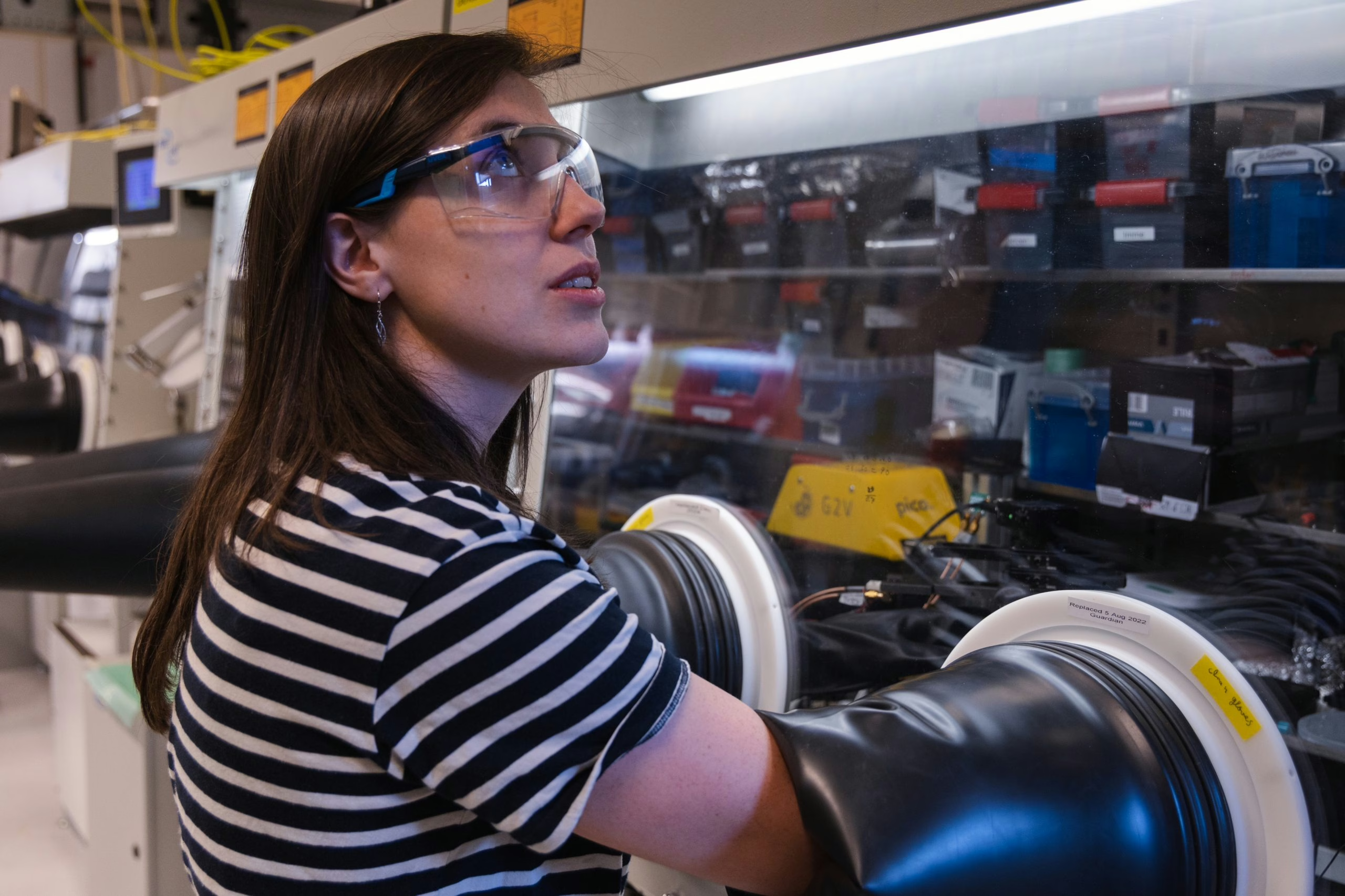
The European Research Council (ERC) announced that AMOLF group leader Erik Garnett is one of the recipients of an ERC Proof of Concept grant. Erik and three other researchers at AMOLF have developed a fully optical technique to measure processes in halide perovskite semiconductors. The sum of the Proof of Concept grant is €150.000, which will be used to develop prototype instruments.
AMOLF, CWI, and DIFFER launch HELIOS project with NWO-I funding
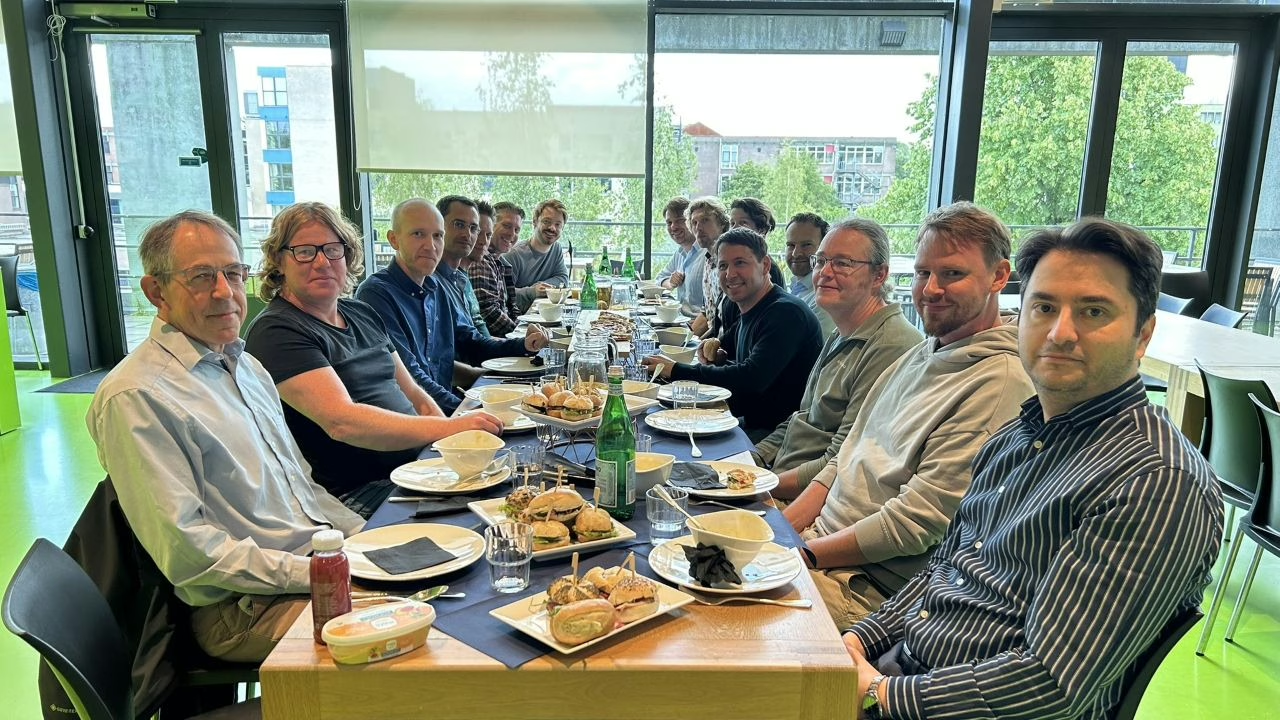
An AMOLF collaboration with CWI and DIFFER has received funding from NWO-I to launch a joint project: HELIOS: AI-guided materials discovery facility for solar energy materials. On Friday, May 23rd, representatives from the three institutes gathered for the kick-off meeting to discuss the roadmap toward developing a highly efficient multilayered halide perovskite solar cell.