
News & updates
Latest developments from our institute
Stay informed about new research results, awards, events, and collaborations across our scientific community.
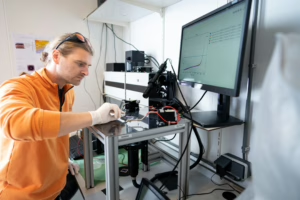
Natural phenomena ‘hyperuniform disorder’ enables highly efficient, thin silicon solar cells
Silicon solar panels are rigid and heavy, and many rooftops cannot support them. This creates a need for thin, flexible solar cells that can be integrated into building materials. However, making silicon solar cells thinner makes it harder to trap light inside the material. Researchers in the 3D Photovoltaics group found a fascinating way to overcome this challenge using a phenomenon called hyperuniform disorder. They publish their findings in the journal ACS Photonics. The researchers were able to make highly efficient silicon solar cell materials that are 30 times thinner than conventional ones. They managed to do this by integrating a layer of nanometer sized structures on top of the material. Up close, this pattern looks random, but it is remarkably when you step back: no clumps, no gaps, and no repeating pattern. This is called hyperuniform disorder (or HUD).
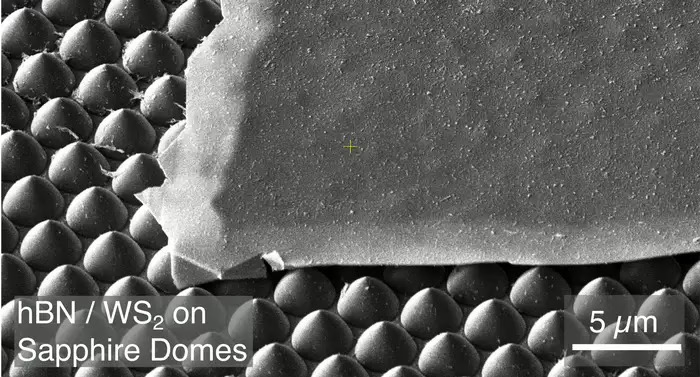
Atom-thin materials: handle with care… and cling film
As materials become thinner – now reaching a thickness of single atoms – it has become ever more difficult to create large enough sheets of these materials and transfer them without cracking them into tiny flakes. Recent work by a broad Amsterdam-based team of scientists, published in the journal ACS Nano, presents a new technique that solves this problem – using an unexpected material that can be found in any home kitchen.
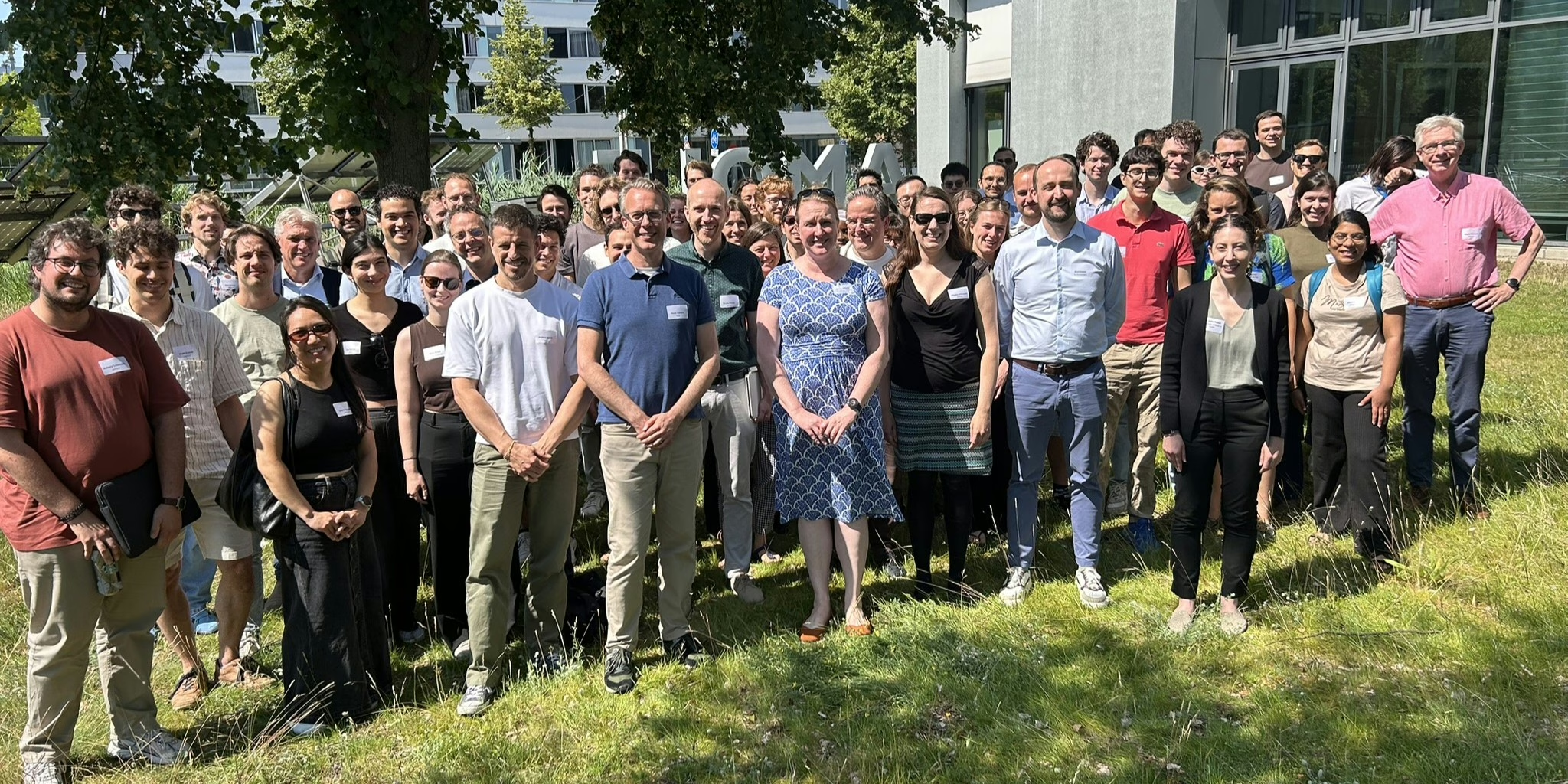
Sustainable Energy Materials research community meets at symposium
On June 19, physicists and chemists in the Netherlands came together to learn about recent discoveries on light for driving and monitoring chemical reactions. Light is a powerful and sustainable tool for steering such reactions with precision. AMOLF organized the bi-annual symposium at Amsterdam Science Park.
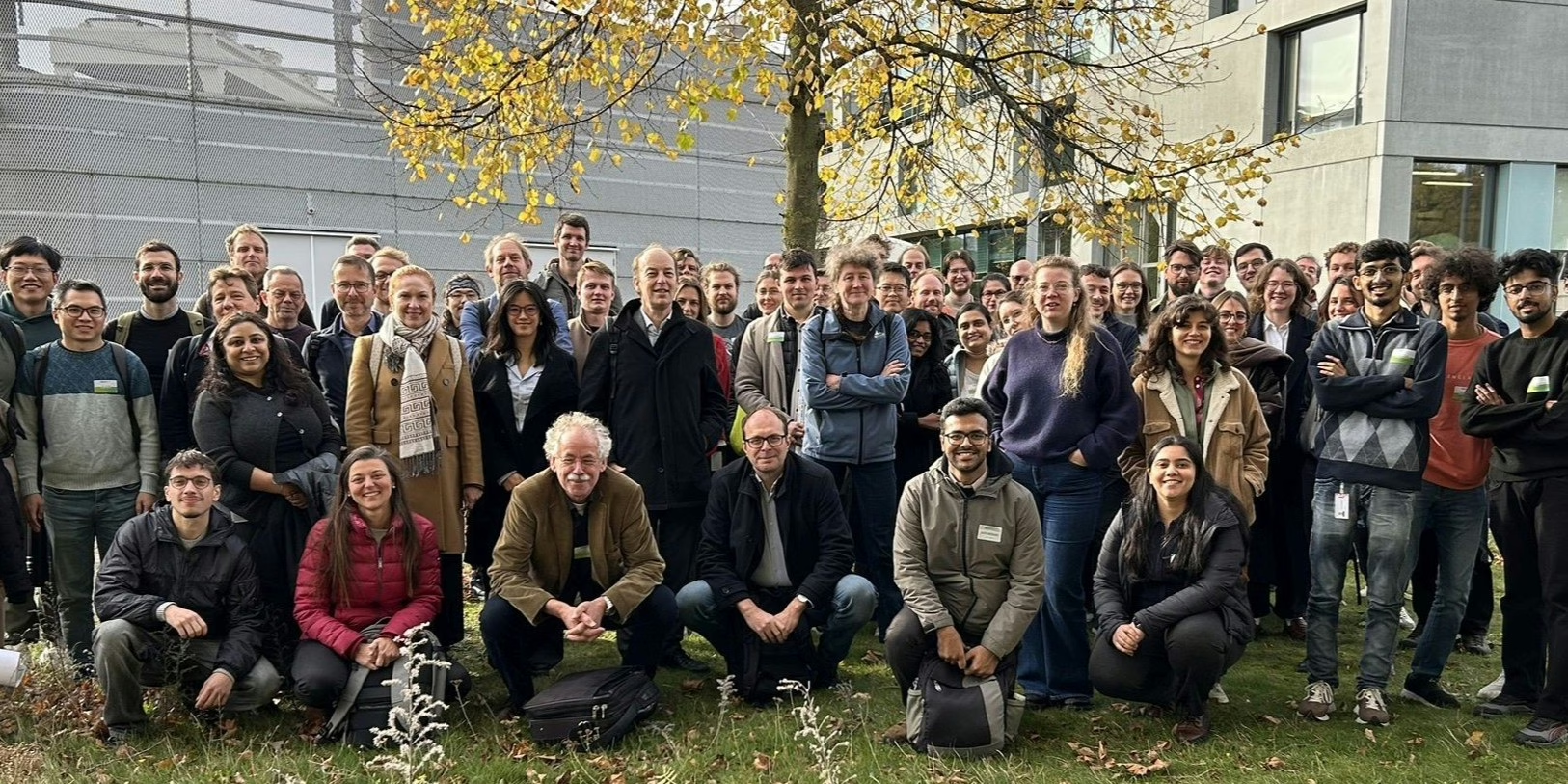
First ANION Symposium with strong community spirit and collaboration
Electrochemists working on nanoscale electrochemical interfaces came together in Amsterdam to share recent findings and explore new collaboration opportunities. The ANION Symposium was the first edition organized by the Advanced Netherlands Institute of Nanoelectrochemistry (ANION), with AMOLF and UvA as co-organizers. The symposium took place on Friday, October 31.
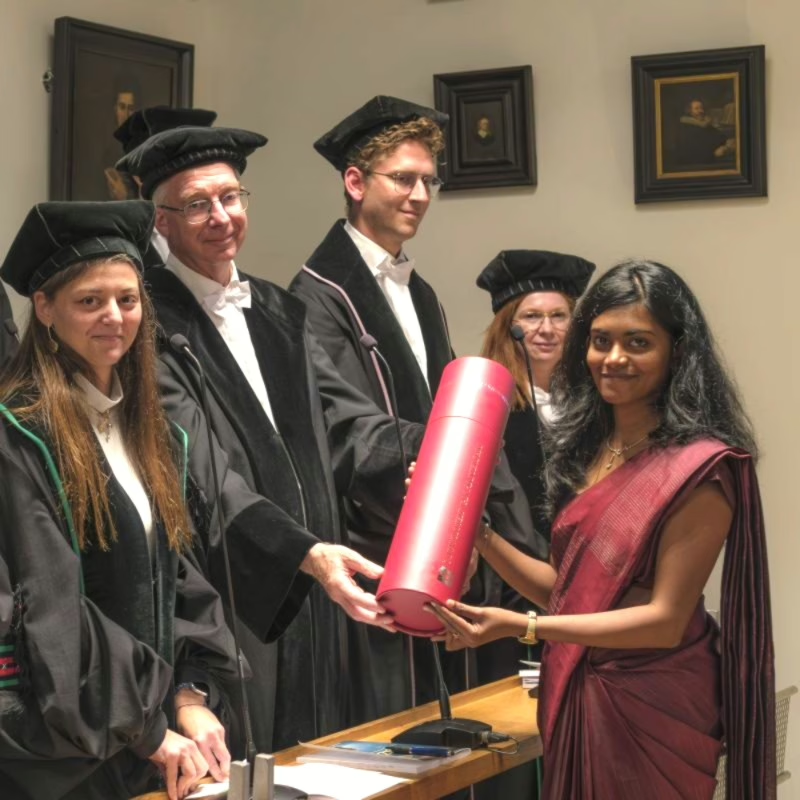
September and October doctorate celebrations
Katharina Till – Cotranslational Folding and Assembly at the Single-Molecule Level – September 18Katharina Till after defending her thesisDuring her doctoral research in the Biophysics group of Sander…
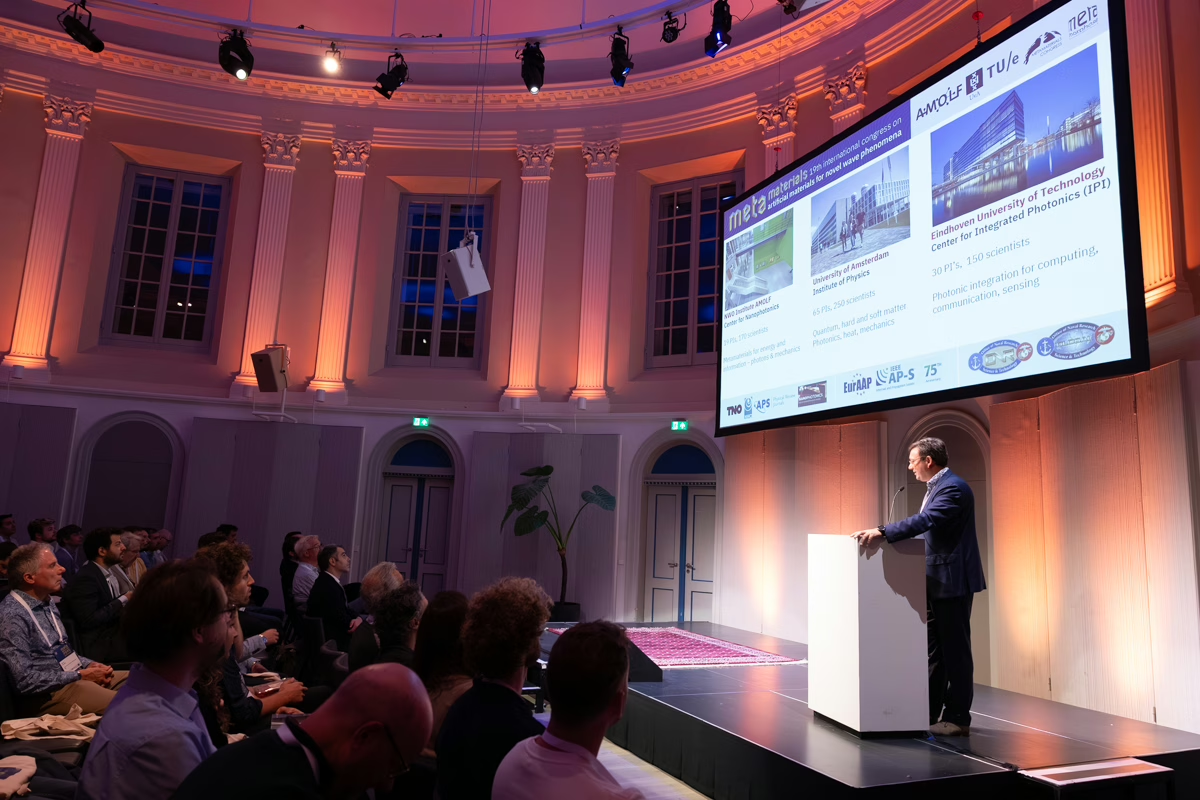
Vibrant Metamaterials2025
The conference Metamaterials2025 brought together 400 researchers from around the world to share their results and vision. Metamaterials was held at Felix Meritis in Amsterdam from September 2 – 6.
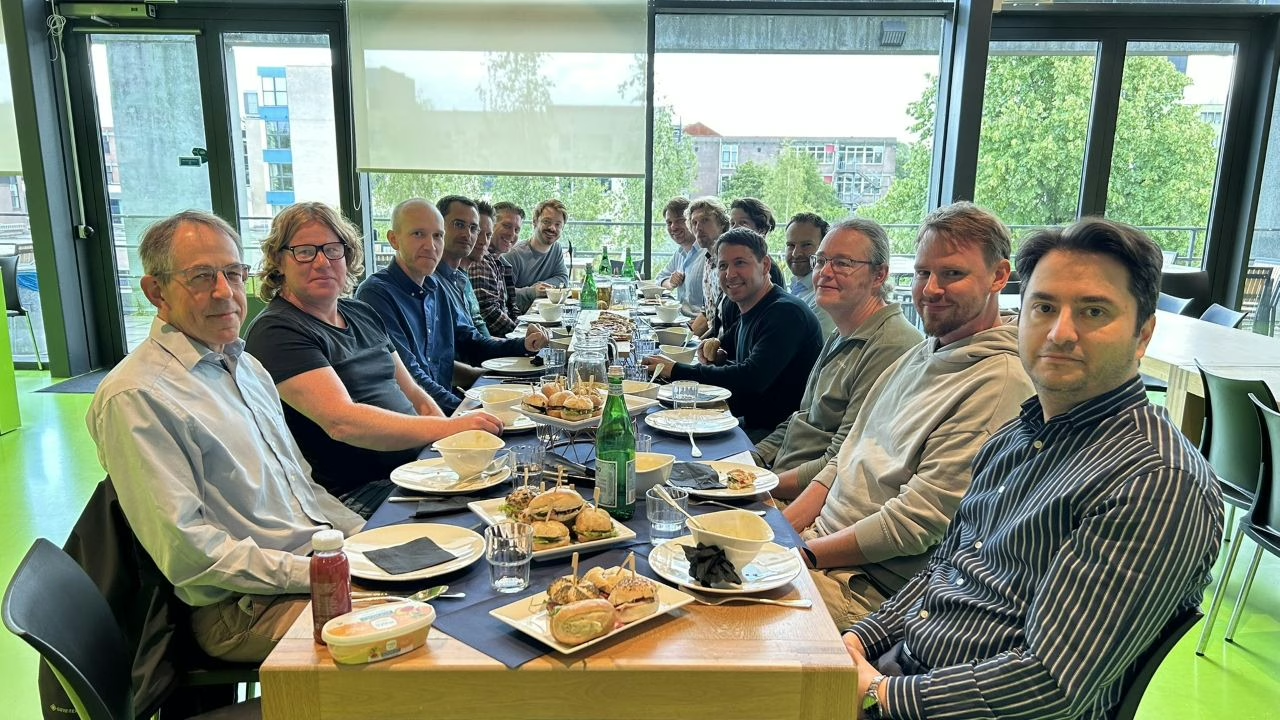
AMOLF, CWI, and DIFFER launch HELIOS project with NWO-I funding
An AMOLF collaboration with CWI and DIFFER has received funding from NWO-I to launch a joint project: HELIOS: AI-guided materials discovery facility for solar energy materials. On Friday, May 23rd, representatives from the three institutes gathered for the kick-off meeting to discuss the roadmap toward developing a highly efficient multilayered halide perovskite solar cell.
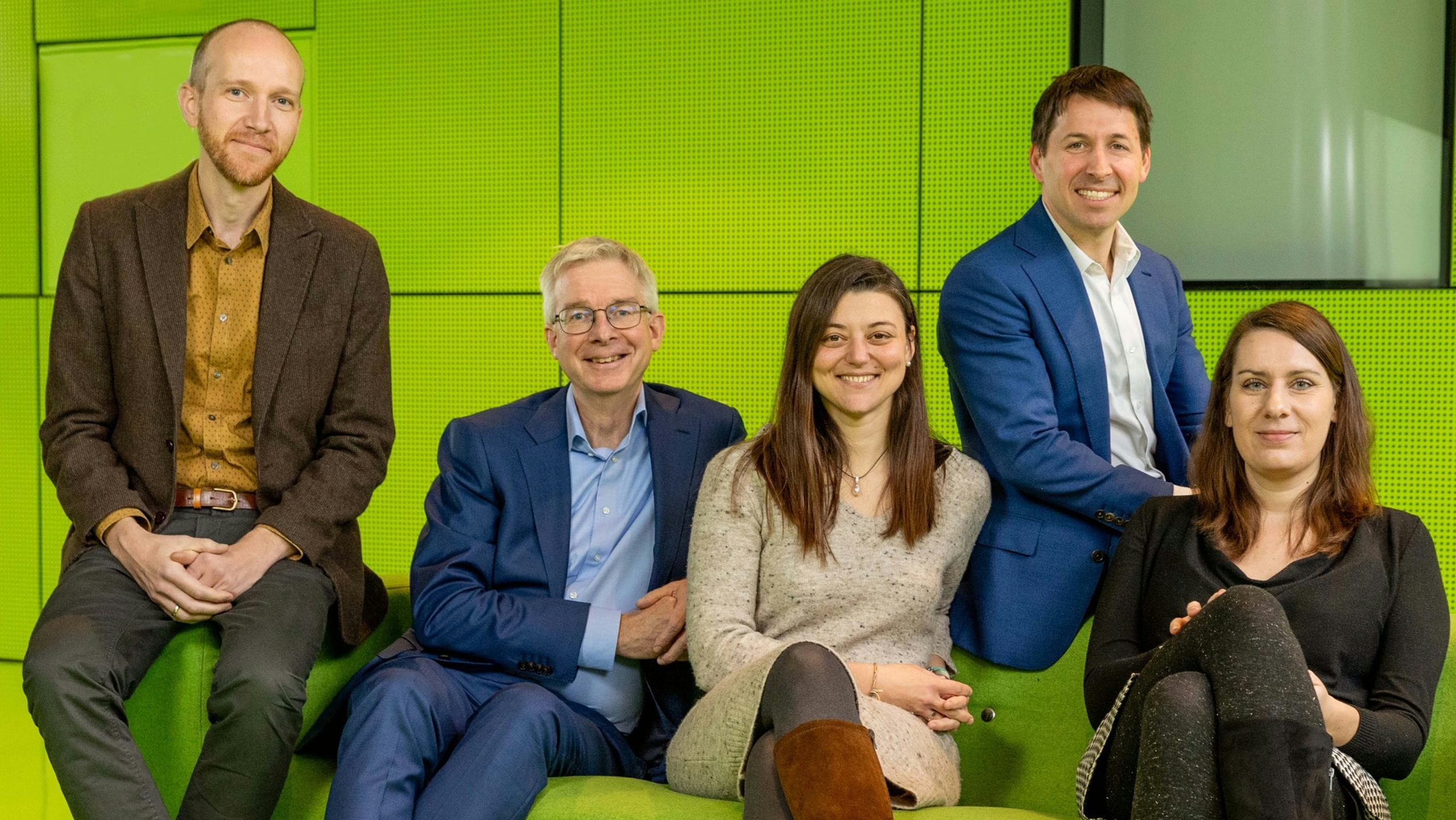
LMPV wins Team Science Award
The team of group leaders leading AMOLF’s Light Management in Photovoltaic Materials (LMPV) program has won the NWO Team Science Award 2023. With the award NWO rewards the most inspiring and successful team of researchers from various disciplinary fields, who jointly take on a scientific challenge in which their individual strengths and expertise demonstrably reinforce each other. The LMPV team will receive the prize money amounting 50.000 euro to be spend on team related activities.