
News & updates
Latest developments from our institute
Stay informed about new research results, awards, events, and collaborations across our scientific community.
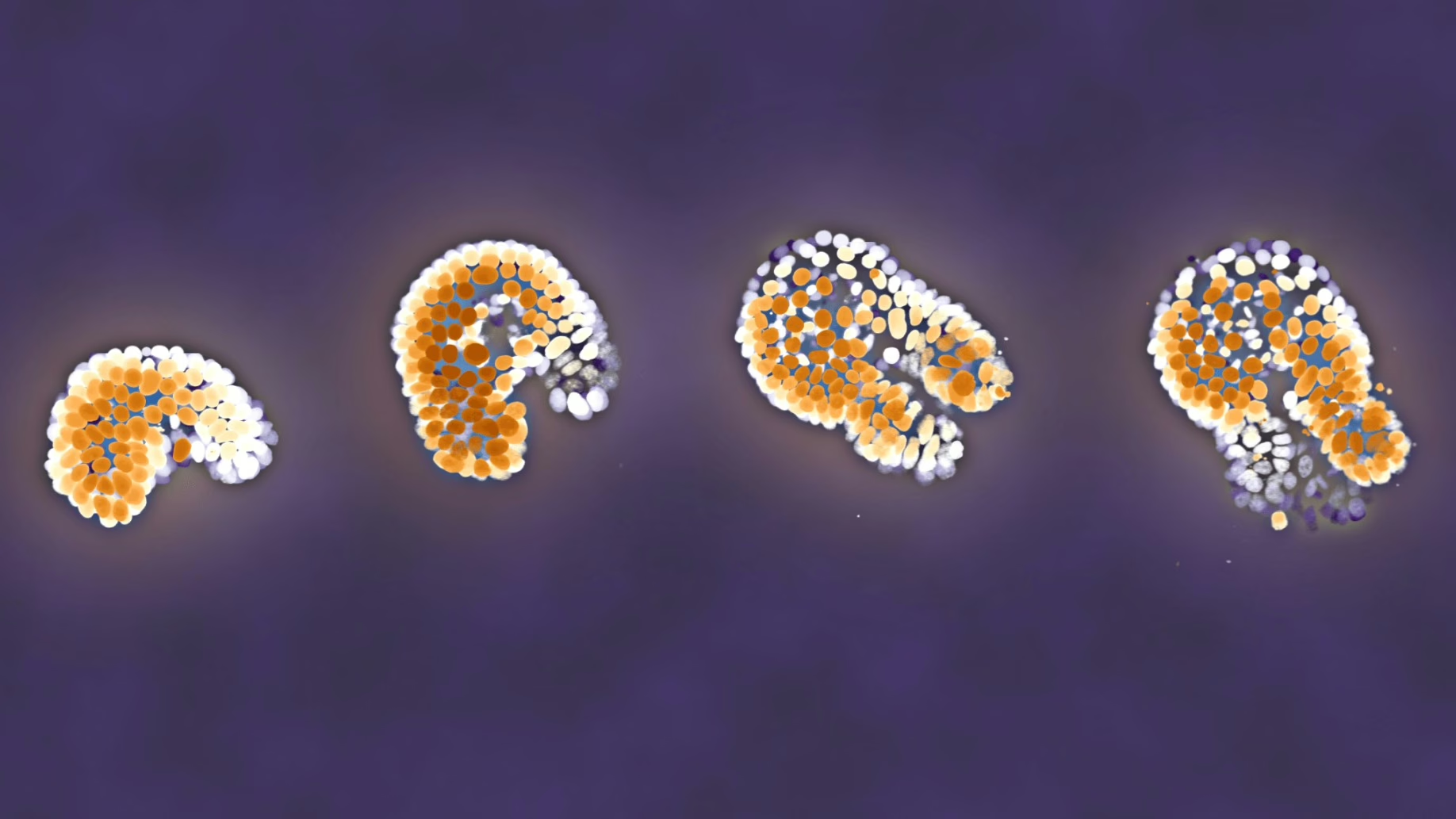
Everything you need to know about organoids
Organoids are instrumental in improving our understanding of processes that are otherwise hidden inside the body. For instance, these small 3D organs can be used to test medicines on tissue grown from a patient’s own cells. AMOLF researchers carry out unique and complex experiments to follow organoids in time. In order to enable other researchers to benefit from their experiences, they now publish their methods in the prestigious journal Nature Protocols.
Tiny glass spheres offer a new way to control light
Researchers from the Nanoscale Solar Cells group at AMOLF have developed a new way to control light using tiny glass spheres. The spheres can efficiently capture incoming light and control which color is guided in which direction. This could help make photocatalysis, where light is used to drive chemical reactions, more efficient and ultimately contribute to more sustainable chemical processes. The technique could also be useful for future semiconductor applications. The research was published in ACS Photonics on August 13, 2026.
First direct observation of protein recycling: a key process for healthy cells
AMOLF researchers report in Nature Communications that they followed in real time how the cellular protein recycling system selects and dismantles proteins. Using single molecule manipulation, they found that the protein recycling system acts as a motor that threads proteins through a central pore. They also discovered energy-driven fluctuations that may help it recognize the correct target, revealing how cells avoid mistakes and prevent diseases such as Alzheimer’s.
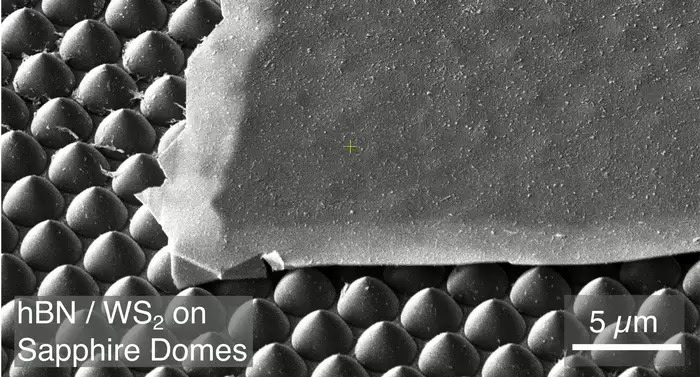
Atom-thin materials: handle with care… and cling film
As materials become thinner – now reaching a thickness of single atoms – it has become ever more difficult to create large enough sheets of these materials and transfer them without cracking them into tiny flakes. Recent work by a broad Amsterdam-based team of scientists, published in the journal ACS Nano, presents a new technique that solves this problem – using an unexpected material that can be found in any home kitchen.
The arrow of time in light
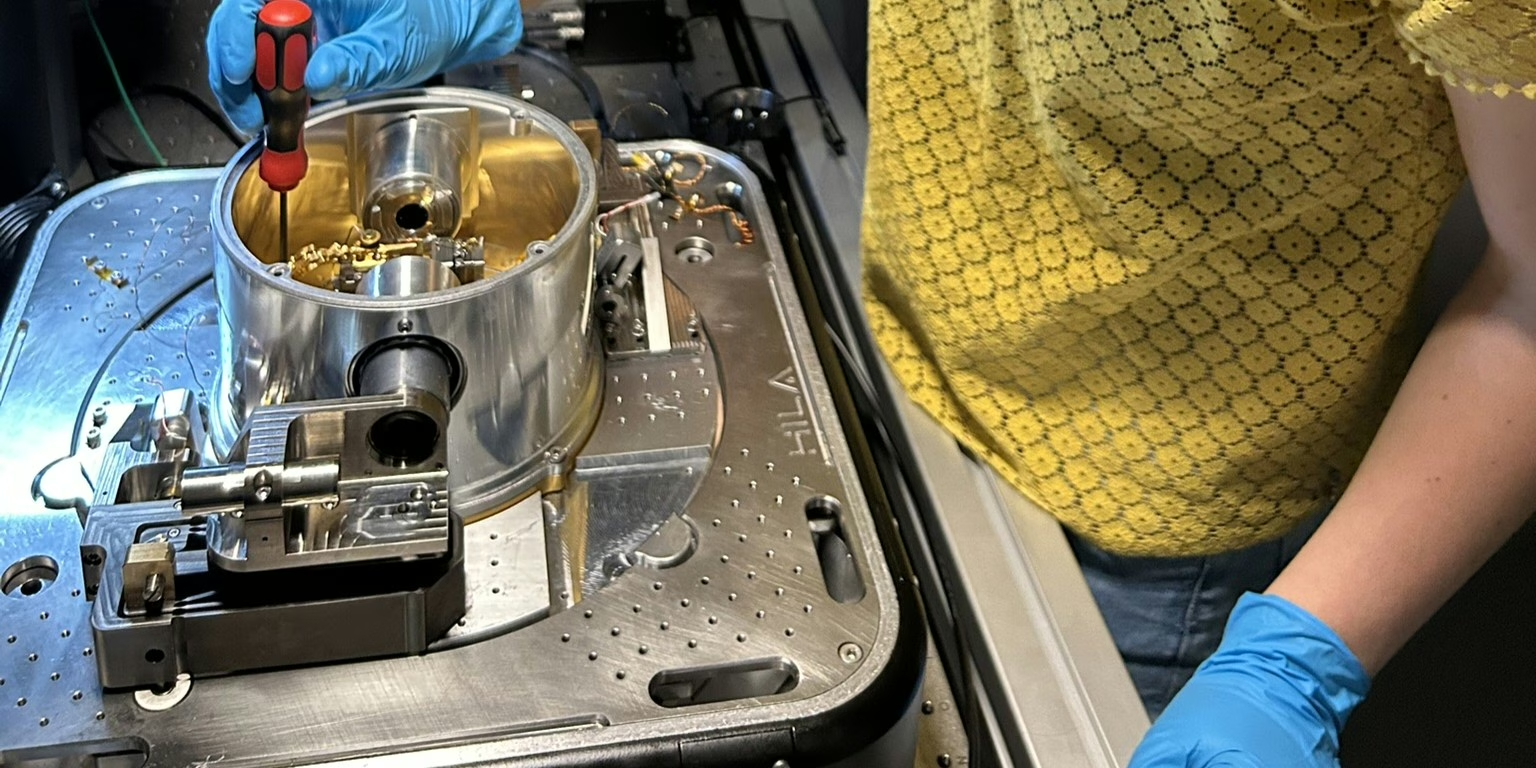
Research in the Interacting Photons group shows that the rules governing how light evolves over time are different from what we might expect. This is not only surprising; its implications could also be significant for the development of energy-efficient information processing systems. The researchers published their findings in the journal Physical Review Letters.
Material that can both store and process information for low-energy computing
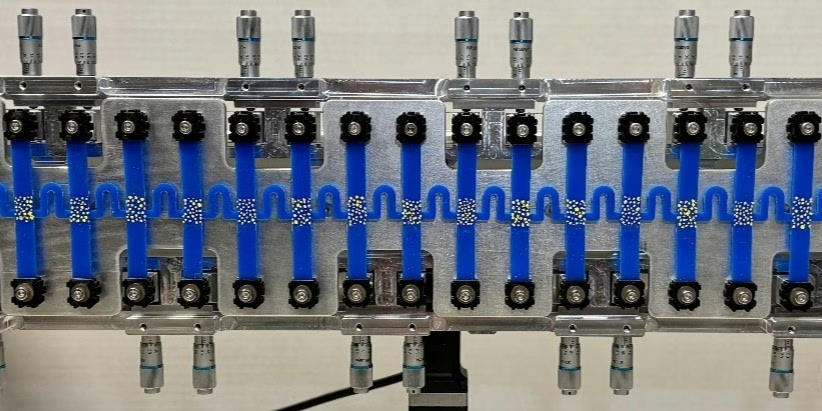
Researchers at AMOLF and the University of Konstanz have developed a mechanical material that can store, move, and process information within the same physical structure. The findings, published in Physical Review Letters, could help inspire future computing technologies that use far less energy than conventional computers.
Researchers publish first global maps of the underground networks formed by mycorrhizal fungi
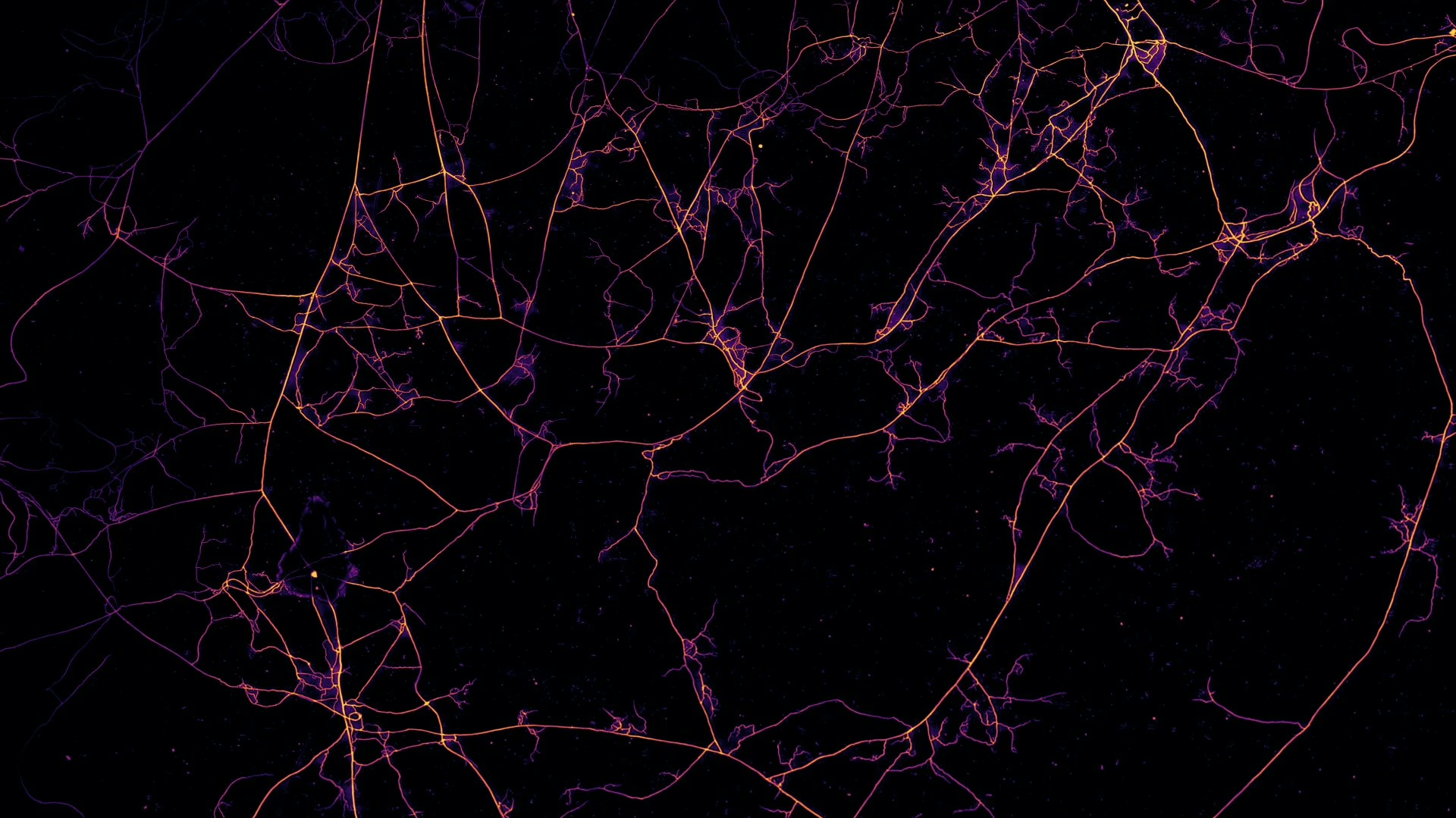
Arbuscular mycorrhizal fungi are soil fungi that form symbiotic relationships with the roots of land plants. Together, they create vast underground networks that sustain plant life and help regulate Earth’s climate by drawing carbon into soils. An international team of researchers has produced the first global maps estimating the distribution and mass of these networks. The study, published on June 11, in Science, includes AMOLF researchers Dr. Corentin Bisot and Prof. dr. Tom Shimizu as authors.
Writing words into smart materials
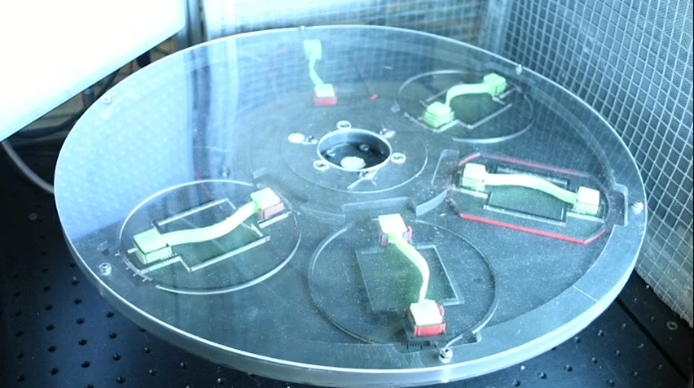
Researchers at AMOLF, EPFL, and Leiden University have developed a new way to store information in mechanical metamaterials. These are artificial materials that have been engineered to exhibit unique properties. In a paper published in Science Advances on May 6, the team shows how one simple signal can cause a response in multiple mechanical elements (material bits) simultaneously. This extraordinary level of control allows them to write all letters of the alphabet into a mechanical system. The discovery could help create future smart materials, soft robots, and remotely controlled devices.