Fotios Avgidis – Criticality and Diversity in a Bacterial Sensory Network – June 6th
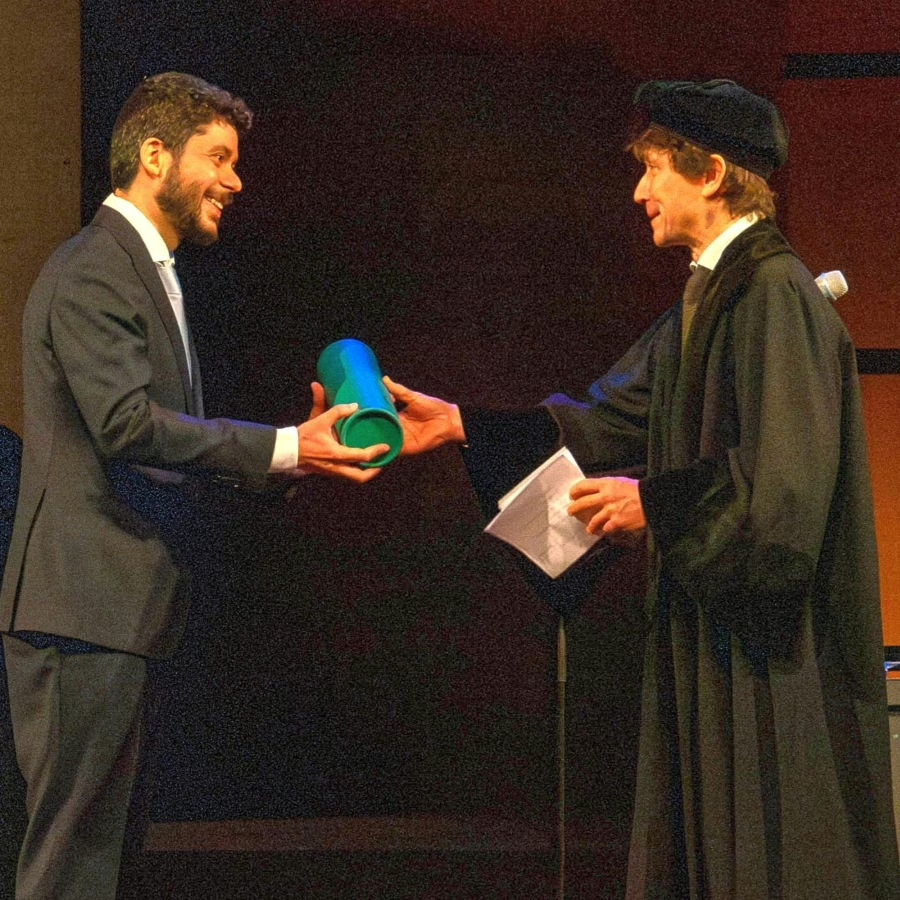
Fotios Avgidis successfully defended his thesis ‘Criticality and diversity in a bacterial sensory network’ at Vrije Universiteit Amsterdam. He did his doctoral research in the group of Thomas Shimizu where he discovered how bacteria not only cope with variability in molecular processes (often referred to as “noise”), but actively control it to enhance sensing as they navigate unpredictable environments.
Fotios left AMOLF in September 2024 starting as a postdoctoral researcher at Yale University in the United States. Fotios: “One of my goals here is to extend the tools and methods I developed during my PhD to explore how other organisms process information about their environment.”
View Fotios Avgidis’s thesis in the repository
Manuel Reinhardt – Quantifying the Flow of Information – June 13th
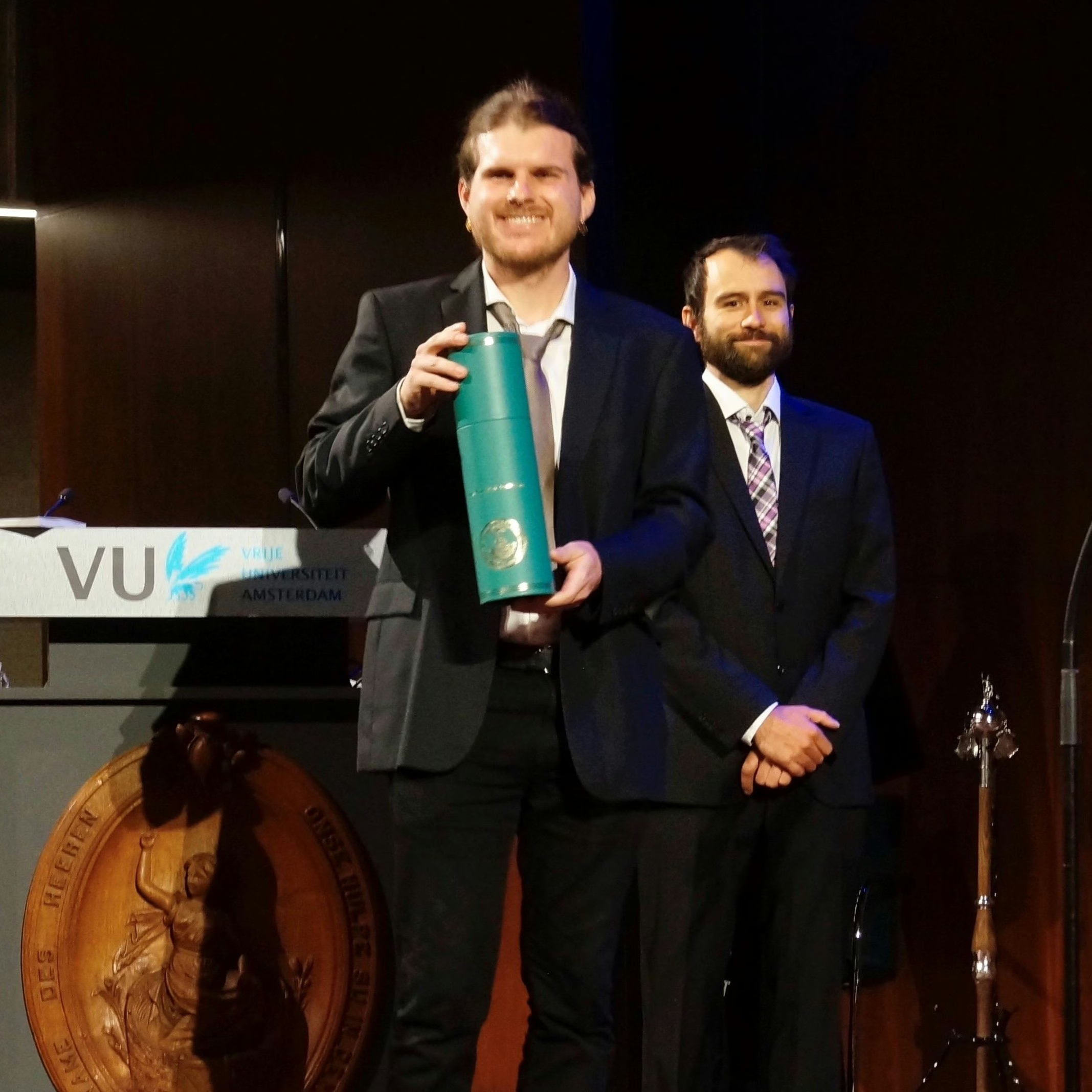
Friday the 13th of June turned out to be an exceptionally good day for Manuel Reinhardt. That day, he defended his thesis at the Vrije Universiteit Amsterdam and received the remarkable news that his PhD work was considered exceptional – earning him the prestigious 𝐜𝐮𝐦 𝐥𝐚𝐮𝐝𝐞 distinction.
Supervisor Pieter Rein ten Wolde explains what makes Manuel’s work stand out: “Manuel developed a computational technique that, for the first time, makes it possible to compute the speed at which information is transmitted exactly for any system with a mathematical model. Moreover, he demonstrated how this technique can be combined with machine learning to extract the same information even when no model is available.”
These accomplishments mark a significant breakthrough. As one of the external referees noted: “This thesis constitutes a distinct conceptual leap.”
View Manuel Reinhardt’s thesis in the repository
Age Tjalma – Optimal Cellular Prediction – June 19th
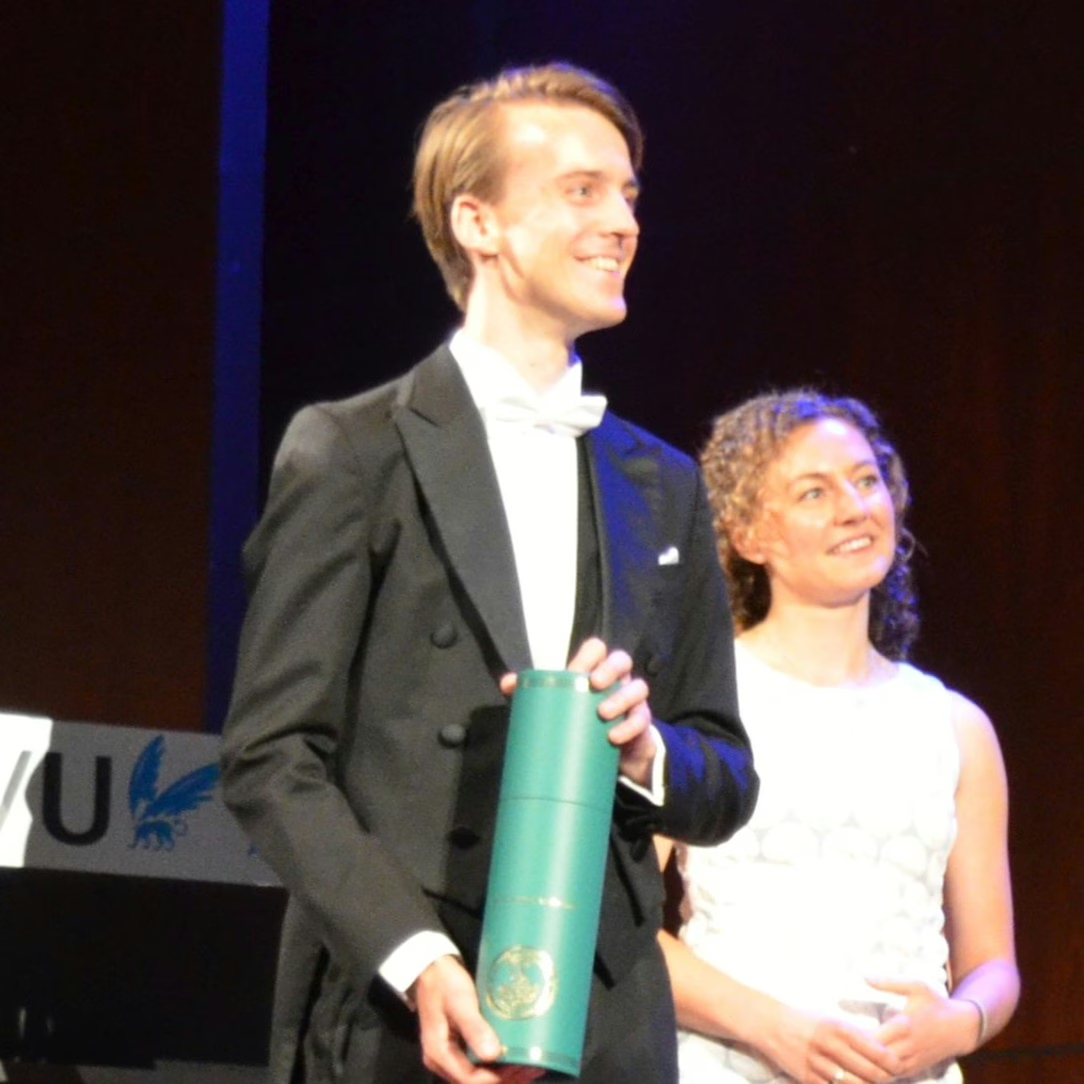
On June 19th, Age Tjalma successfully defended his thesis about e-coli bacteria at the Vrije Universiteit Amsterdam. His most striking finding? How these single-celled organisms can reliably predict the future.
Age’s supervisor, Pieter Rein ten Wolde, explains: “The better bacteria can predict changes in their environment, the greater their chances of survival. But predictions come at a cost, and the most reliable information may require significant resources. Age did a great job showing that – given the available budget in terms of proteins and energy – E. coli makes the best possible prediction.”
Age is thinking about his next steps. Together with two friends, he wants to start a company that steers the operation of heat pumps to make them more sustainable and cost effective. He says: “Heat pumps can be much more efficient when they are used in a smarter way!”
View Age Tjalma’s thesis in the repository
Deba Pal – Harnessing Nanophotonics for High Brightness White Micro-LEDs – July 8th
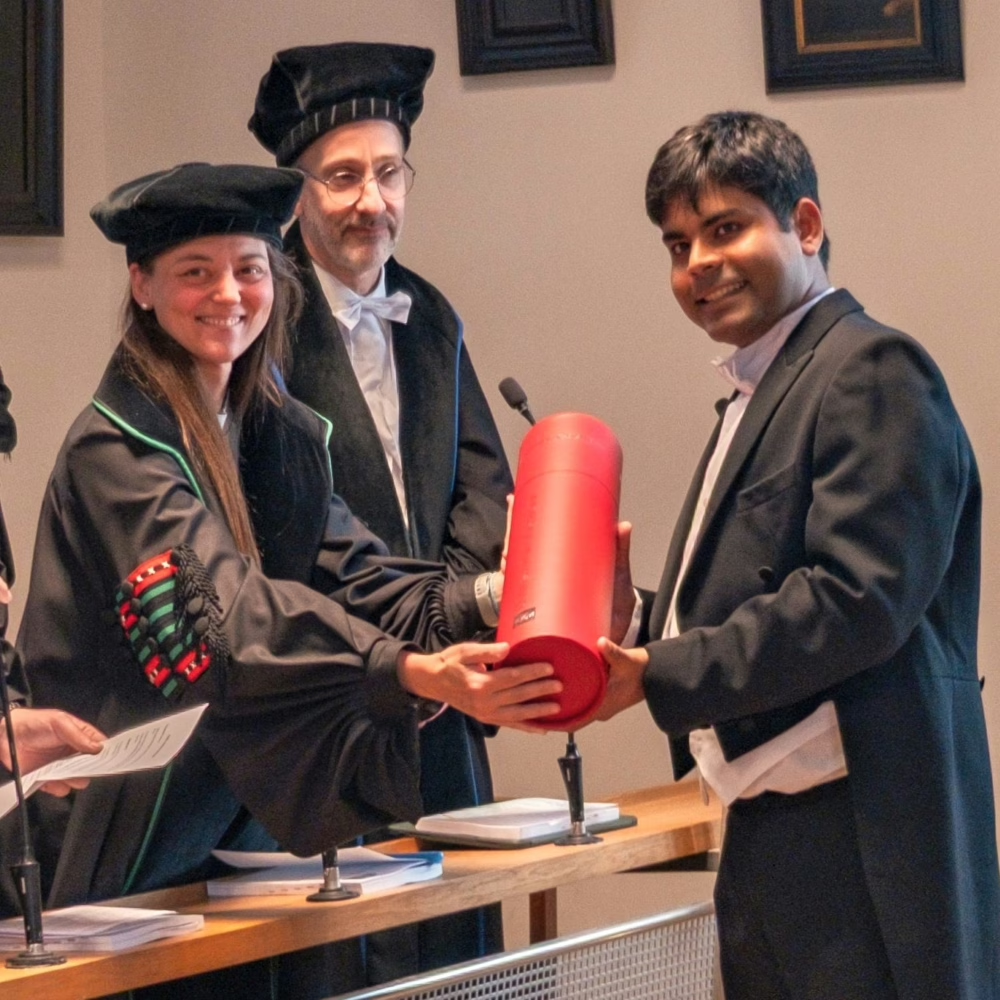
Debapriya (Deba) Pal combined cutting-edge nanophotonics research with industrial collaboration. On July 8th, he successfully defended his thesis at the University of Amsterdam. For four years, Deba remained firmly focused on a single goal: boosting the brightness of white phosphor-converted micro-LEDs for use as pixels in next-generation AR/VR displays – developed in close partnership with industrial partner Lumileds. He says: “This goal kept me on track and helped me avoid getting lost in blue-sky research. At times it was challenging – AMOLF offers so many impressions and opportunities.”
Deba’s next adventure will take him to New York, where he plans to pursue a postdoctoral position with Andrea Alù.