
News
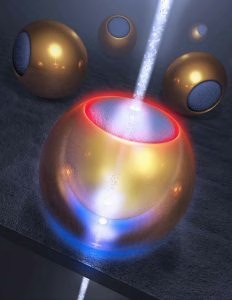
A team of researchers from AMOLF and Stanford University has developed a novel way to make three-dimensional optical images of nanoscale objects. They irradiate the object with a 30 keV electron beam under different angles and collect the cathodoluminescence emitted by the sample. Using a tomographic reconstruction they then determine the three-dimensional light distribution in metallic crescent particles at nanoscale resolution.
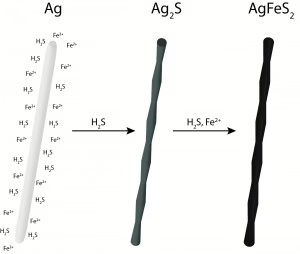
For the first time a team of researchers from FOM Institute AMOLF have synthesized a mineral (AgFeS2) to create semiconducting nanowires. This earth-abundant semiconductor has a direct band gap of 0.88 eV and thus could form the basis for a cheap bottom cell in a multi-junction photovoltaic material. This work was published in the Journal of the American Chemical Society on March 26, 2015.
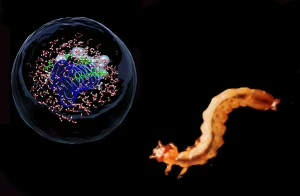
AMOLF postdoc Konrad Meister from the research group of Huib Bakker was honoured with a Marie Sklodowska-Curie Individual Fellowship amounting 165 k€ for his proposal Hydration Dynamics of Antifreeze Proteins.

The Netherlands Organisation for Scientific Research (NWO) has awarded a Vici grant to AMOLF group leader Femius Koenderink. A total of 216 researchers submitted a pre-prososal. Out of 132 elaborated proposals, 36 researchers now receive a Vici grant of up to 1.500.000 euro.
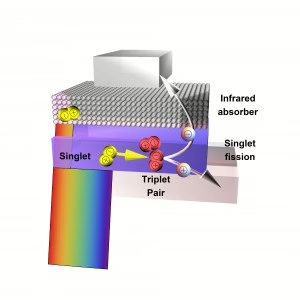
The solar energy research network SOLARDAM has received its first research grant. The 1 M€ grant from the Amsterdam Academic Alliance (AAA) enables collaborative research between AMOLF, UvA, VU, and ECN on the development of novel methods to convert sunlight to electricity and fuel.

AMOLF postdoc Katja Taute (Systems Biology and Biophysics research groups) has won the award for outstanding postdoctoral talk at the BLAST XIII conference (13th International Conference on Bacterial Locomotion and Signal Transduction). The award included a cash prize of USD 500. The conference took place in Arizona, USA from January 19th till January 23rd, 2015.

Last year Hugo Doeleman started at AMOLF as PhD student in the research group Resonant Nanophotonics.
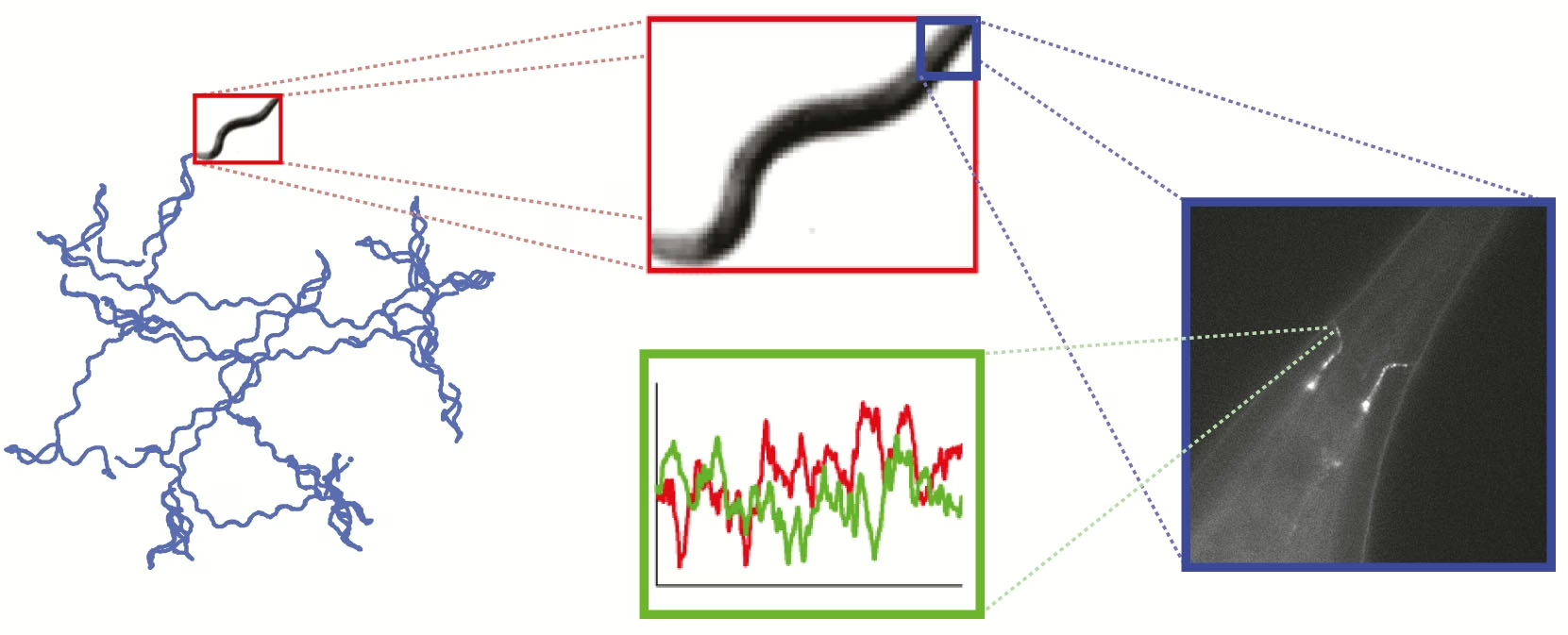
Group leader Tom Shimizu was awarded a so called ‘Vrije FOM Programma’ on The signal is the noise: seeking physical origins of fluctuation in organism-scale behaviour.

As of November 1st, Bruno Ehrler has been appointed as AMOLF group leader.
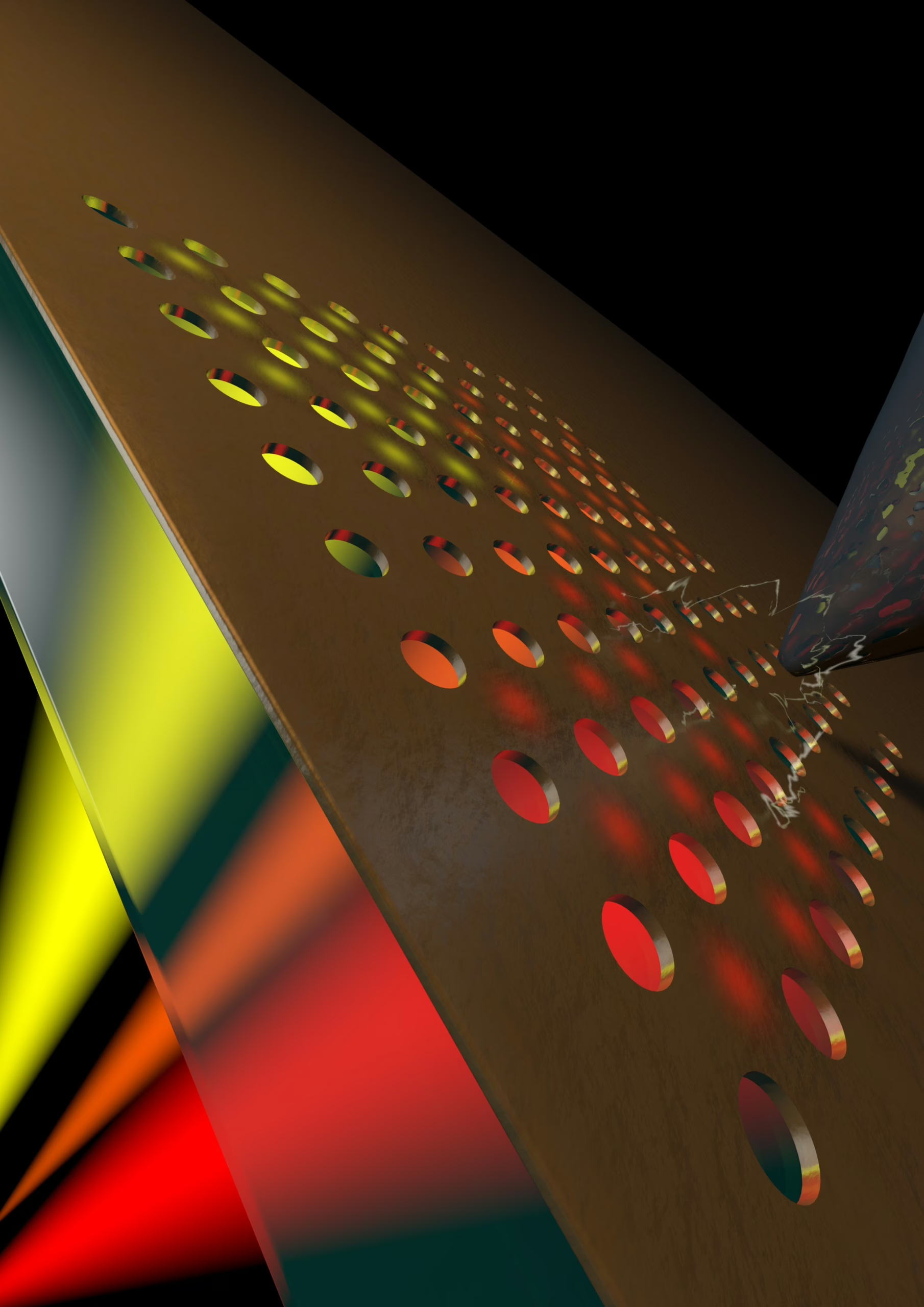
Researchers of the FOM Institute AMOLF and the California Institute of Technology have discovered a new method to generate electrical potentials using light. Using precisely sculpted metal nanocircuits they found that light can be effectively captured and converted to an electrical potential as high as 100 millivolt. The research was published on 30 October 2014 in the journal Science. The AMOLF-Caltech team, who have been collaborators for many years, give the newly discovered effect the name “plasmo-electric effect”. Albert Polman, the leader of the AMOLF-part of the team: “This is an entirely new way to convert light into electricity. We have now shown that we can create a voltage; the next step is to see if we can also collect current and generate electrical power.”
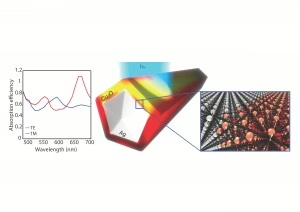
Researchers at the FOM Institute AMOLF have taken the first steps towards making a high performance solar cell by coating metal nanowire electrodes with an ultrathin shell of the absorbing material copper oxide. Such “solar highways” may provide an ideal geometry for future high efficiency solar cells. This work was published in Nano Letters on September 18, 2014
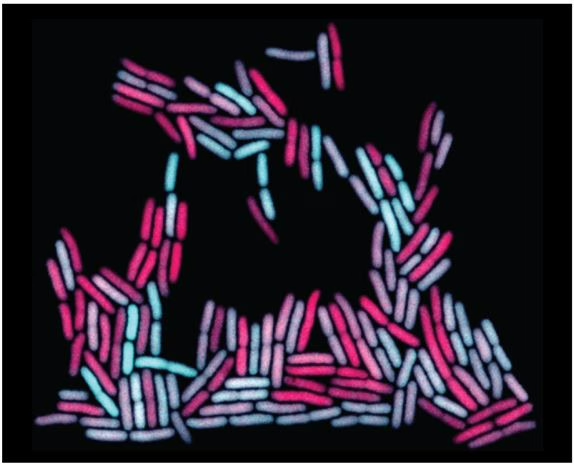
Researchers from FOM institute AMOLF have discovered that metabolism, the process that converts molecules in a cell, proceeds irregularly. As metabolism is the motor that drives all biological activity in cells this instability may play a role in diseases such as cancer. The researchers will publish their study on 3 September 2014 in Nature.