
News
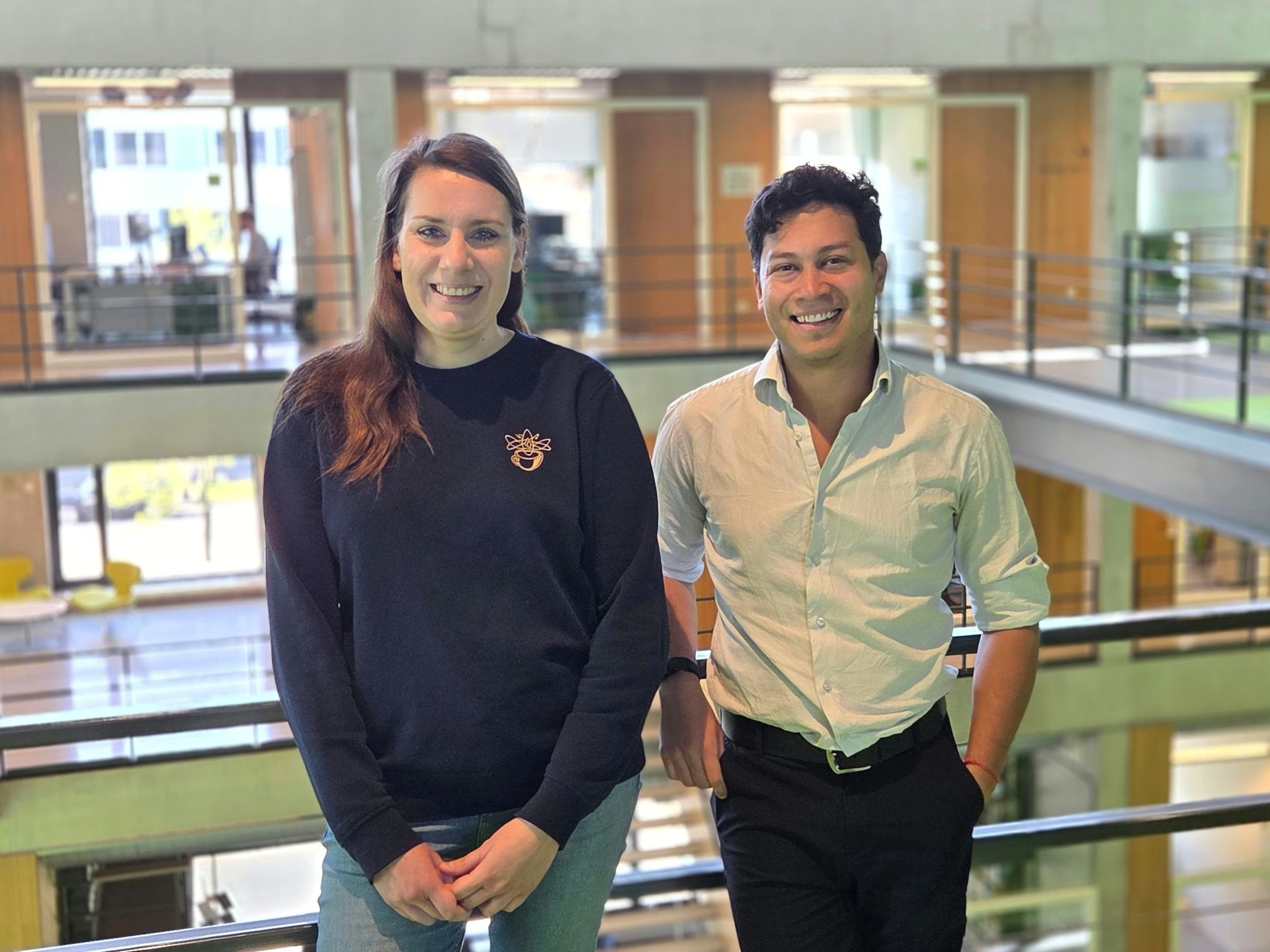
AMOLF group leader Wiebke Albrecht has been awarded an NWO XS grant for the project “Mapping nanoscale heat generation and dissipation around plasmonic nanoparticles.”
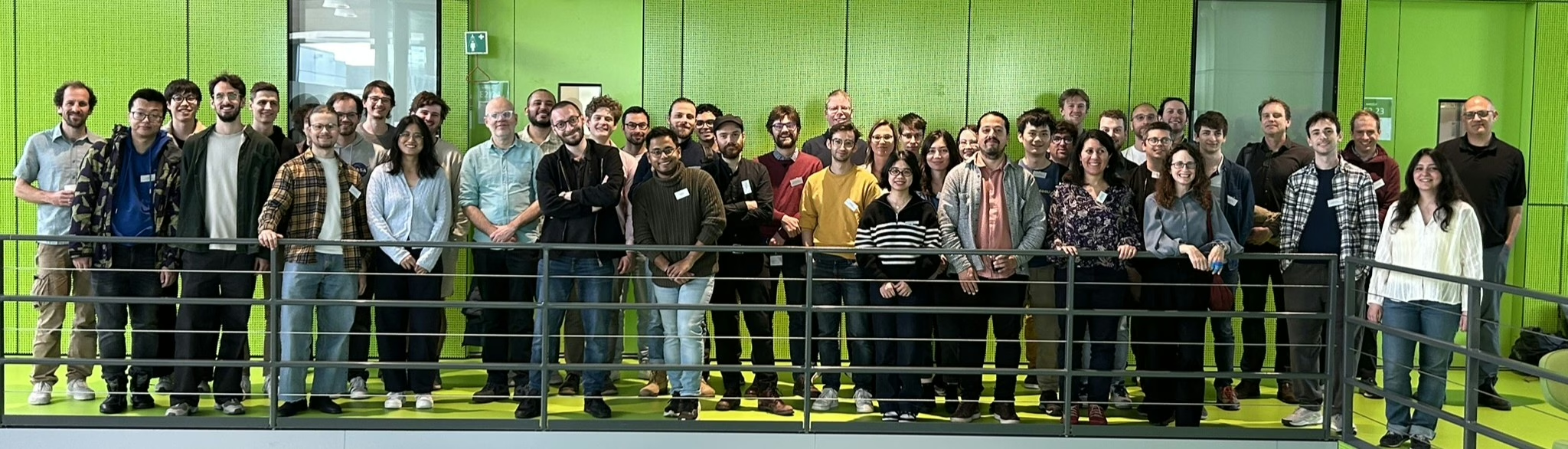
On April 16 and 17, AMOLF organized the first ‘Multistable Active Matter’ symposium. The initiative for this new symposium came from Martin van Hecke (Mechanical Metamaterials), with the aim of starting a discussion about a new direction in the field: the design and understanding of multistable active systems.
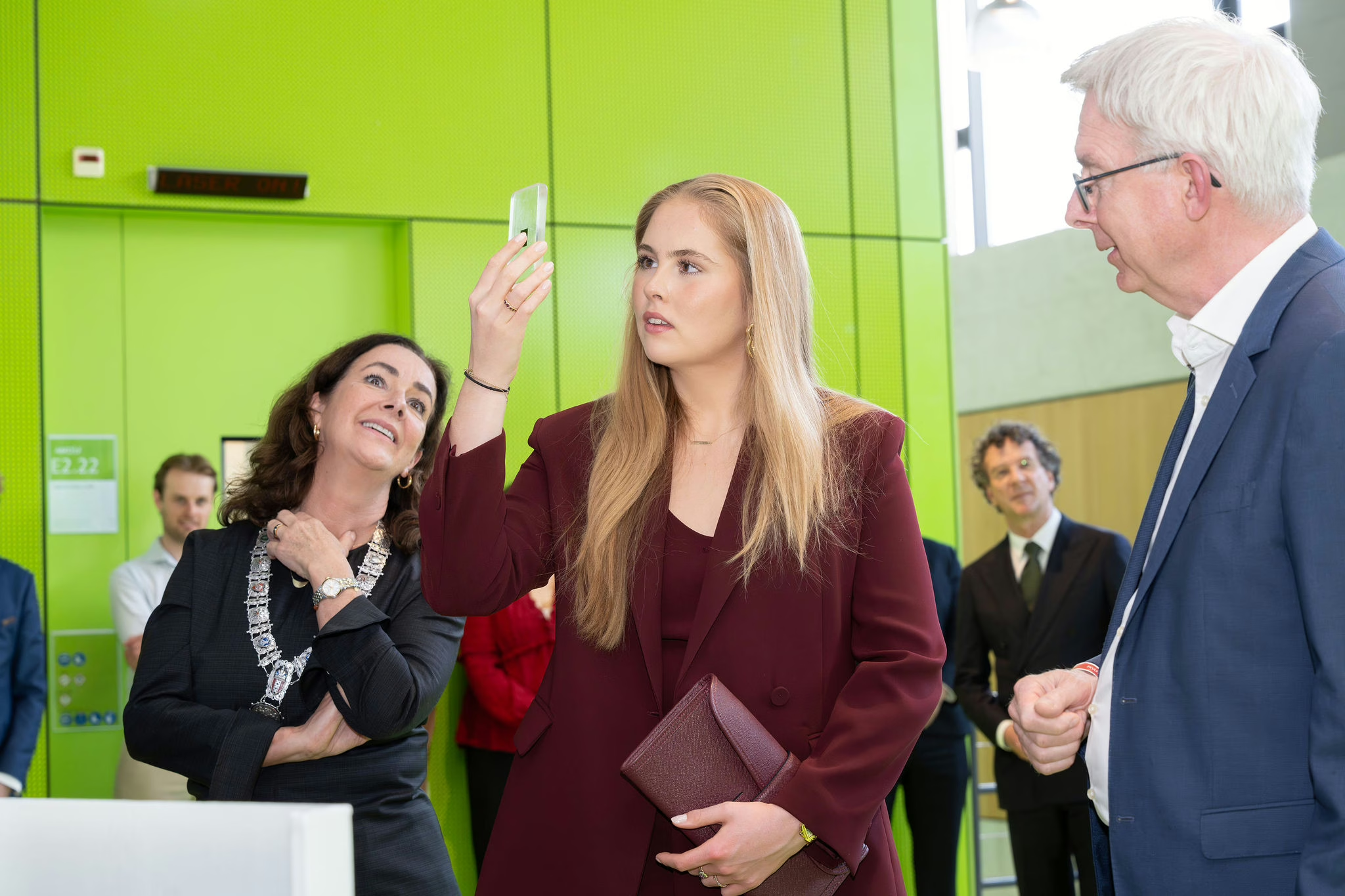
On Thursday, 16 April, the Princess of Orange visited Amsterdam Science Park, including AMOLF. Princess Amalia, who has been studying at the University of Amsterdam (UvA), was in Amsterdam for an introductory visit at the invitation of Mayor Femke Halsema. The theme was Amsterdam Tech City, with a special focus on AI and sustainable solar energy. At Amsterdam Science Park, researchers, students and entrepreneurs work together on solutions to tomorrow’s societal challenges.
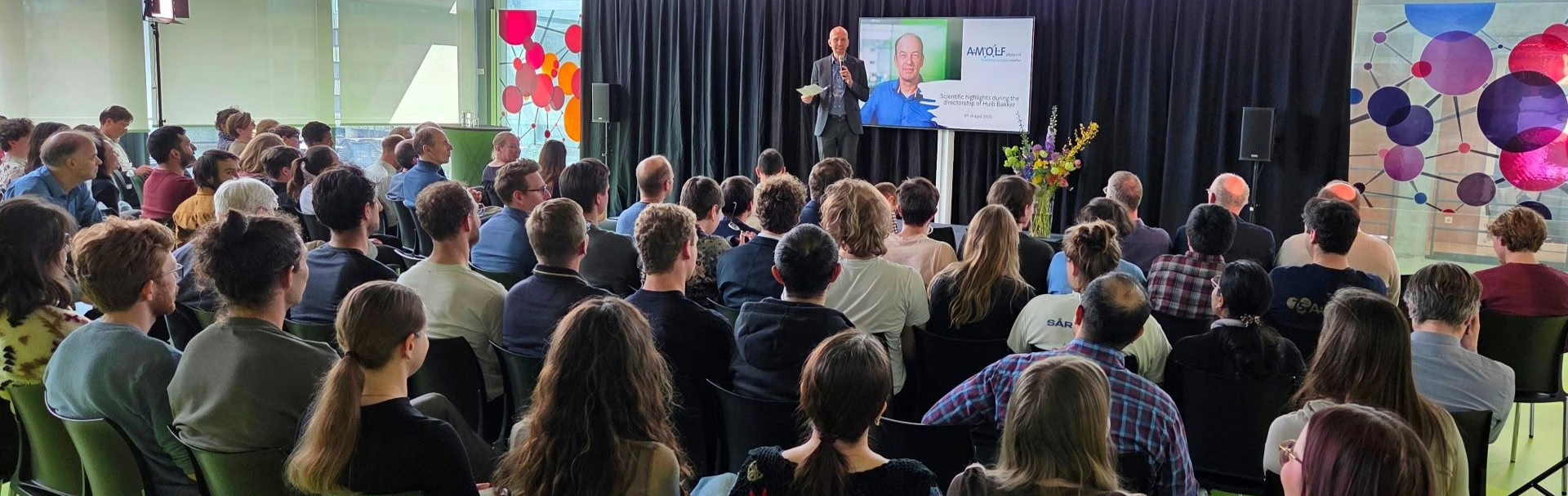
After serving as director of AMOLF for 10 years, Huib Bakker stepped down on December 31. Last week, AMOLF celebrated his directorship with a special symposium.
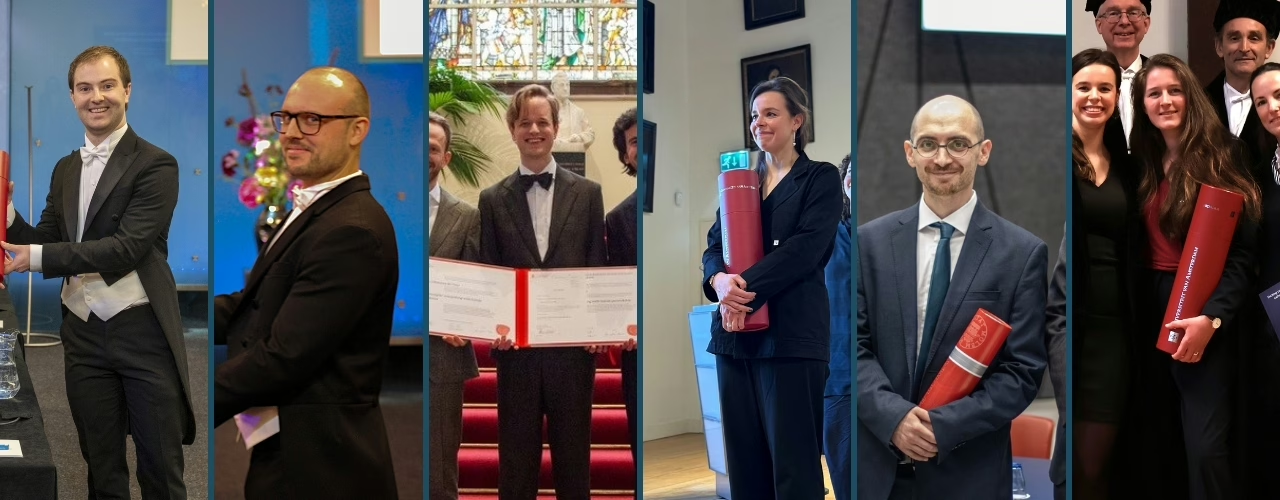
Left to right: Kasper Spoelstra, Luca Gross, Jeroen de Boer, Nika van Nielen, Sergio Picella, Evelijn Akerboom.Kasper Spoelstra (cum laude) Title: Shedding light on dynamic…
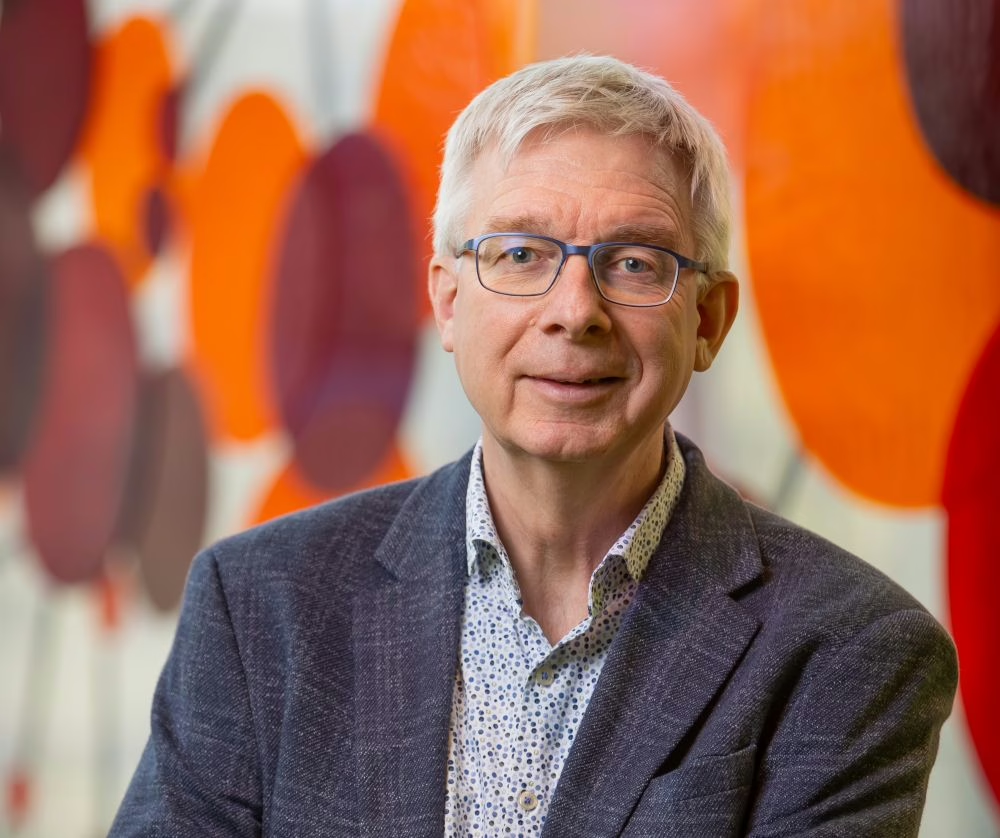
The Royal Netherlands Academy of Arts and Sciences (KNAW) has elected Albert Polman, group leader at AMOLF and professor at the University of Amsterdam, as member of the board as of September 1. In the board, Albert will represent the Domain Natural Sciences and Technology as the successor of Ton van der Steen, whose term ends on that date.
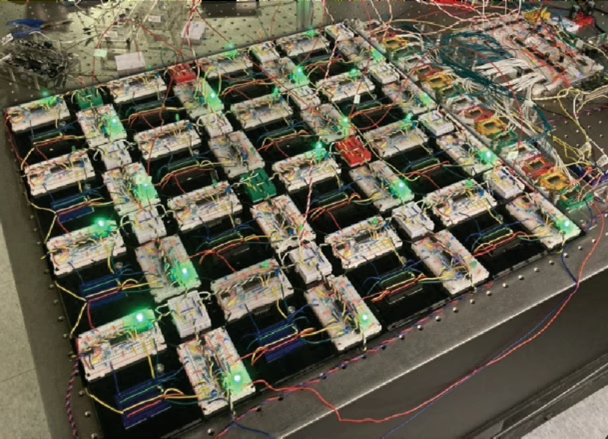
AMOLF group leader Nachi Stern has received an NWO ENW-M1 grant to support his research project on how physical systems can learn. His research could help develop new types of energy efficient hardware for artificial intelligence. The Dutch Research Council (NWO) uses the ENW-M1 grant to fund high quality fundamental research driven by curiosity and important scientific questions.
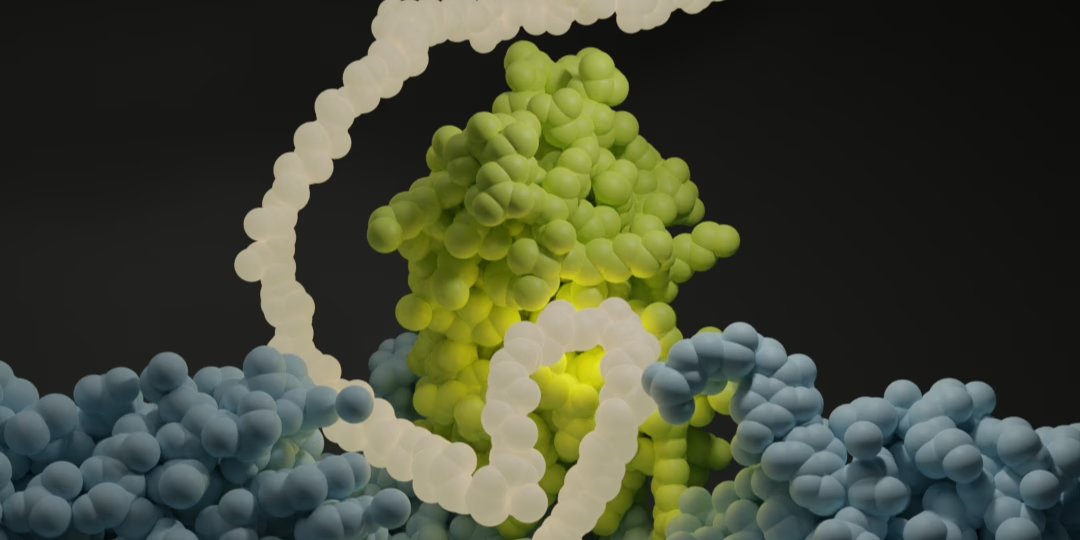
Four research groups joined forces to reveal the very first moments of a protein’s life in human cells. They found that as soon as an amino acid chain exits from the ribosome, a protein called NAC binds and folds it into the correct structure. This finding fundamentally rewrites our textbook knowledge on how human cells suppress diseases caused by protein folding errors. The researchers published their findings in the journal Molecular Cell on March 23.
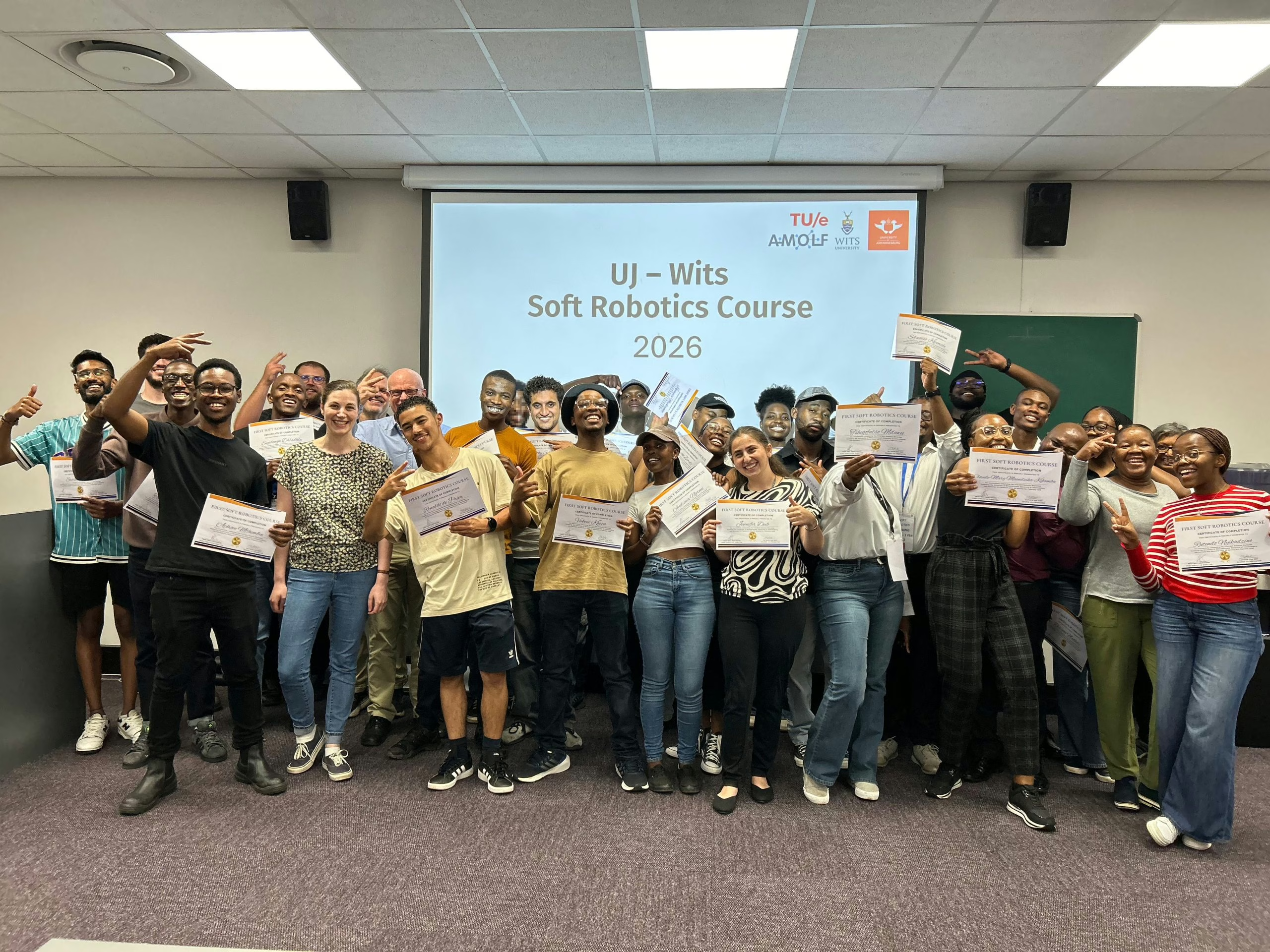
A unique opportunity presented itself to researchers in AMOLF’s Soft Robotic Matter group. Two university engineering faculties and a research unit in South Africa asked them to organize a Soft Robotics summer school. From 26 January to 2 February, PhD student Katrien van Riet and her South African students progressed from an introduction to the topic to a final prototype presentation.
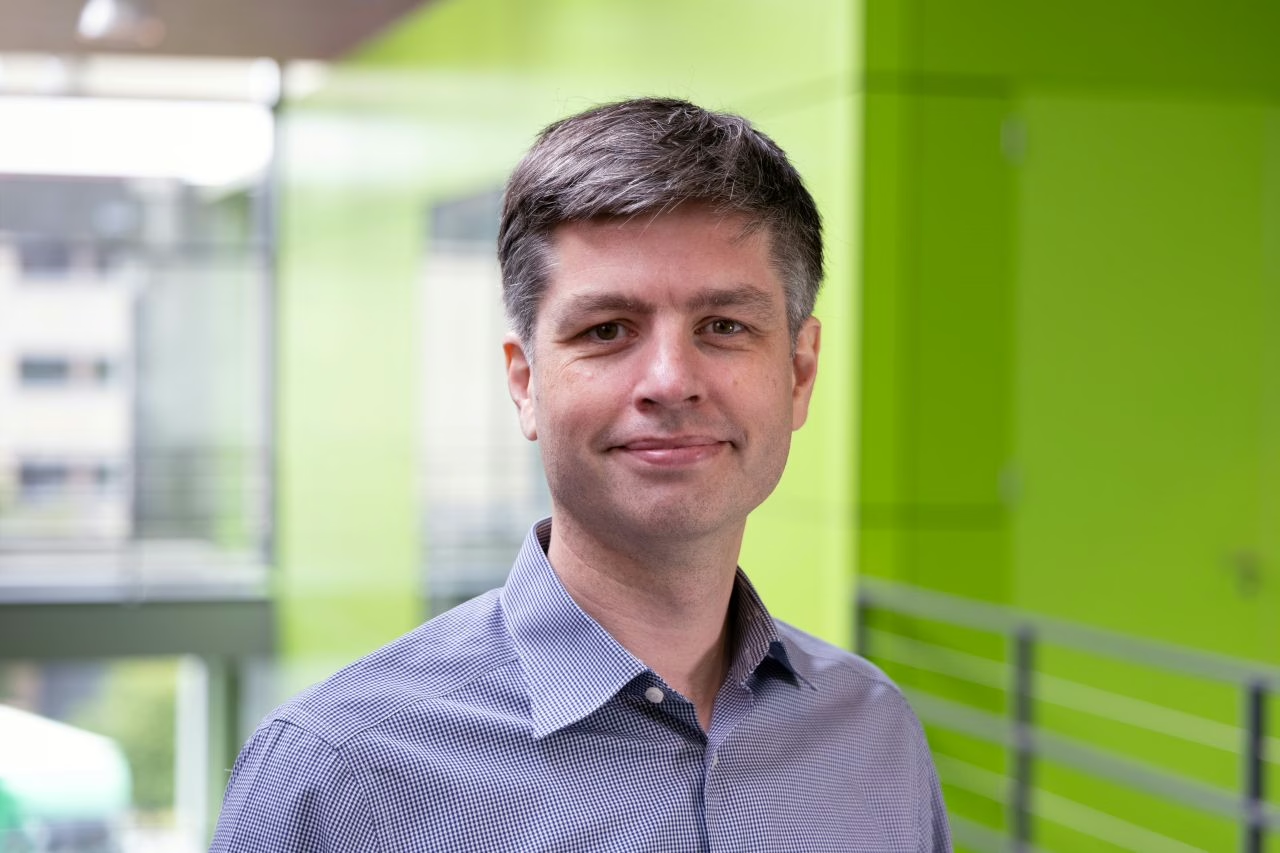
On February 26th, NWO announced that AMOLF group leader Ewold Verhagen receives a Vici grant to carry out the project Programmable nonlinear optomechanical metamaterials. The budget available for this research project is 1.5 M€. NWO considers the Vici grant as an incentive for adventurous, talented, and groundbreaking researchers.
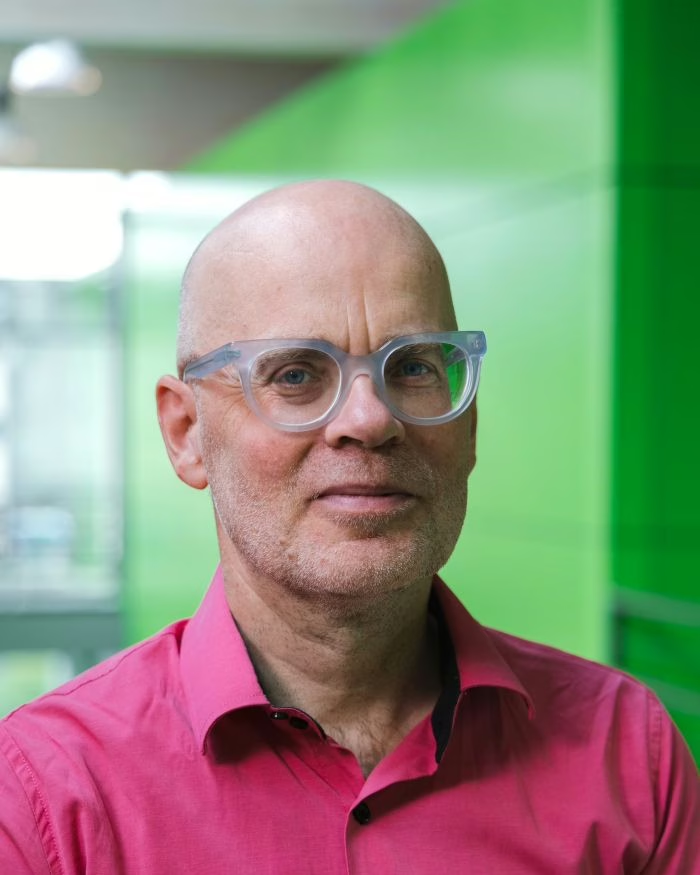
Physicists from AMOLF and Leiden University created the first micro-scale metamaterials that can take on specific shapes without external control. This breakthrough paves the way for smart, self-adapting materials. The research team presented the groundbreaking research into micro-scale metamaterials in Nature on February 25.
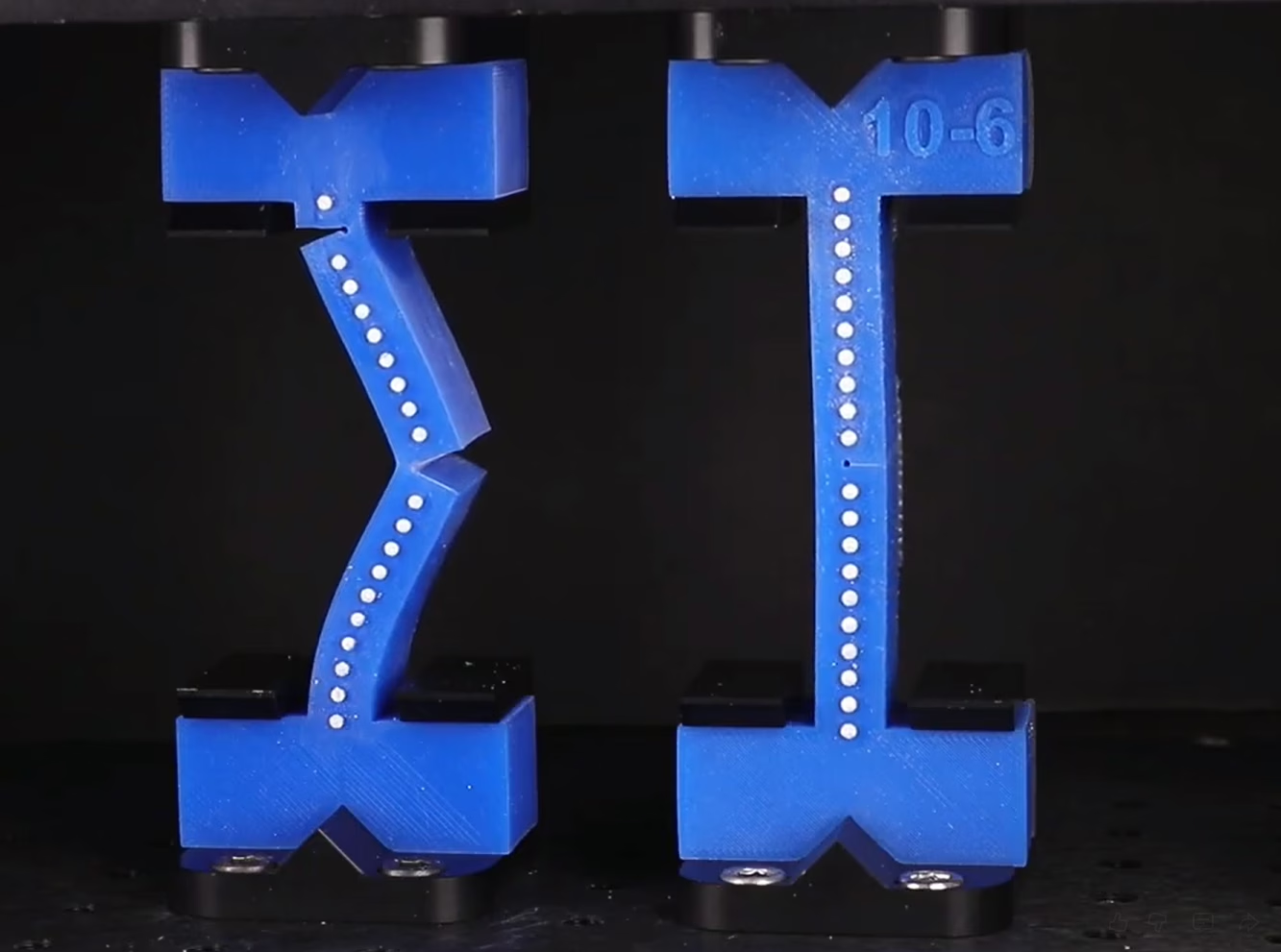
When a slender object, like a card, column or beam, is compressed, it buckles and curves in one of two directions – as described by the scientist Leonhard Euler in 1744. This behavior prompted researchers in the Mechanical Metamaterials group at AMOLF to ask themselves: can we change this? Together with collaborators from Leiden University, they show how partial cuts in beams can fundamentally alter their buckling (deformation) behavior. The researchers published their findings in the journal Science Advances on February 13, 2026.