
News
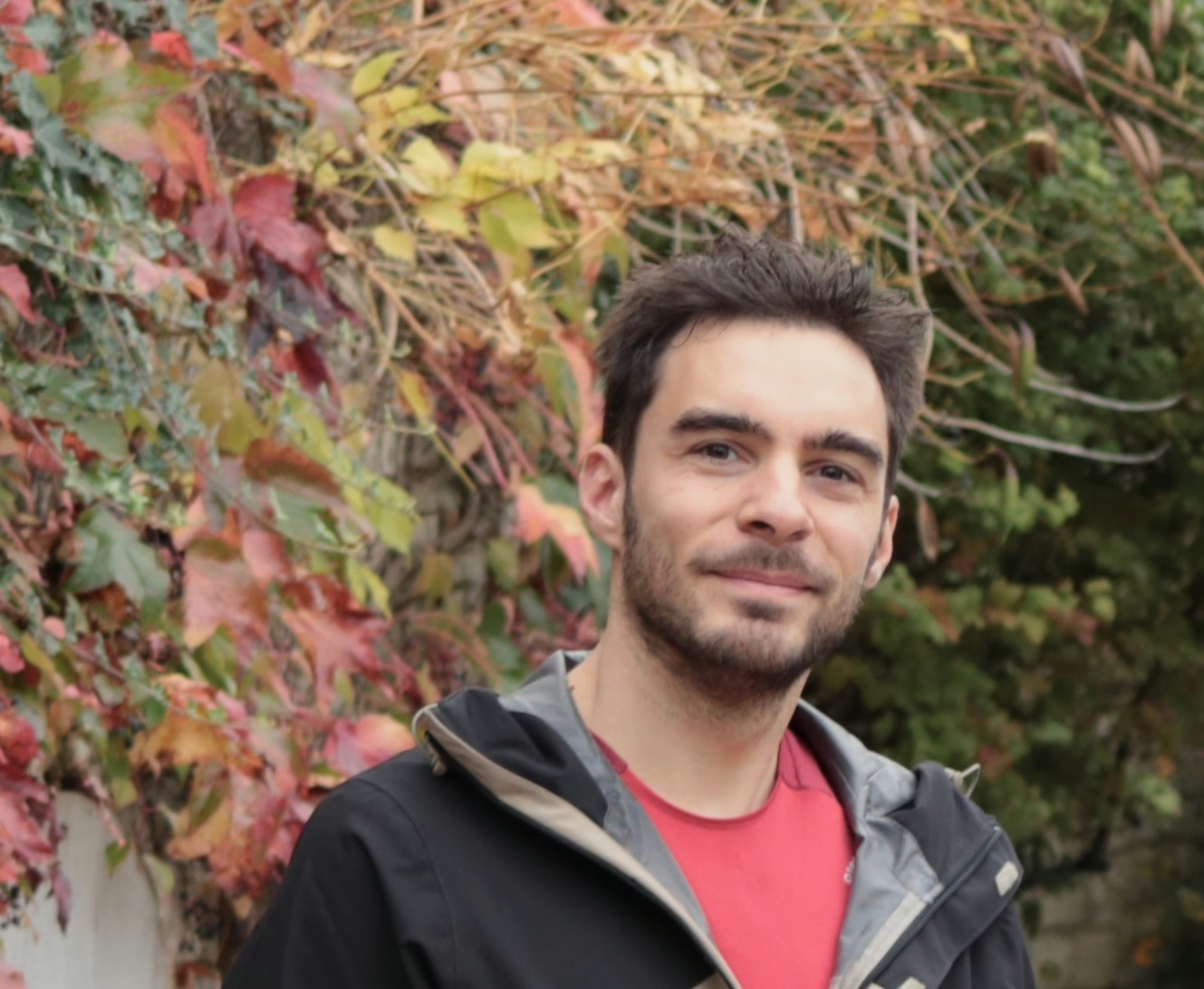
In the last year, AMOLF postdoc Achille Joliot uncovered many fascinating details about mycorrhizal fungi. Now, he is able to take his research further as recipient of the Marie Sklodowska-Curie Individual Fellowship. Using the grant, Achille is eager to answer an ecologically important question: how are these fungi able to make sophisticated decisions without a central nervous system. This work will be carried out in the Physics of Behavior group led by Tom Shimizu.
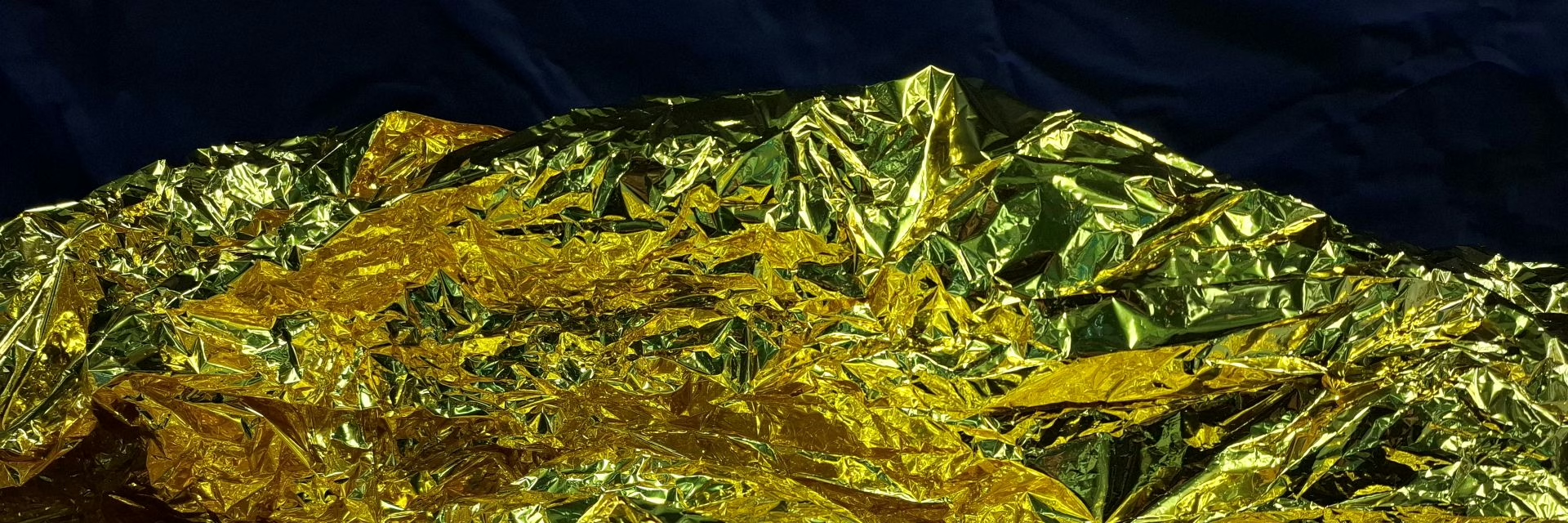
From the crinkle of a candy wrapper to the squish of a metal kitchen scrubber, disordered materials that lack a regular structure share a surprising secret. Despite their differences, they age in a similar way. This is important knowledge to enable production of more durable products, and it helps to explain why some models – like large AI models – sometimes get stuck. Together with international collaborators, researchers from the Mechanical Metamaterials group present their findings in the journal PNAS on February 18.
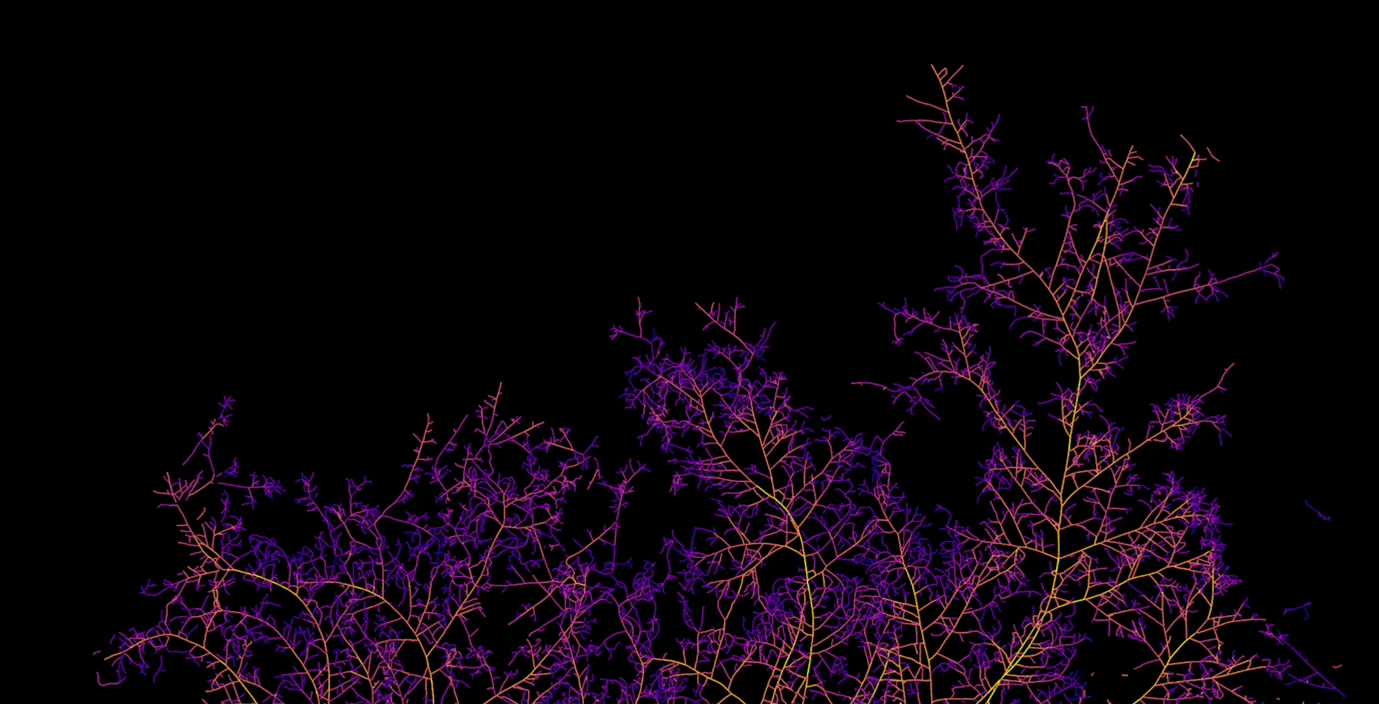
Most plants on earth rely on symbiotic nutrient exchange with fungal partners to boost their growth, but what are the exact terms of this trade? AMOLF researchers, together with collaborators from Vrije Universiteit Amsterdam and Ecole Normale Superieur de Lyon, discovered that the ‘exchange rate’ for carbon (from plants) and phosphorus (from fungi) remains remarkably constant over time, but depends on the type of plant involved in the exchange. The findings are published in the Proceedings of the National Academy of Sciences USA (PNAS) on February 6th.
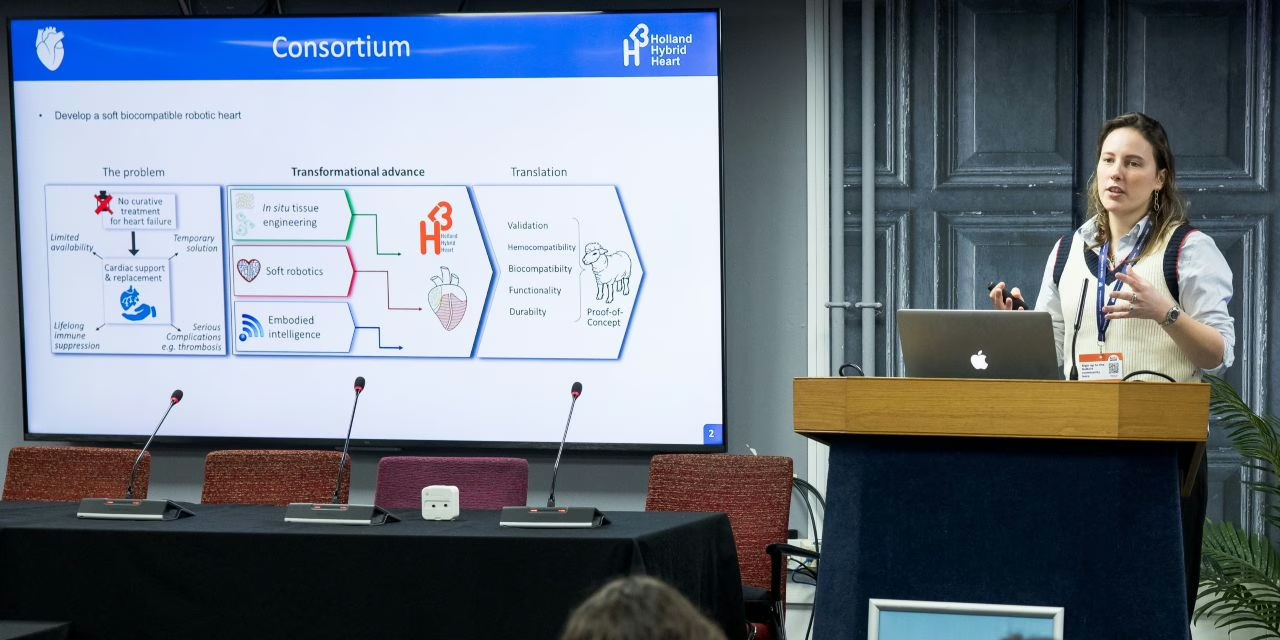
Nienke Reitsma not only has great scientific ideas; she also presents them very well! At the Soft Robotics for Healthcare Network (SoRoH) conference, Nienke received the ‘Best Oral Presentation Prize’ for a talk highlighting her contribution to the Holland Hybrid Heart project.

The sensory proteins that control the motion of bacteria constantly fluctuate. AMOLF researchers, together with international collaborators from ETH Zurich and University of Utah, found out that these proteins can jointly switch on and off at the same time. The researchers discovered that this protein network operates at the boundary between order and disorder. The findings are published in Nature Physics on January 29th.

The European Research Council (ERC) announced that AMOLF group leaders Wim Noorduin and Marc Serra Garcia have received an ERC Proof of Concept grant. Together with collaborators they will enable applications that address important societal challenges: the need for single-handed molecules for drug development and a simpler way to monitor damage in wind turbine blades.
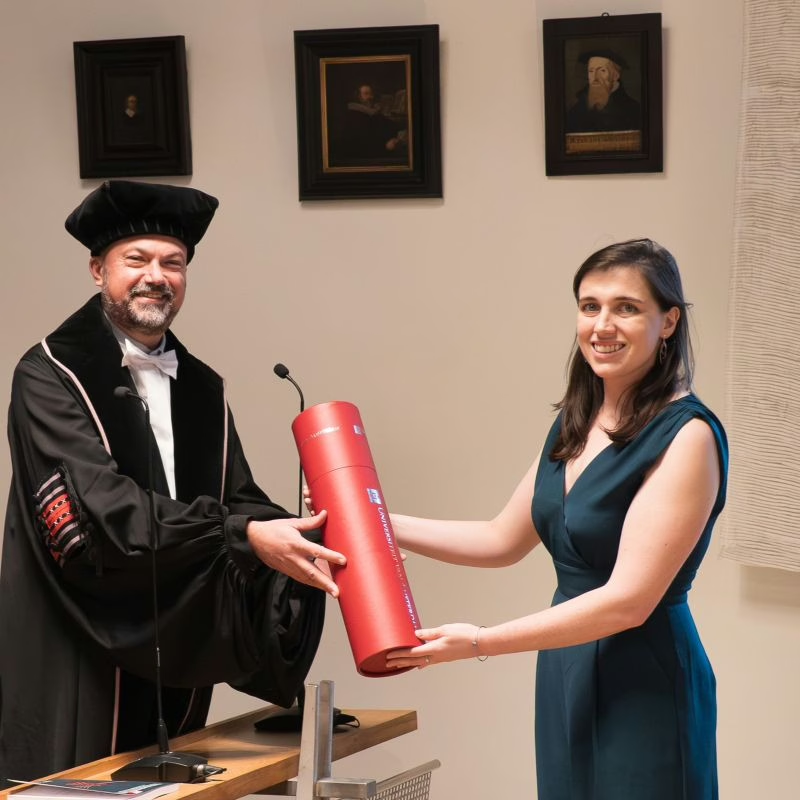
Giel Keijsers Title: Strong light-matter interactions in coherently driven open-access optical cavities Date: November 4 [caption id="" align="alignright" width="290"] Giel Keijsers after defending his thesis[/caption] How can you influence the…
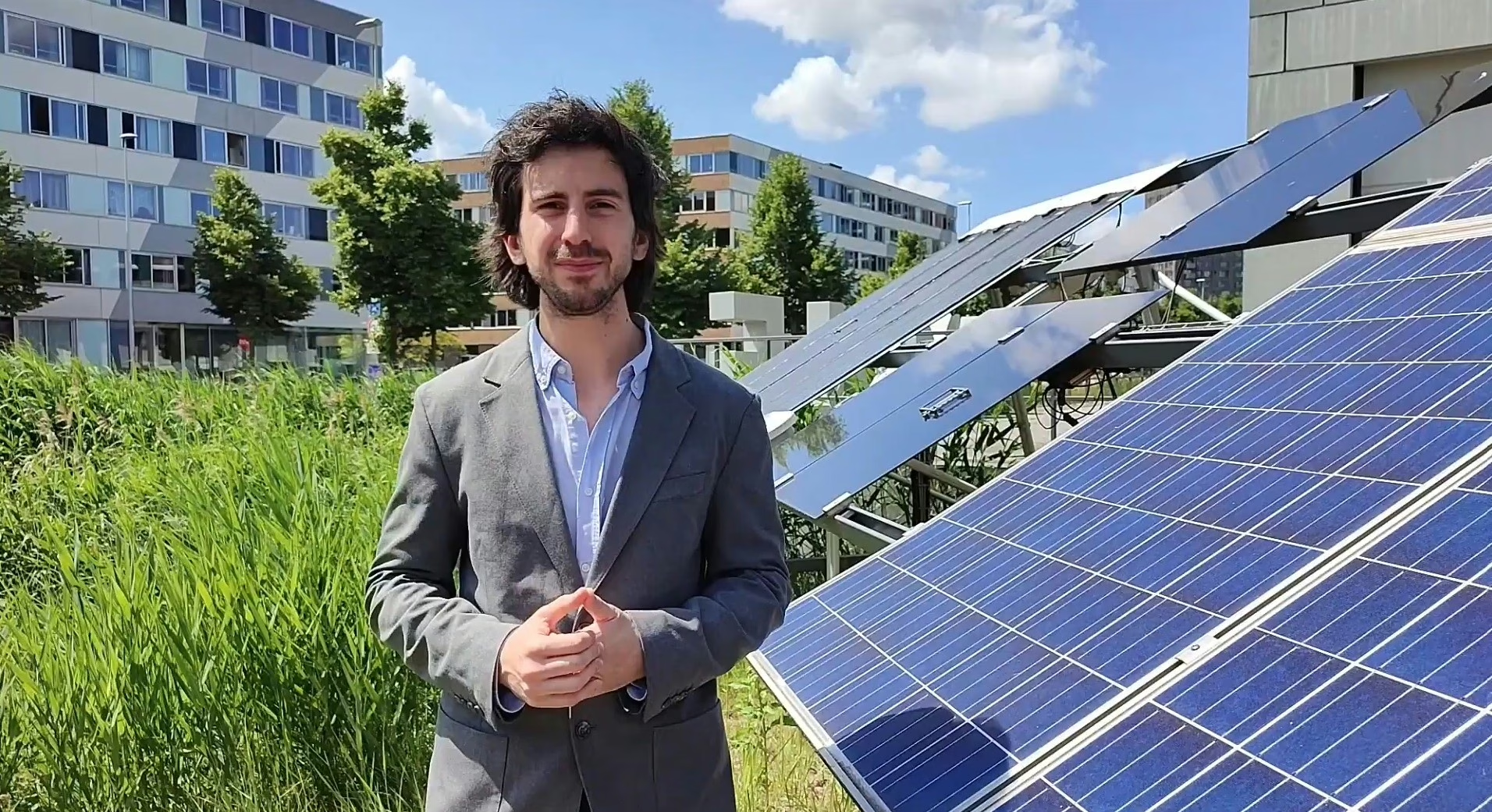
After filing for a patent together with colleagues, Agustin Alvarez (Hybrid Solar Cells) is ready for the next step. Recently, he received an NWO Faculty of Impact Award that helps him to take an important next step towards achieving societal impact with his invention.
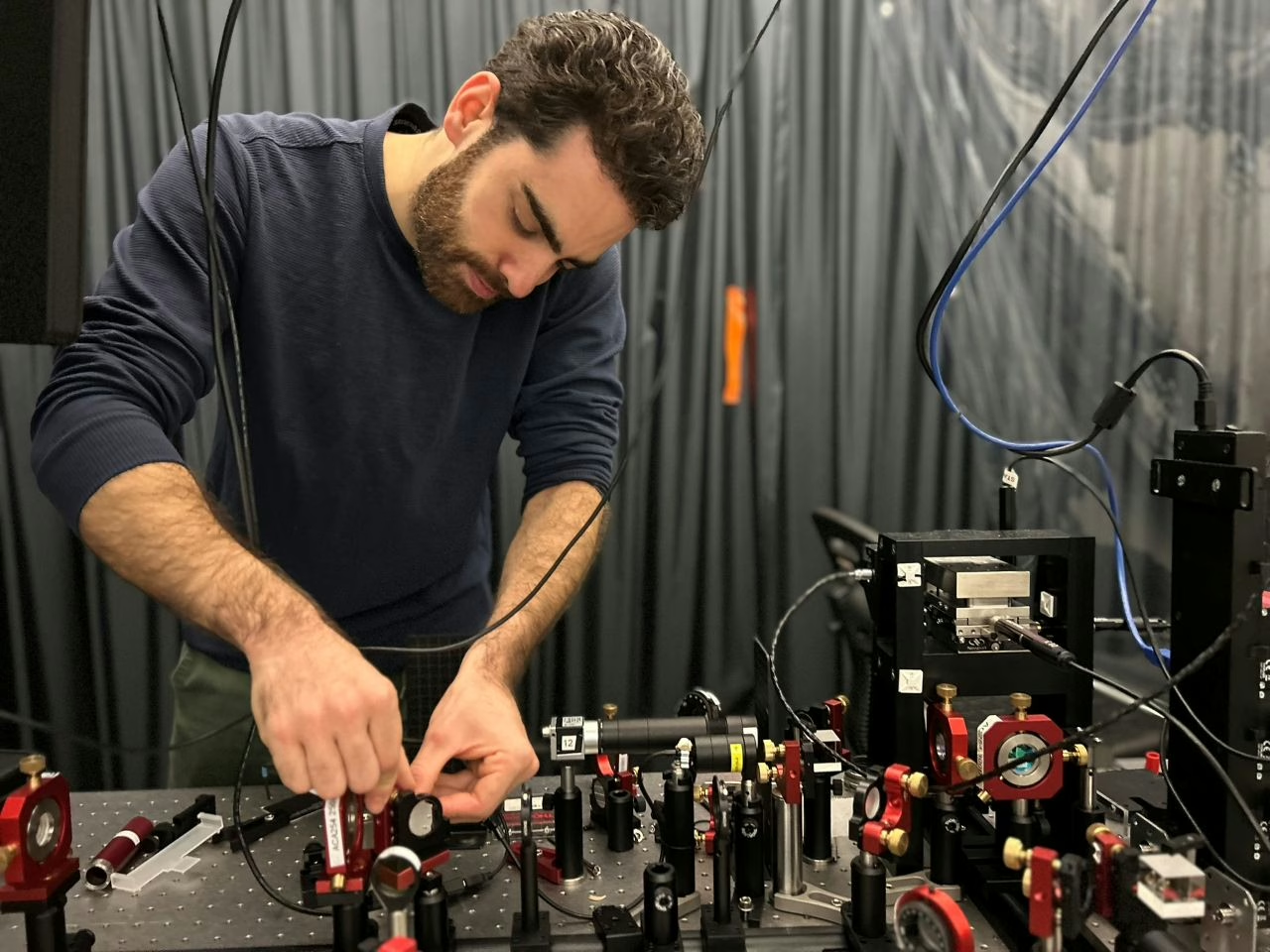
The research teams of Femius Koenderink and Lyuba Amitonova (ARCNL) investigated new optical detection strategies to efficiently measure perturbations at the nanometer scale. For their experiments they used metasurfaces, which are artificial surfaces configured with carefully shaped nanoparticles that interact with light. Inspiration for the project came from a collaboration of AMOLF, ARCNL and industry partner ASML, focused on finding new ways to monitor potential errors that might arise during computer chip fabrication. The researchers published their findings in the journal Nature Communications on December 10.
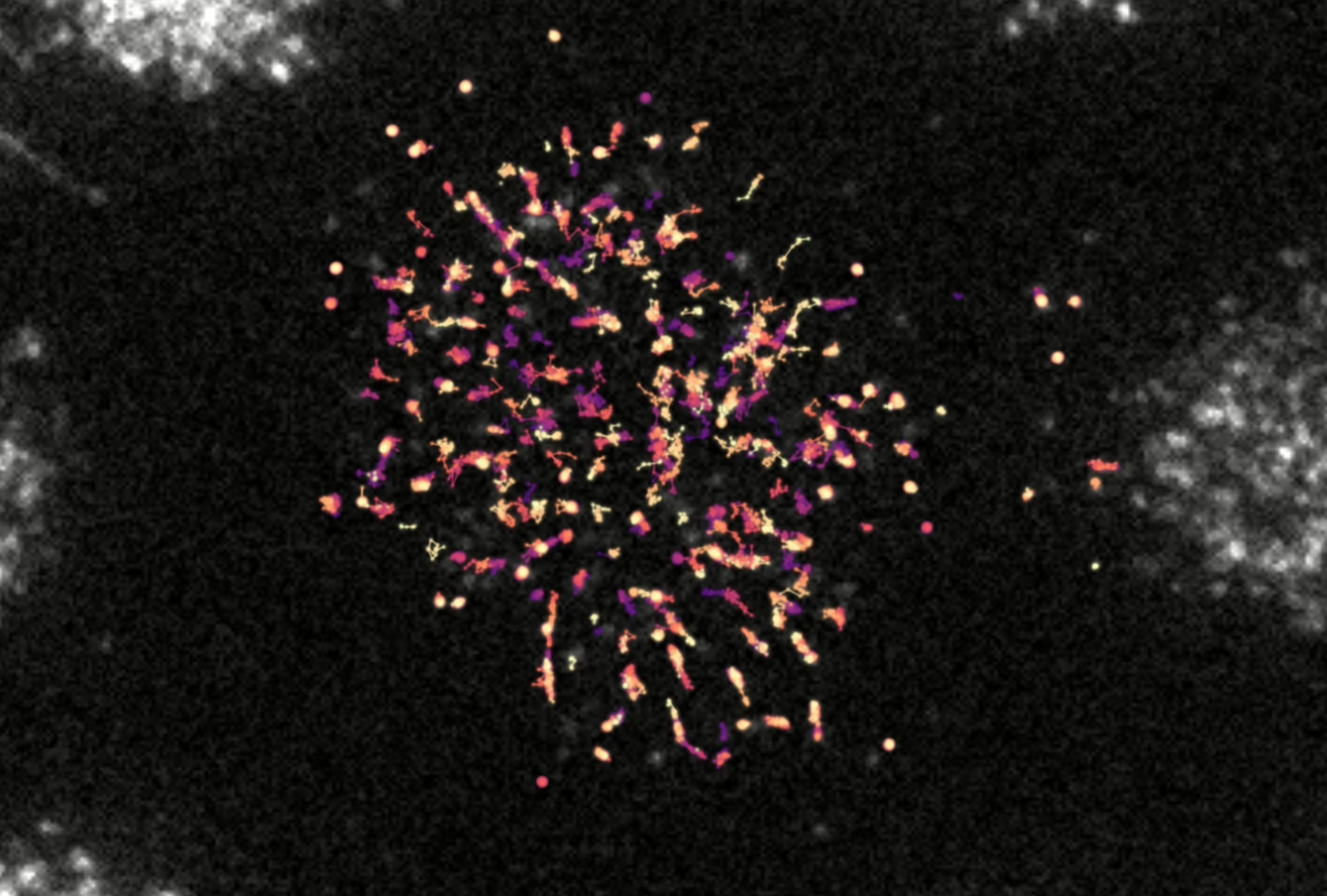
Immune cells can regulate their own activity through a previously unknown molecular interaction on their surface, according to new research published in Science Signaling on December 9, 2025. Researchers from the Physics of Cellular Interactions group at AMOLF, together with collaborators, discovered that two proteins, MARCO and LAIR-1, can interact on the same immune cell to control inhibitory signaling. This main finding reveals a new way in which immune cells fine tune their behavior and helps explain how immune responses can be either restrained or released when needed.
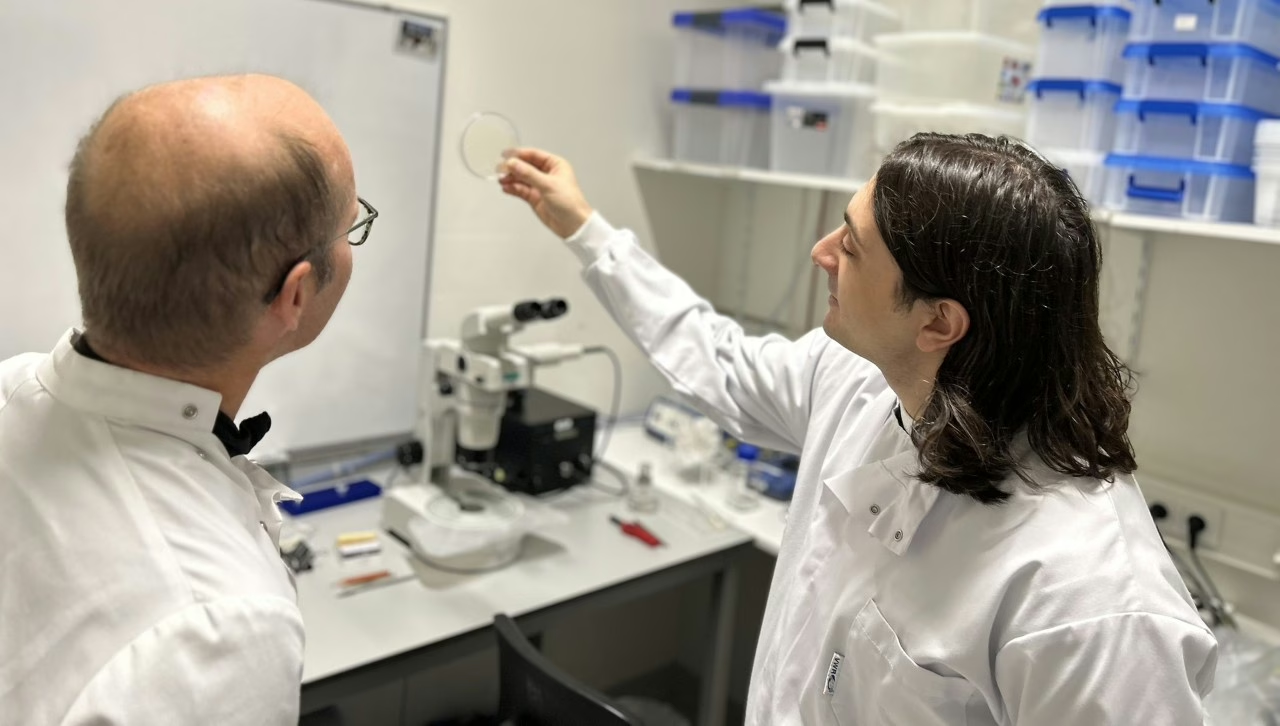
AMOLF researchers discovered a mysterious interplay of insulin signals in the worm C. elegans. The insulin-driven protein DAF-16 does not only move in and out of the cell nucleus in a complex rhythm, it does so at exactly the same moment in all cells of the body. Because of the many similarities between C. elegans and humans, the research may contribute to a better understanding of diseases such as diabetes, cancer and of ageing. The researchers published their findings in the journal Nature Communications on December 11.
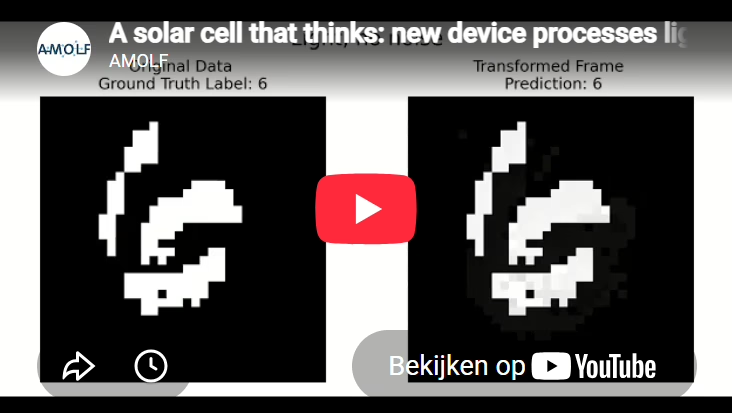
Imagine a camera that cannot only see light but also understand what it sees without a computer, and even without being plugged in. AMOLF PhD student Jeroen de Boer from the Hybrid Solar Cells group has developed the first step towards such a device: a tiny light sensor that also processes information, inspired by how the human brain works. His findings were published in the journal Device on December 17.