
News

As of September 1, Martin van Hecke starts a new research group on Mechanical Metamaterials.
These forms of matter derive their transnatural functionalities from their structure rather than composition — examples range from elastic media with carefully designed cavities to Origami.
Main research themes are to explore programmable, active and intelligent metamaterials, as well as to discover their design rules (“the inverse problem”).
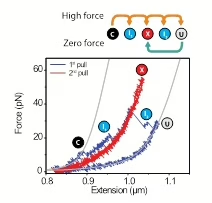
Researchers from FOM institute AMOLF have directly observed the misfolding of a protein chain. Protein chains are thought to fold into the wrong structure sometimes, and thus cause neurodegenerative diseases. It has now become possible to follow this crucial process directly, by mechanically manipulating single proteins. The paper reporting on this work is published online on 14 August in Angewandte Chemie.
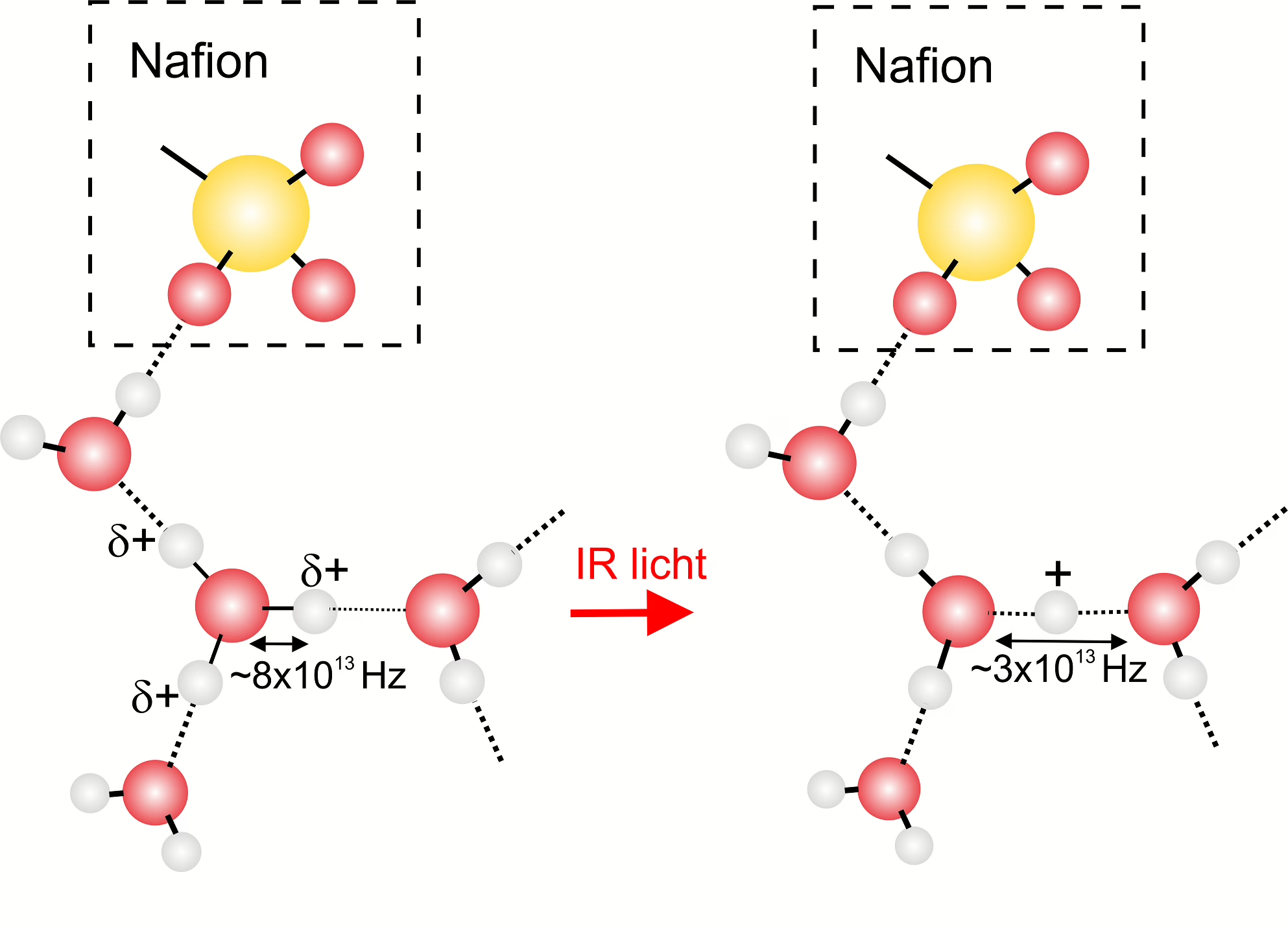
Researchers from FOM Institute AMOLF have discovered that infrared light strongly stimulates the transport of protons (H+ ions) in hydrogen fuel cells. Hydrogen fuel cells are an alternative, clean source of energy: hydrogen and oxygen are directly converted into electricity with clean water as the sole waste product. A good proton conduction increases the efficiency and yield of these cells. The researchers published their results online on June 26, 2014 in Physical Review Letters.
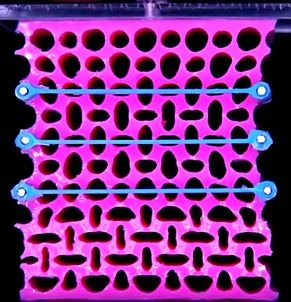
Arrival of Martin van Hecke initiates a new line of research. FOM Institute AMOLF is launching a new line of research in designer matter, aimed at the design of new forms of functional matter. Professor Martin van Hecke (Leiden University) will lead a new research group at AMOLF, with effect from 1 September 2014, in the area of mechanical metamaterials. Together with Van Hecke, AMOLF will further expand the broad line of research into designer matter over the next few years. Van Hecke will continue to spend half of his time at Leiden University.
AMOLF group leader Albert Polman receives the 2014 Innovation in Materials Characterization Award of the Materials Research Society (MRS) “for the development, application and commercialization of Angle-Resolved Cathodoluminescence Imaging Spectroscopy (ARCIS) as a new tool for optical imaging at the nanoscale, with applications in nanophotonics and materials science in general.”
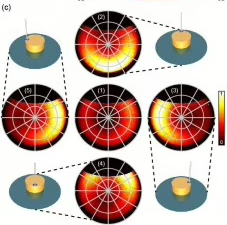
Researchers at FOM Institute AMOLF have discovered a novel method to create directional beams of light on the nanoscale based on a simple single-element nanoantenna design. The insights from this work could be used in the future to design very small light directors for nanoscale sensing applications in biology and photonics. The research will be published today in the journal Nature Communications

AMOLF group leader Albert Polman has been honored with the prestigious Physica prize of the Netherlands Physical Society (NNV). The NNV grants the prize to Albert Polman for his outstanding contributions, both in the Netherlands and internationally, of the physics of light
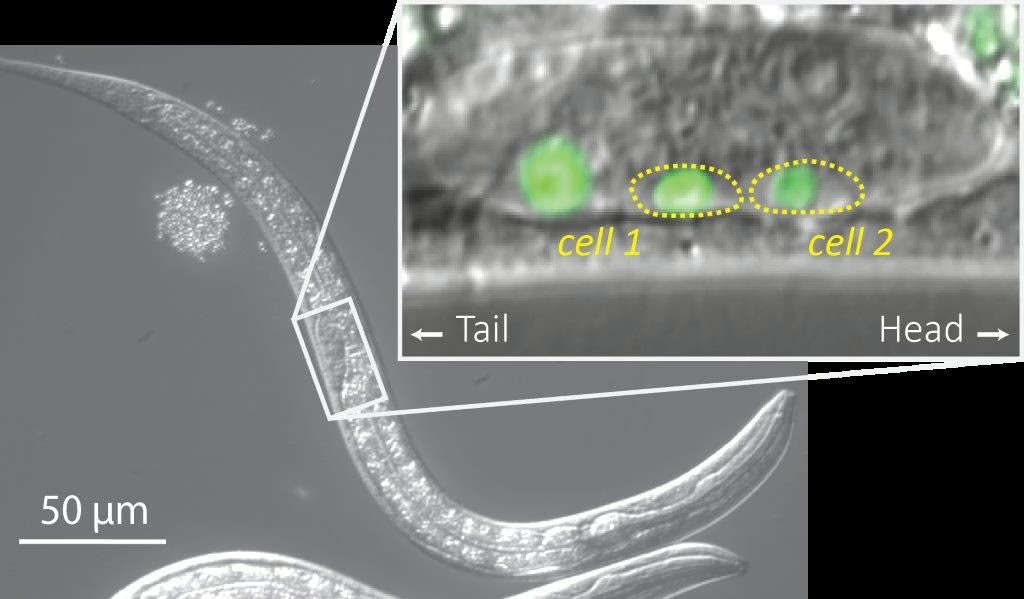
AMOLF group leader Jeroen van Zon has received a prestigious ERC Starting Grant.

As of March 1st, Jeroen van Zon has been appointed group leader within the Systems Biophysics department at AMOLF. His ‘Quantitative Developmental Biology’ research group will use a quantitative, physics-inspired approach to study problems in developmental biology, focusing on the small roundworm C. elegans. The aim of research is to elucidate how living organisms can reliably build their bodies during development, despite considerable underlying variability on the molecular level. The group will use a combination of fluorescence microscopy, microfluidics and mathematical modelling to study these questions.