People and recognition

Vici grant for Femius Koenderink

The Netherlands Organisation for Scientific Research (NWO) has awarded a Vici grant to AMOLF group leader Femius Koenderink. A total of 216 researchers submitted a pre-prososal. Out of 132 elaborated proposals, 36 researchers now receive a Vici grant of up to 1.500.000 euro.

Koenderinks proposal Hybrid nanophotonic architectures for ultrafast quantum optics explores a completely new approach to controlling light, coined “hybrid nanophotonics.”

Control over the interaction between a single emitter and a single photon is crucial for microscopy, solid state lighting, and optical information processing. Currently, researchers pursue two diametrically opposite routes to reach such control. They either build the best possible microcavity around the emitter that stores light for a very long time , or conversely they build the best possible nano-antenna to help the emitter send and receive photons as fast as possible. The new research program “hybrid nanophotonic architectures for ultrafast quantum optics” combines the best of both approaches: developing hybrids that contain both the light emitting antennas and the light receiving microcavities. This approach leads to a  very strong interaction between light and matter that takes place over unprecedented THz bandwidths, and with unprecedented, ultrafast response times.

At AMOLF Koenderink heads the Resonant Nanophotonics group. He is also a professor by special appointment at the Institute of Physics at the University of Amsterdam (UvA).

About the Vici grants
The Innovational Research Incentives Scheme has been set up in 2000 by NWO, KNAW and the universities jointly. The aim is to promote innovation in the academic research field. The scheme is directed at providing encouragement for individual researchers and gives talented, creative researchers the opportunity to conduct their own research programme independently and promote talented researchers to enter and remain committed to the scientific profession. It includes three forms of grant: Veni (for researchers who have recently completed their doctorates), Vidi (for experienced researchers) and Vici (for researchers of professorial quality).
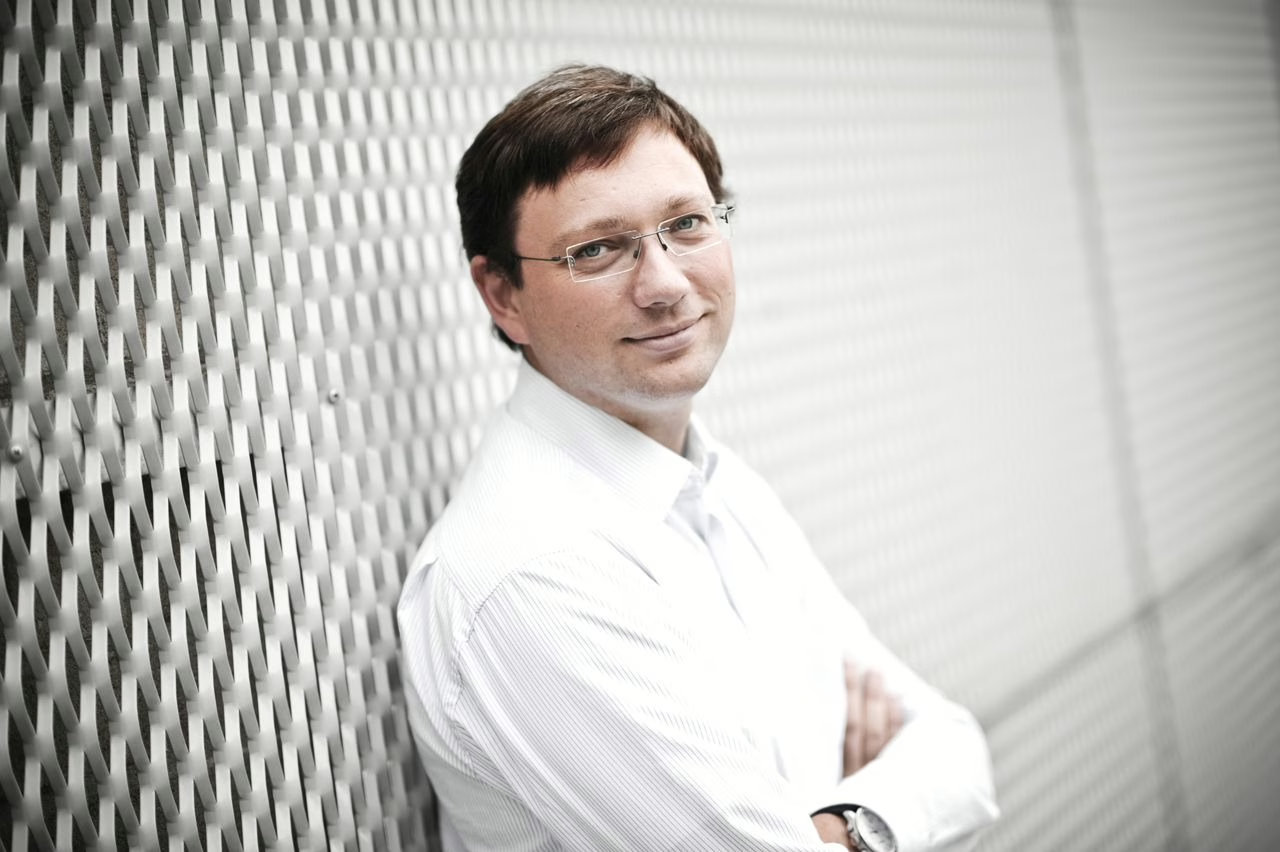
Femius Koenderink
Picture: Jeroen Oerlemans
Share article
What's happening

Most recent news items

All news items
Joining forces to study perovskite interfaces
People and recognition

Joining forces to study perovskite interfaces

AMOLF group leaders Professor Wiebke Albrecht and Professor Bruno Ehrler have received an NWO ENW-M2 grant for their joint research project, The Dynamic Atomic Interface between Halide Perovskites and Metals. The insights gained will pave the way for sustainable, high-performance solar energy and information technology. Wiebke and Bruno will each hire a PhD student for this project. The grant amounts to €800.000.

Read news item
Wim Noorduin and Arian van Asten presenting their scientific journey
People and recognition

Wim Noorduin and Arian van Asten presenting their scientific journey

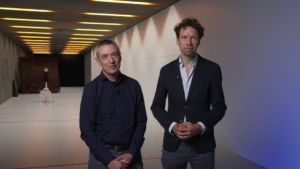
On October 8, Professor Wim Noorduin and his collaborator Professor Arian van Asten (University of Amsterdam) presented their scientific journey in a video to the audience at the ‘Avond van Wetenschap en Maatschappij’. They did so alongside the other nominees for the Huibregtsen Prize.

Read news item
Natural phenomena ‘hyperuniform disorder’ enables highly efficient, thin silicon solar cells
Research highlights

Natural phenomena ‘hyperuniform disorder’ enables highly efficient, thin silicon solar cells

Silicon solar panels are rigid and heavy, and many rooftops cannot support them. This creates a need for thin, flexible solar cells that can be integrated into building materials. However, making silicon solar cells thinner makes it harder to trap light inside the material. Researchers in the 3D Photovoltaics group found a fascinating way to overcome this challenge using a phenomenon called hyperuniform disorder. They publish their findings in the journal ACS Photonics.

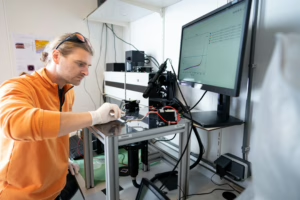
The researchers were able to make highly efficient silicon solar cell materials that are 30 times thinner than conventional ones. They managed to do this by integrating a layer of nanometer sized structures on top of the material. Up close, this pattern looks random, but it is remarkably when you step back: no clumps, no gaps, and no repeating pattern. This is called hyperuniform disorder (or HUD).

Read news item
Stay informed

Get the latest research highlights, events, and news from our institute delivered to your inbox