
News & updates
Latest developments from our institute
Stay informed about new research results, awards, events, and collaborations across our scientific community.
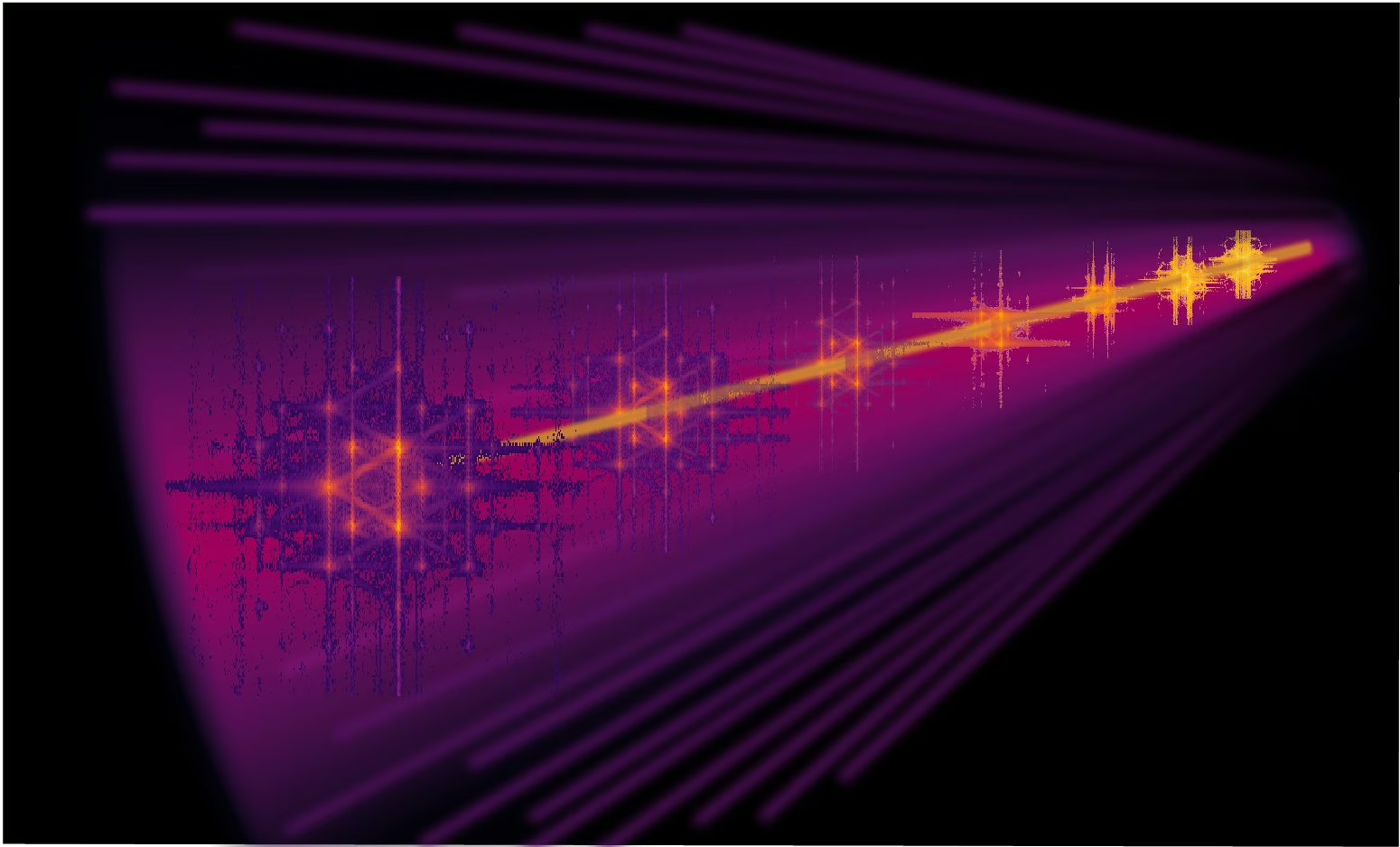
Quantifying topological protection of light on a chip
Photonic topological insulators are currently at the forefront of on-chip photonic research due to their potential for loss-free information transport. Realized in photonic crystals, they enable robust propagation of optical states along domain walls. But how robust is robust? In order to answer this, researchers from AMOLF and TU Delft quantified photonic edge state transport using phase-resolved near-field optical microscopy. The findings provide a crucial step towards error-free integrated photonic quantum networks. The results were published in the journal Light Science & Applications.
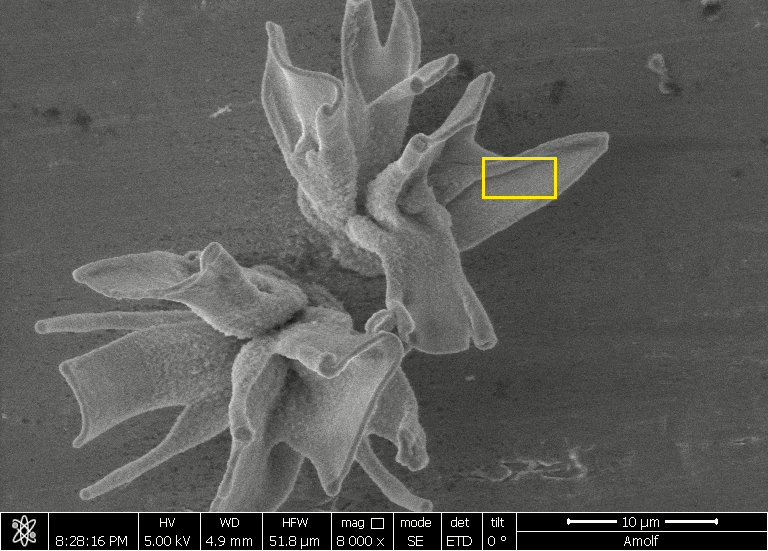
Transforming Self-Assembled Architectures into Functional Materials
Imagine if a material would arrange itself into a shape suited for its application. It may result in a catalyst that maximizes its own surface area for improved efficiency or a micro-actuator that forms appendages to grab nearby objects. This is the promise that self-assembly holds: making complex, functional materials by letting matter shape itself. Yet, not all matter that self-assembles into interesting forms turns out to have a useful function in its final shape. Researchers of the Self-Organizing Matter group recently discovered that ion exchange allows them to separate the self-assembly process from the resulting material. Their findings were published in Advanced Materials on November 16th and highlighted in Nature and Nature Reviews Materials.
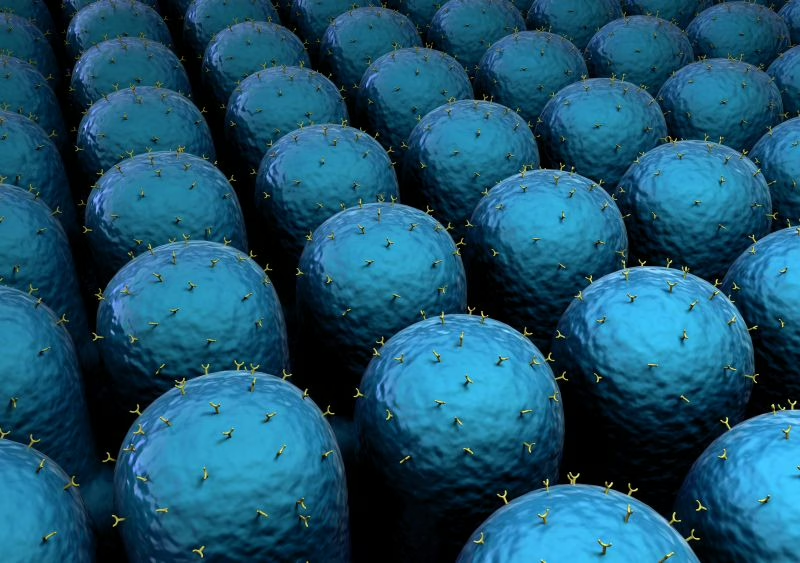
Dynamic risk management in cell populations
Much like investors on the stock market, cell populations prepare for changes in the environment by spreading the risk. The tool box they use contains a repertoire of sensory receptors on the surface of individual cells. These receptors can be tweaked to make individual members of the population responsive to different environmental signals. It was thought that cells could only modify this diversity relatively slowly, by producing new receptor proteins or degrading them. Scientists at AMOLF (Amsterdam, the Netherlands) and Yale University (New Haven, CT) now report the discovery of a mechanism that enables cell populations to tune their diversity much faster, by a combination of physical and chemical interactions between existing proteins. The findings are published in the journal Science Advances on November 13th.
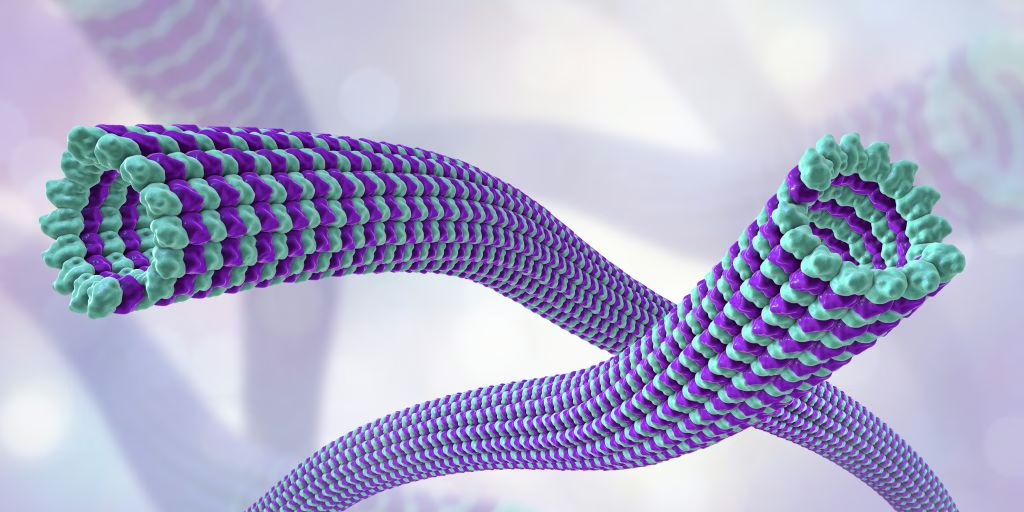
Exponential scaling of frictional forces in cells
AMOLF researchers present a theory that describes the friction between biological filaments that are crosslinked by proteins. Surprisingly, their theory predicts that the friction force scales highly non-linearly with the number of crosslinkers. The authors believe that cells use this scaling, not only to stabilize cellular structures but also to control their size. The new findings are important for our understanding of the dynamics of cellular structures such as the mitotic spindle, which pulls chromosomes apart during cell division.
Solar cell material performs better under pressure
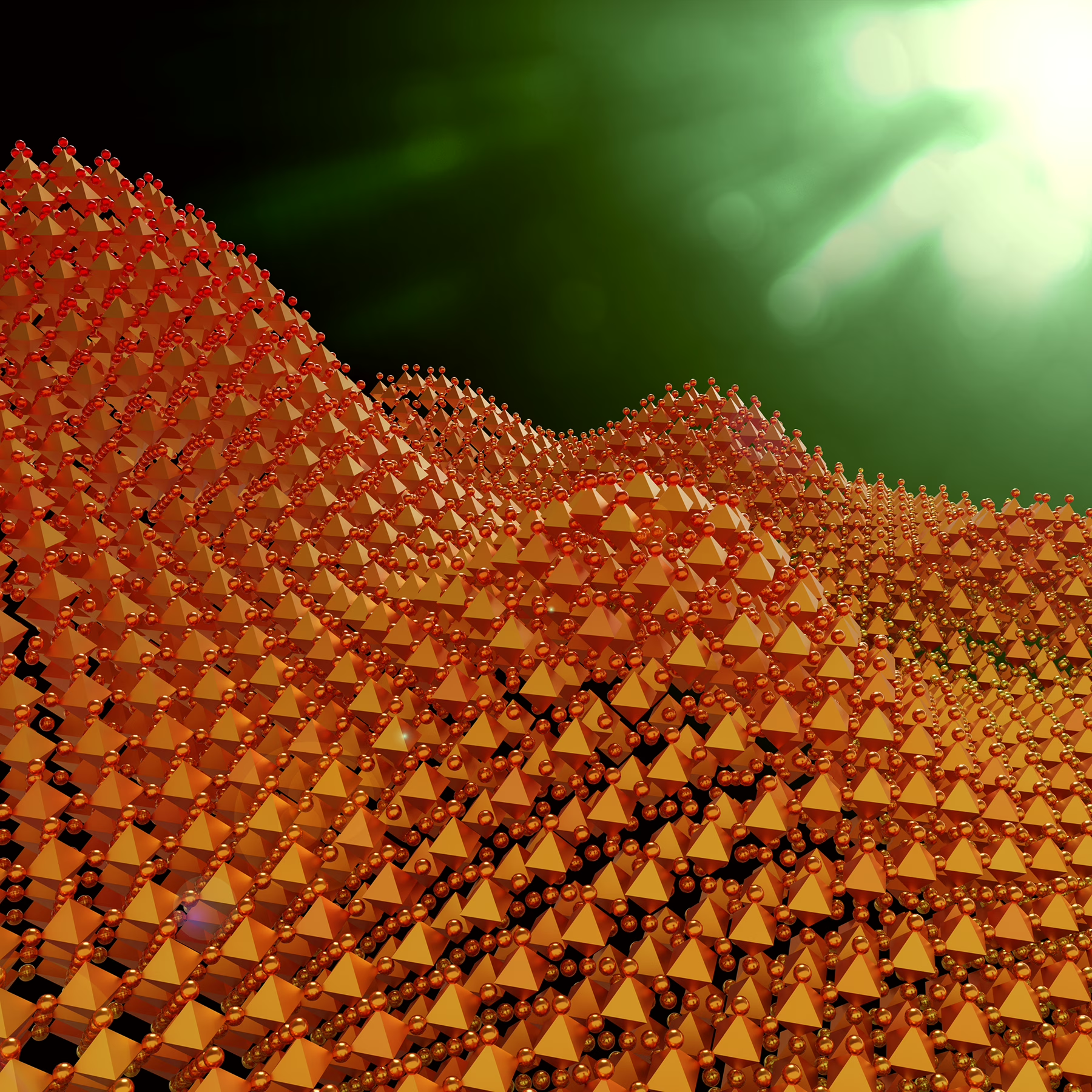
A novel and highly promising material for solar cells, halide perovskites, is more stable and consequently more efficient if just one ion is substituted. Researchers from AMOLF revealed in an unexpected manner why this is the case: pressure plays an important role. They published their findings on July 15th in Cell Reports Physical Science.

Evolutionary conflicts predicted
Evolution seems to be an unpredictable process. However, predicting the constraints of evolution is possible. Researchers from AMOLF and the French ESPCI have demonstrated this using their mathematical method, followed by experiments on bacteria. On June 24, they publish their results in the journal Cell Systems.
Olive oil sheds new light on universality in phase transitions
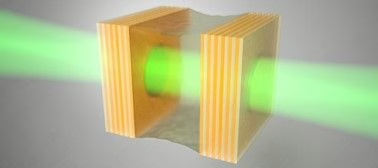
A simple drop of olive oil in a system of photons bouncing between two mirrors, has revealed universal aspects of phase transitions in physics. Researchers at AMOLF used an oil-filled optical cavity in which light undergoes phase transitions similar to those in boiling water. The system they studied has memory because the oil causes photons to interact with themselves. By varying the distance between the two mirrors and measuring the transmission of light through the cavity, they discovered a universal law describing phase transitions in systems with memory. These results are published on April 15th in Physical Review Letters.
Topology protects light propagation in photonic crystal
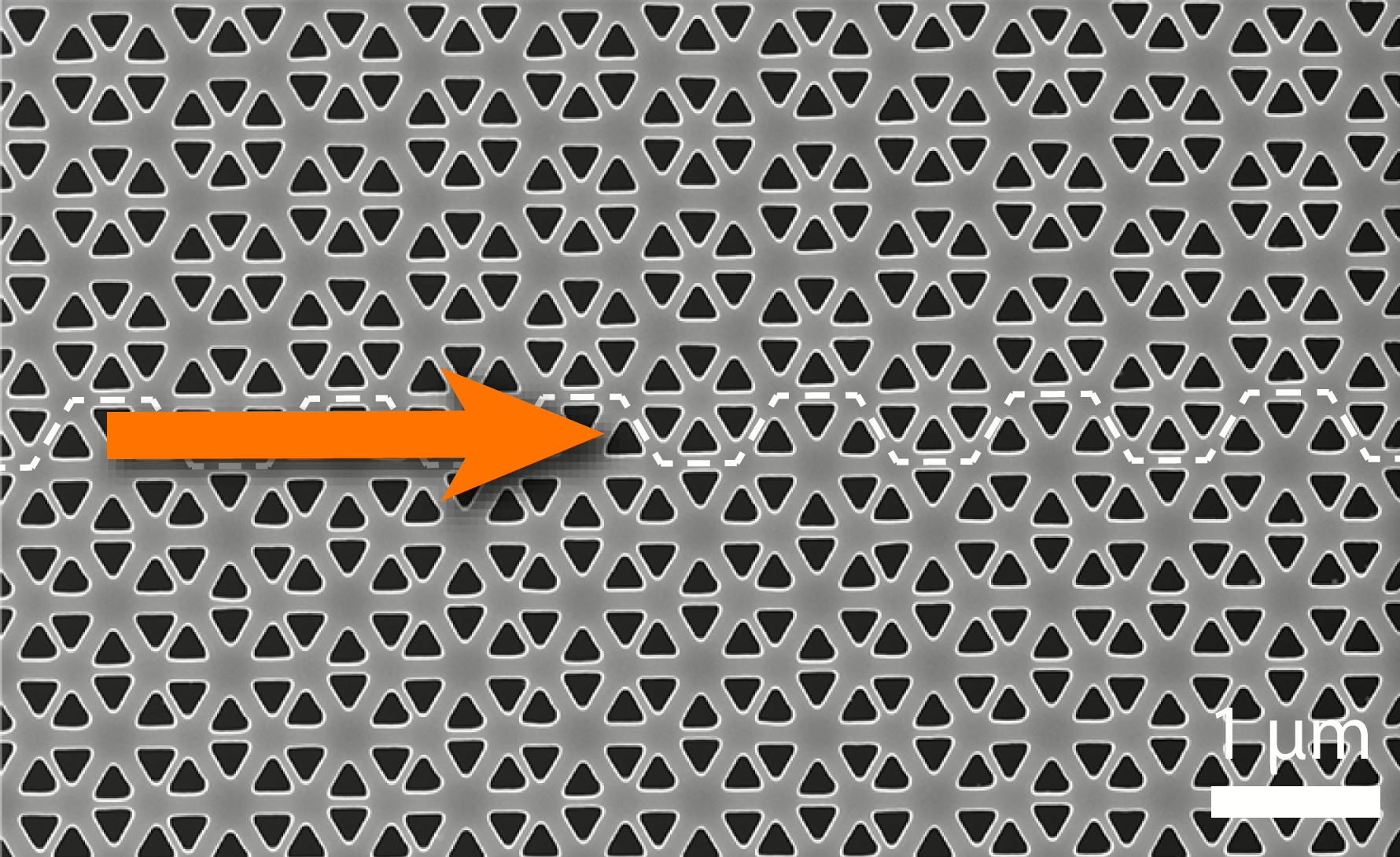
Researchers of AMOLF and TU Delft have seen light propagate in a special material without it suffering from reflections. The material, a photonic crystal, consists of two parts that each have a slightly different pattern of perforations. Light can propagate along the boundary between these two parts in a special way: it is ‘topologically protected’ and, therefore, does not bounce back at imperfections. Even when the boundary forms a sharp corner, the light follows it without a problem. “For the first time, we have seen these fascinating light waves move at the technologically relevant scale of nanophotonics,” says Ewold Verhagen, group leader at AMOLF. The results are published on March 6th in the scientific journal Science Advances.