
News & updates
Latest developments from our institute
Stay informed about new research results, awards, events, and collaborations across our scientific community.
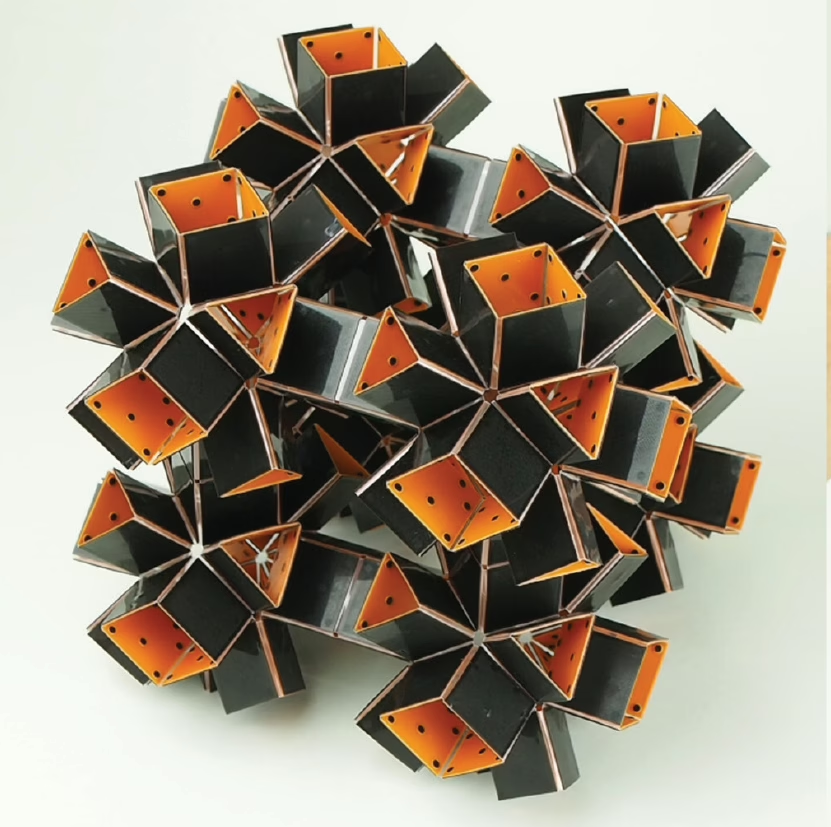
Smart simulations chart the behavior of surprising structures
AMOLF researchers are studying three-dimensional prismatic structures that can assume different shapes, with the aim of producing metamaterials that have multiple properties. Researchers have found a new way to simulate the deformations in such structures, and in doing so, they discovered a wide range of unexpected shapes. The results will be published today in the scientific journal Nature Communications.
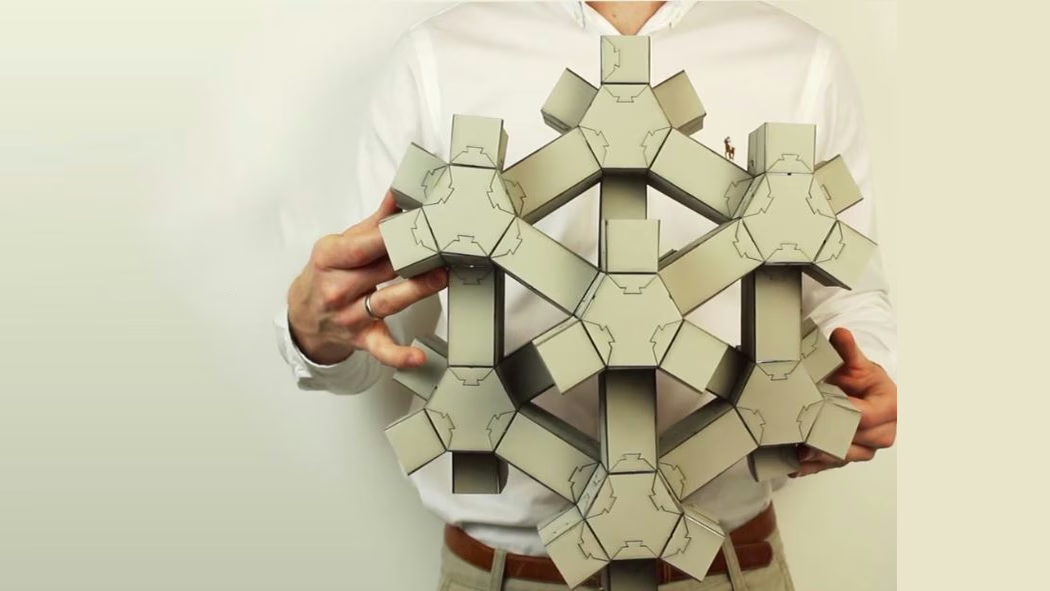
Bas Overvelde candidate for ‘Wetenschapstalent’
For the fourth time, New Scientist is looking for scientific talent in the Netherlands and Belgium. The contest is created to put young scientific talent and their work centre stage. AMOLF group leader Bas Overvelde is in the top 25 of scientist competing in this contest.
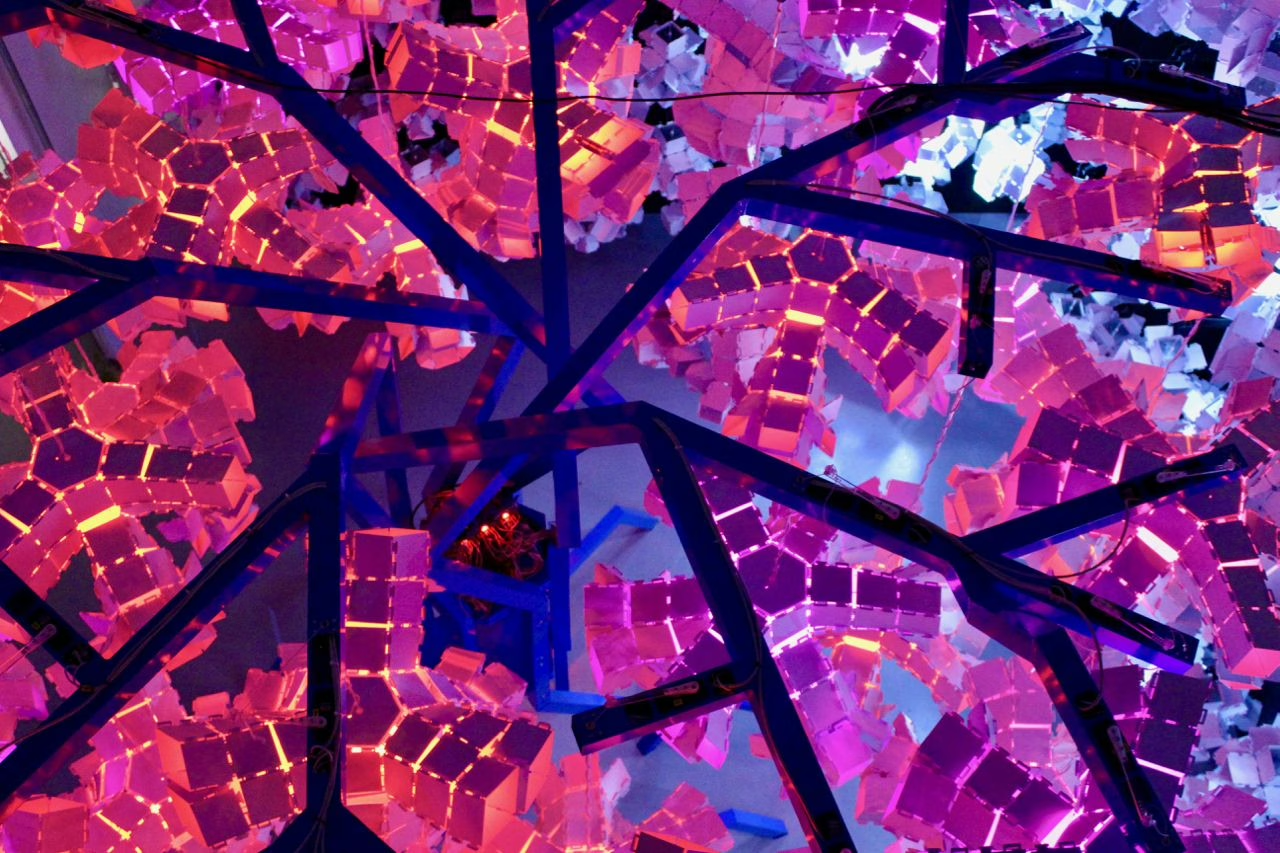
Edge of Chaos – an interactive kinetic installation
Between order and chaos, a mathematical space originally studied to understand the behaviour of avalanches and crystallisation of liquids, scientists are uncovering the rules for the existence of life itself. A small region called the “Edge of Chaos” displays complex behaviour that is both organised and unstable, creating the continuous flux that scientist hypothesise drives the engine of life – evolution – and produces the boundless novelty of the natural world.
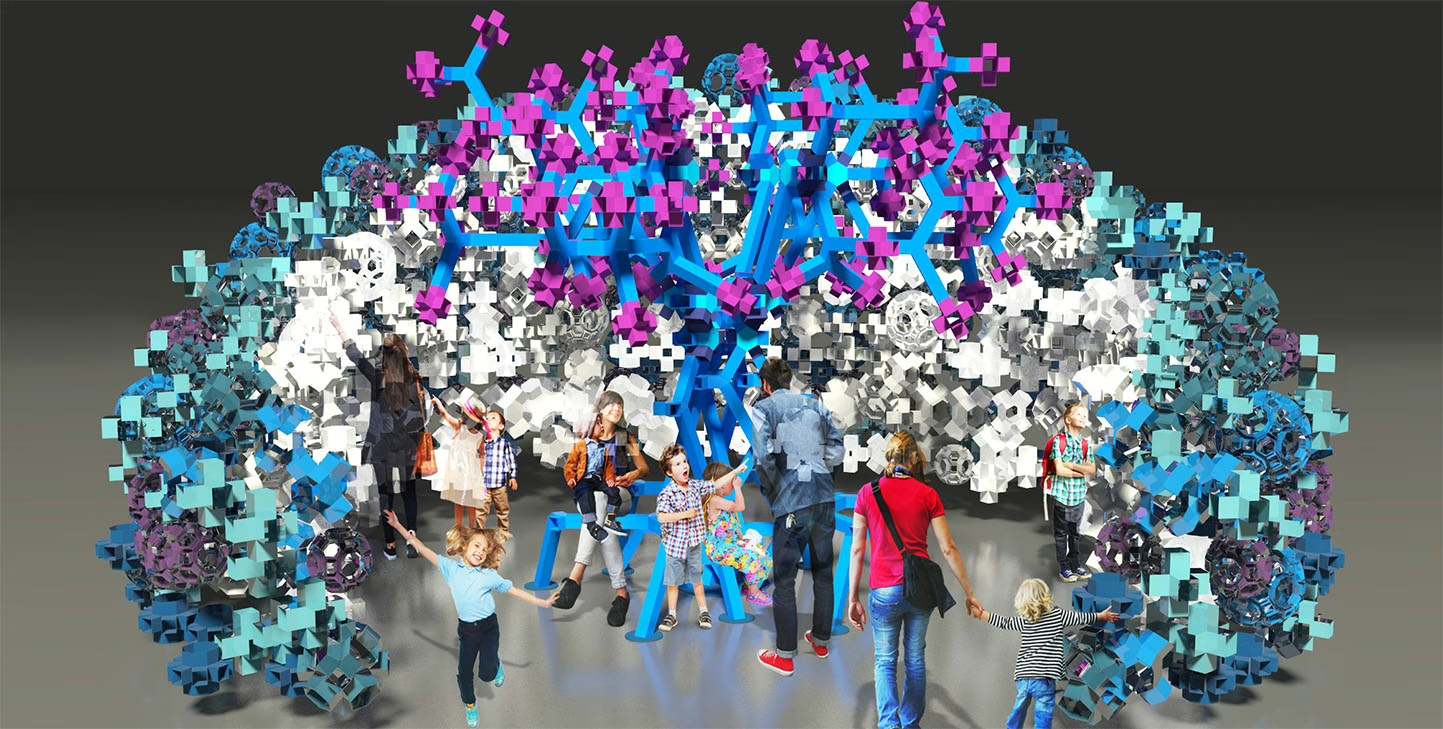
Overvelde connects Science & Art
On October 25th at the Cinekid Festival in Amsterdam, AMOLF scientific group leader Bas Overvelde received a grant to build an interactive art installation. It is one of three original media artworks that will be produced following the “Supernatural: stories of worlds to come” international call for projects (les voyages de capitaine future). The installation is called “The Edge of Chaos” and is designed by the Soft Robotic Matter Group (Amsterdam). Bas Overvelde and designers Vasilija Abramovic, Ruari Glynn from the Interactive Lab are stoked about the news and are gearing up to start building the structure. Upon completion, the art installation will go on tour in Europe (Paris, Amsterdam, Namur) to be exhibited by all four organizers of the competition: Cinekid, la Gaîté Lyrique, KIKK and WoeLab.
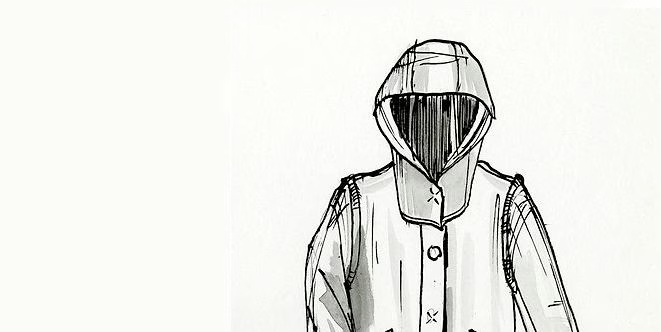
Who doesn’t want to wear a soft robotic jacket?!
AMOLF group leader Bas Overvelde has been awarded funding through the programme ‘Creatieve industrie – Kennis Innovatie Mapping’ (KIEM) from NWO Humanities. The funding will go to “Project Cairo: an intelligent soft robotic jacket”. Overvelde will work on this project with the Distributed and Interactive Systems group led by Pablo Cesar (CWI) and with Borre Akkersdijk (Byborre).
Veni grants for Bas Overvelde and Cristina Martinez Torres
The Netherlands Organisation for Scientific Research (NWO) awarded Veni grants to AMOLF group leader Bas Overvelde (Soft Robotic Matter) and postdoc Cristina Martinez Torres (Biological Soft Matter).
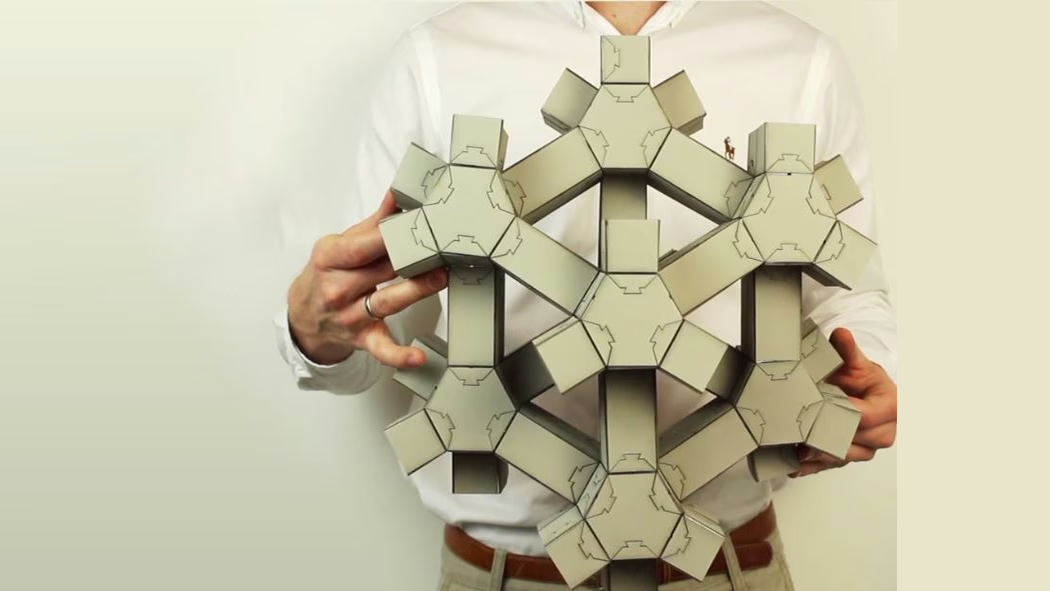
Folding reconfigurable materials : Toolkit to design metamaterials with programmable shape and function
During his PhD research at Harvard University, AMOLF group leader Bas Overvelde developed a smart method for designing and investigating new metamaterials. For such materials the microstructure determines the function, rather than the molecular composition. The ideal metamaterial changes shape autonomously to achieve the desired functionality. Overvelde and his American colleagues developed a toolkit to design such metamaterials that can assume different shapes in a manner reminiscent of origami. They published their research on 19 January 2017 in Nature.
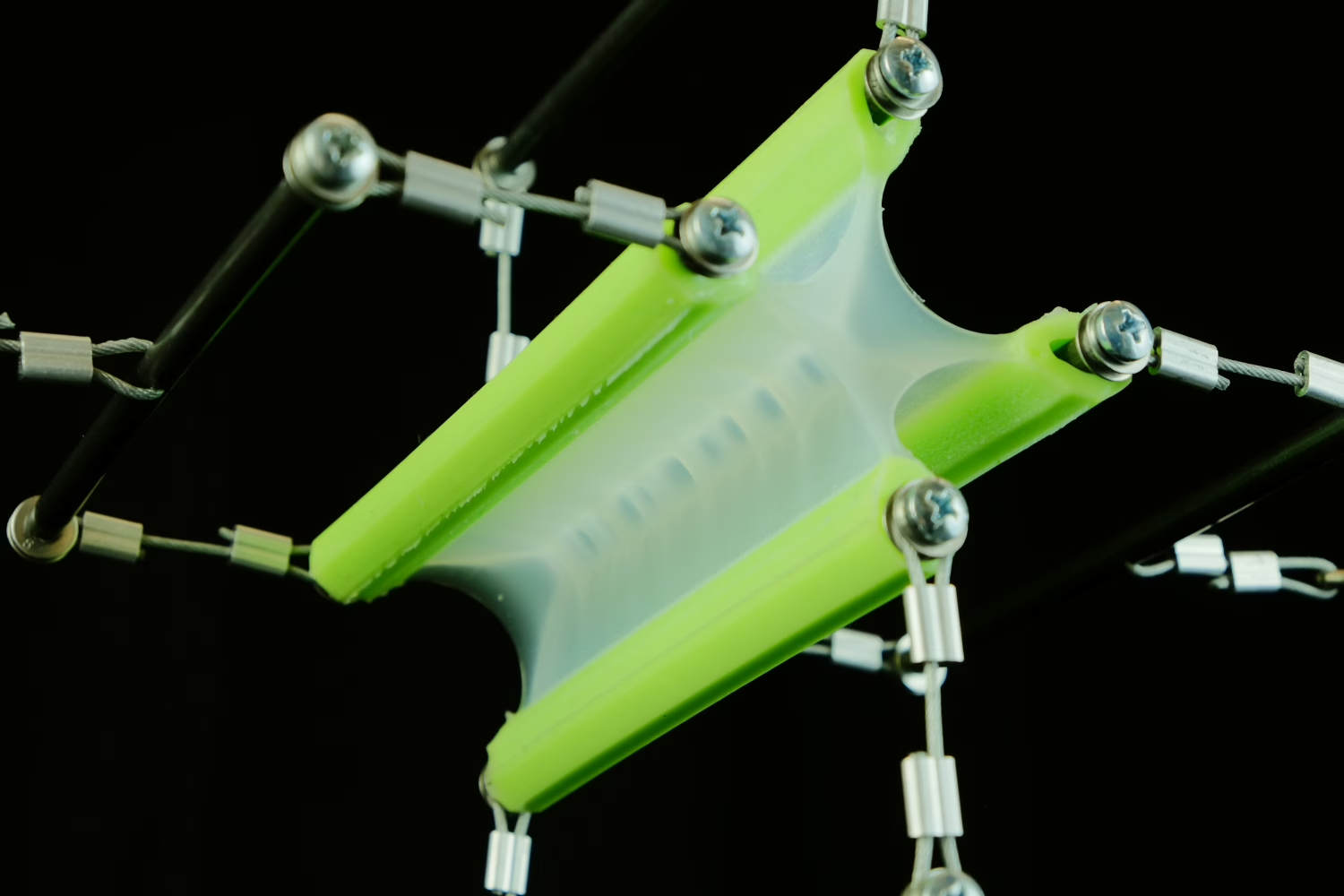
Tension instability flattens thick block
This summer Bas Overvelde started as tenure track group leader at AMOLF. During the first few months in Amsterdam he finished a project with former Harvard colleagues, which they published last month in Physical Review Letters. The team demonstrated for the first time experimentally that with the right amount of tensile force, a thick cube of soft material would undergo an elastic instability and suddenly deform into a thin, flat plate. Using tensile — stretching — forces, the team triggered this instability in a centimeters-thick elastomer block, deforming it into a flat surface.