Research highlights

Overvelde connects Science & Art

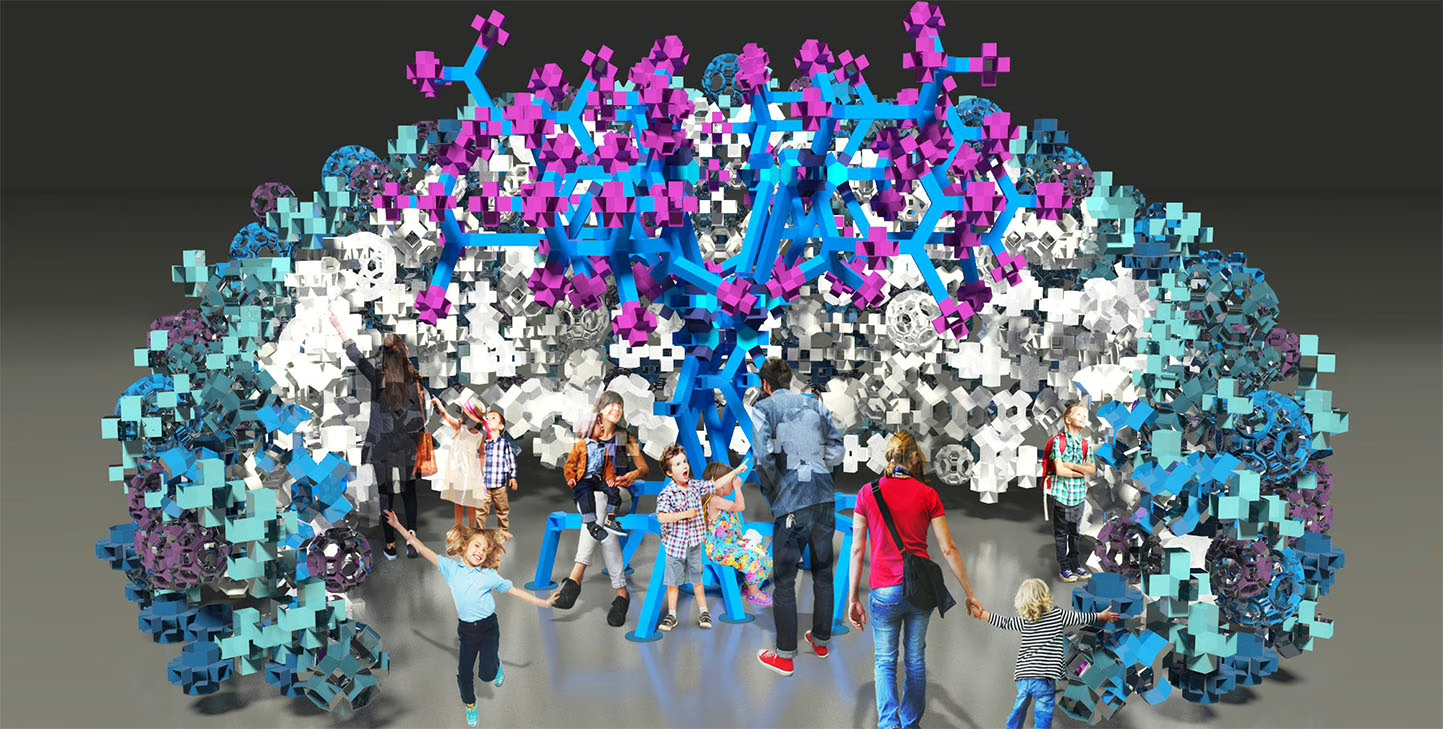
On October 25th at the Cinekid Festival in Amsterdam, AMOLF scientific group leader Bas Overvelde received a grant to build an interactive art installation. It is one of three original media artworks that will be produced following the “Supernatural: stories of worlds to come” international call for projects (les voyages de capitaine future). The installation is called “The Edge of Chaos” and is designed by the Soft Robotic Matter Group (Amsterdam). Bas Overvelde and designers Vasilija Abramovic, Ruari Glynn from the Interactive Lab are stoked about the news and are gearing up to start building the structure. Upon completion, the art installation will go on tour in Europe (Paris, Amsterdam, Namur) to be exhibited by all four organizers of the competition: Cinekid, la Gaîté Lyrique, KIKK and WoeLab.

“Edge of Chaos”
What happens between order and chaos? The interactive art installation “Edge of Chaos” invites visitors to cross boundaries and experience this balance point between highly ordered and turbulent systems. The installation uses geometries developed in Overvelde’s research group and a kinetic installation to create a bewildering atmosphere. Rather than assembling the building blocks in a precise and systematic way, the “Edge of Chaos” installation mimics the design process of the future, where new materials, technology and ideas will emerge from turbulent processes and where artificial intelligence plays a major role. For AMOLF, the project addresses some key principles that are important to the institute. It tells a story about our technological world and it induces a collaborative culture that allows the active participation of children and the co-constructing of creative knowledge: learning by experimenting together.

“Edge of Chaos” is a collaboration with the Interactive Lab at the Bartlett School of Architecture in London (www.interactivearchitecture.org).

Watch ‘winners of the Open Call – Les Voyages de Capitaine futur’ from KIKK Festival on Vimeo.

“Edge of Chaos” will be exhibited in 2018 at the following locations:

  • The Capitaine futur and the Supernature collective’s exhibition, held at La Gaîté Lyrique in Paris, France, from April to July 2018.
  • The Cinekid Film, Television and Digital Media Festival in Amsterdam, the Netherlands, as part of the ten-day MediaLab exhibition in October 2018.
  • Little.KIKK, an event held in conjunction with the KIKK Festival in Namur, Belgium, for 7 days in November 2018.
  • One of the 3 projects will be exhibited at WoeLab in Lomé, Togo, in late 2018
Share article
What's happening

Most recent news items

All news items
Wiebke Albrecht, Group Leader Hybrid Nanosystems at AMOLF
People and recognition

Wiebke Albrecht appointed professor at Vrije Universiteit Amsterdam

Dr. Wiebke Albrecht has been appointed professor by special appointment in Electron and Optical Imaging of Nanomaterials at the Faculty of Science of Vrije Universiteit Amsterdam (VU). The chair was established on behalf of the Foundation for the Advancement of Atomic and Molecular Physics (‘Stichting tot bevordering van de Atoom- en Molecuulfysica’) with the Department of Physics and Astronomy of the VU.

Read news item
About AMOLF

AMOLF launches new website

On October 1, AMOLF launches a completely redesigned website. The new website puts AMOLF’s research and people center stage and makes it easier for different audiences to find the information they are looking for.

Read news item
Collaboration

Successful outcomes of international EBEAM program led by AMOLF

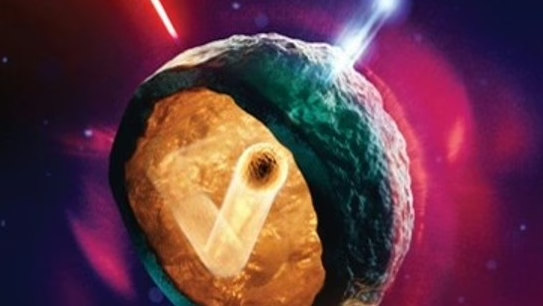
The EU Pathfinder project Electron Beams Enhancing Analytical Microscopy (EBEAM) that was recently completed has received a highly positive review of the European Innovation Council (EIC). EBEAM brought together eight European research institutions and companies, including AMOLF, that develop new concepts and instruments combining spectroscopic analysis with electron microscopy.

Read news item
Research highlights

Everything you need to know about organoids

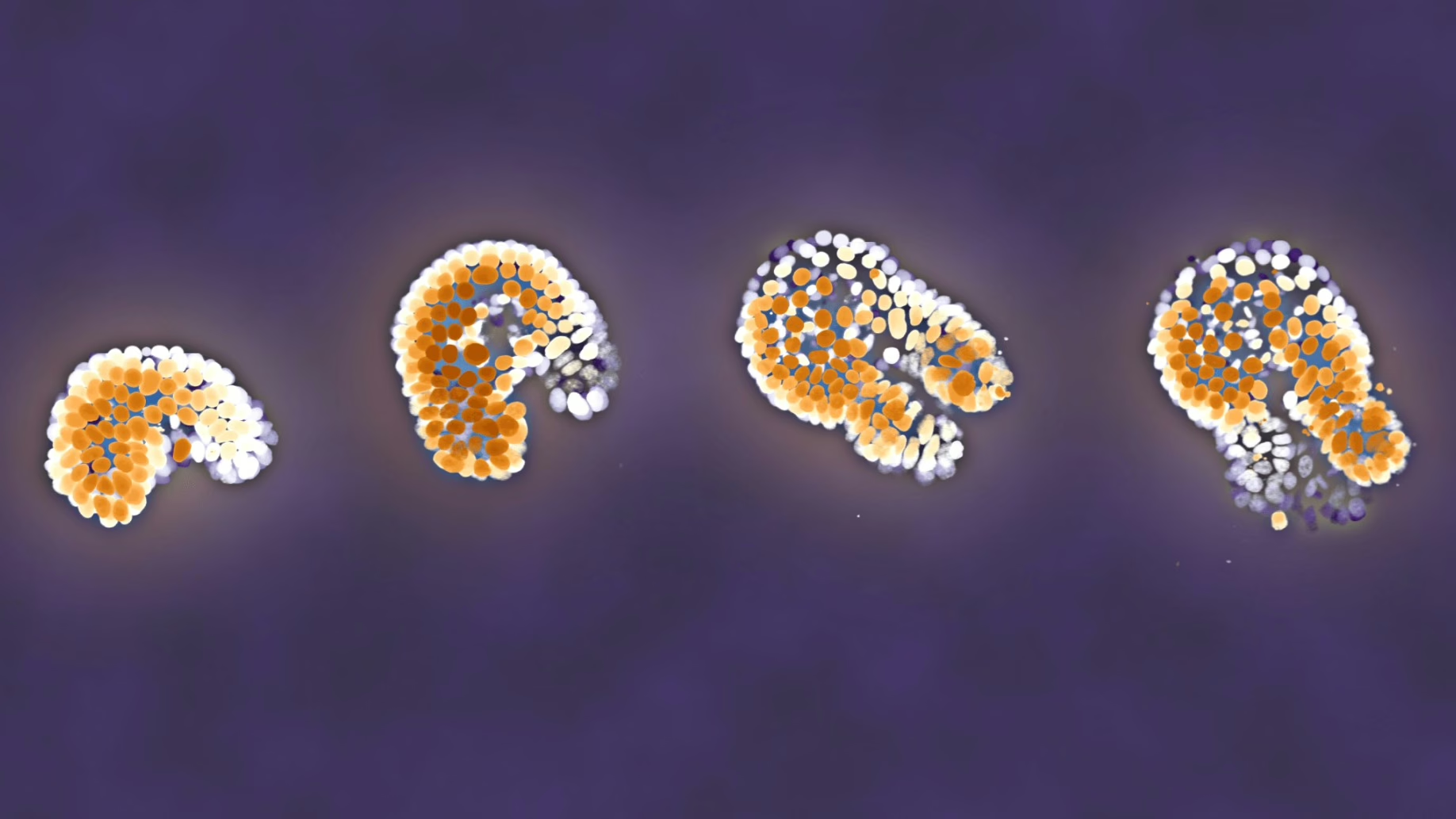
Organoids are instrumental in improving our understanding of processes that are otherwise hidden inside the body. For instance, these small 3D organs can be used to test medicines on tissue grown from a patient’s own cells. AMOLF researchers carry out unique and complex experiments to follow organoids in time. In order to enable other researchers to benefit from their experiences, they now publish their methods in the prestigious journal Nature Protocols.

Read news item
Stay informed

Get the latest research highlights, events, and news from our institute delivered to your inbox