Research highlights

Who doesn’t want to wear a soft robotic jacket?!

AMOLF group leader Bas Overvelde has been awarded funding through the programme ‘Creatieve industrie – Kennis Innovatie Mapping’ (KIEM) from NWO Humanities. The funding will go to “Project Cairo: an intelligent soft robotic jacket”. Overvelde will work on this project with the Distributed and Interactive Systems group led by Pablo Cesar (CWI) and with Borre Akkersdijk (Byborre).

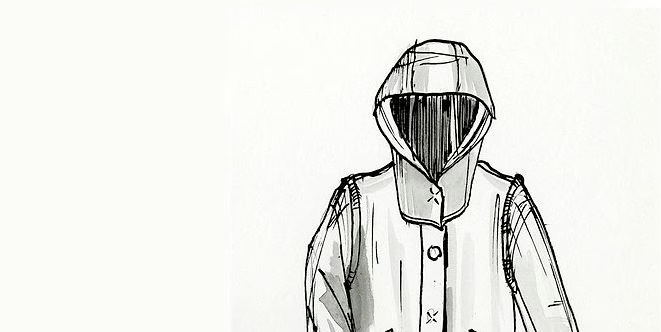
The goal of project Cairo is to create an urban jacket that pushes the state-of-the-art of smart-textiles. The jacket will sense and reason about the wearer’s activity, profile and external conditions to trigger changes in its structure and insulation. To build it, the group will exploit new materials developed by Overvelde’s Soft Robotic Matter group, as a way of changing the physical properties of textiles. This will be added to the proven expertise in merging sensor technology and artificial intelligence, developed by CWI, with the innovative textile design and fabrication techniques of Byborre. The team will fine-tune the jacket to assist people commuting by bike, and test it with potential final users applying quantitative and qualitative methods.
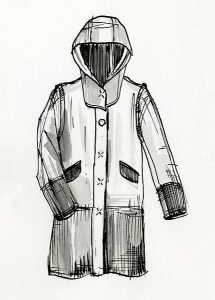
The research will address questions such as: how can smart-textiles play a more active role in controlling our environment? Can we design, build and understand technology that goes beyond an attached or even retrofit sensor and make it an integrated part of the textile itself? The project will presumably take place in the period October 2017-March 2018.

Before starting his research group at AMOLF in May 2016, Bas Overvelde did his doctoral studies in applied mathematics at Harvard University. His research at AMOLF is a continuation of the work started at Harvard. More information: www.overvelde.com
 

Share article
What's happening

Most recent news items

All news items
Joining forces to study perovskite interfaces
People and recognition

Joining forces to study perovskite interfaces

AMOLF group leaders Professor Wiebke Albrecht and Professor Bruno Ehrler have received an NWO ENW-M2 grant for their joint research project, The Dynamic Atomic Interface between Halide Perovskites and Metals. The insights gained will pave the way for sustainable, high-performance solar energy and information technology. Wiebke and Bruno will each hire a PhD student for this project. The grant amounts to €800.000.

Read news item
Wim Noorduin and Arian van Asten presenting their scientific journey
People and recognition

Wim Noorduin and Arian van Asten presenting their scientific journey

On October 8, Professor Wim Noorduin and his collaborator Professor Arian van Asten (University of Amsterdam) presented their scientific journey in a video to the audience at the ‘Avond van Wetenschap en Maatschappij’. They did so alongside the other nominees for the Huibregtsen Prize.

Read news item
Natural phenomena ‘hyperuniform disorder’ enables highly efficient, thin silicon solar cells
Research highlights

Natural phenomena ‘hyperuniform disorder’ enables highly efficient, thin silicon solar cells

Silicon solar panels are rigid and heavy, and many rooftops cannot support them. This creates a need for thin, flexible solar cells that can be integrated into building materials. However, making silicon solar cells thinner makes it harder to trap light inside the material. Researchers in the 3D Photovoltaics group found a fascinating way to overcome this challenge using a phenomenon called hyperuniform disorder. They publish their findings in the journal ACS Photonics.

The researchers were able to make highly efficient silicon solar cell materials that are 30 times thinner than conventional ones. They managed to do this by integrating a layer of nanometer sized structures on top of the material. Up close, this pattern looks random, but it is remarkably when you step back: no clumps, no gaps, and no repeating pattern. This is called hyperuniform disorder (or HUD).

Read news item
Stay informed

Get the latest research highlights, events, and news from our institute delivered to your inbox