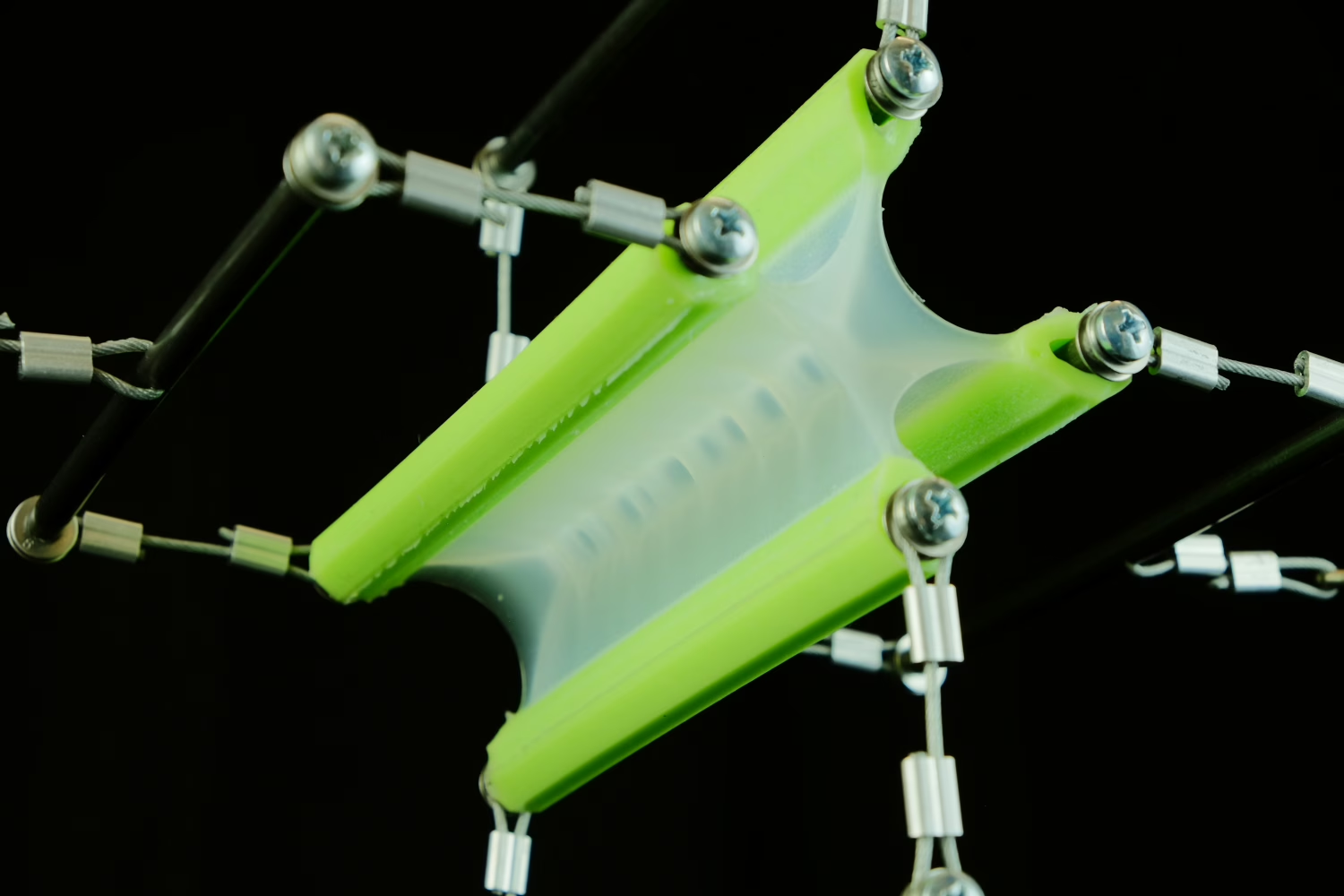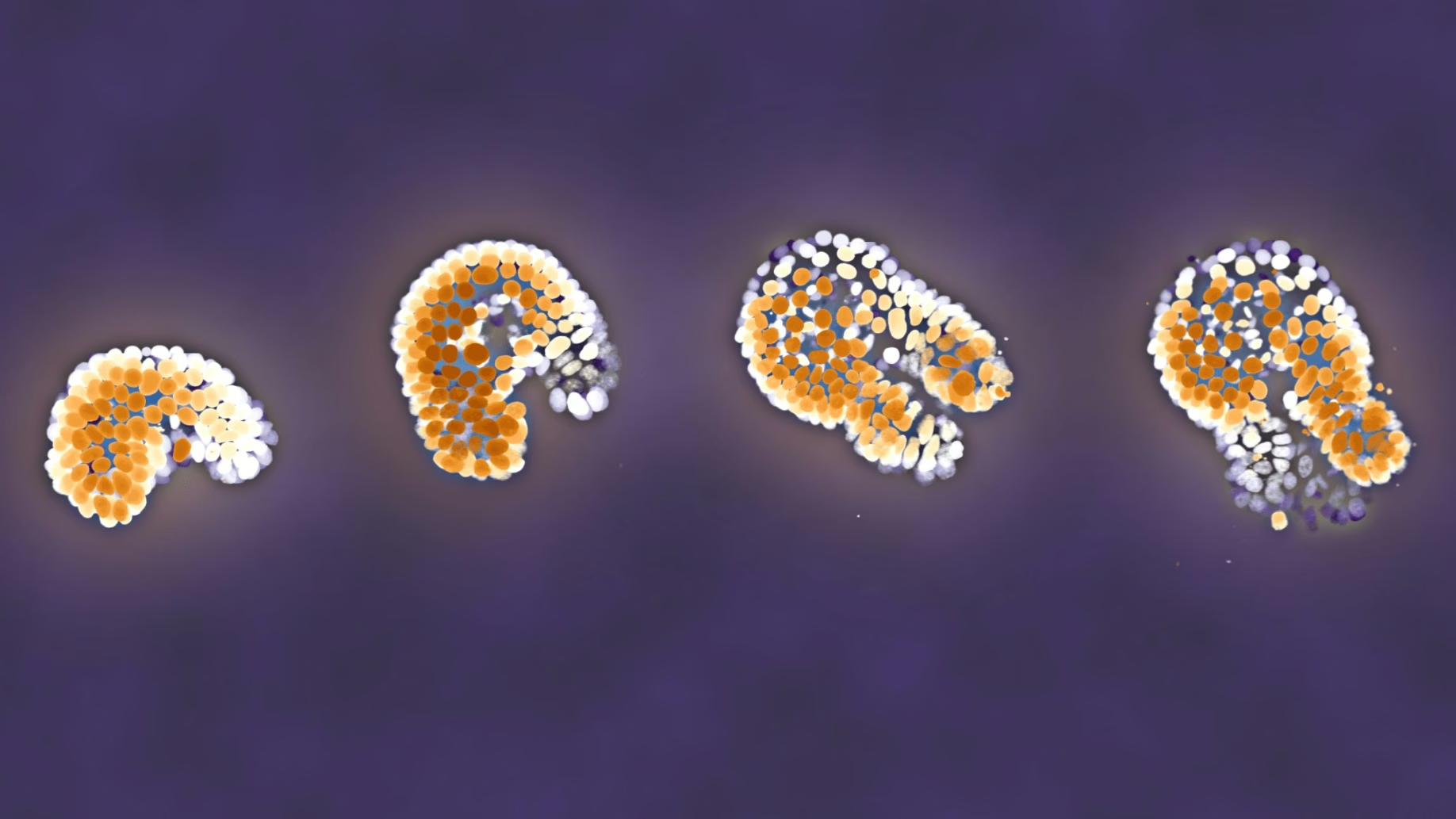
“Imagine pulling or compressing a block of soft material — like rubber — equally in all directions. You wouldn’t expect the block to deform much because of the nature of the material,” said Bas Overvelde. “But, in 1948, an applied mathematician named Ronald Rivlin predicted that with the right amount of tensile force, a thick cube of soft material would suddenly deform into a thin, flat plate.” For almost 70 years, this prediction remained purely theoretical. Materials scientists, were unable to prove the theory experimentally, although they knew that the instability existed.
The research uncovers a type of instability that can be triggered in soft, elastic bodies, and widens the design space for new architected materials that use instabilities to change or enhance their functionality. Bas Overvelde continues this research at AMOLF: “An interesting avenue is to use these elastic instabilities to create materials that can suddenly switch between behaviors by using simple triggers to change their geometry.”
Johannes T.B. Overvelde, David M.J. Dykstra, Rijk de Rooij, James Weaver and Katia Bertoldi, Tensile instability in a thick elastic body, Phys. Rev. Lett. 117, 094301: 1-16 (2016)