
News & updates
Latest developments from our institute
Stay informed about new research results, awards, events, and collaborations across our scientific community.
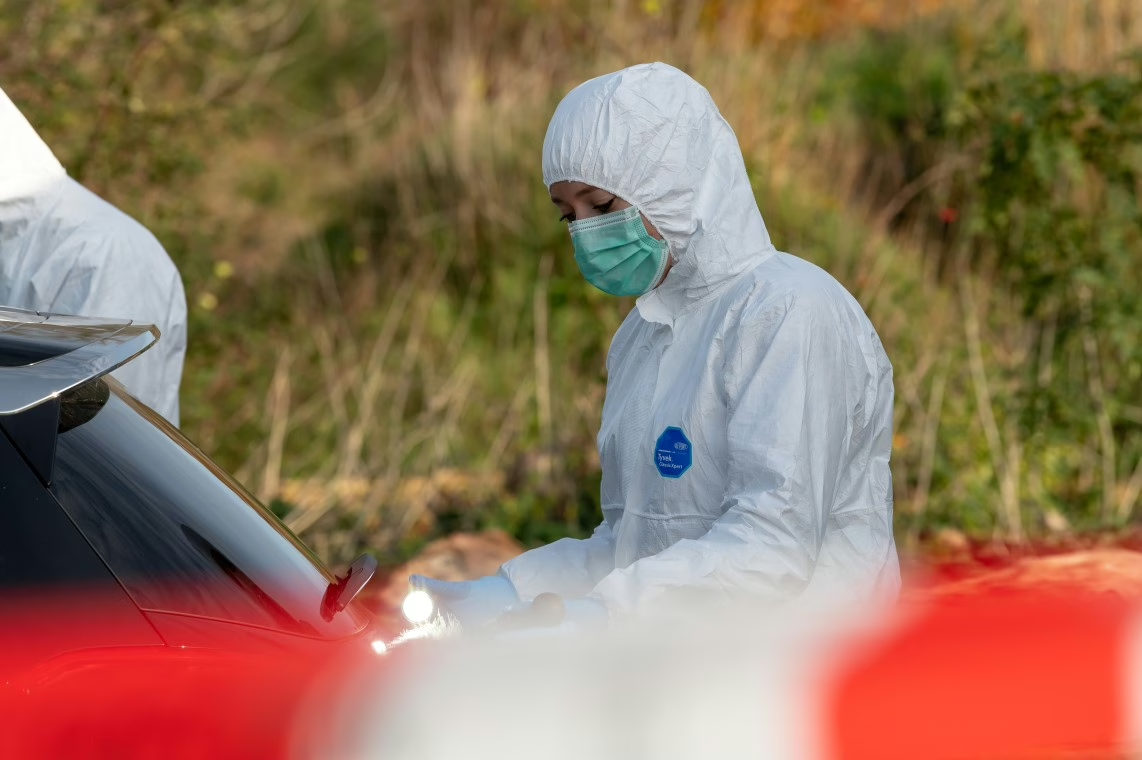
Solving crimes with glowing evidence: a brand-new method to detect gunshot residue at the crime scene
Crime scene investigation may soon become significantly more accurate and efficient thanks to a new method for detecting gunshot residues. Researchers from the groups of Wim Noorduin (AMOLF/University of Amsterdam) and Arian van Asten (University of Amsterdam) developed the technique that converts lead particles found in gunshot residue into a light-emitting semiconductor. This method is faster, more sensitive, and easier to use than current alternatives. Forensic experts at the Amsterdam police force are already testing it in actual crime scene investigations. The researchers recently published their findings in Forensic Science International.
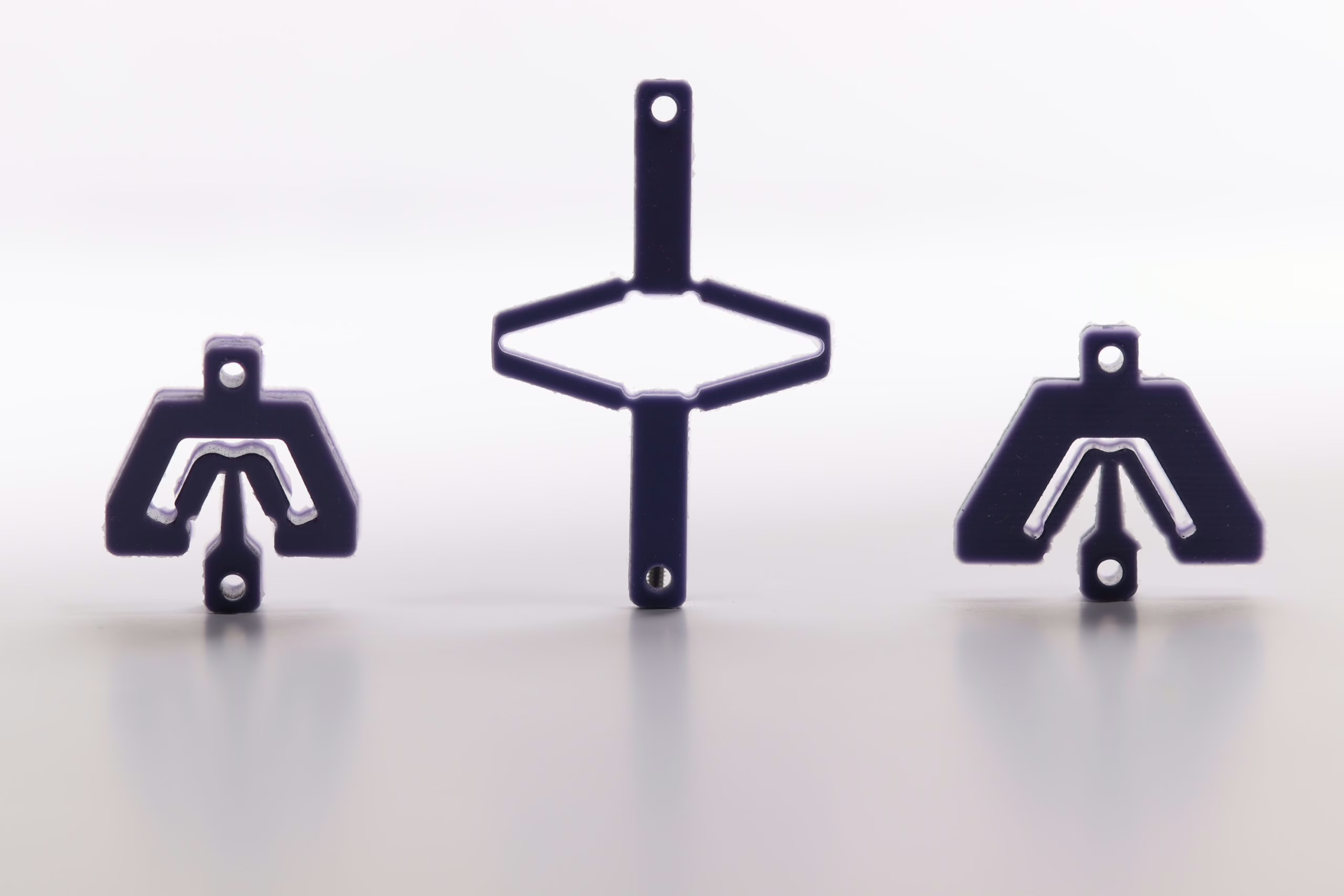
These structures shrink when pulled
Discovery unlocks new exotic properties for soft robotics, smart devices, and more. When you pull something—like a rubber band—you expect it to get longer. But what if it did the…
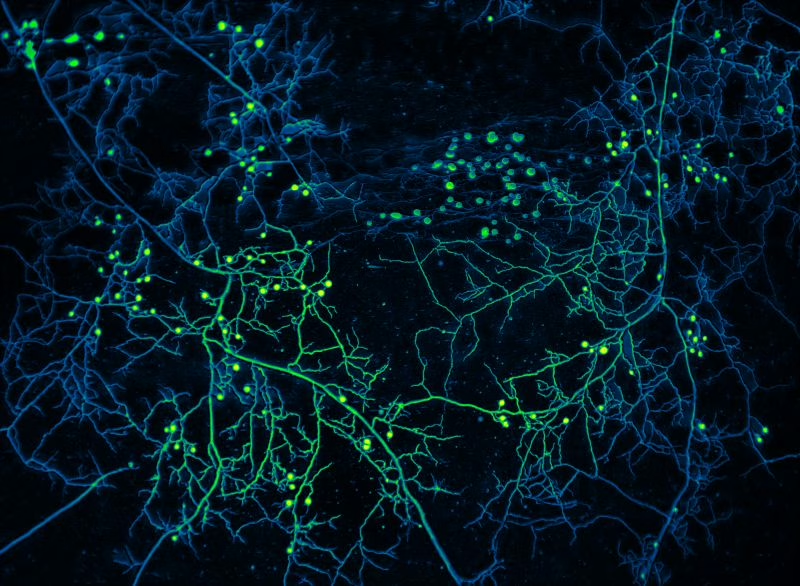
Moving massive amounts of CO2 underground: research shows how plant-fungal networks drive nutrient flows that support ecosystems
A study published online in Nature on February 26th has revealed how plants and fungi construct networks that operate as hyper-efficient ‘supply chains,’ moving billions of tons of CO2 underground. By building a robot (Aretha), which tracks over half a million fungal ’roadways’ simultaneously, researchers Tom Shimizu (AMOLF/Vrije Universiteit Amsterdam), Toby Kiers (SPUN/Vrije Universiteit Amsterdam), Howard Stone (Princeton University) and collaborators succeeded in mapping and tracking these nutrient-exchange networks that help regulate Earth’s ecosystems and carbon cycles. With atmospheric CO2 levels rising, the collected data is becoming increasingly important.
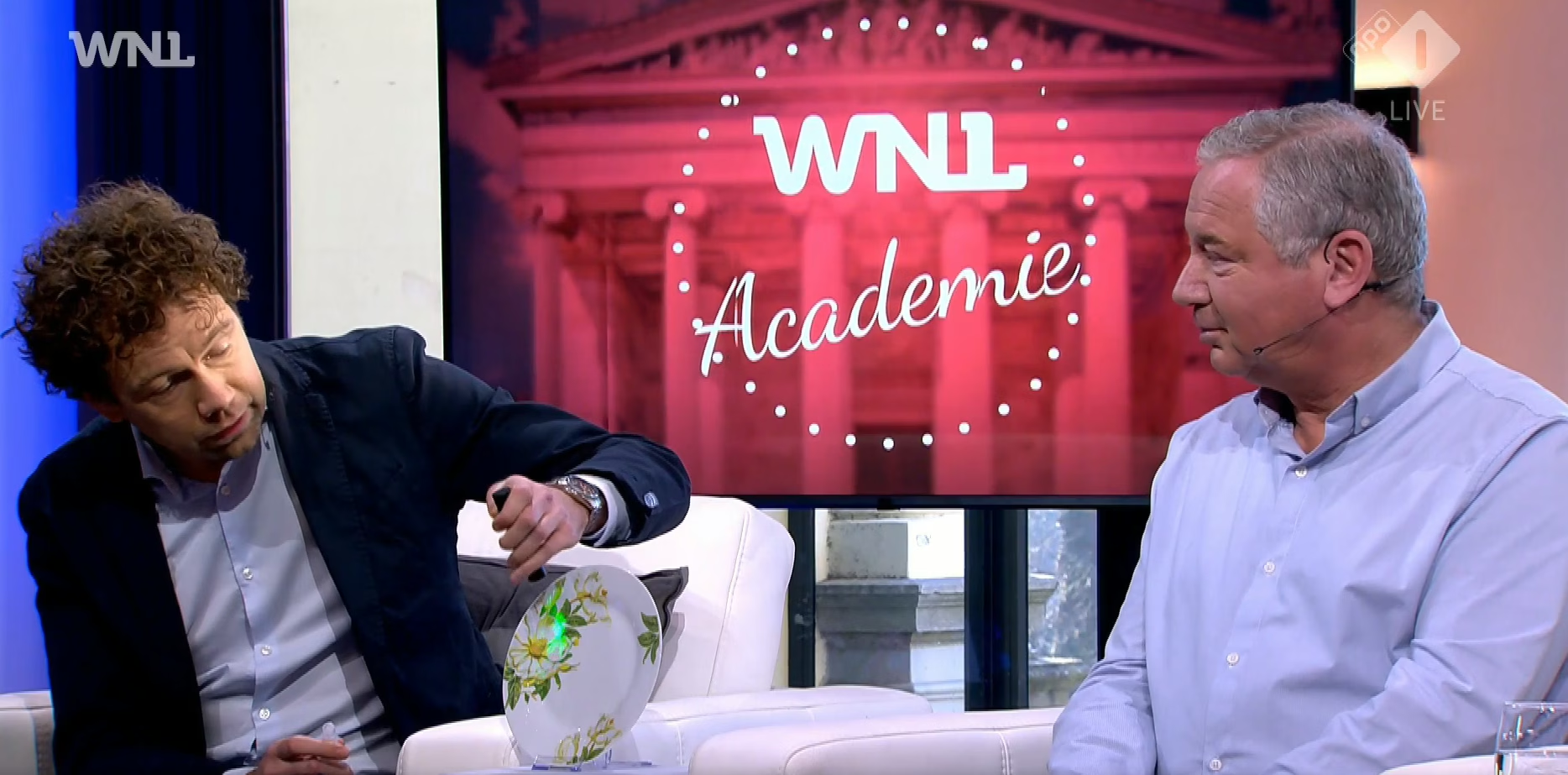
Live experiment on WNL op Zondag TV program by Wim Noorduin
Yesterday, Wim Noorduin demonstrated the lead detection test developed by him and his research team on the Dutch-language TV program ‘WNL op Zondag’. NWO president Marcel Levi, a regular guest on the show, had invited Wim to join him in sharing the fascinating story of his discovery.

Universal warning signal for optical damage onset
Universal and easy-to-measure warning signals for catastrophic damage occur in the metals used to transport data in computer chips. That is what ARCNL PhD student Ester Abram discovered and described in a recent paper in the Journal of Applied Physics. “A slight increase in the observed reflectivity of the metal indicates that its morphology is starting to change as a result of exposure to laser light.”
New process creates ordered semiconductor material at room temperature
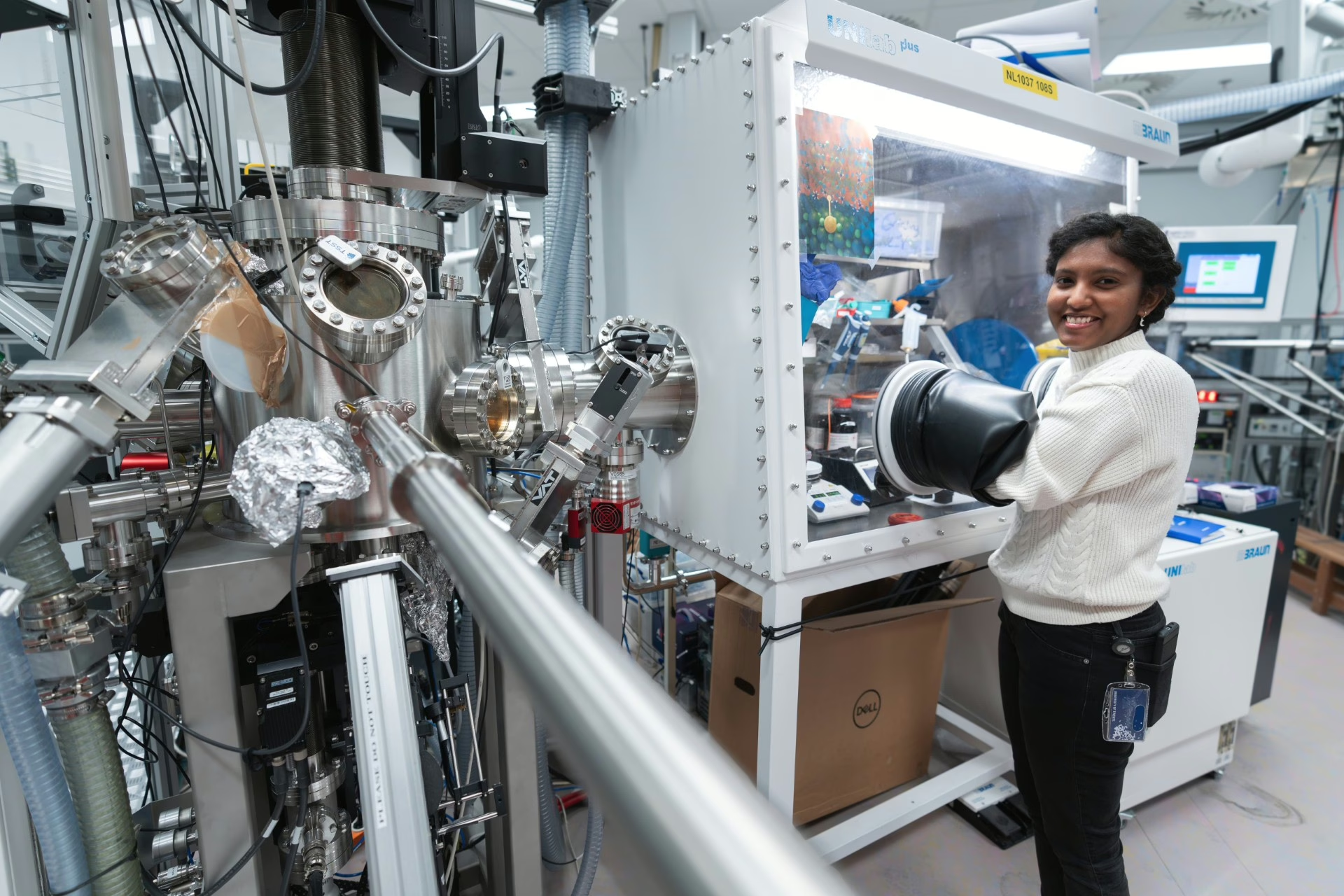
Scientists of the University of Twente, research institute AMOLF and the University of Oxford have developed a way to create highly ordered semiconductor material at room temperature. This research, which was led by the University of Twente, was published in the scientific journal

Computers that work like our brain: Menachem Stern takes on the challenge
Menachem Stern started at AMOLF as a group leader on August 1st. His research group, Learning Machines, focuses on topics such as power-efficient algorithms for neuromorphic computers. Recently, the Journal of the Association for Computing Machinery (ACM) published an article titled “Controlling AI’s Growing Energy Needs,” which features an interview with Menachem about his work.
AMOLF team breaks the symmetry in a metallic grating
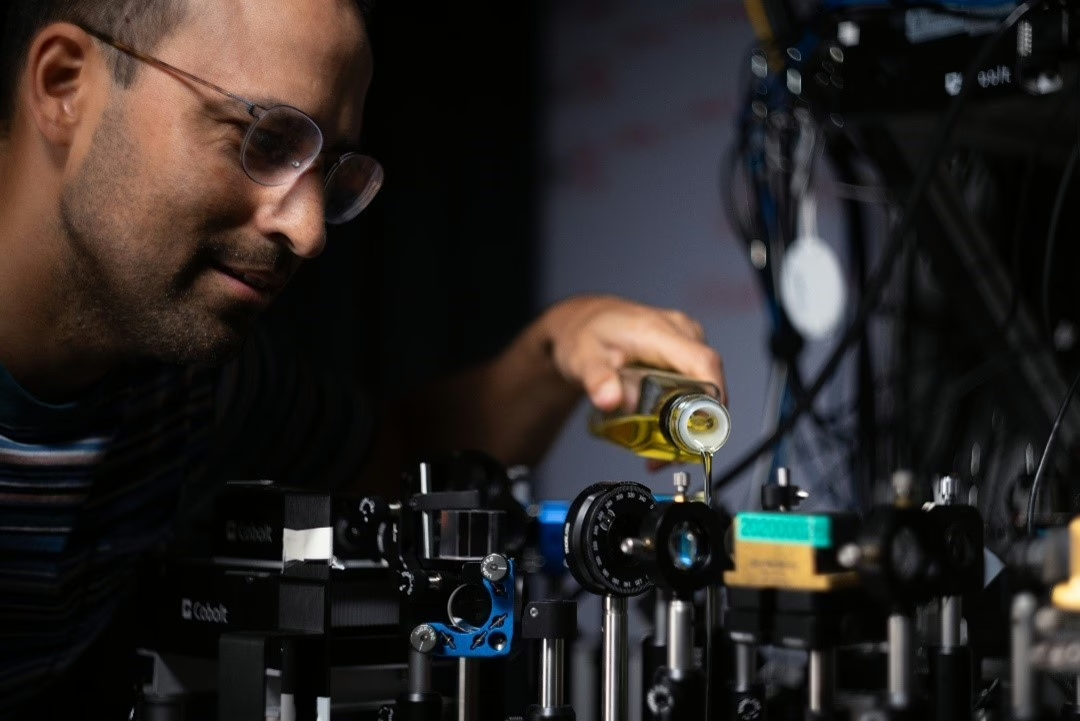
Scientists at AMOLF and the University of Madrid have observed and described unique and spontaneous symmetry breaking in a metallic grating. By covering the grating with oil, they created a non-linear optical response with memory in the system. This resulted in asymmetric diffraction, even though the grating and illumination were symmetrical. Such behavior opens opportunities for better resolution in imaging and sensing methods with gratings. The scientists published their findings in Physical Review Letters on 27 September 2024.