Research highlights

Live experiment on WNL op Zondag TV program by Wim Noorduin

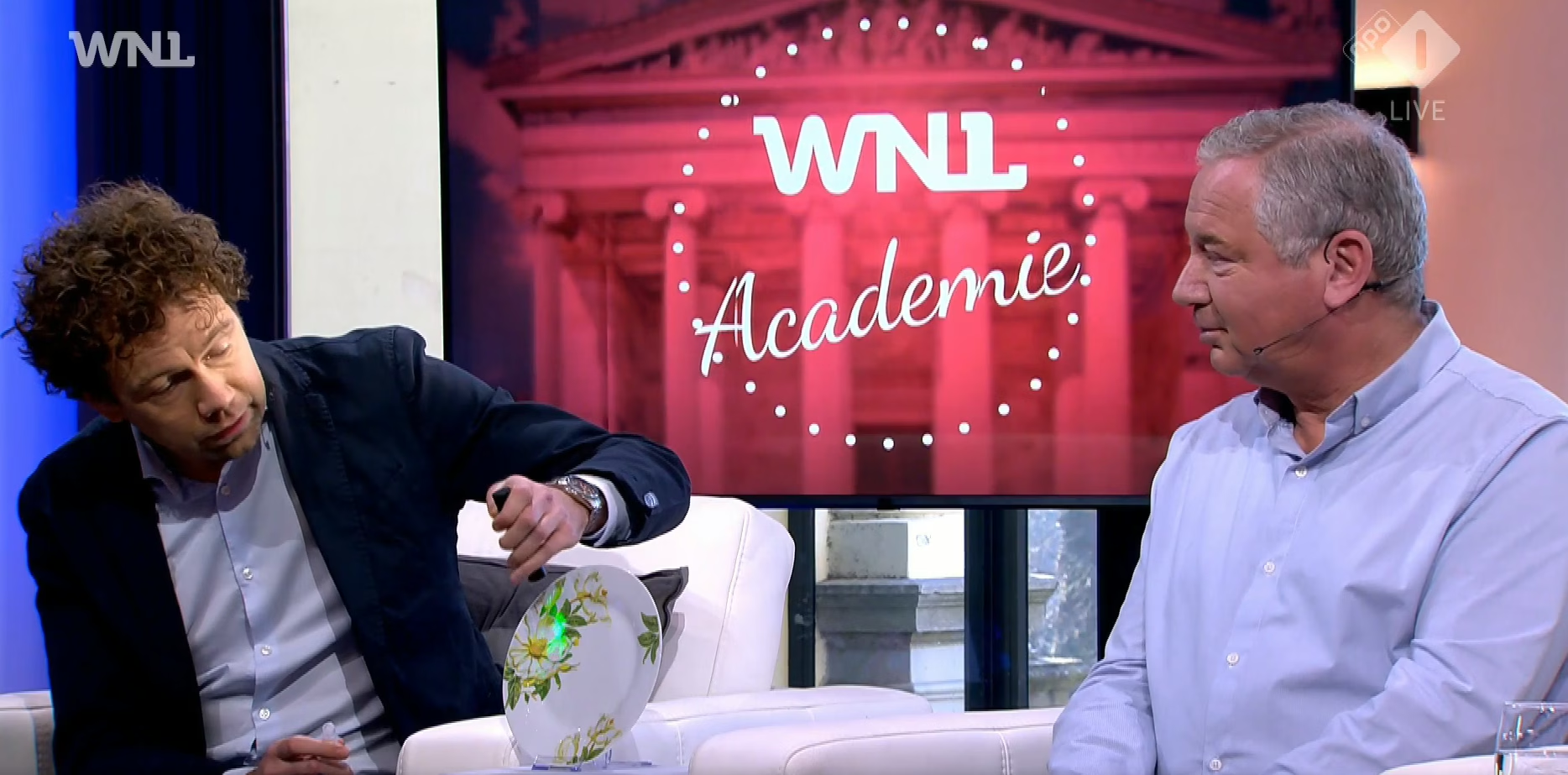
Yesterday, Wim Noorduin demonstrated the lead detection test developed by him and his research team on the Dutch-language TV program ‘WNL op Zondag’. NWO president Marcel Levi, a regular guest on the show, had invited Wim to join him in sharing the fascinating story of his discovery. 

While many people think lead poisoning is a problem of the past, Wim shared a staggering statistic: 1 in 3 children worldwide suffer from lead poisoning. “And there is plenty of lead to be found right here in the city center of Amsterdam.” 

Wim came up with the idea for the test during the COVID pandemic while watching the local AT5 news report about lead poisoning in Amsterdam. While biking to work, he thought, “wouldn’t it be great if I could use semiconductors to make this problem visible?” His PhD student, Lukas Helmbrecht, sent him some materials, and he started experimenting—on his neighbor’s rooftop. 

How does it work? Actually, quite simple! “We have invented a chemical reaction that makes lead react with the spray in our test developed by our start-up company Lumetallix. As a result, ultra-small crystals are formed that light up bright green under UV light.”

A live demonstration on the TV program showed just how easy it is. The vintage plate and beer glass Wim brought to the show glowed bright green, indicating the presence of lead. Fortunately, the coffee mugs from the TV show, featuring their logo, turned out to be lead-free! 
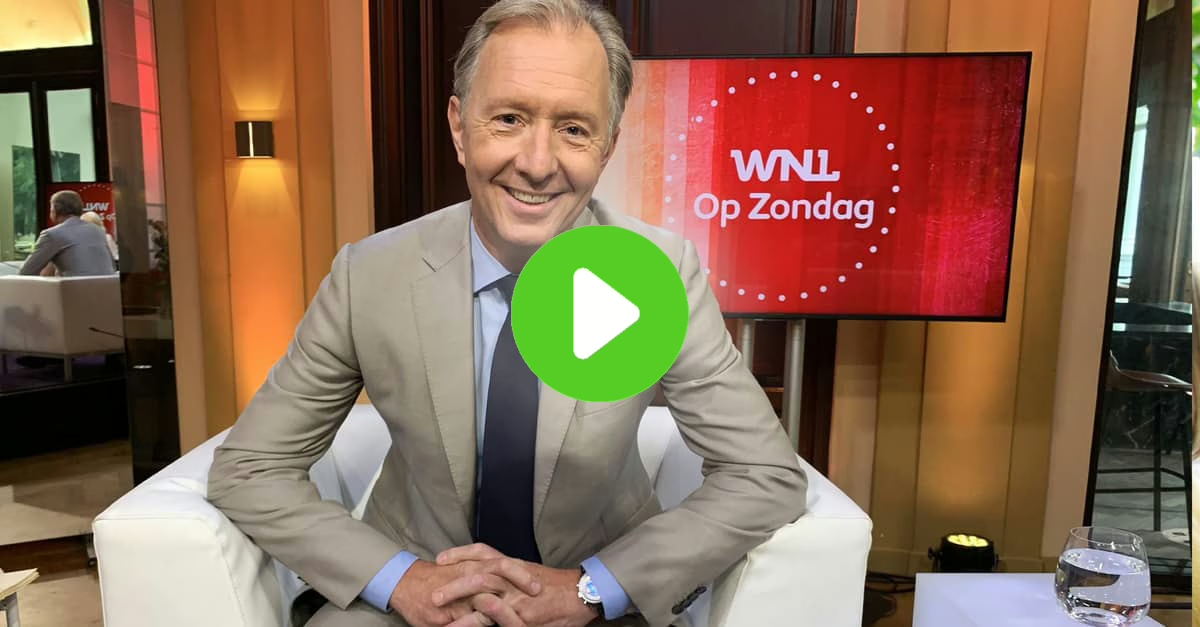
Wim Noorduin op WNL op zondag

Want to the show with Wim sharing his story and demonstrating the test? Wim his section will start on 52:00.

Watch this episode on the NPO website

Share article
What's happening

Most recent news items

All news items
Collaboration

Successful outcomes of international EBEAM program led by AMOLF

The EU Pathfinder project Electron Beams Enhancing Analytical Microscopy (EBEAM) that was recently completed has received a highly positive review of the European Innovation Council (EIC). EBEAM brought together eight European research institutions and companies, including AMOLF, that develop new concepts and instruments combining spectroscopic analysis with electron microscopy.

Read news item
Research highlights

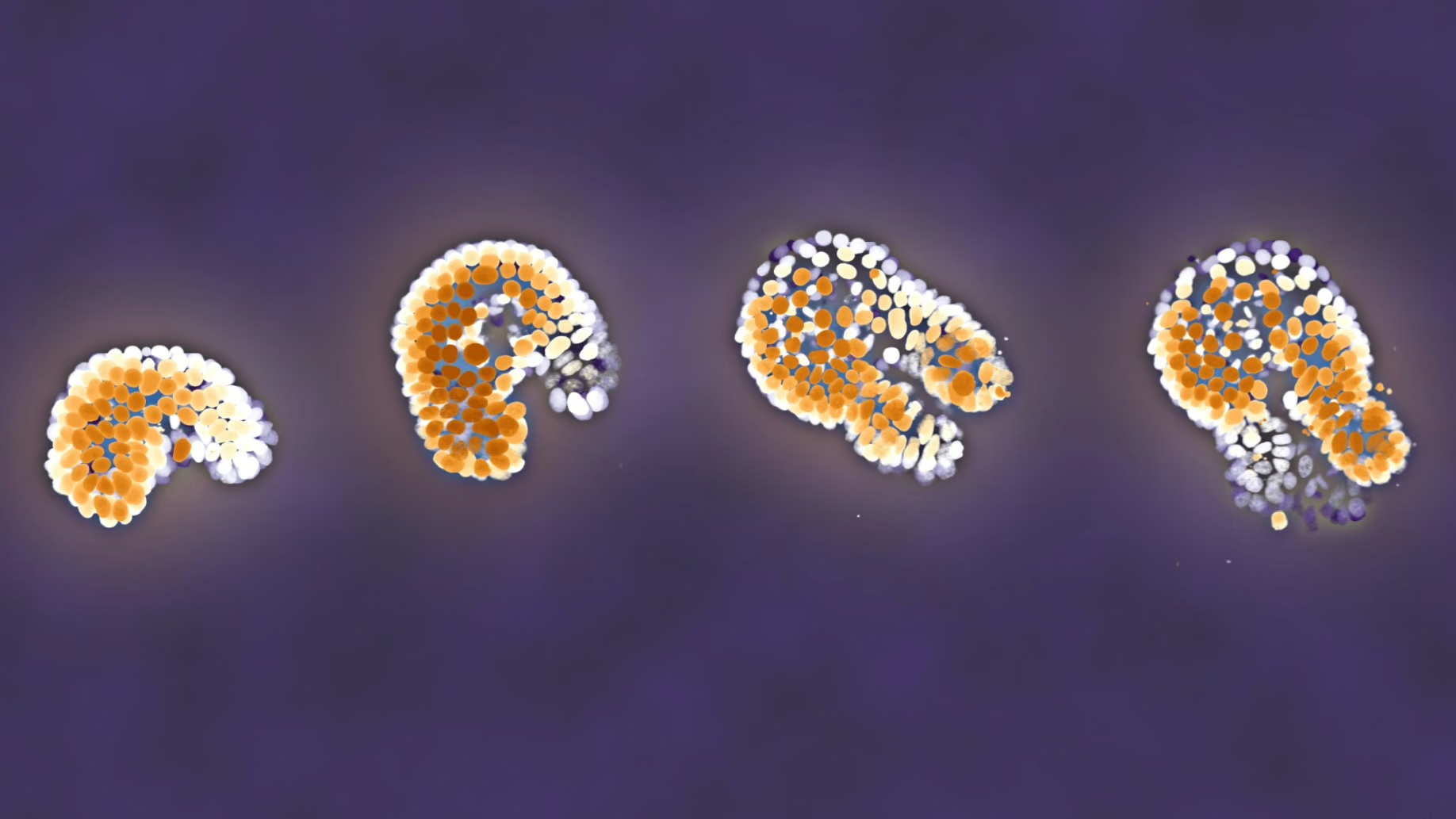
Everything you need to know about organoids

Organoids are instrumental in improving our understanding of processes that are otherwise hidden inside the body. For instance, these small 3D organs can be used to test medicines on tissue grown from a patient’s own cells. AMOLF researchers carry out unique and complex experiments to follow organoids in time. In order to enable other researchers to benefit from their experiences, they now publish their methods in the prestigious journal Nature Protocols.

Read news item
Events and outreach

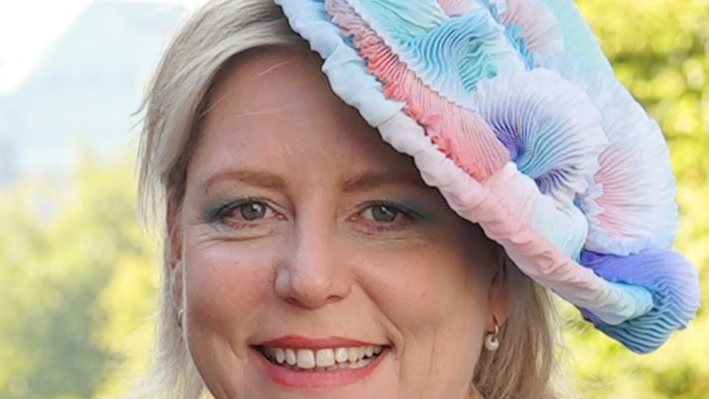
Minister Rianne Letschert wears hat and shoulder ornament inspired by Wim Noorduin’s research

This year at the opening of the parliamentary year (Prinsjesdag) Minister of Education, Culture and Science Rianne Letschert wears a spectacular hat and shoulder ornament. Both of them are inspired by the microscopic structures studied by group leader Wim Noorduin (AMOLF/UvA), which look remarkably like tiny flowers under a microscope. Artist and designer Malou Beemer translated these shapes, normally invisible to the naked eye, into wearable art.

Read news item
Nachi Stern, Group Leader Learning Machines at AMOLF
People and recognition

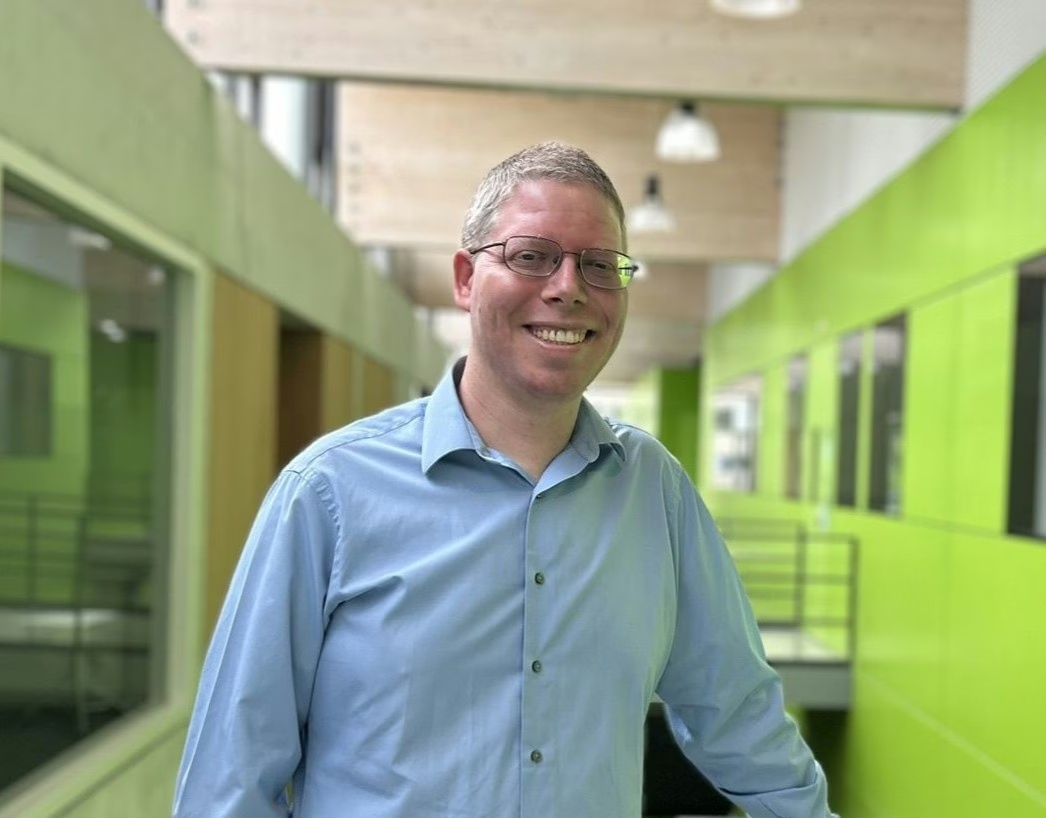
Nachi Stern awarded ERC Starting Grant to explore how matter learns

Why do brains learn, but rocks do not? Could a material one day adapt to its environment the way a living organism does? AMOLF group leader Dr. Nachi Stern has been awarded an ERC Starting Grant to investigate the physical laws of learning, in a project called, “Physical Learning in Dynamical Systems.”

Read news item
Stay informed

Get the latest research highlights, events, and news from our institute delivered to your inbox