Research highlights

Computers that work like our brain: Menachem Stern takes on the challenge

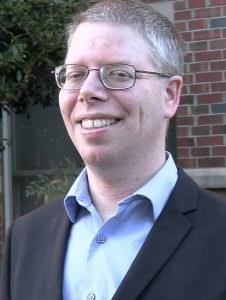
Menachem Stern started at AMOLF as a group leader on August 1st. His research group, Learning Machines, focuses on topics such as power-efficient algorithms for neuromorphic computers. Recently, the Journal of the Association for Computing Machinery (ACM) published an article titled “Controlling AI’s Growing Energy Needs,” which features an interview with Menachem about his work.

Group leader Menachem Stern

Neuromorphic computers are gaining significant attention due to their numerous advantages. Unlike traditional computers, which separate computation from memory, neuromorphic systems mimic the way the brain operates. As a result, they consume considerably less energy—an important benefit given the anticipated increase in global electricity demand.

While learning is generally discussed in the context of computers or the brain, Menachem says, “I think about it in a more physical context that applies to smart materials as well as adaptive biological systems without brains, such as the vascular and immune system in our own bodies.”

Information in Matter

Menachem’s research group is part of the Information in Matter theme at AMOLF. Here, he finds colleagues who share similar research questions but approach them from different perspectives. For example, Marc Serra Garcia’s group, Hyper Smart Matter, aims to design and build complex materials that manipulate sound waves to process information. Additionally, researchers like Tom Shimizu (Physics of Behavior) and Pieter Rein ten Wolde (Biochemical Networks) are likely candidates to explore how Menachem’s ideas can be applied to biological systems.

Before joining AMOLF, Menachem worked as a postdoctoral researcher at the University of Pennsylvania. Together with colleagues at the university, he developed a prototype of a neuromorphic computer in the form of an electronic circuit with adaptive resistive elements, which learns without the assistance of any standard computer.

Learn more

For more information, read the interview with Menachem Stern in the Journal of the Association for Computing Machinery (ACM).

Controlling AI’s growing energy needs

Share article
What's happening

Most recent news items

All news items
Natural phenomena ‘hyperuniform disorder’ enables highly efficient, thin silicon solar cells
Research highlights

Natural phenomena ‘hyperuniform disorder’ enables highly efficient, thin silicon solar cells

Silicon solar panels are rigid and heavy, and many rooftops cannot support them. This creates a need for thin, flexible solar cells that can be integrated into building materials. However, making silicon solar cells thinner makes it harder to trap light inside the material. Researchers in the 3D Photovoltaics group found a fascinating way to overcome this challenge using a phenomenon called hyperuniform disorder. They publish their findings in the journal ACS Photonics.

The researchers were able to make highly efficient silicon solar cell materials that are 30 times thinner than conventional ones. They managed to do this by integrating a layer of nanometer sized structures on top of the material. Up close, this pattern looks random, but it is remarkably when you step back: no clumps, no gaps, and no repeating pattern. This is called hyperuniform disorder (or HUD).

Read news item
Off Road grant for a better understanding of intestinal cells that communicate with the immune system
People and recognition

Off Road grant for a better understanding of intestinal cells that communicate with the immune system

AMOLF postdoc Dr. Susanna Eli received an Off Road grant from ZonMw to investigate cells known as M cells in the gut lining that connect the intestine to the immune system. Understanding how M cells develop could ultimately contribute to better treatments for intestinal and immune-related diseases. The grant amounts to 100,000 euros.

Read news item
Science for all ages at Wetenschapsdag 2026
Events and outreach

Science for all ages at Wetenschapsdag 2026

Each year during the national Weekend of Science, AMOLF opens its doors to visitors of all ages to share our enthusiasm for science. AMOLF organizes Wetenschapsdag together with four other research organizations at Amsterdam Science Park: ARCNL, Nikhef, CWI, and University of Amsterdam.

Read news item
About AMOLF

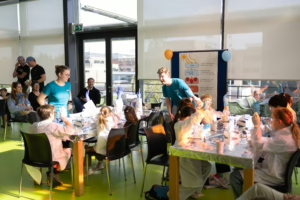
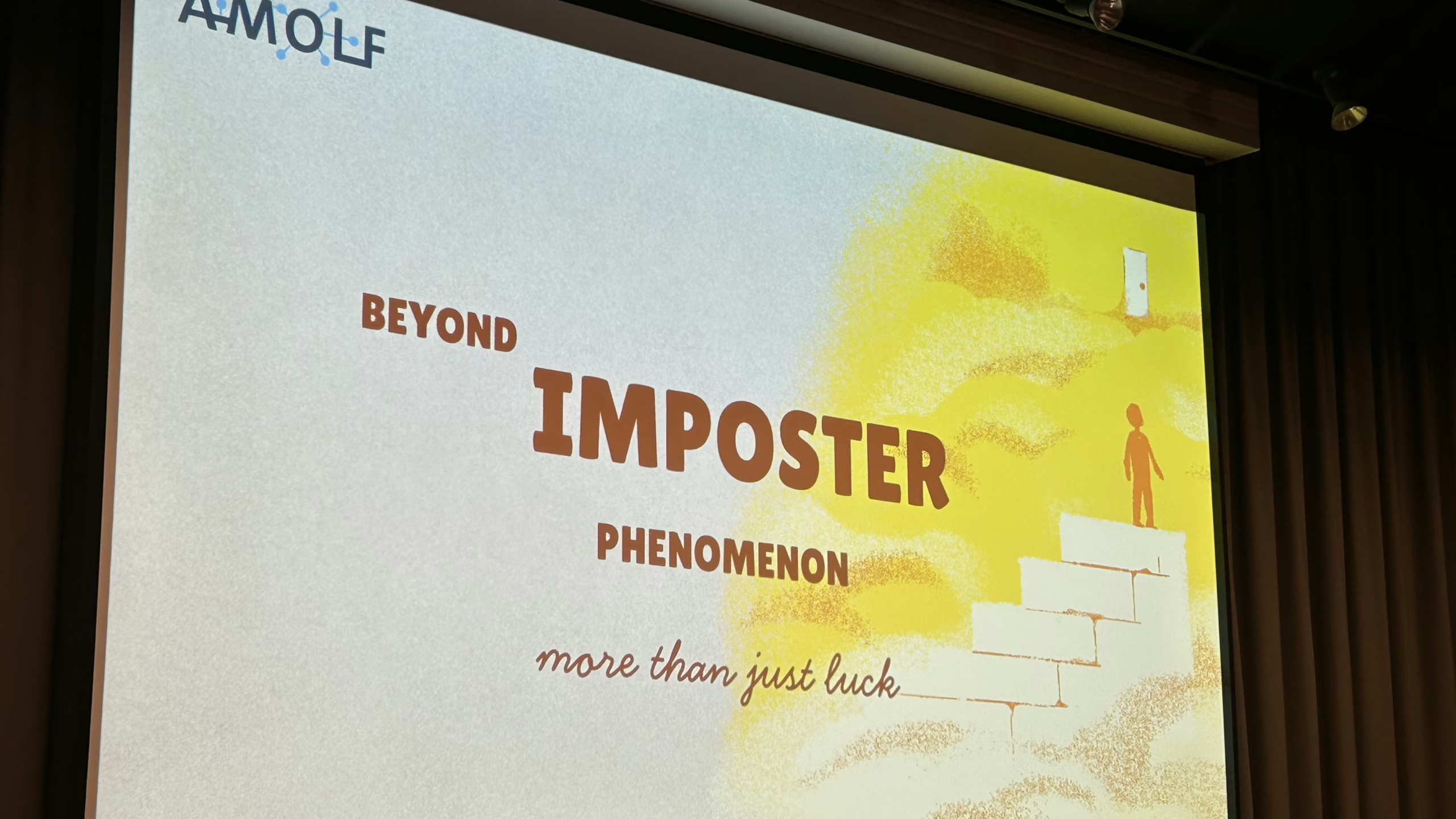
Annual AMOLF Diversity Day focuses on Impostor Phenomenon

Once a year, the AMOLF Inclusion and Diversity team organizes Diversity Day for all AMOLF employees. On October 1, this year’s event took place with the theme Beyond Impostor Phenomenon – More Than Just Luck.

Read news item
Stay informed

Get the latest research highlights, events, and news from our institute delivered to your inbox