
News & updates
Latest developments from our institute
Stay informed about new research results, awards, events, and collaborations across our scientific community.
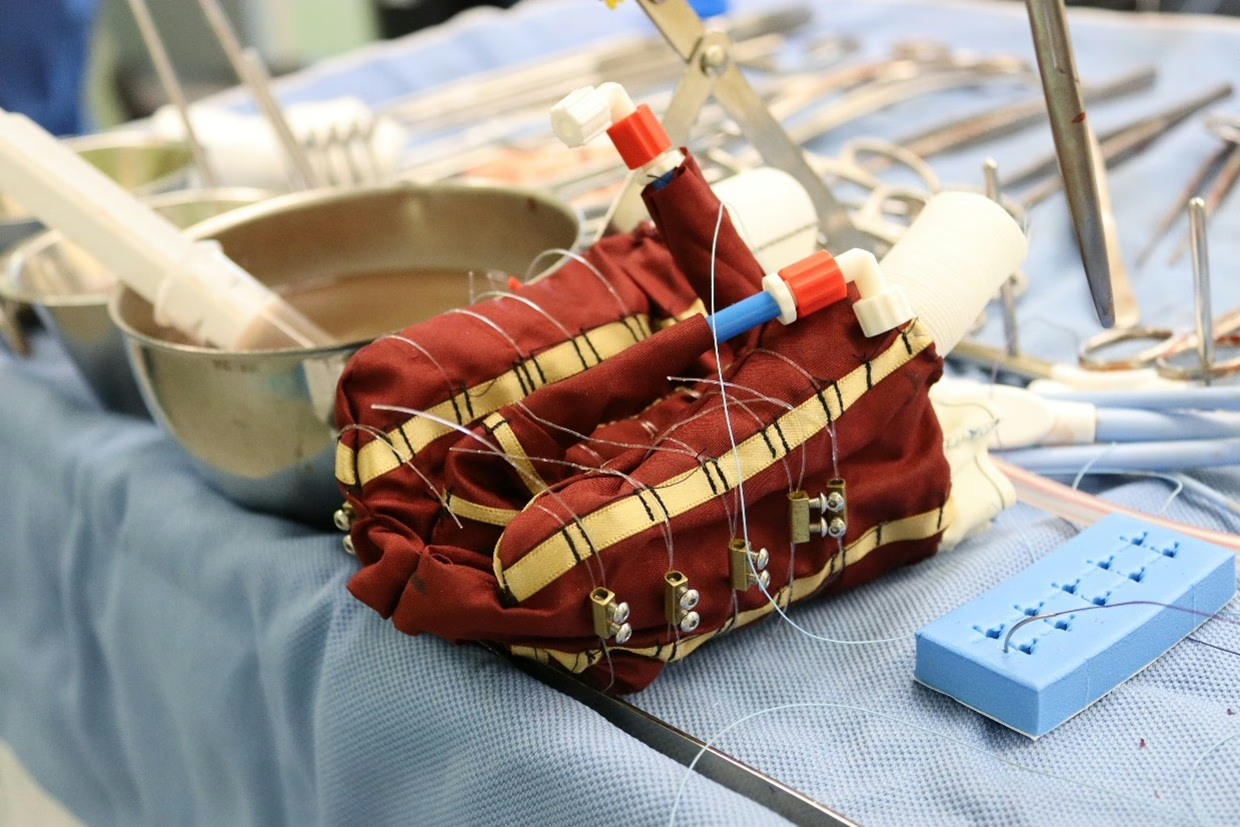
Breakthrough in heart technology: prototype of first soft robotic artificial heart
An international team of researchers with AMOLF group leader Bas Overvelde, has taken the first steps towards developing a new type of artificial heart that combines soft robotics with advanced biomaterials. This so-called ‘Hybrid Heart’ has been published in the journal Nature Communications on June 3rd.
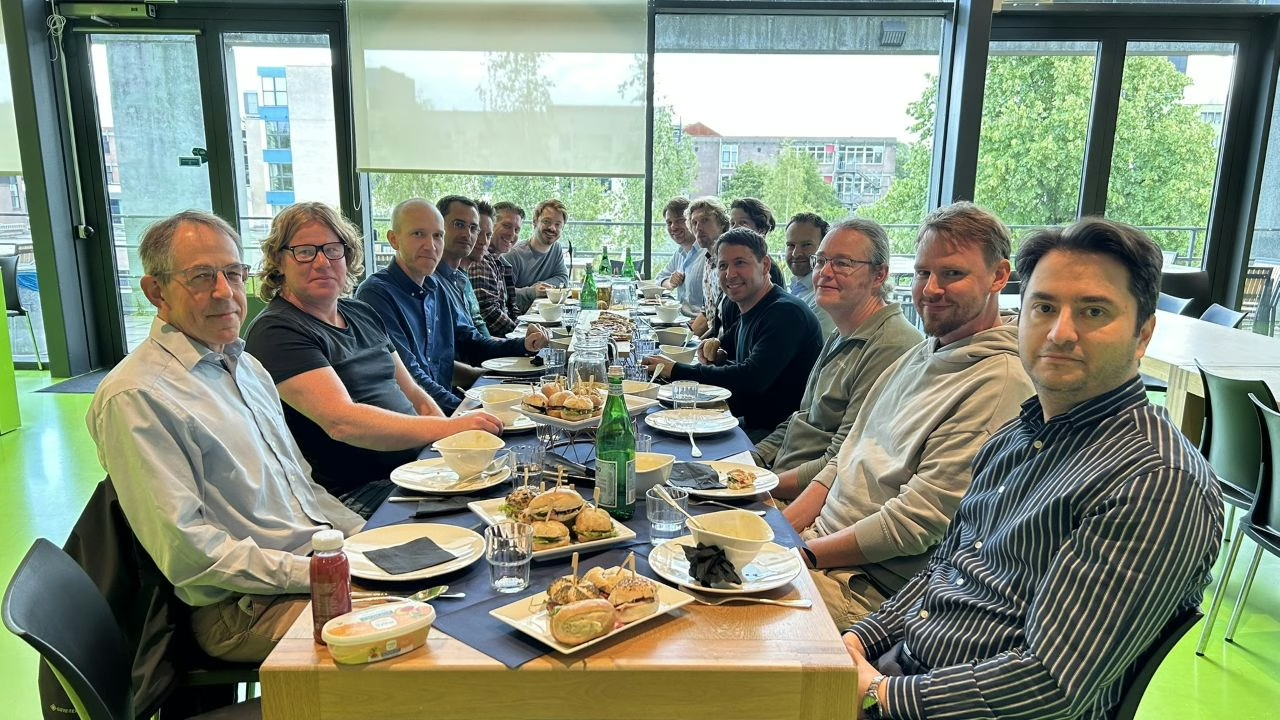
AMOLF, CWI, and DIFFER launch HELIOS project with NWO-I funding
An AMOLF collaboration with CWI and DIFFER has received funding from NWO-I to launch a joint project: HELIOS: AI-guided materials discovery facility for solar energy materials. On Friday, May 23rd, representatives from the three institutes gathered for the kick-off meeting to discuss the roadmap toward developing a highly efficient multilayered halide perovskite solar cell.
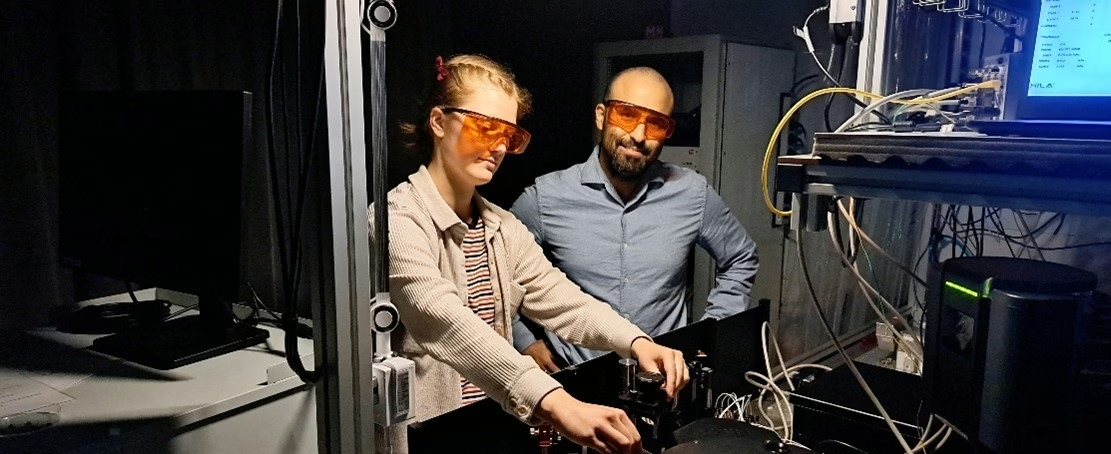
New properties discovered in promising optical materials
Halide perovskites are being studied throughout the world as promising materials for harvesting and controlling light, due to their unique optical and electrical properties. Now, for the first time, researchers have observed optical nonlinearity in a halide perovskite crystal under continuous laser illumination. With the discovery of these properties, published in Nature Photonics, researchers at AMOLF expand the possibilities for studies of atomic structure, electronics, and communication technologies.
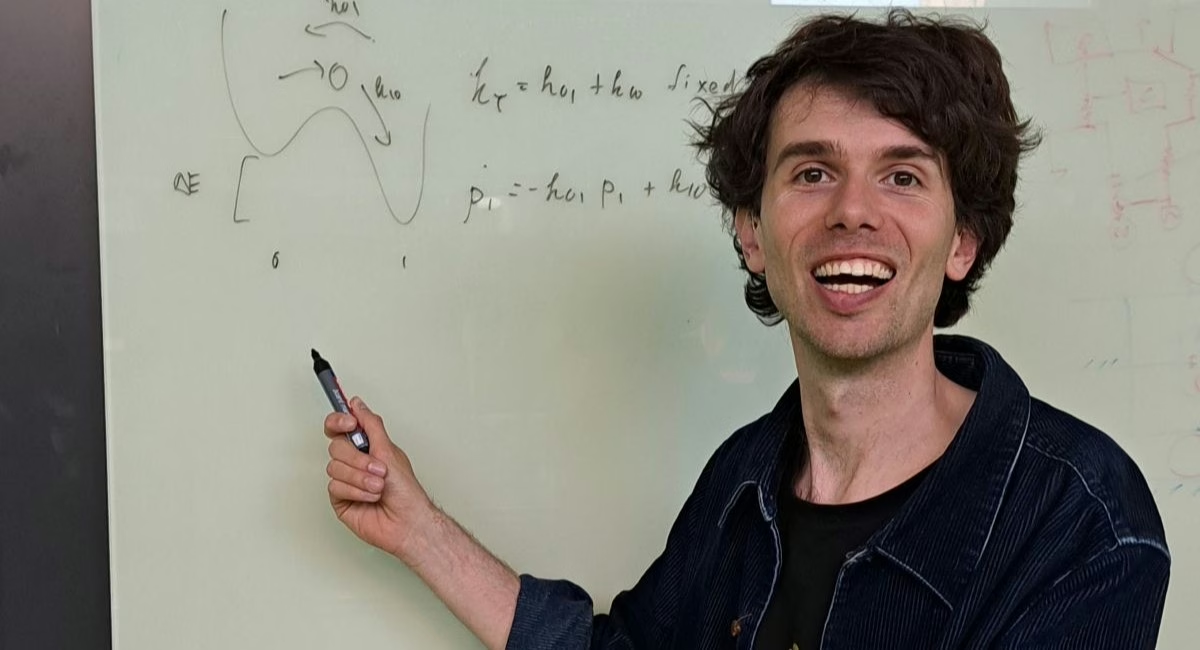
Optimizing bit-by-bit operations for energy-efficient computing
How can we make computing more energy-efficient when nature itself introduces randomness at every step? At the intersection of physics and information science, researchers from AMOLF and Imperial College London explore how thermal noise interferes with the physical switching of bits in computing devices. Their new work, published in Physical Review E, reveals that how we measure these state changes can make a surprising difference in designing the most efficient computational protocols.
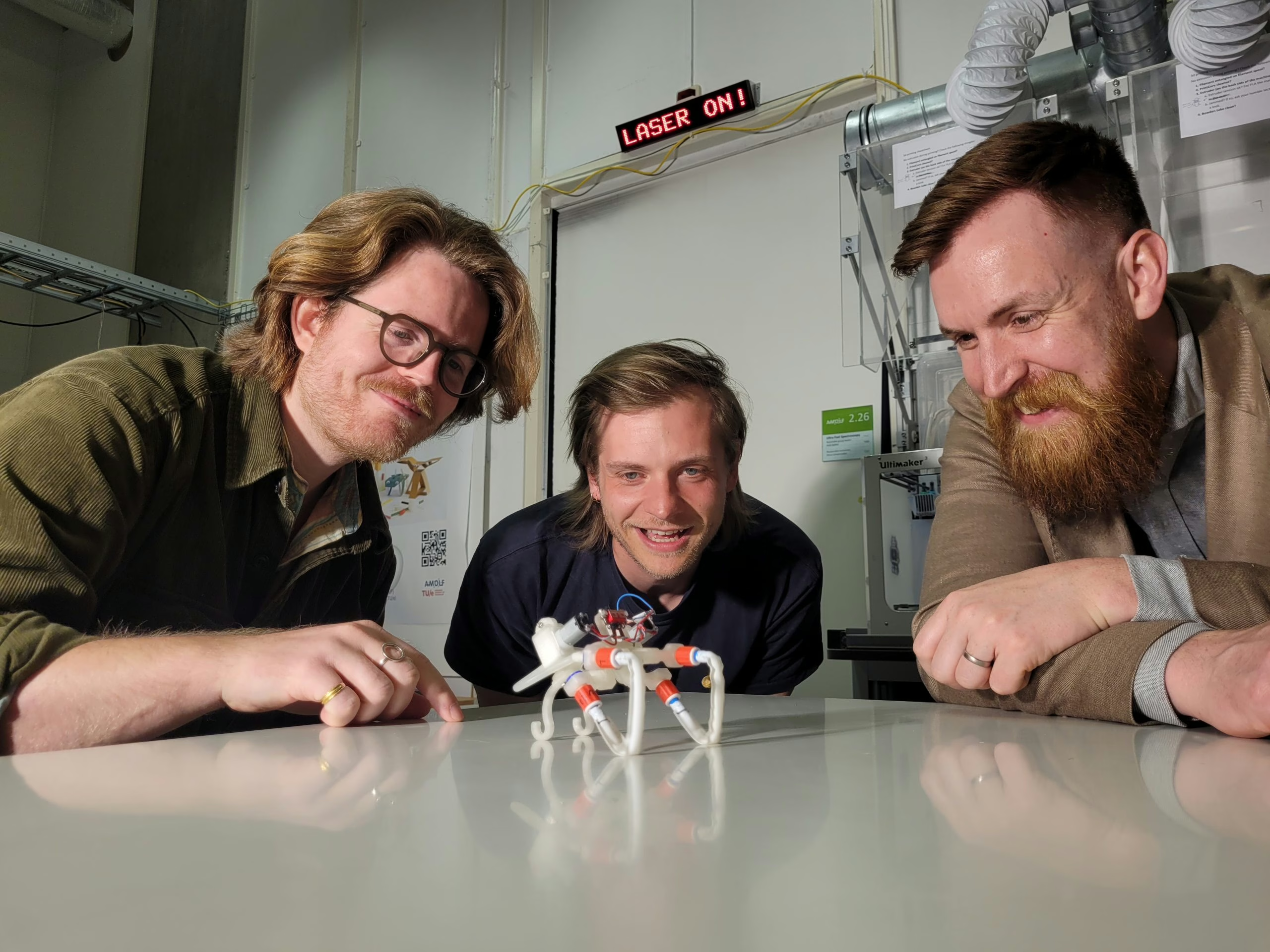
This soft robot “thinks” with its legs
A research team from AMOLF created a soft robot that walks, hops, and swims — all without a brain, electronics, or AI. Just soft tubes, air, and some clever physics. Possible future applications range from smart pills to space tech.
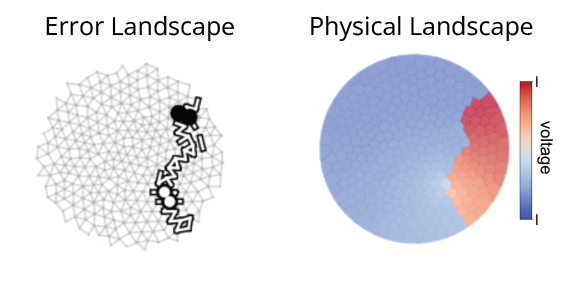
Research shows physical networks become what they learn
In an article published in Physical Review Letters on April 11th, theoretical physicist Menachem Stern describes his latest findings on physical learning. This is a new research field that connects how neural networks learn with how living systems evolve and adapt. One of the advantages of physical learning is that it is extremely energy efficient, which is different from machine learning models, like ChatGPT, that use substantial amounts of energy.
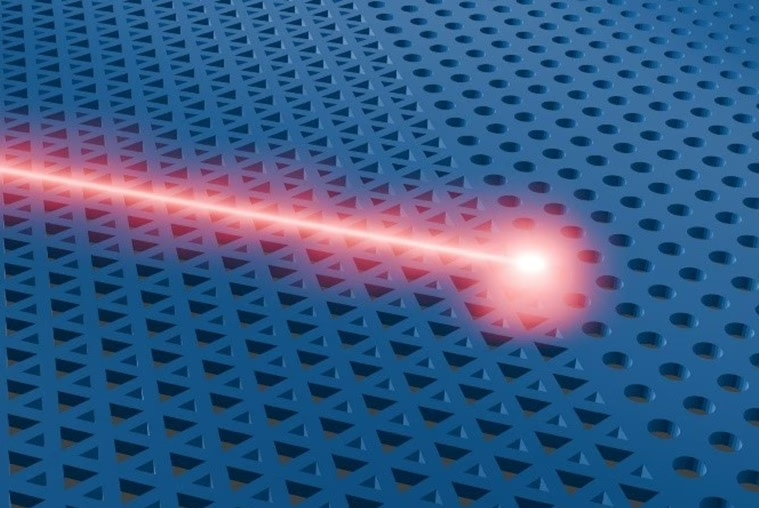
A new mechanism for concentrating light on a chip
Concentrating light in a volume as small as the wavelength itself is a challenge that is crucial for numerous applications. Researchers from AMOLF, TU Delft, and Cornell University in the USA have demonstrated a new way to focus light on an extremely small scale. Their method utilizes special properties of a photonic crystal and works for a broader spectrum of wavelengths than alternative methods. The researchers publish their findings in Science Advances on April 18th.
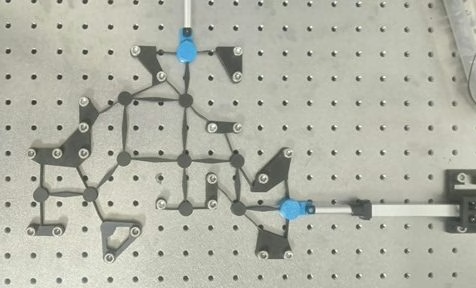
Soft materials that compute: can mechanics support AI?
A team of researchers at AMOLF has unveiled a remarkable discovery in physical computing: a soft, flexible material that can compute – not by electronics, but through its very shape and structure. This reprogrammable material, based on so-called “floppy modes”, can carry out matrix-vector multiplications, a mathematical operation fundamental to machine learning and artificial intelligence.