
News & updates
Latest developments from our institute
Stay informed about new research results, awards, events, and collaborations across our scientific community.
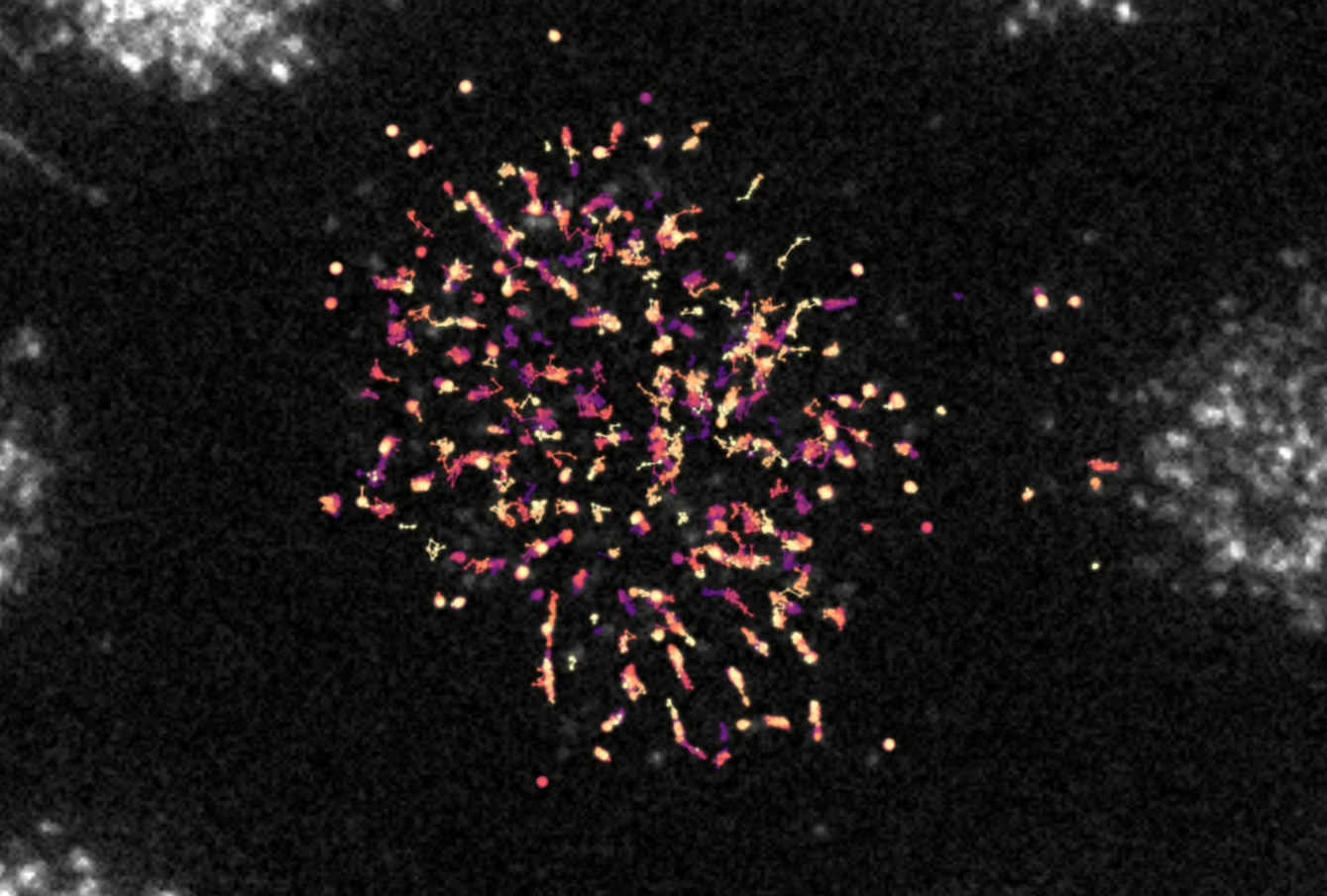
Immune cells regulate themselves through a newly discovered molecular interaction
Immune cells can regulate their own activity through a previously unknown molecular interaction on their surface, according to new research published in Science Signaling on December 9, 2025. Researchers from the Physics of Cellular Interactions group at AMOLF, together with collaborators, discovered that two proteins, MARCO and LAIR-1, can interact on the same immune cell to control inhibitory signaling. This main finding reveals a new way in which immune cells fine tune their behavior and helps explain how immune responses can be either restrained or released when needed.
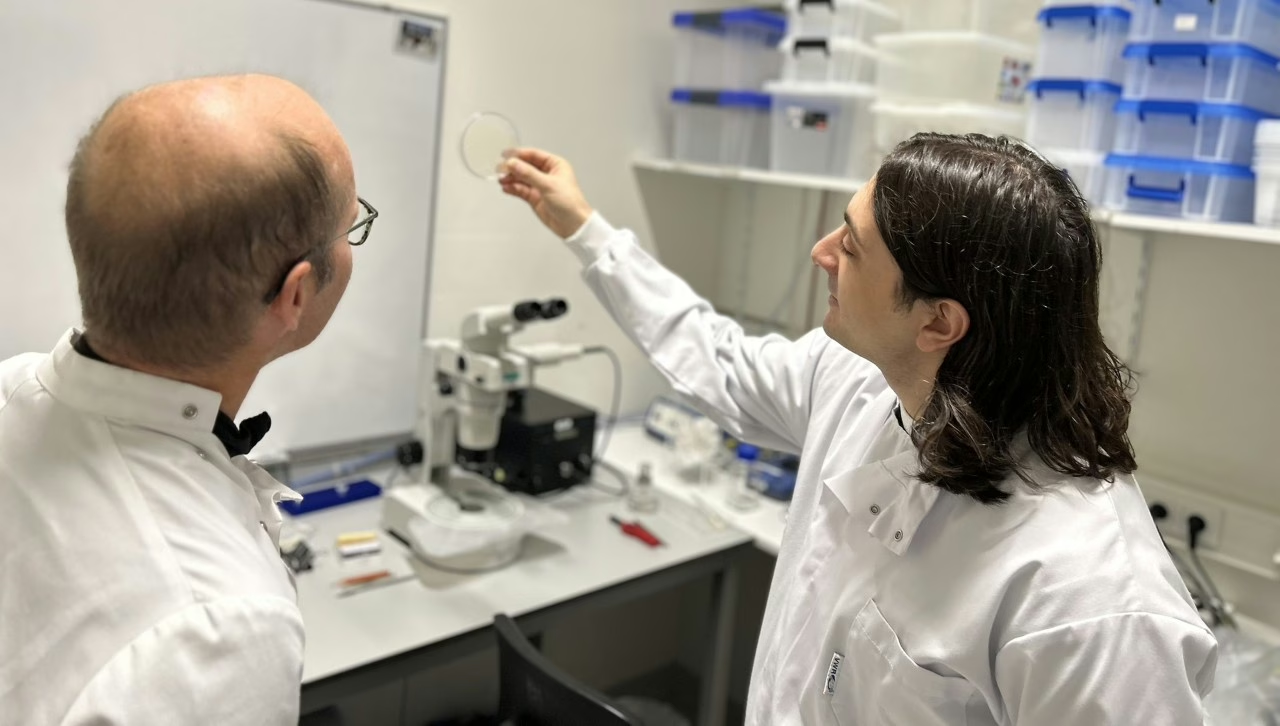
Rhythm contains important information for the cell
AMOLF researchers discovered a mysterious interplay of insulin signals in the worm C. elegans. The insulin-driven protein DAF-16 does not only move in and out of the cell nucleus in a complex rhythm, it does so at exactly the same moment in all cells of the body. Because of the many similarities between C. elegans and humans, the research may contribute to a better understanding of diseases such as diabetes, cancer and of ageing. The researchers published their findings in the journal Nature Communications on December 11.
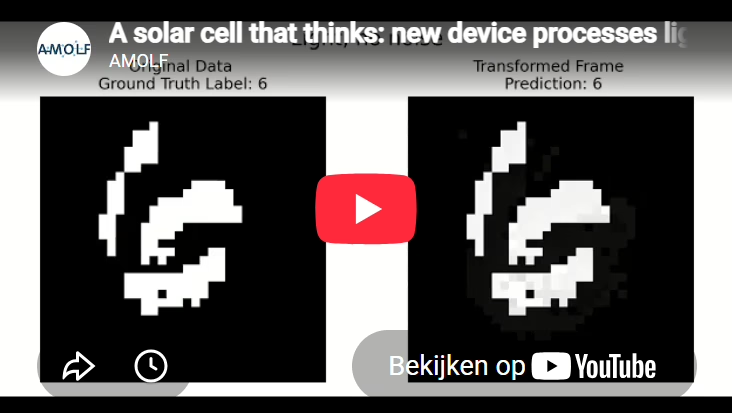
A solar cell that thinks: new device processes light similar to the human brain
Imagine a camera that cannot only see light but also understand what it sees without a computer, and even without being plugged in. AMOLF PhD student Jeroen de Boer from the Hybrid Solar Cells group has developed the first step towards such a device: a tiny light sensor that also processes information, inspired by how the human brain works. His findings were published in the journal Device on December 17.
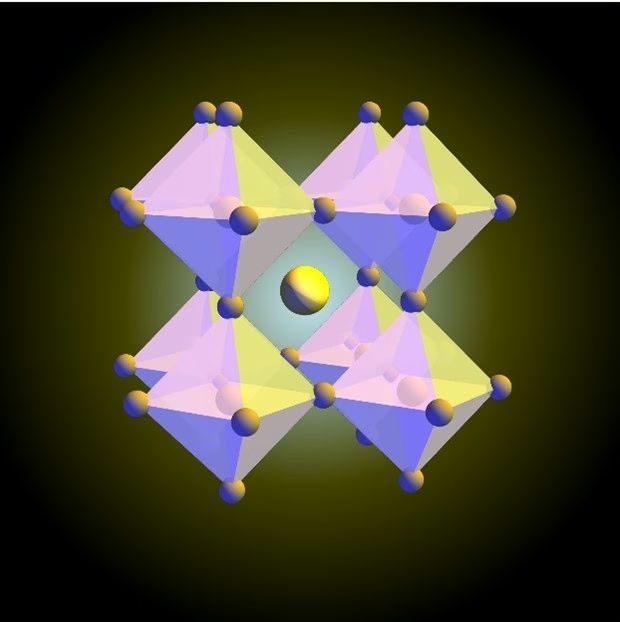
A smart new way to study mobile ions in perovskite solar cells
Researchers in the Hybrid Solar Cells group have developed a simple new method to study mobile ions in perovskite solar cells. These ions play a key role in the degradation of the cells, so understanding them is essential to make more stable solar devices.
A new view on state switching in materials
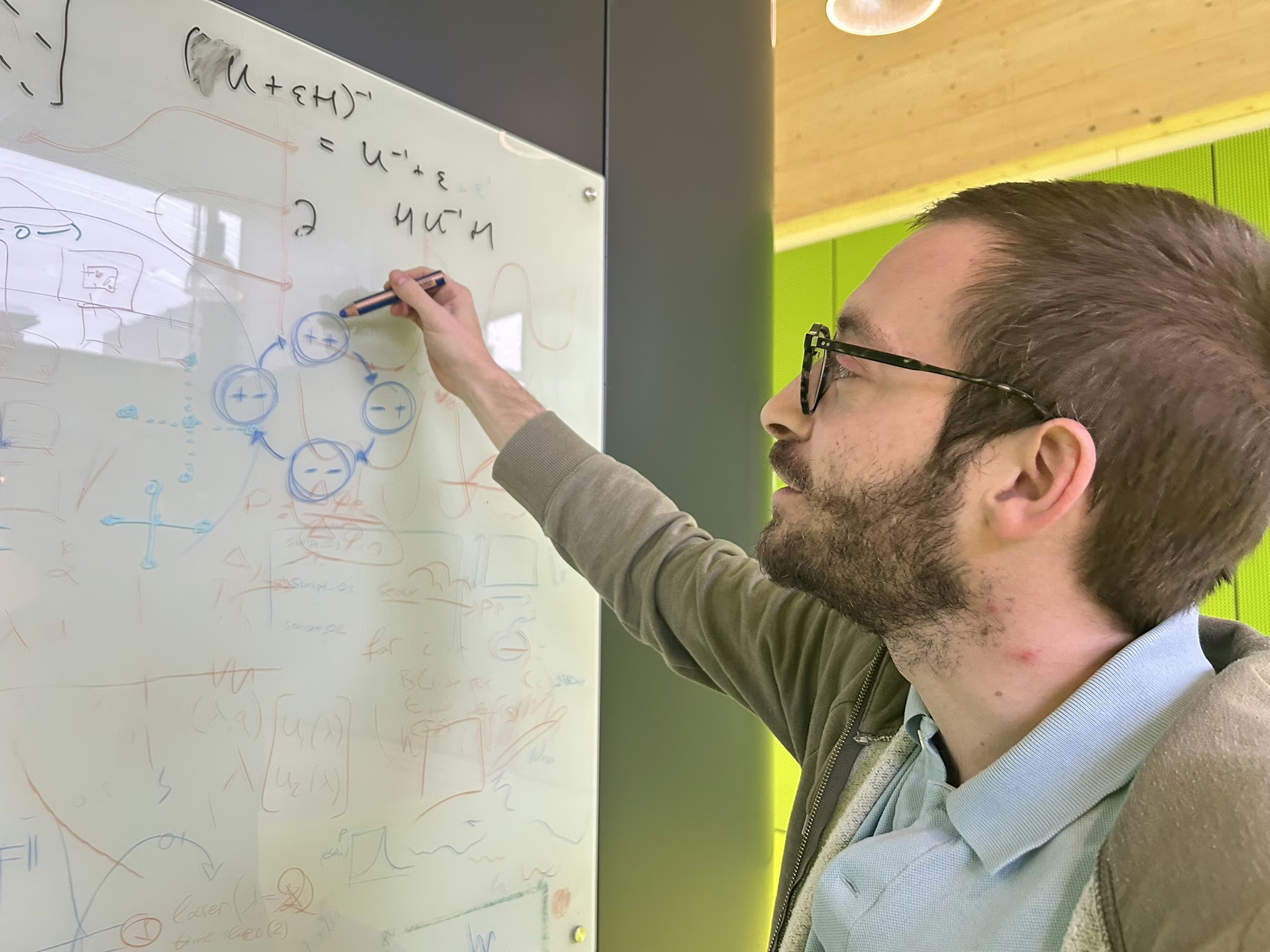
AMOLF researchers in the group of Martin van Hecke working on theoretical models for disordered materials, discovered how these systems can start switching between states in unexpected ways. The results open new ways to model materials that show memory effects and could influence fields ranging from soft robotics to biophysics. They published their findings in the journal Physical Review Letters on November 13.

Start of METAPIC project building metasurface pixels
Together with collaborators, AMOLF group leader Femius Koenderink has received funding for the METAPIC project from the Photon Delta call of the Dutch Research Council (NWO).
Soft robots that remember
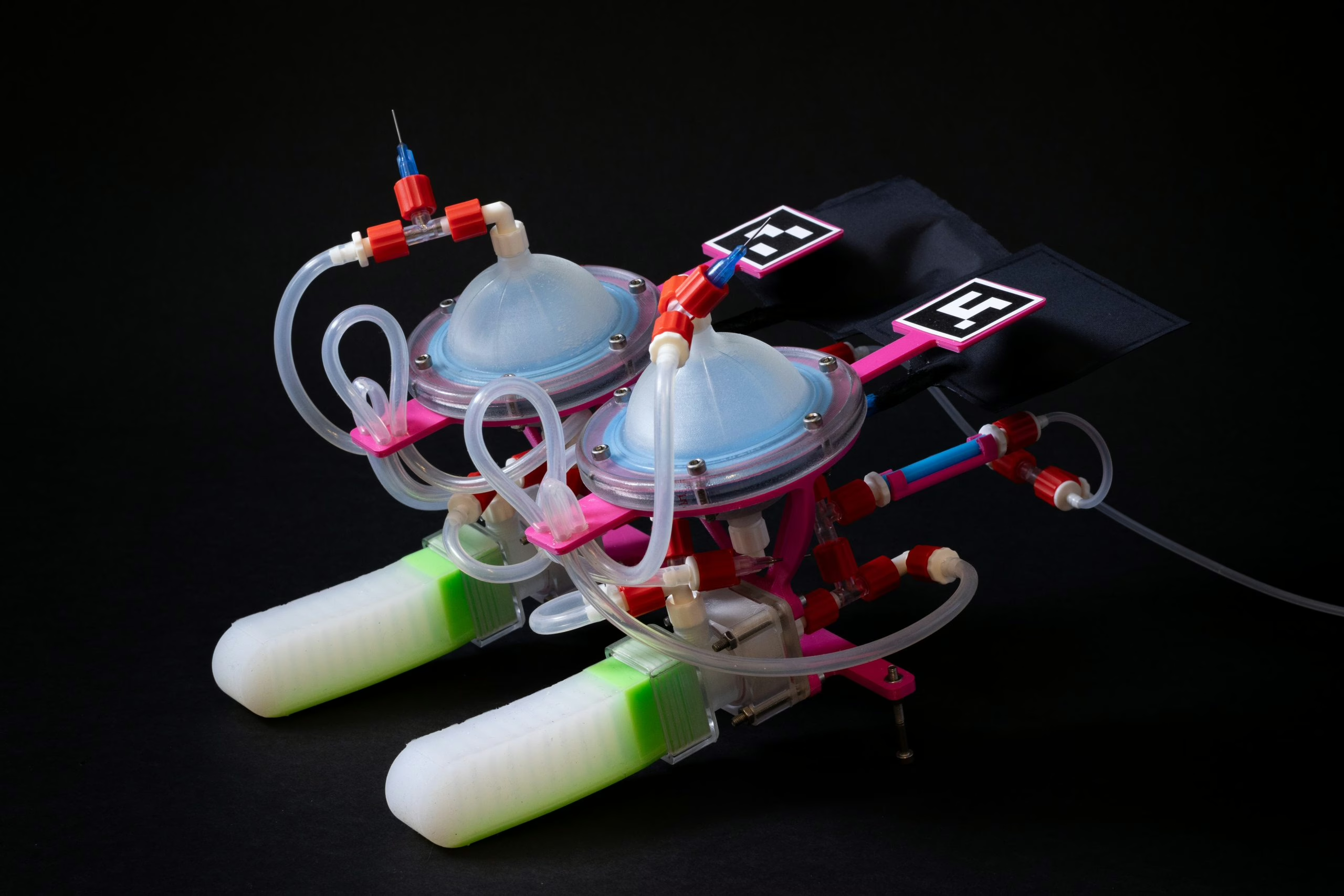
Alberto Comoretto and his colleagues in the Soft Robotic Matter group at AMOLF have created soft robots that can remember past events – without using computers or electronics. Instead, their memory is built into the robot’s flexible body. The researchers published their paper in the Cell press journal Device, and the robot was even featured on the cover of this journal.
New algorithm improves ability to track movements of cells in organs
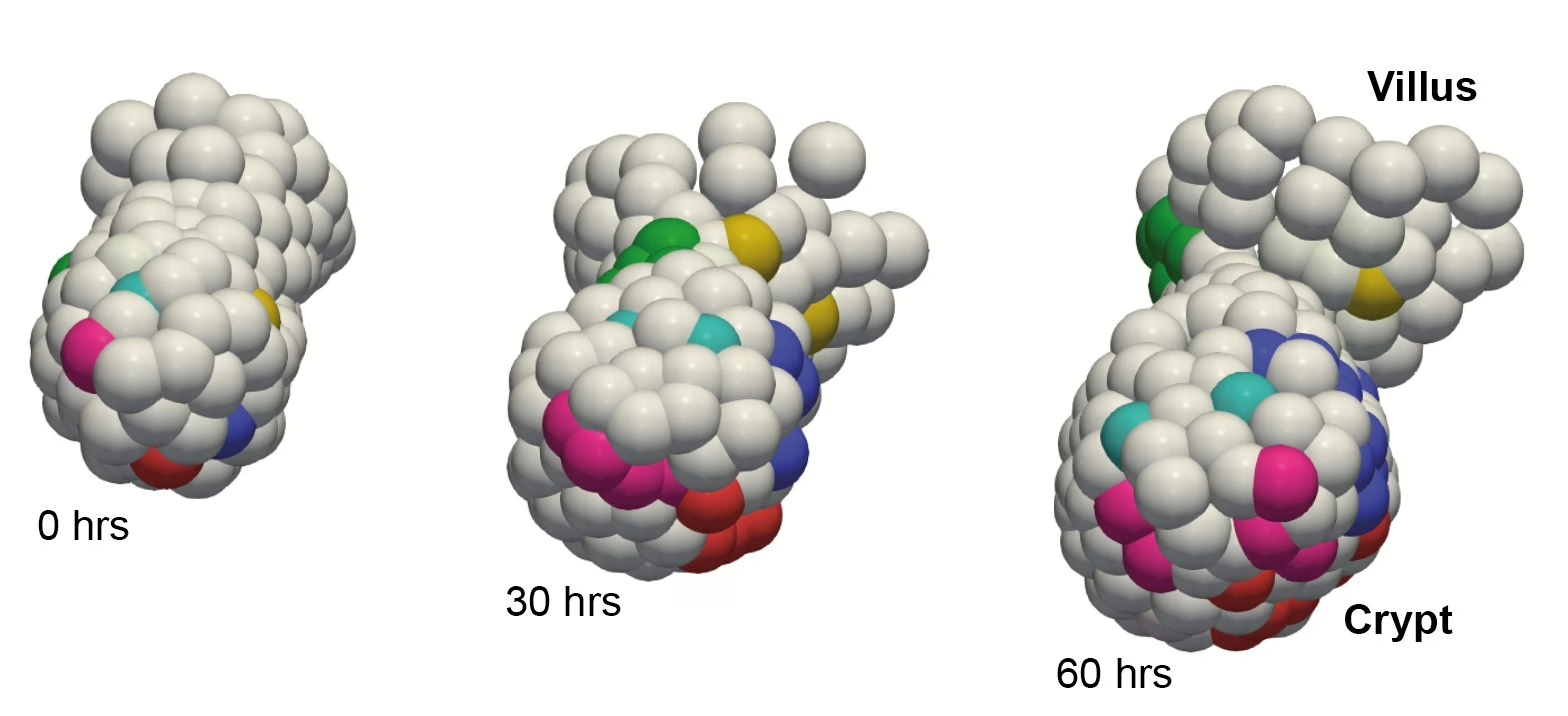
Frustrated by the time cost of manually checking cell tracking data, AMOLF PhD student Max Betjes developed an algorithm to more efficient cell-tracking analysis. He validated this automated analysis on cell movements in miniature organs, and the results are now published in Nature Methods.