
News & updates
Latest developments from our institute
Stay informed about new research results, awards, events, and collaborations across our scientific community.
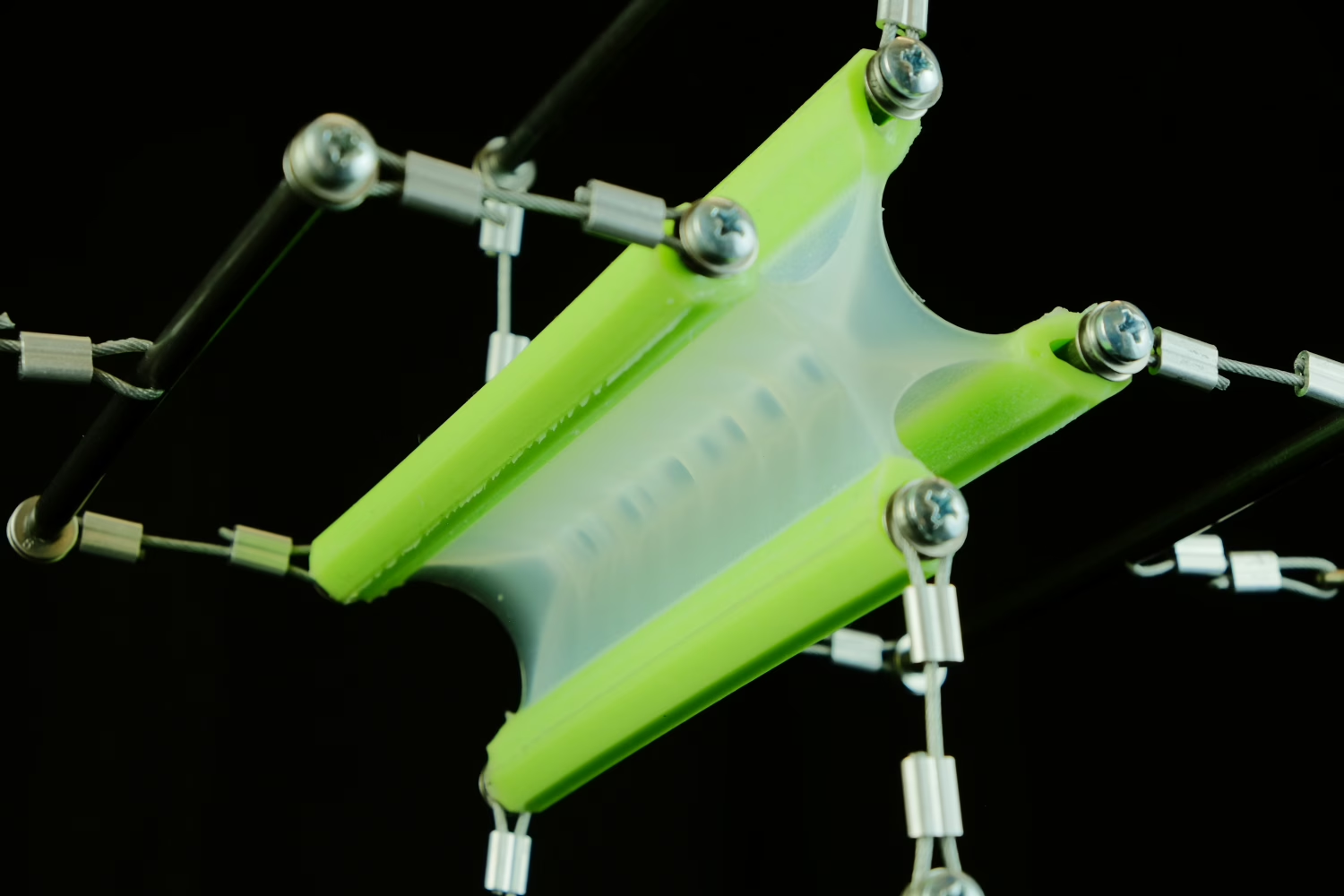
Tension instability flattens thick block
This summer Bas Overvelde started as tenure track group leader at AMOLF. During the first few months in Amsterdam he finished a project with former Harvard colleagues, which they published last month in Physical Review Letters. The team demonstrated for the first time experimentally that with the right amount of tensile force, a thick cube of soft material would undergo an elastic instability and suddenly deform into a thin, flat plate. Using tensile — stretching — forces, the team triggered this instability in a centimeters-thick elastomer block, deforming it into a flat surface.
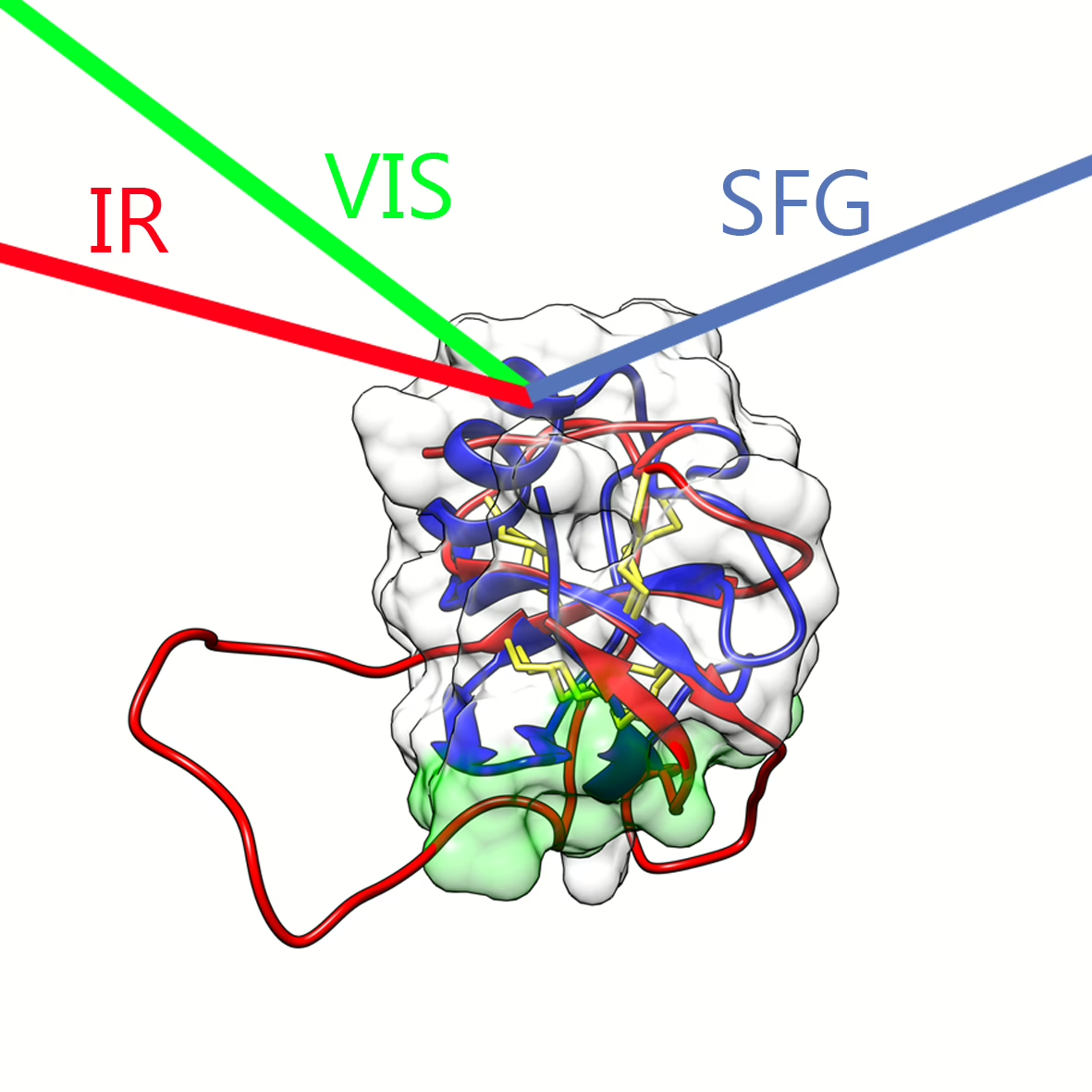
How do hydrophobins work at the water surface?
Hydrophobins are a group of highly surface-active proteins that are produced by fungi. They are known for their unique functions related to interfaces. Hydrophobins largely reduce the surface tension of water, strongly adhere to surfaces and form protective surface coatings, all functions that play important roles in fungal physiology. Hydrophobins are used in several industrial applications, such as foams, dispersions and functional coatings. These applications rely on the unique surface properties of hydrophobins characterized by the proteins’ self-assembly into robust films.

Understanding nanoscale solar cells
A team of researchers from the AMOLF-group Nanoscale Solar Cells and Eindhoven University of Technology have developed both a theory and an experimental method that provide the first detailed demonstration of how a nanoscale solar cell works. This had proved challenging until now due to the exceptionally small size of these solar cells. This new method has brought implementation of nanotechnology in the production of sustainable energy a step closer. The researchers published their results on 12 September 2016 in an article in Nature Nanotechnology.
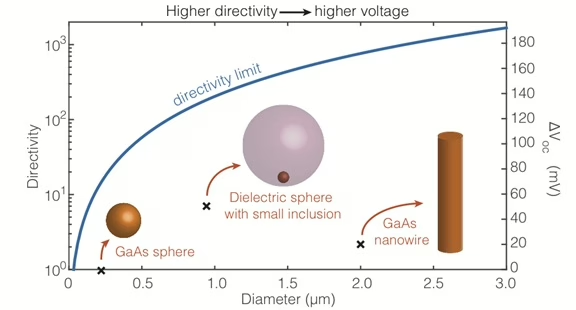
Nanotechnology can improve solar cell efficiencies via directional emission
Researchers from the Nanoscale Solar Cells group at AMOLF together with collaborators from the University of Texas, Austin, and Columbia University, New York, found that nanostructures can enable efficiencies above the so-called “Shockley-Queisser” limit, which limits the efficiency of a normal solar cell to 34%. These results were published in ACS Nano on September 1, 2016.
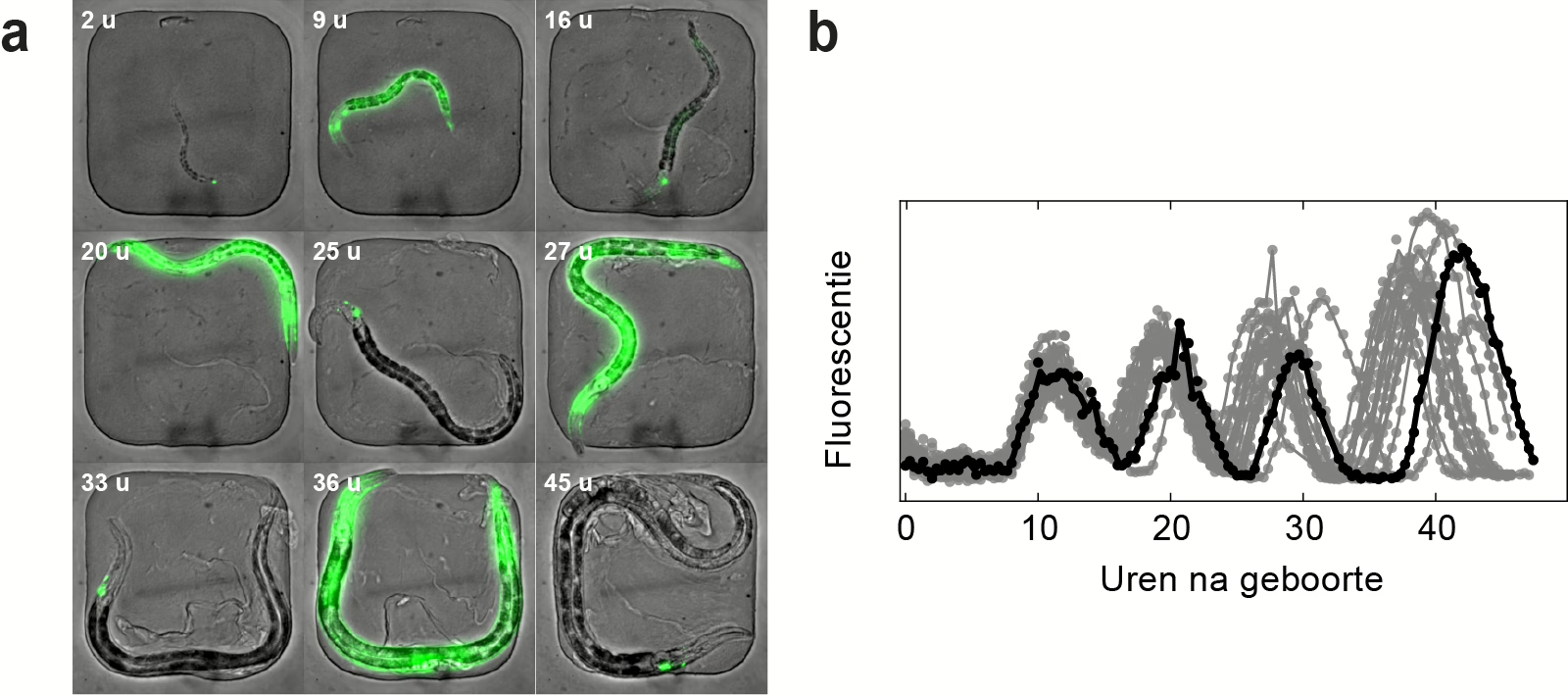
Premiere: watch the development of a larva into an adult worm live
Researchers from FOM institute AMOLF have developed a microscopy technique for the live tracking of development in the individual cells of a growing, eating and moving organism, the nematode worm Caenorhabditis elegans. The next step is to find out how environmental factors affect development. The researchers will publish their findings in Nature Communications, on August 25, 2016.
Building with flexible blocks
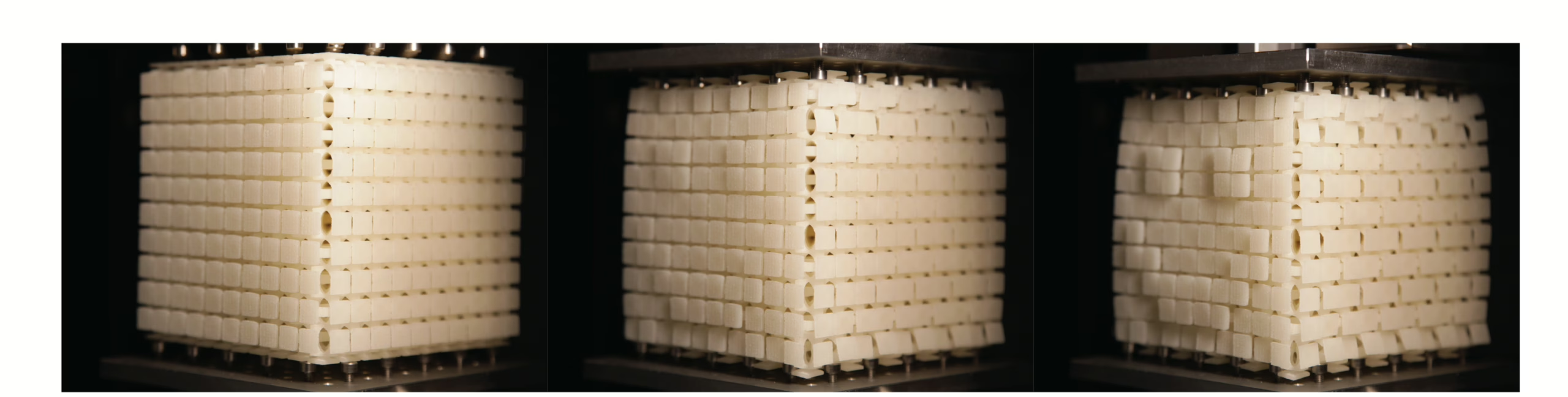
On an apparently normal cube a pattern of hollows and bulges appears when the cube is compressed. Physicists from FOM Institute AMOLF and Leiden University together with colleagues from Tel Aviv University have developed a method to design such three-dimensional structures and to construct these using simple building blocks. This paves the way for the use of ‘machine materials’ in, for example, prostheses and wearable technology. The researchers published their findings on 28 July in an article in Nature.
Demonstration of a flat lens for ultraviolet light
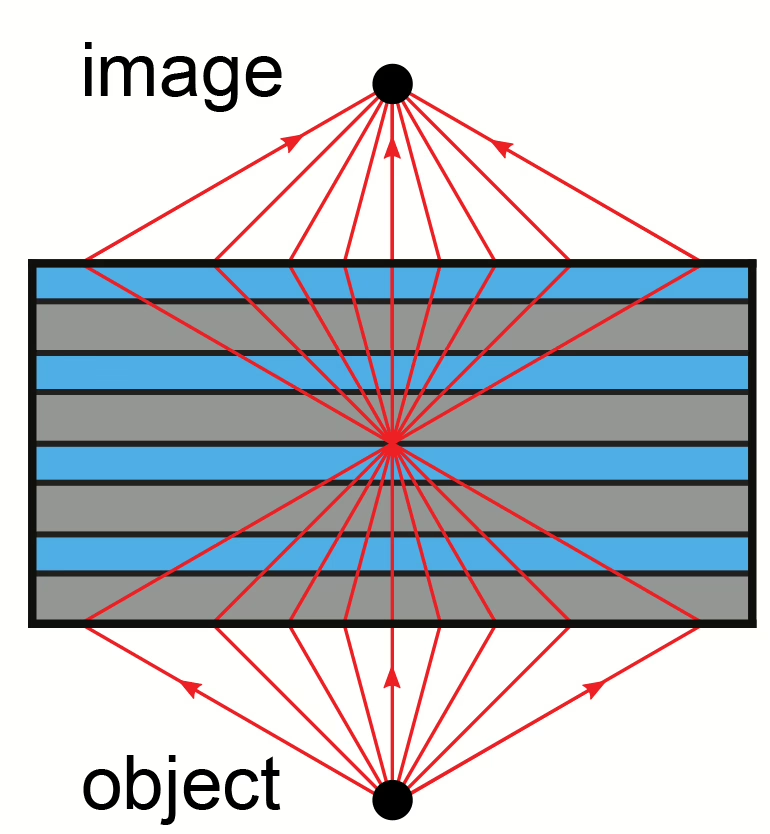
AMOLF researchers have created a new optical lens that is flat, rather than curved like a traditional glass lens. The lens operates by the mechanism of negative refraction, that was first predicted by Veselago in 1968 and focuses ultraviolet light to a diffraction-limited spot. It can find applications in ultracompact optical storage devices and ultrasmall microscopy instruments.
Proteins absorb water before unfolding
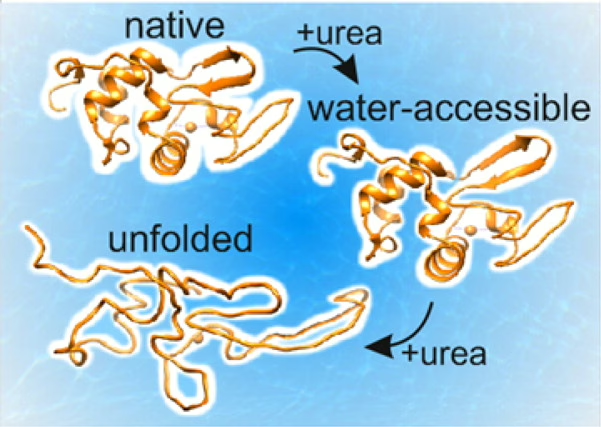
Proteins perform specific biological functions for which they strongly depend on their three-dimensional structure that results from the folding of the polypeptide chain. The mechanisms by which proteins fold and unfold are still not fully understood.