
News & updates
Latest developments from our institute
Stay informed about new research results, awards, events, and collaborations across our scientific community.
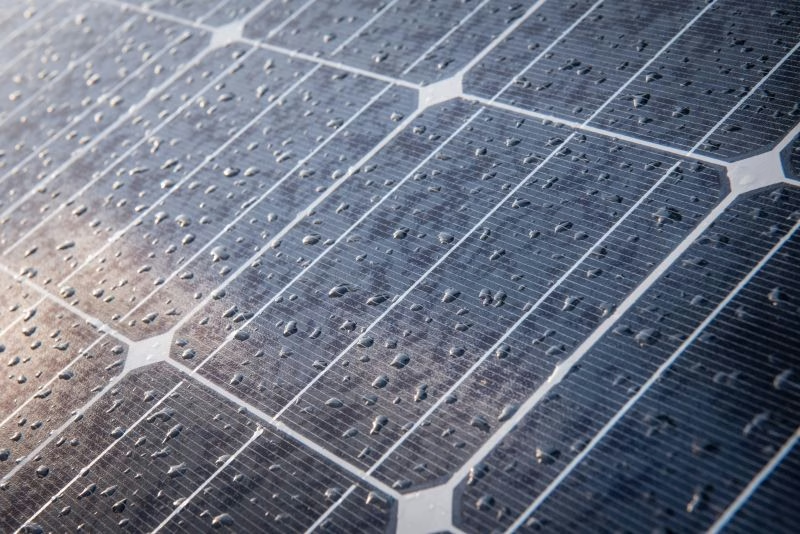
SolarNL: major consortium proposes large scale production of solar panels in the Netherlands
SolarNL is a national research, innovation and industrial investment program to bring back and stimulate photovoltaics manufacturing to the Netherlands/Europe. It has been submitted as a proposal for the National Economic Growth Fund (Nationaal Groeifonds) in February 2023. The consortium consists of a large group of public and private parties, one of which is AMOLF that contributes its expertise in fundamental photovoltaics research.
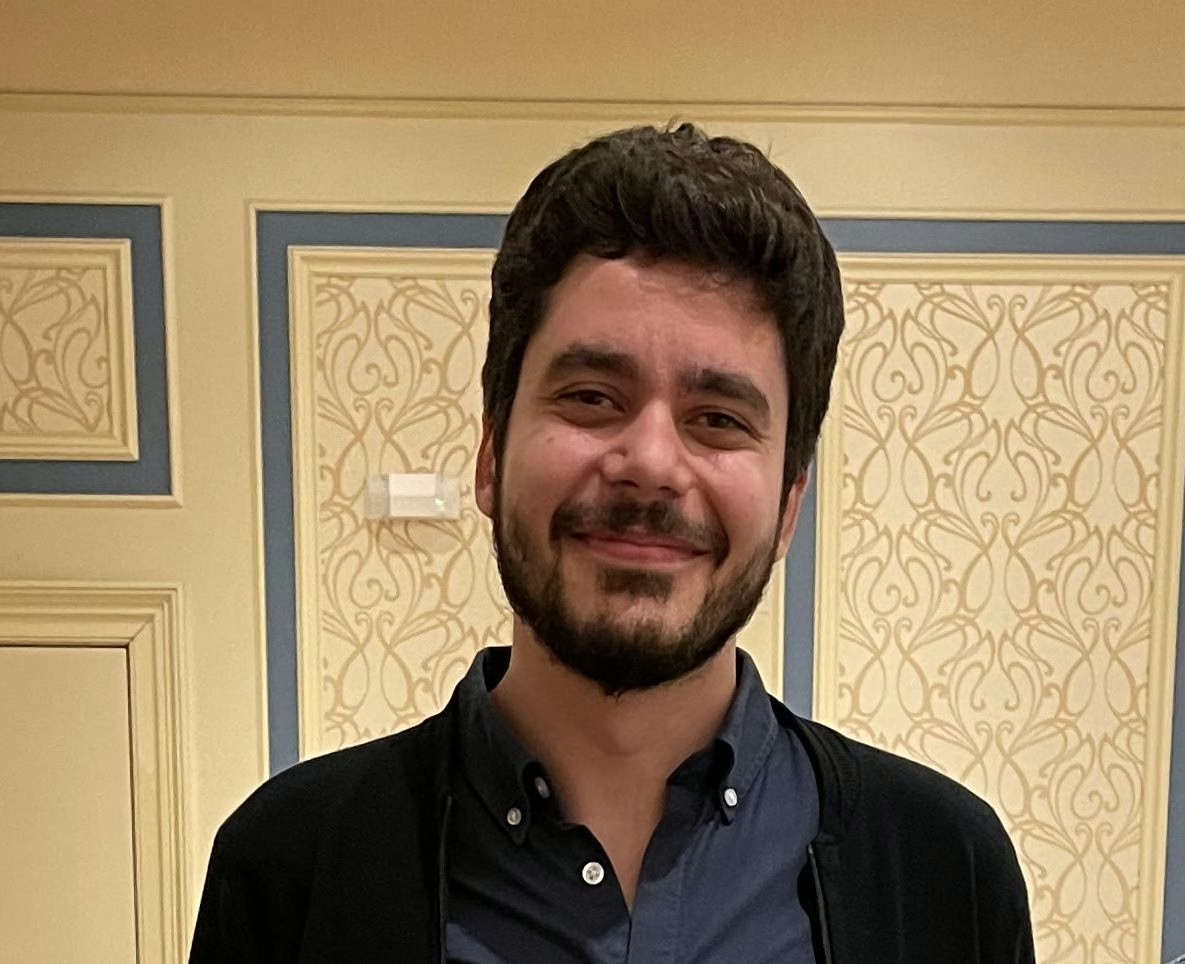
PhD student Fotios Avgidis wins award
At the BLAST XVII conference 2023, AMOLF PhD student Fotios Avgidis has won the Howard C. Berg award for outstanding talk by a young investigator. Howard C. Berg was a pioneer in the field of biophysics.
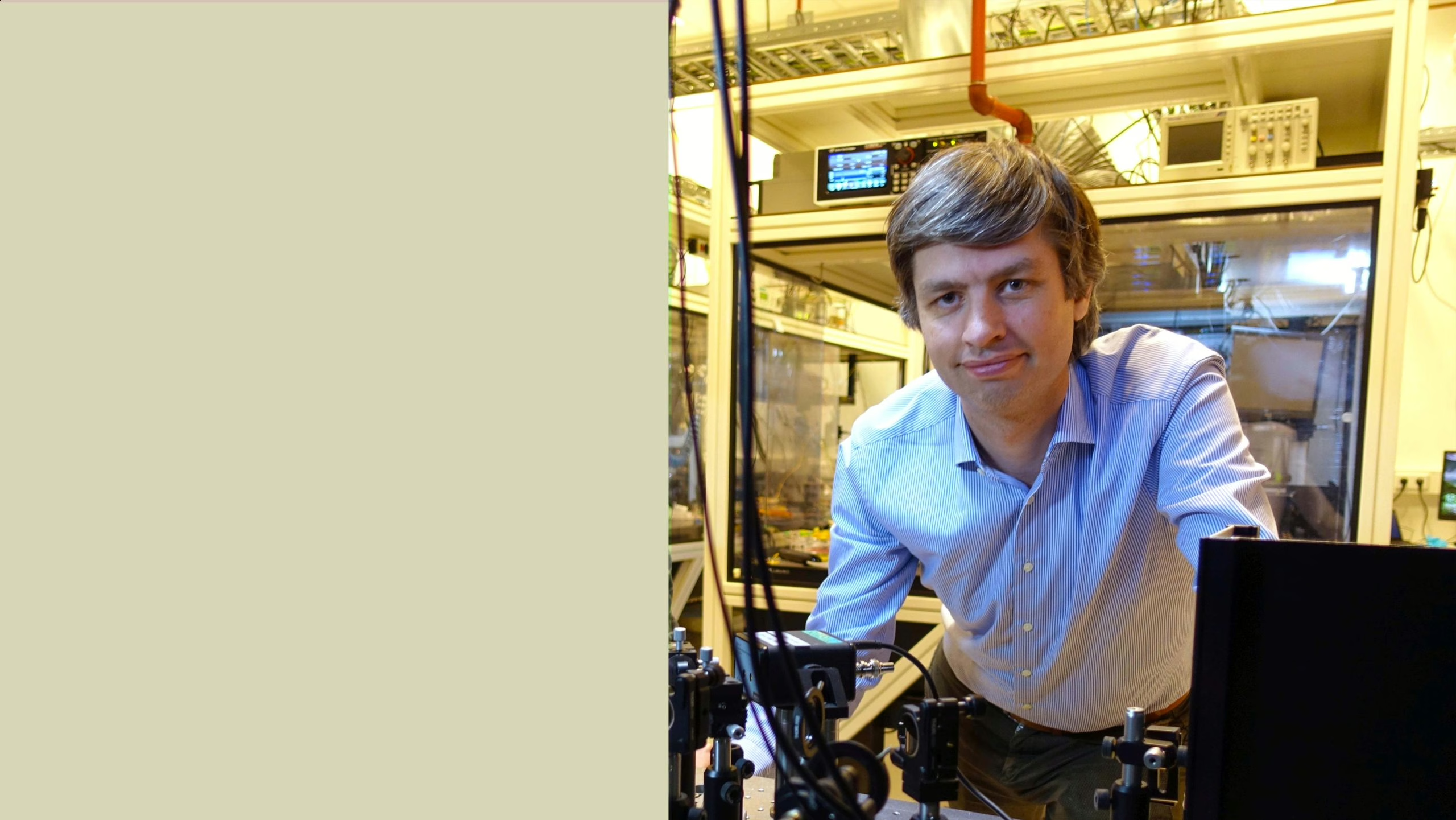
ERC Consolidator grant for Ewold Verhagen
AMOLF group leader Ewold Verhagen (Photonic Forces group) received an ERC Consolidator grant from the European Research Council (ERC). He has been granted 2.7 million euros to carry out his research plans. In addition to being an AMOLF group leader, Verhagen is part-time professor at Eindhoven University of Technology (TU/e).
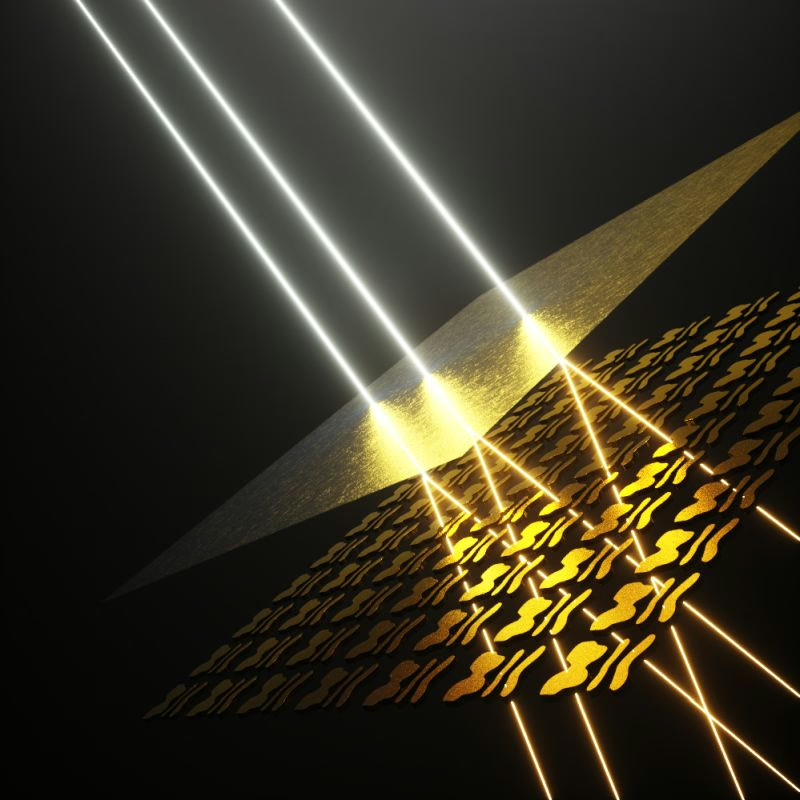
Mathematics at the speed of light
Researchers at AMOLF, University of Pennsylvania, and City University of New York (CUNY) created a nanostructured surface capable of solving equations using light. This discovery opens exciting new opportunities in the field of analog processing based on optical metasurfaces. AMOLF PhD student Andrea Cordaro and his co-authors publish their findings in Nature Nanotechnology on January 12th 2023.

Kristina Ganzinger member of De Jonge Akademie
The KNAW has selected ten new members for ‘De Jonge Akademie’, one of which is AMOLF group leader Kristina Ganzinger (Physics of Cellular Interactions). Members of ‘De Jonge Akademie’ are researchers who are interested in the role science plays in society and who have finished their doctoral studies less than ten years ago.
Daughter cells in the intestine do what their mother tells them
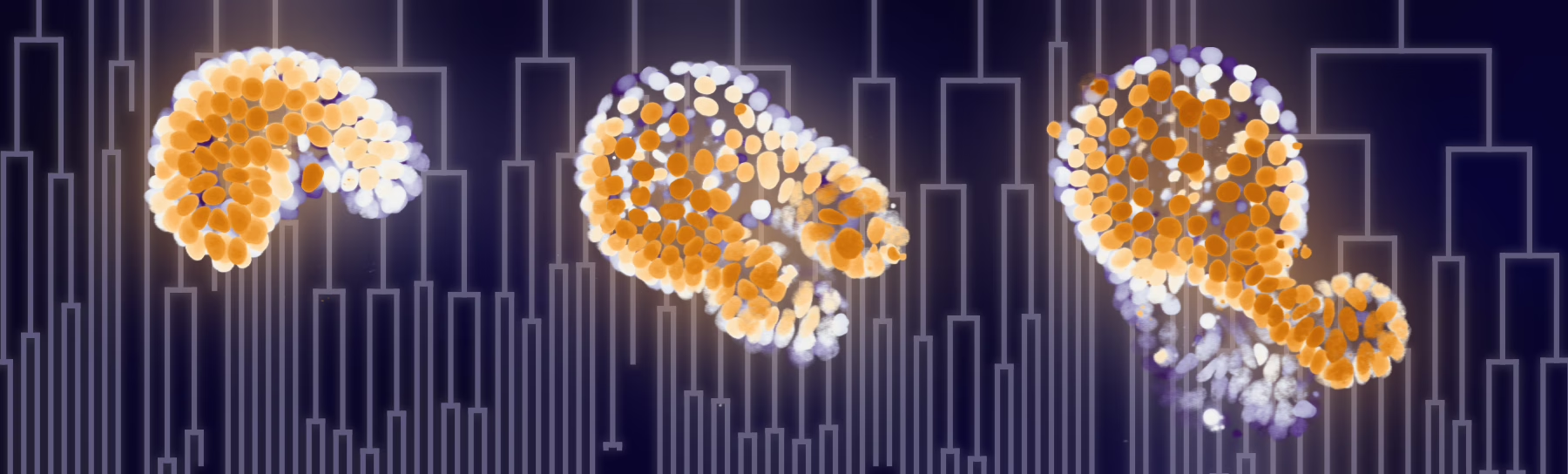
AMOLF researchers have discovered what prevents cells in the intestine from dividing rampantly. One hypothesis was that this happens because, on average, for each cell that divides, another cell stops dividing. However, this model failed to provide a good answer to the question as to why cell growth fluctuates so little. Jeroen van Zon and his colleagues have now discovered how that mechanism works by making time-lapse videos of the cells. They noted that two daughter cells from the mother cell always do the same. Either they both divide, or neither divides. As a result of this, cell growth is constant with less chance of cancer and other diseases.
Bas Overvelde wins KNAW Early Career Award
AMOLF group leader Bas Overvelde (Soft Robotic Matter) has won the KNAW Early Career Award. With the award, the KNAW acknowledges young and talented researchers at the beginning of their careers who are expected to (further) develop new and original research ideas. The award consists of a specially designed art work and a financial contribution of 15.000 euro that the award recipient can spend to strengthen his or her own career in science.
New model for reproduction of E. coli bacteria
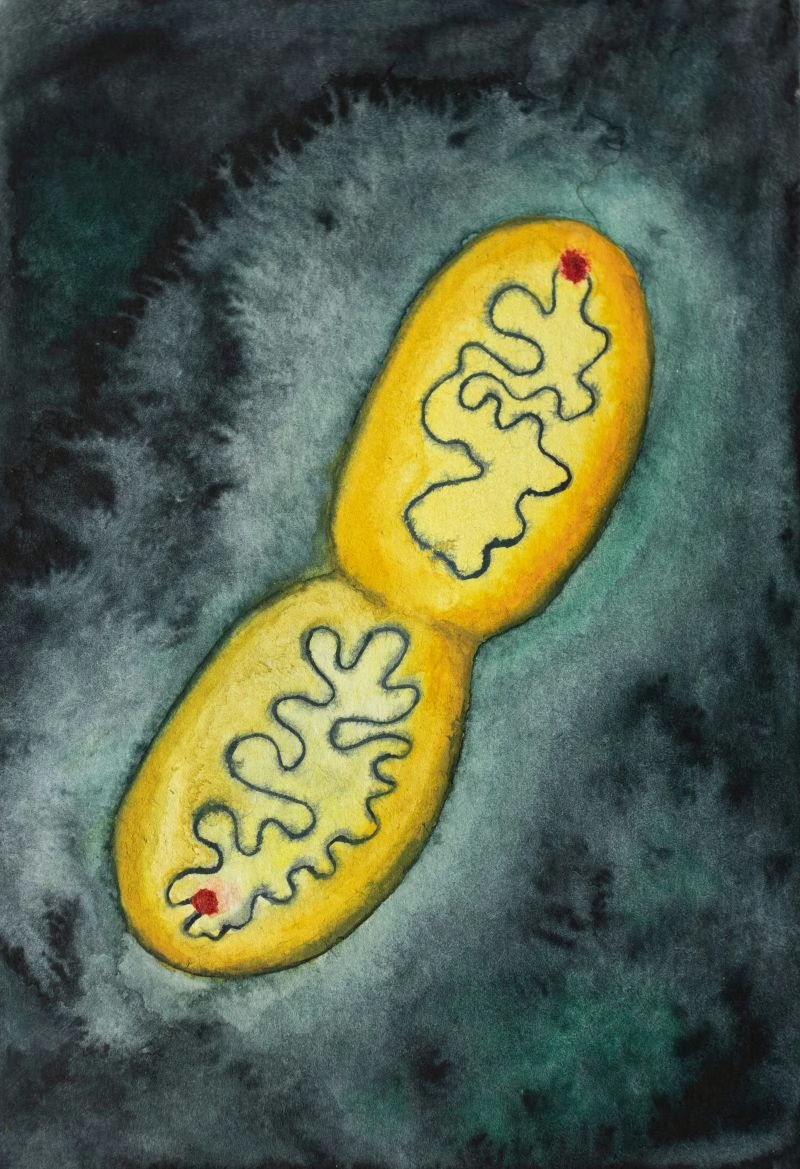
With a new model, AMOLF researchers reveal how single celled organisms like bacteria coordinate growth, cell division and DNA replication. Bacteria reproduce via growth and cell division. During each cycle of growth and division, the so-called cell cycle, the cell needs to copy all cellular components exactly once. How the cell achieves this has been a long-standing question in the field. PhD student Mareike Berger and professor Pieter Rein ten Wolde have now developed a mathematical model that offers an explanation. They publish their findings on November 7 in Nature Communications.