Events and outreach

OrganoidNL 2023: A successful showcase of organoid research in the Netherlands

On March 31st, 2023, the first OrganoidNL Symposium was organized at the AMOLF institute in Amsterdam. This one-day event brought together researchers from across the Netherlands with an interest in embryo-like structures and organoid technology and biology. With this symposium, the organizers aimed to further galvanize the already strong organoid research in the Netherlands by providing a platform for knowledge exchange and collaboration.

Embryo-like structures are derived from pluripotent stem cells and recapitulate specific stages of embryonic development, while organoids are three-dimensional structures that can mimic the function and structure of various organs and tissues. These in vitro model systems allow the investigation of basic biological processes, such as embryo or organ development, but can also be applied to study for example disease or optimize treatment therapies. Bringing together experts in the diverse associated disciplines helps to fully leverage the potential of embryo-like and organoid systems for science and society.
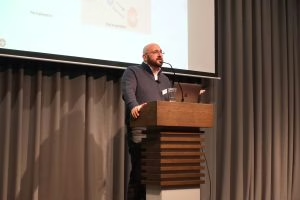
Jacob Hanna (the Weizmann Institute of Science)

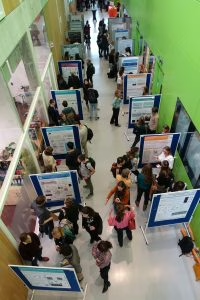
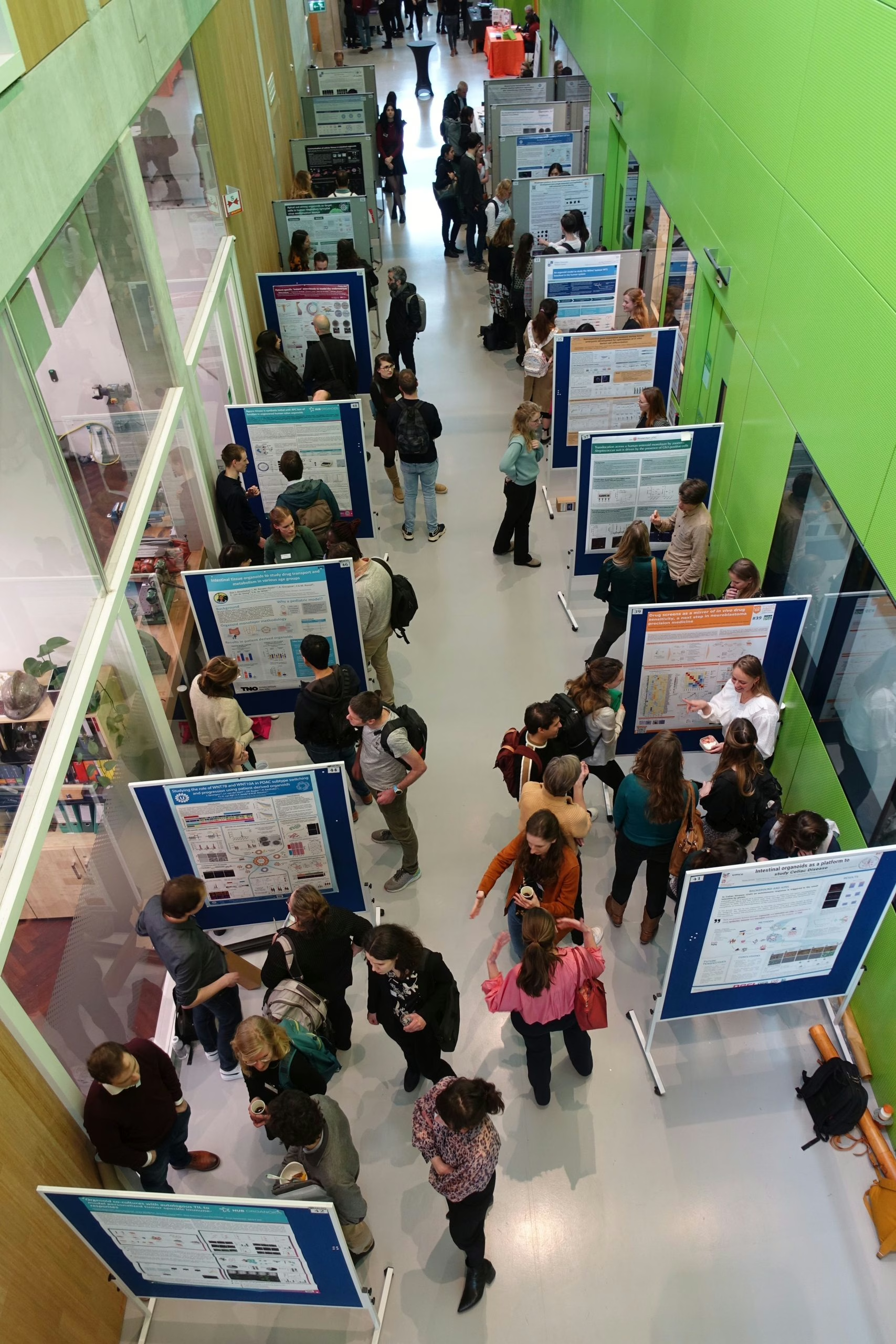
The symposium featured five invited speakers who are leading experts in the field of organoid research: Jacob Hanna from the Weizmann Institute of Science, Anne Rios from the Princess Máxima Center, Madelon Maurice and Hugo Snippert from the UMC Utrecht, and Alexander van Oudenaarden from the Hubrecht Institute. They presented their latest exciting work on topics such as synthetic ex utero embryogenesis, organoid cancer immunity models, genome replication speeds, and single-cell nascent DNA sequencing. In addition, there were six selected talks by PhD students and post-docs who showcased their innovative research on various aspects of organoid biology, such as cross-lineage dependencies, DNA repositioning, enterocyte and microfold cell differentiation, intestinal stem cell dynamics, liver organoids, trophoblasts, and neural tube patterning. During a poster session, more than 40 participants displayed their research projects and exchanged ideas with other attendees.

The symposium attracted a lot of enthusiasm even before it started, with far more than the maximum 140 participants registering for the event. On the day itself, over 50 scientists followed the event through a live stream. Given the excitement and buzz that the symposium generated, the plan is to turn this into a recurring event. So stay tuned for the next OrganoidNL symposium!

The symposium was organized by Sander Tans (AMOLF), Renée van Amerongen (University of Amsterdam), Benedetta Artegiani (Princess Máxima Center), Delilah Hendriks (Hubrecht Institute), Maria Rodriguez Colman (UMC Utrecht), Ina Sonnen (Hubrecht Institute), and Jeroen van Zon (AMOLF).
 

Share article
What's happening

Most recent news items

All news items
Collaboration

Successful outcomes of international EBEAM program led by AMOLF

The EU Pathfinder project Electron Beams Enhancing Analytical Microscopy (EBEAM) that was recently completed has received a highly positive review of the European Innovation Council (EIC). EBEAM brought together eight European research institutions and companies, including AMOLF, that develop new concepts and instruments combining spectroscopic analysis with electron microscopy.

Read news item
Research highlights

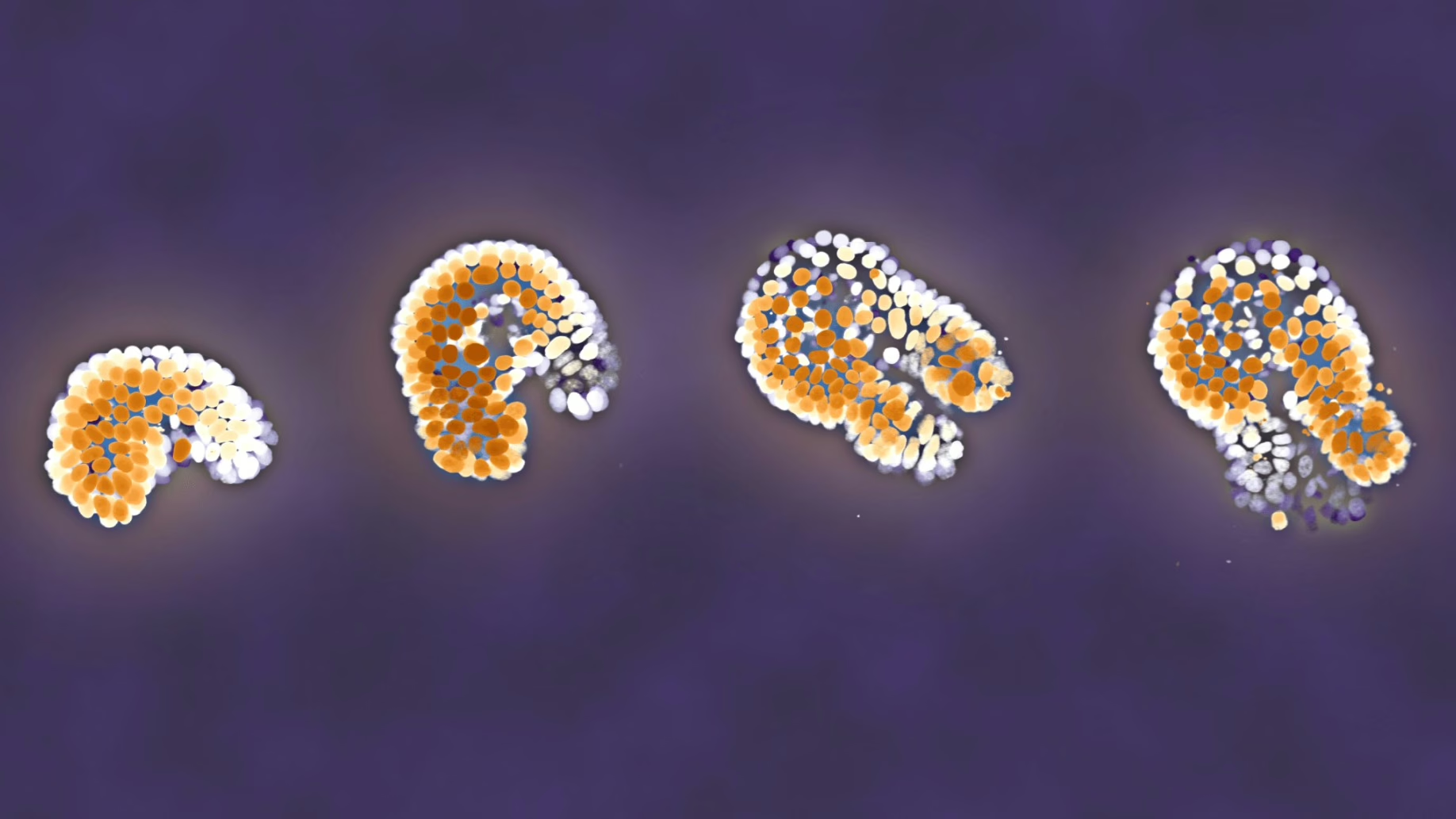
Everything you need to know about organoids

Organoids are instrumental in improving our understanding of processes that are otherwise hidden inside the body. For instance, these small 3D organs can be used to test medicines on tissue grown from a patient’s own cells. AMOLF researchers carry out unique and complex experiments to follow organoids in time. In order to enable other researchers to benefit from their experiences, they now publish their methods in the prestigious journal Nature Protocols.

Read news item
Events and outreach

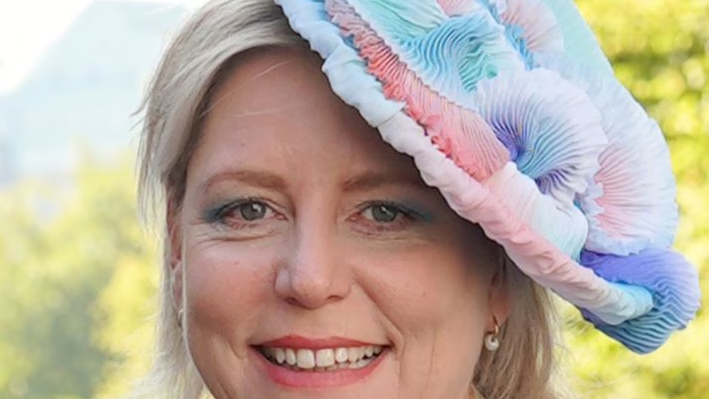
Minister Rianne Letschert wears hat and shoulder ornament inspired by Wim Noorduin’s research

This year at the opening of the parliamentary year (Prinsjesdag) Minister of Education, Culture and Science Rianne Letschert wears a spectacular hat and shoulder ornament. Both of them are inspired by the microscopic structures studied by group leader Wim Noorduin (AMOLF/UvA), which look remarkably like tiny flowers under a microscope. Artist and designer Malou Beemer translated these shapes, normally invisible to the naked eye, into wearable art.

Read news item
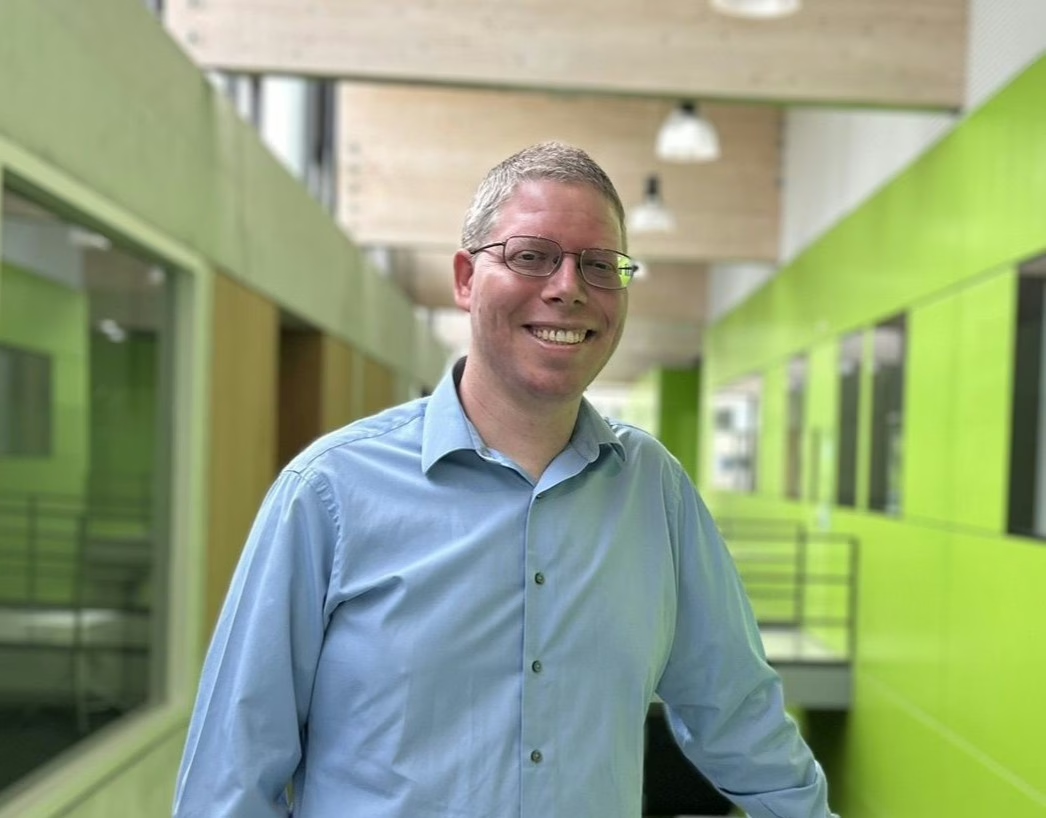
Nachi Stern, Group Leader Learning Machines at AMOLF
People and recognition

Nachi Stern awarded ERC Starting Grant to explore how matter learns

Why do brains learn, but rocks do not? Could a material one day adapt to its environment the way a living organism does? AMOLF group leader Dr. Nachi Stern has been awarded an ERC Starting Grant to investigate the physical laws of learning, in a project called, “Physical Learning in Dynamical Systems.”

Read news item
Stay informed

Get the latest research highlights, events, and news from our institute delivered to your inbox