
News & updates
Latest developments from our institute
Stay informed about new research results, awards, events, and collaborations across our scientific community.
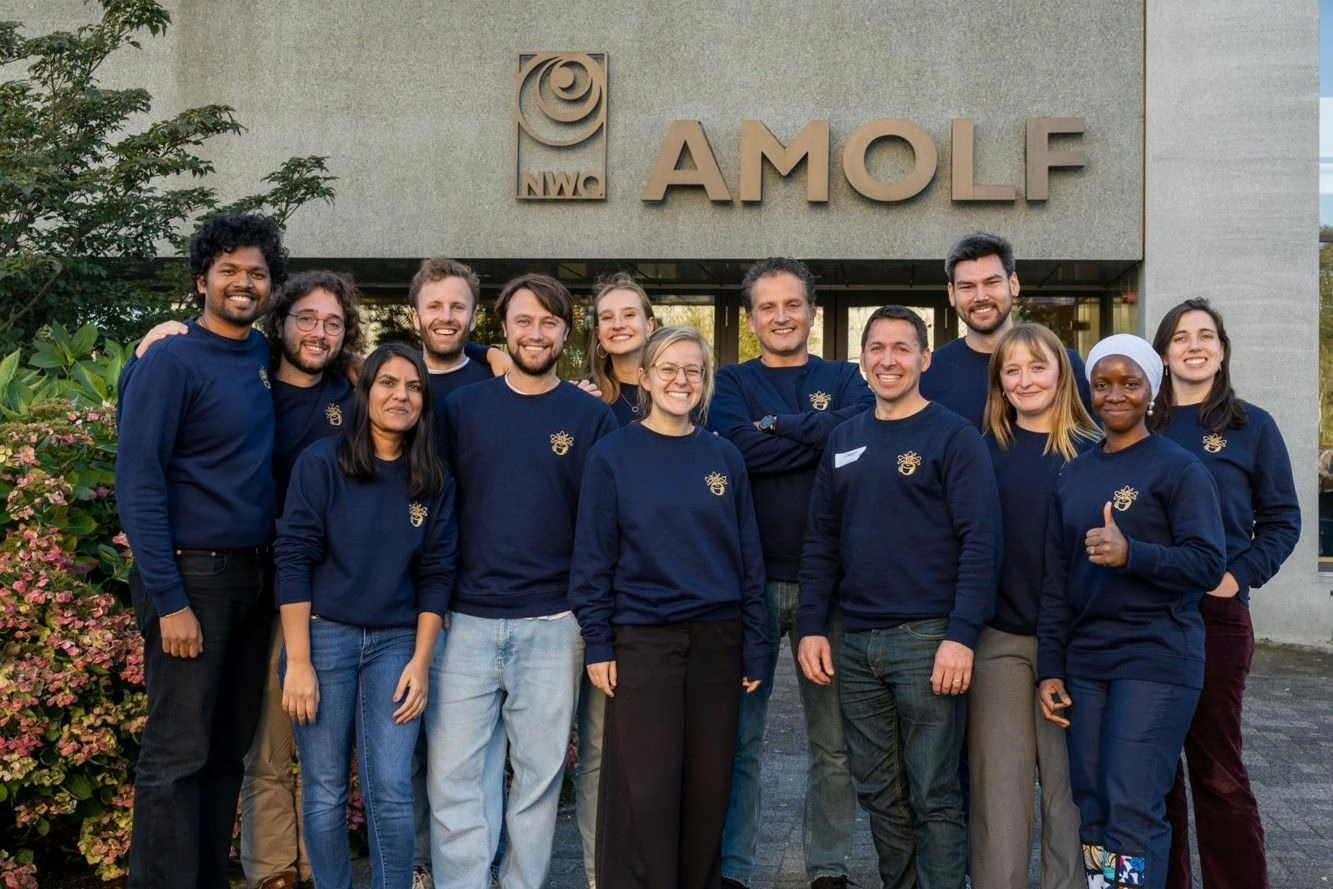
NWO grant to make perovskites ‘sing’
AMOLF researcher Fanny Thorimbert has received an NWO grant in the Open Competition ENW-XS call. Together with other researchers in the Nanoscale Solar Cell group — including Sarah Gillespie and group leader Erik Garnett — Fanny will investigate the material perovskite, which has high potential to contribute to the energy transition. The grant amounts to 50.000 euros.
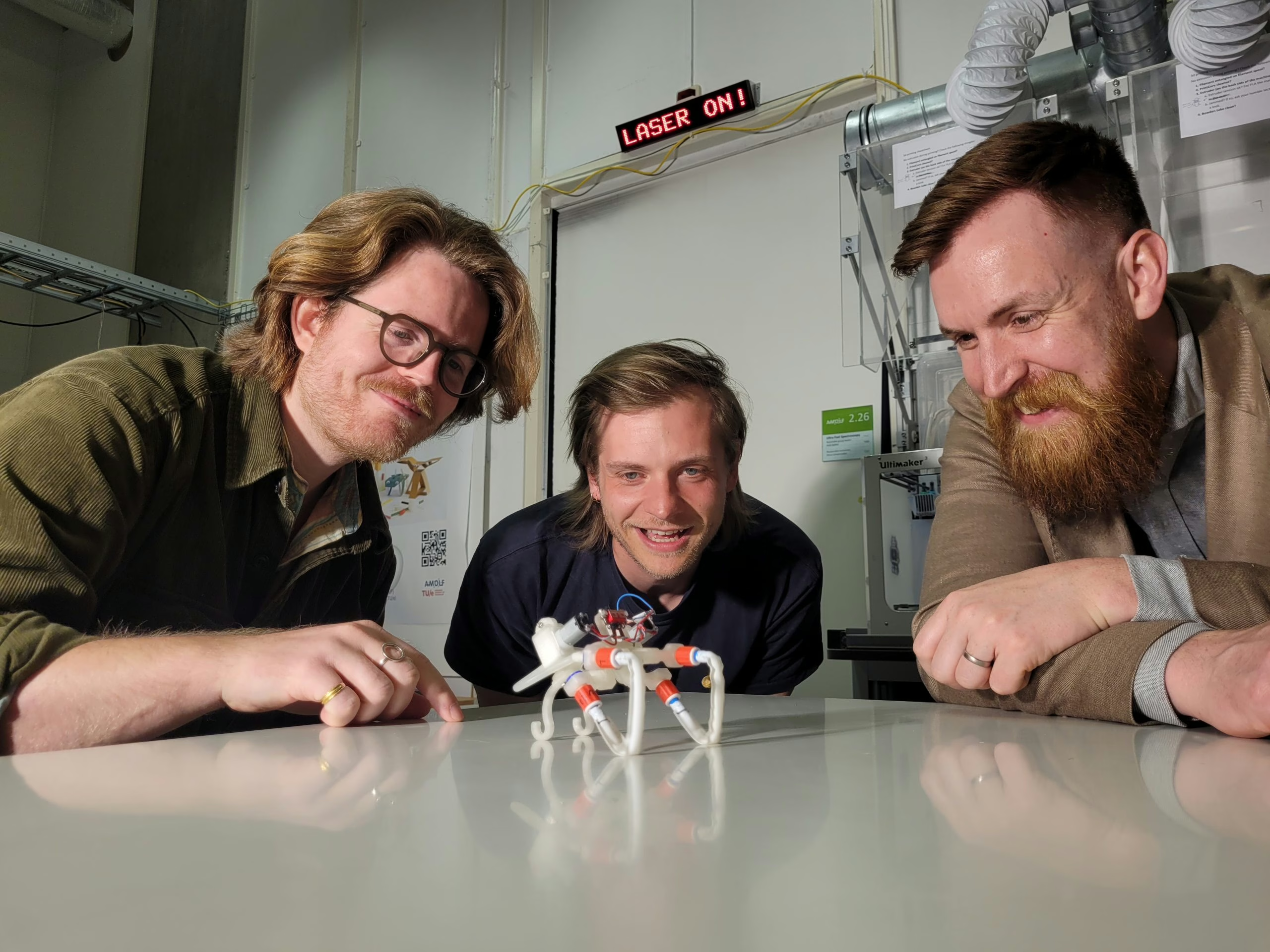
This soft robot “thinks” with its legs
A research team from AMOLF created a soft robot that walks, hops, and swims — all without a brain, electronics, or AI. Just soft tubes, air, and some clever physics. Possible future applications range from smart pills to space tech.
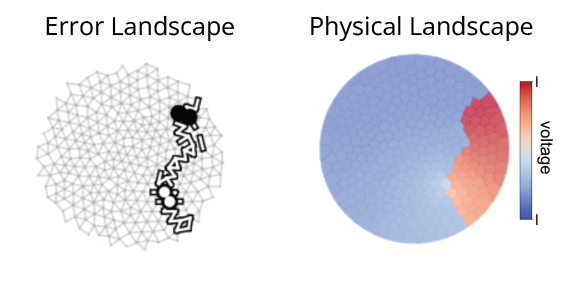
Research shows physical networks become what they learn
In an article published in Physical Review Letters on April 11th, theoretical physicist Menachem Stern describes his latest findings on physical learning. This is a new research field that connects how neural networks learn with how living systems evolve and adapt. One of the advantages of physical learning is that it is extremely energy efficient, which is different from machine learning models, like ChatGPT, that use substantial amounts of energy.
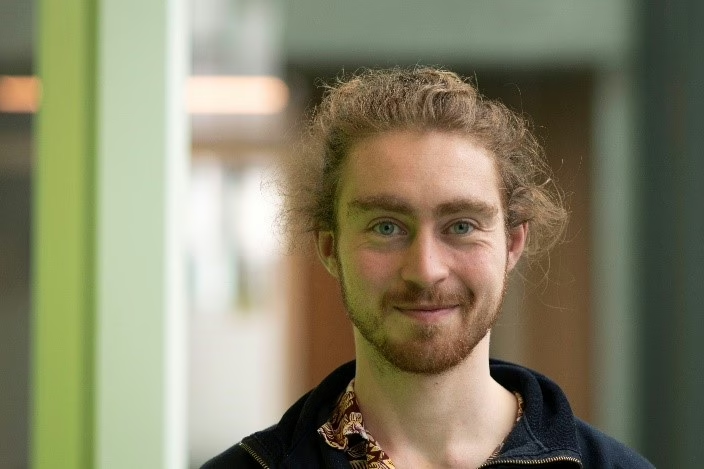
AMOLF researcher Corentin Bisot wins Van Leeuwenhoek Award
Postdoc Corentin Bisot (Physics of Behavior) has won the Van Leeuwenhoek Award, an initiative of the Koninklijke Nederlandse Vereniging voor Microbiologie (KNVM). The award ceremony took place during the Scientific Spring Meeting in Papendal on April 2nd. Corentin received the prize in the category ‘environmental microbiology’.
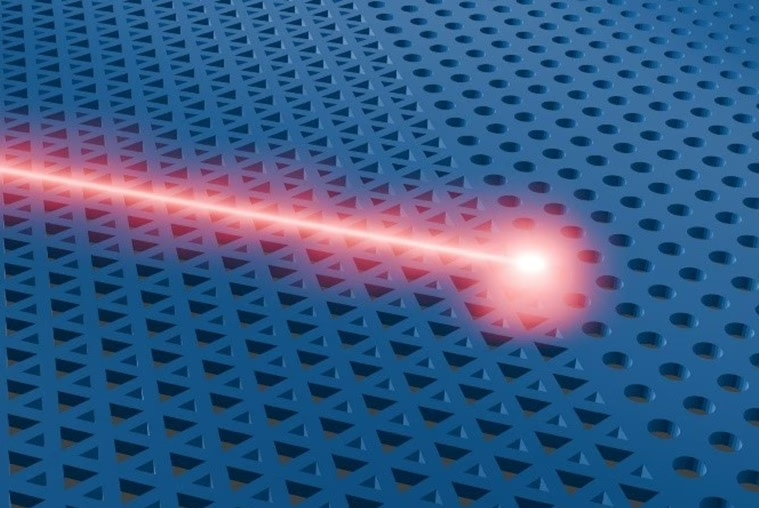
A new mechanism for concentrating light on a chip
Concentrating light in a volume as small as the wavelength itself is a challenge that is crucial for numerous applications. Researchers from AMOLF, TU Delft, and Cornell University in the USA have demonstrated a new way to focus light on an extremely small scale. Their method utilizes special properties of a photonic crystal and works for a broader spectrum of wavelengths than alternative methods. The researchers publish their findings in Science Advances on April 18th.
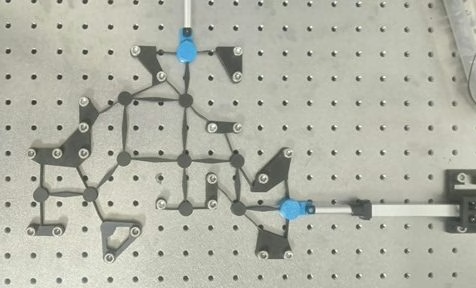
Soft materials that compute: can mechanics support AI?
A team of researchers at AMOLF has unveiled a remarkable discovery in physical computing: a soft, flexible material that can compute – not by electronics, but through its very shape and structure. This reprogrammable material, based on so-called “floppy modes”, can carry out matrix-vector multiplications, a mathematical operation fundamental to machine learning and artificial intelligence.
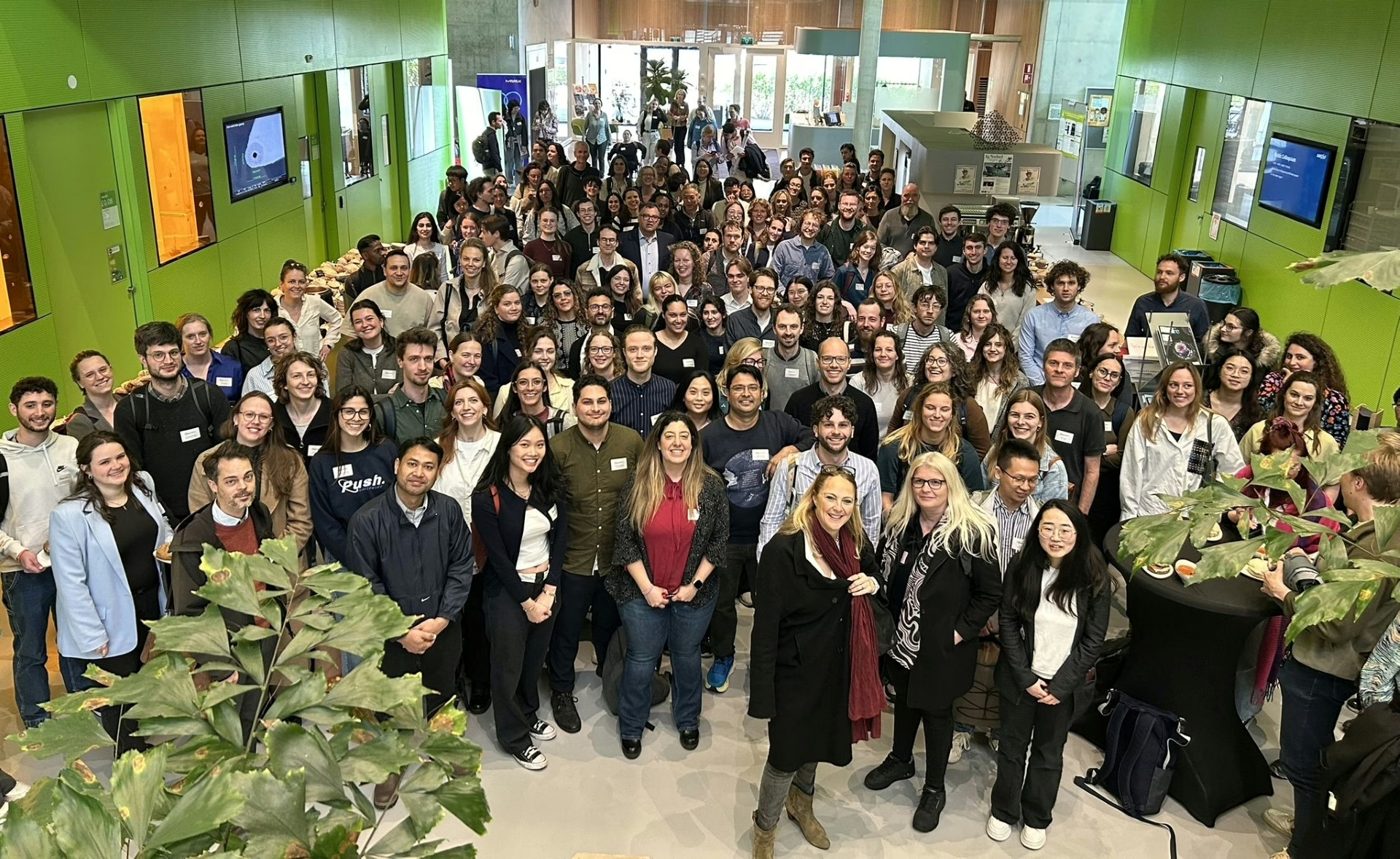
OrganoidNL Symposium 2025: Exploring the future of organoid research
On April 11, 2025, AMOLF hosted the third edition of the OrganoidNL Symposium, bringing together researchers from across the Netherlands and abroad to discuss the latest developments in organoid biology. Following its successful launch in 2023, the event has grown into an important platform for sharing knowledge, building collaborations, and exploring the scientific and medical potential of organoids.
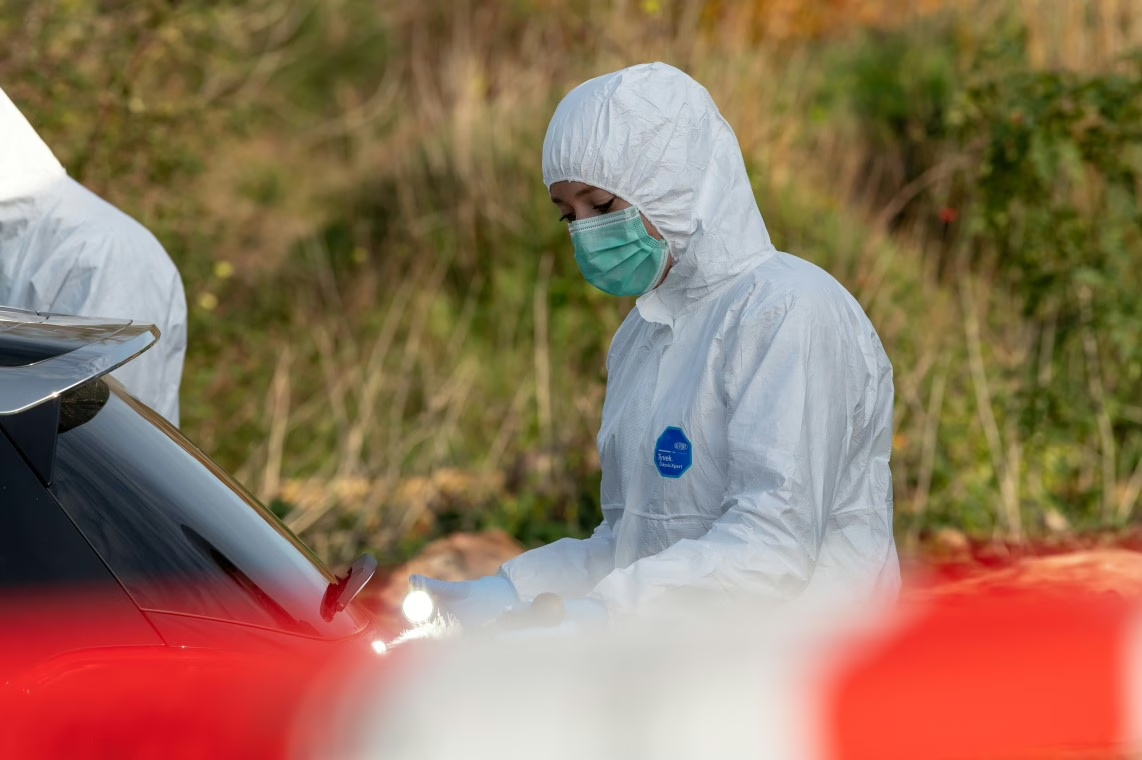
Solving crimes with glowing evidence: a brand-new method to detect gunshot residue at the crime scene
Crime scene investigation may soon become significantly more accurate and efficient thanks to a new method for detecting gunshot residues. Researchers from the groups of Wim Noorduin (AMOLF/University of Amsterdam) and Arian van Asten (University of Amsterdam) developed the technique that converts lead particles found in gunshot residue into a light-emitting semiconductor. This method is faster, more sensitive, and easier to use than current alternatives. Forensic experts at the Amsterdam police force are already testing it in actual crime scene investigations. The researchers recently published their findings in Forensic Science International.