Strengthening connections and sharing progress
As co-organizer Sander Tans (AMOLF) explained: “The symposium is intended to bring together researchers from across the Netherlands with an interest in organoid technology and biology – focused on both adult and embryonic stages.” The 2025 edition fulfilled that aim, offering a full day of talks, poster sessions, and informal exchanges. It provided a forum for both established and early-career researchers to present their work and explore new directions for the field.
The event also played an important role in connecting academic groups, medical researchers, and industrial partners. This mix of disciplines and perspectives underscores the Netherlands’ strong and growing position in this rapidly advancing area of science.
Keynotes and talks
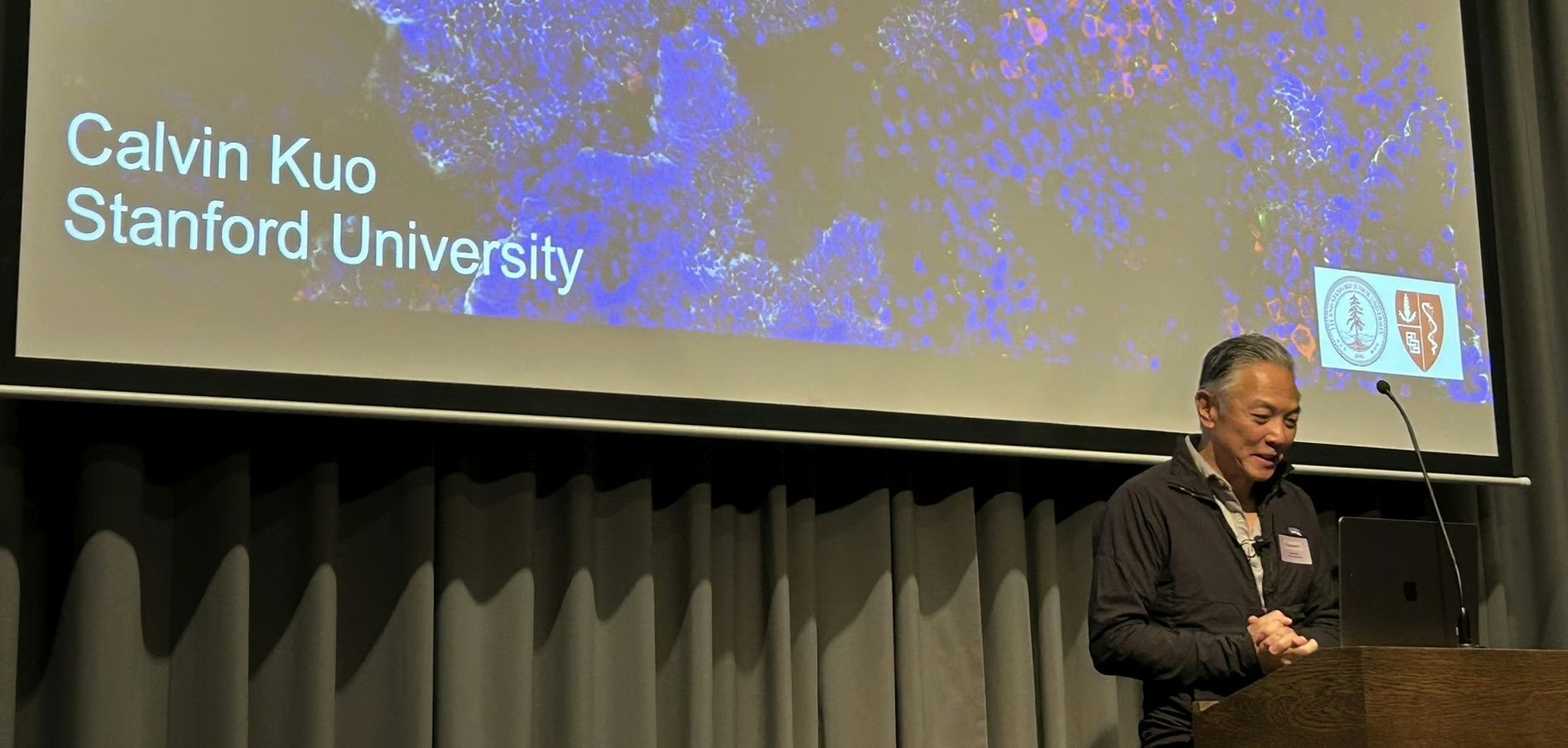
The scientific program featured contributions from a diverse group of international speakers, including:
- Calvin Kuo (Stanford University, USA) demonstrated methods to study cancer, autoimmunity, and infection, by integrating patient-derived materials with cancer databases and novel culturing techniques such as Air Liquid Interface cultures;
- Kai Kretzschmar (University of Würzburg, Germany) presented on how metastases from cancers derived from specific locations in the oral cavity elicit different responses from cytotoxic T-cells;
- Mina Gouti (MDC Berlin, Germany) showed how automation in organoid culturing contributes to the understanding of complex interactions at the neuromuscular junctions in the context of diseases such as Spinal Muscular Atrophy;
- Ina Sonnen (Hubrecht Institute, Utrecht) illustrated how organoid research can advance our understanding of complex oscillatory cell-cell interactions in differentiating tissues;
- Nicolas Rivron (IMBA, Vienna) moved the discussion to the realm of evolution based on his work on the implantation of blastocysts;
- Prisca Liberali (FMI Basel / ETH Zurich, Switzerland) closed the meeting, presenting her work on early symmetry breaking and the patterning of organoids. Liberali emphasized making data openly available and confirming findings in mice, setting ambitions for the field.
A broad and active program
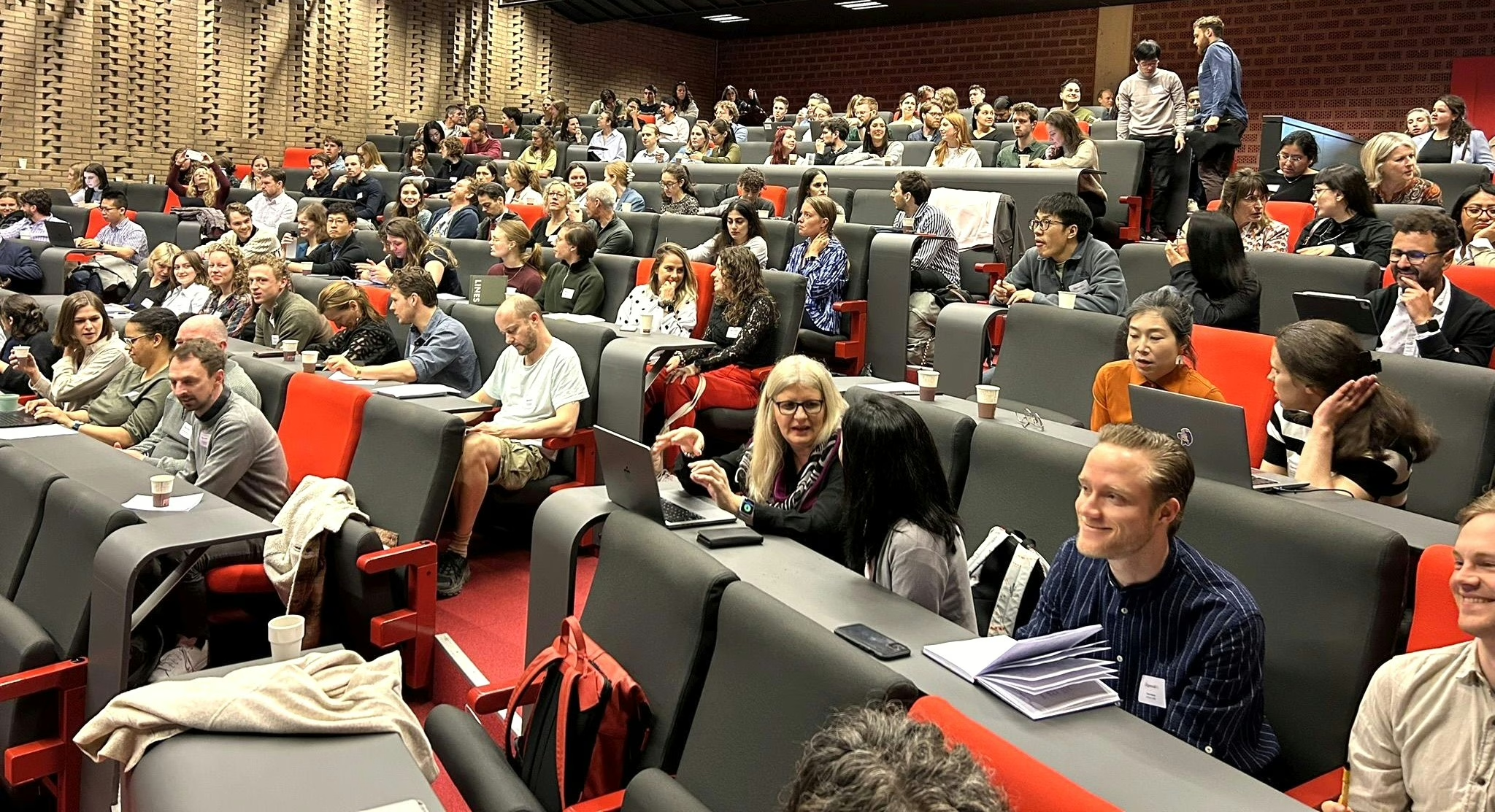
In addition to the speakers, researchers from various universities and institutes contributed through selected presentations, flash talks, and a lively poster session. These sessions highlighted the wide range of topics currently explored in the field, from fundamental developmental biology to disease modeling and regenerative medicine.
The event also offered researchers the chance to meet journal editors from STAR Protocols, Trends in Cell Biology, and Cell Reports Medicine to discuss publication strategies and scientific communication.
Looking ahead
This year’s symposium illustrated how the organoid field continues to evolve along three major lines:
- Diving ever deeper into specific cell-tissue behaviors and interactions;
- Studying broad interactions of multiple or sometimes all cell types that reside in a tissue;
- Stronger connections between basic science and patient-specific applications.
Organoid research can now shed light on a wide range of topics, from evolution to medical applications. Sander Tans: “It’s truly inspiring to see how organoids are now erasing the gap between fundamental insights and medical relevance. The ability to follow how major diseases like Intestinal Bowel Disease develop truly at the cellular level under the microscope, will open up a range of new possibilities in the near future.”
Organizing committee and thanks
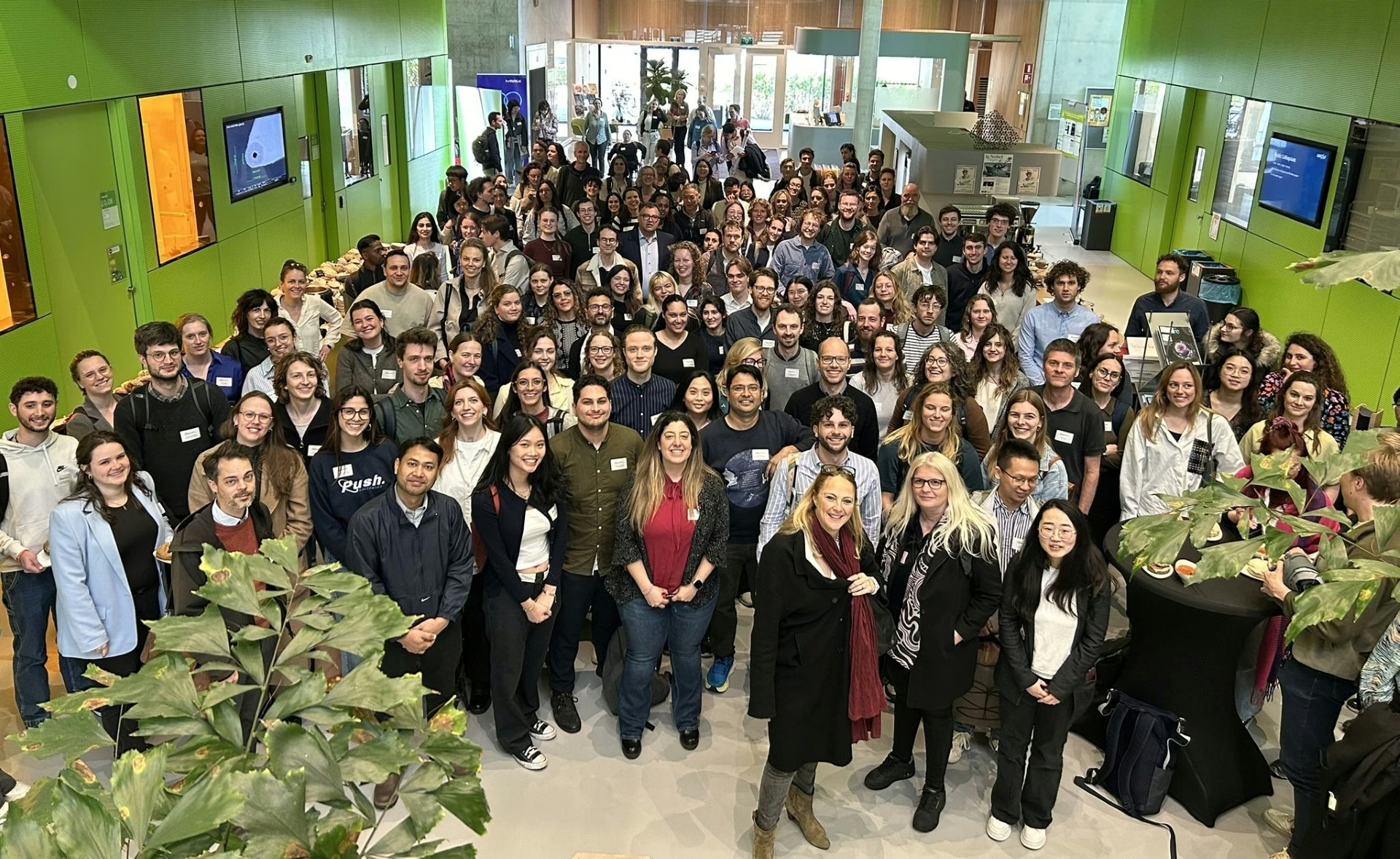
The symposium was opened by Maria Rodriguez Colman (UMC Utrecht) and organized by Sander Tans (AMOLF), Benedetta Artegiani (Princess Máxima Center), Delilah Hendriks (Princess Maxima Center), Hugo Snippert (UMC Utrecht), Ina Sonnen (Hubrecht Institute), Saskia Suijkerbuijk (Utrecht University) and Jeroen van Zon (AMOLF).
We thank all participants, speakers, and editors for making the 2025 edition a success. Special thanks to our sponsors Biospx, Mimetas, Cellbox, Huborganoids, and Bio-Techne for a successful event.
For more information about organoid-related research at AMOLF, visit the webpages of our Biophysics and Quantitative Developmental Biology research groups.