
News & updates
Latest developments from our institute
Stay informed about new research results, awards, events, and collaborations across our scientific community.

Two Veni grants awarded for projects on immune system activation and twisted perovskites
Two researchers have been awarded Veni grants from the Dutch Research Council (NWO) for three-year postdoctoral research projects at AMOLF. Dr. Megan Farrell will conduct her project on how immune cells respond to signals from the tissue around them. Dr. Kunal Datta will investigate how new optical and electronic properties emerge when semiconductor crystals twist against each other.
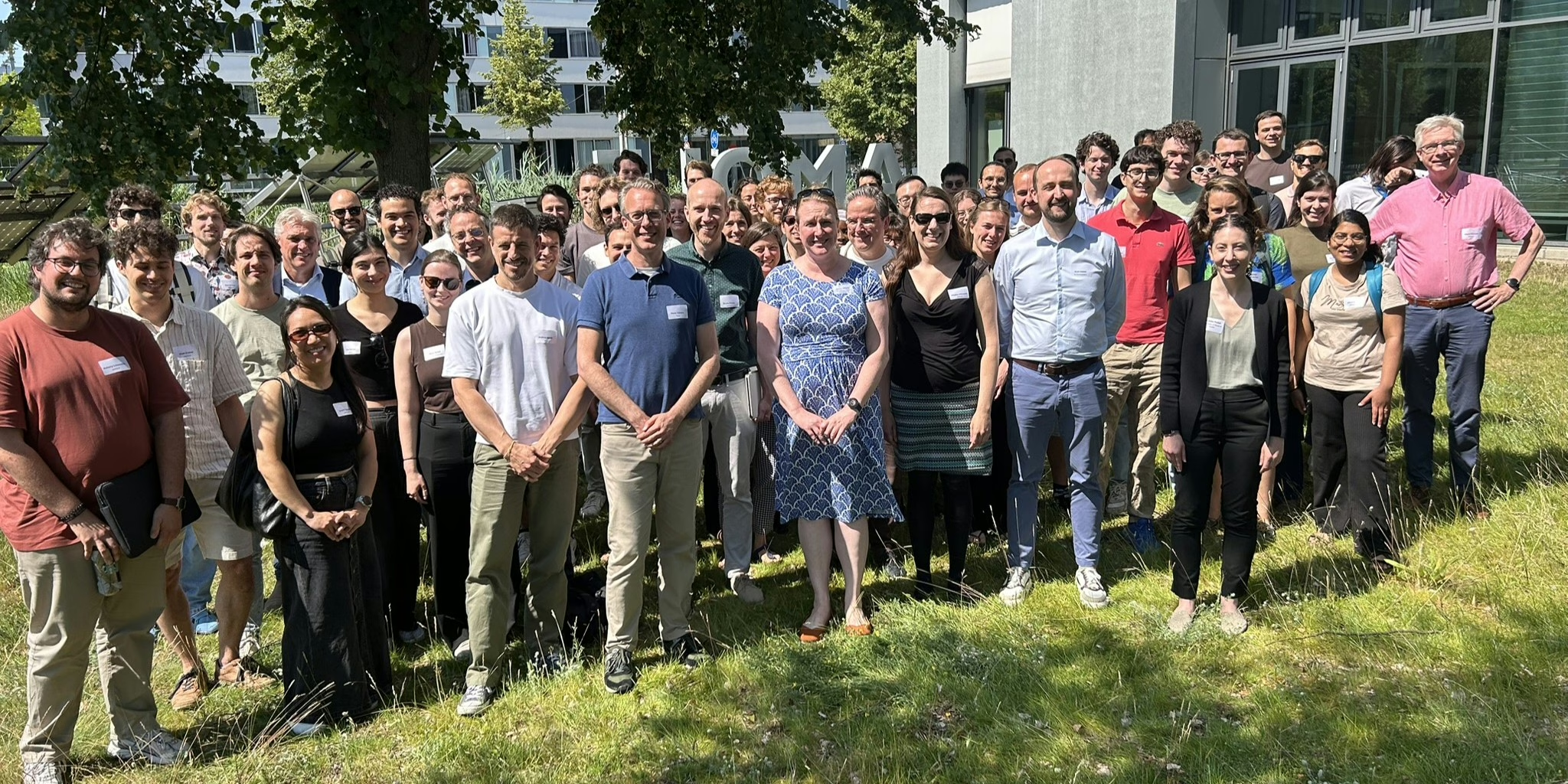
Sustainable Energy Materials research community meets at symposium
On June 19, physicists and chemists in the Netherlands came together to learn about recent discoveries on light for driving and monitoring chemical reactions. Light is a powerful and sustainable tool for steering such reactions with precision. AMOLF organized the bi-annual symposium at Amsterdam Science Park.
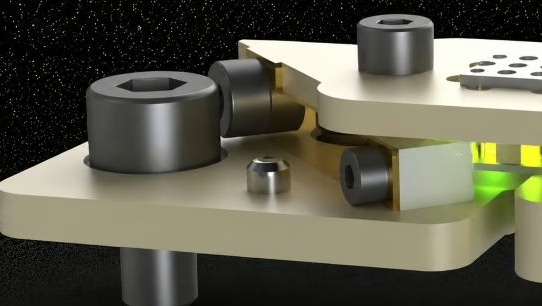
ERC Proof of Concept to develop platform for computation using light
Professor Bruno Ehrler and Dr. Agustin Alvarez from the Hybrid Solar Cells group receive an ERC grant from the European Research Council. The researchers will develop a new hardware platform for processing information directly where it is sensed. This approach reduces the need to transfer data to separate processing units, as is typically done on conventional computers. The project ‘Vision with Ionic Spatiotemporal Perovskite Arrays’ (VISTA) is funded with €150,000.
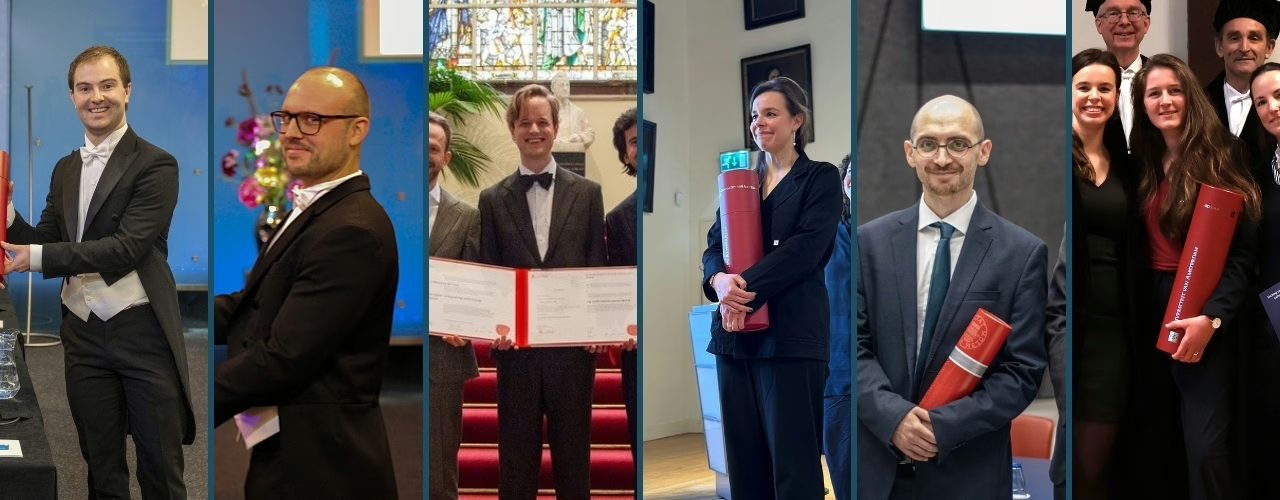
AMOLF kicking off 2026 with six PhD defenses
Left to right: Kasper Spoelstra, Luca Gross, Jeroen de Boer, Nika van Nielen, Sergio Picella, Evelijn Akerboom.Kasper Spoelstra (cum laude) Title: Shedding light on dynamic…
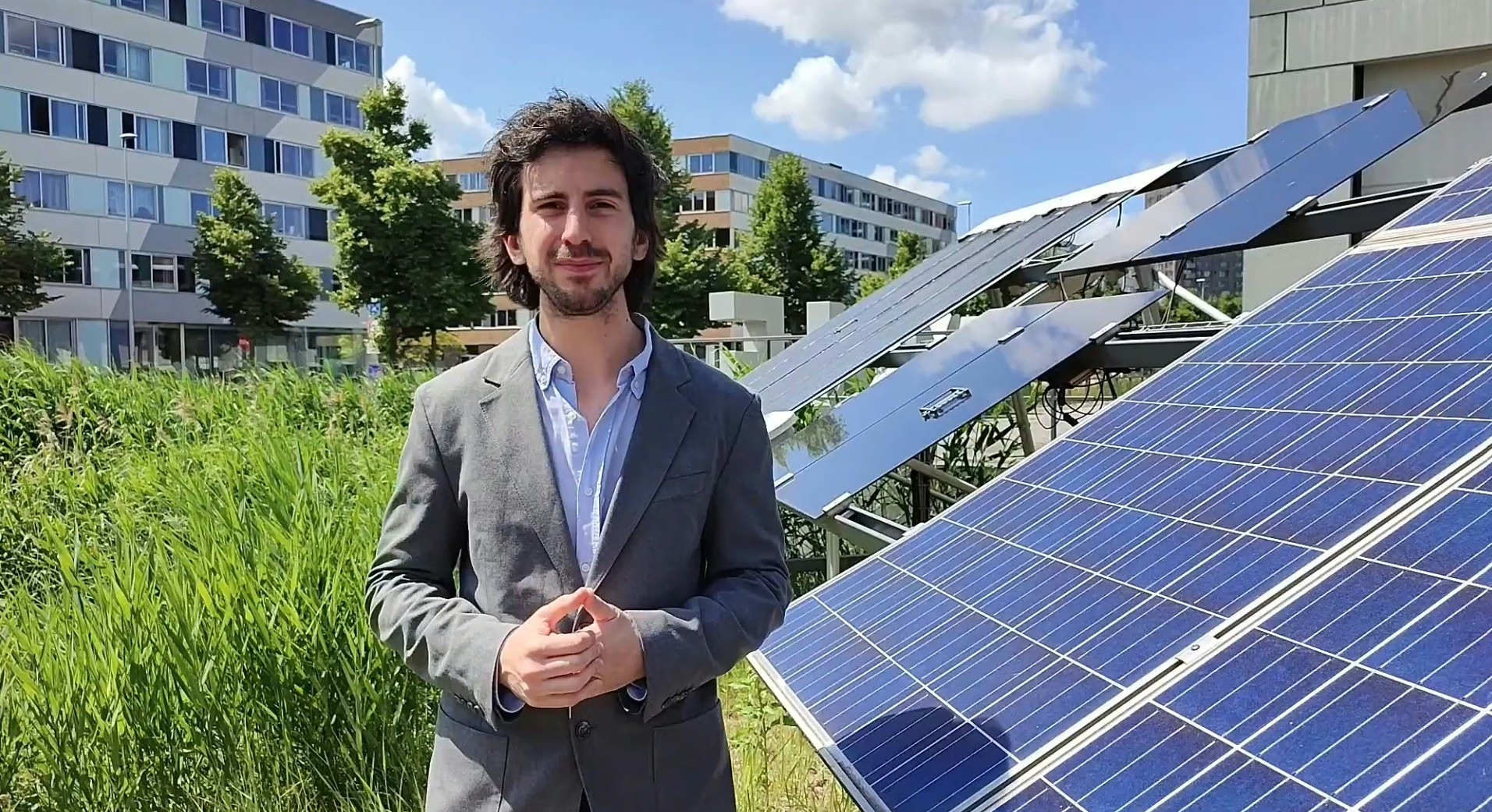
Faculty of Impact Award for AMOLF start-up
After filing for a patent together with colleagues, Agustin Alvarez (Hybrid Solar Cells) is ready for the next step. Recently, he received an NWO Faculty of Impact Award that helps him to take an important next step towards achieving societal impact with his invention.
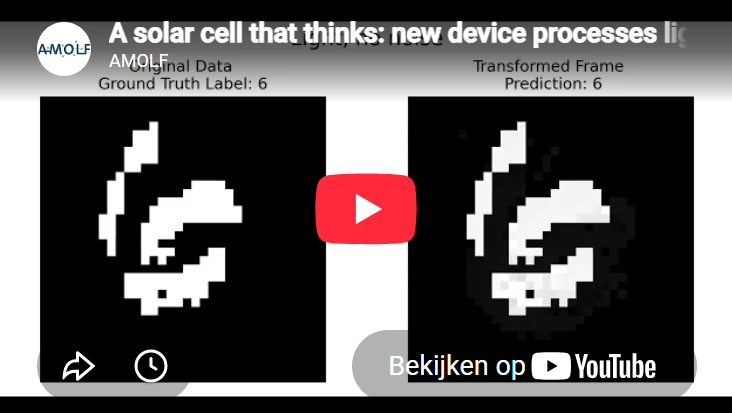
A solar cell that thinks: new device processes light similar to the human brain
Imagine a camera that cannot only see light but also understand what it sees without a computer, and even without being plugged in. AMOLF PhD student Jeroen de Boer from the Hybrid Solar Cells group has developed the first step towards such a device: a tiny light sensor that also processes information, inspired by how the human brain works. His findings were published in the journal Device on December 17.
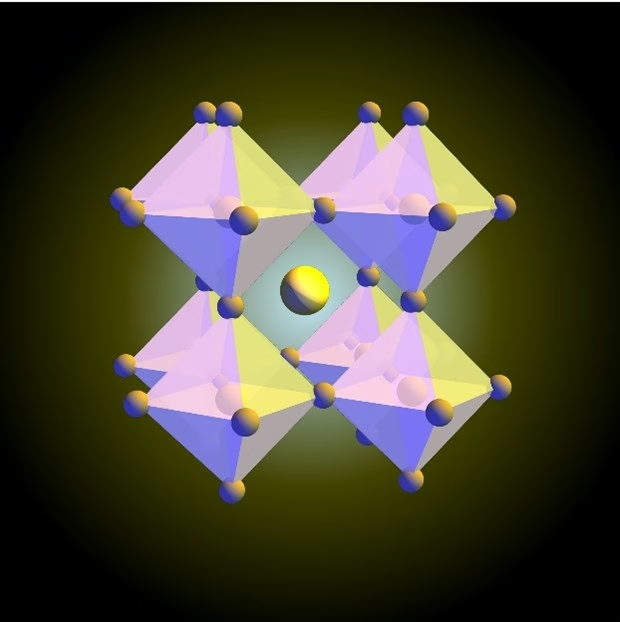
A smart new way to study mobile ions in perovskite solar cells
Researchers in the Hybrid Solar Cells group have developed a simple new method to study mobile ions in perovskite solar cells. These ions play a key role in the degradation of the cells, so understanding them is essential to make more stable solar devices.
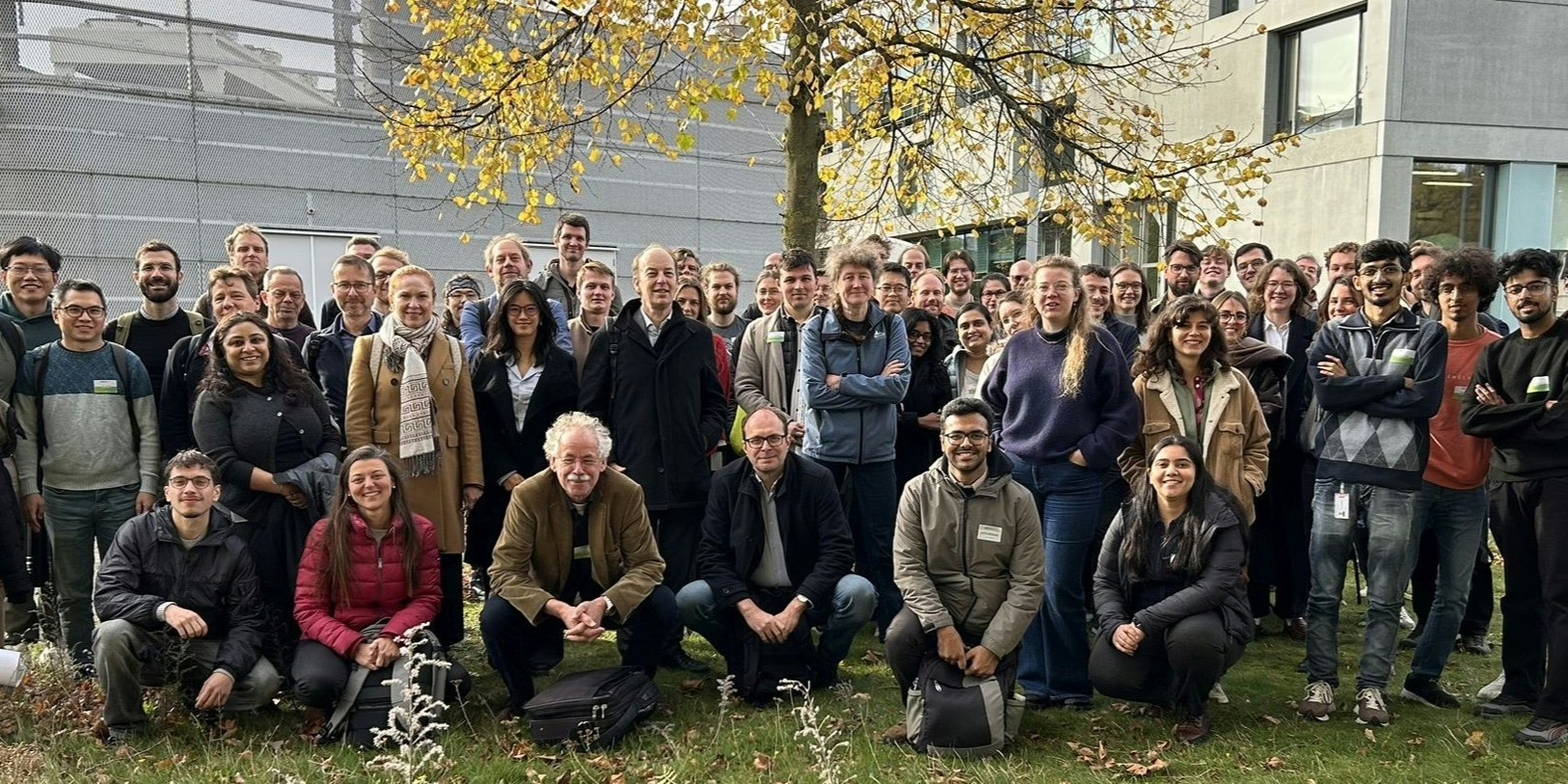
First ANION Symposium with strong community spirit and collaboration
Electrochemists working on nanoscale electrochemical interfaces came together in Amsterdam to share recent findings and explore new collaboration opportunities. The ANION Symposium was the first edition organized by the Advanced Netherlands Institute of Nanoelectrochemistry (ANION), with AMOLF and UvA as co-organizers. The symposium took place on Friday, October 31.