
News & updates
Latest developments from our institute
Stay informed about new research results, awards, events, and collaborations across our scientific community.
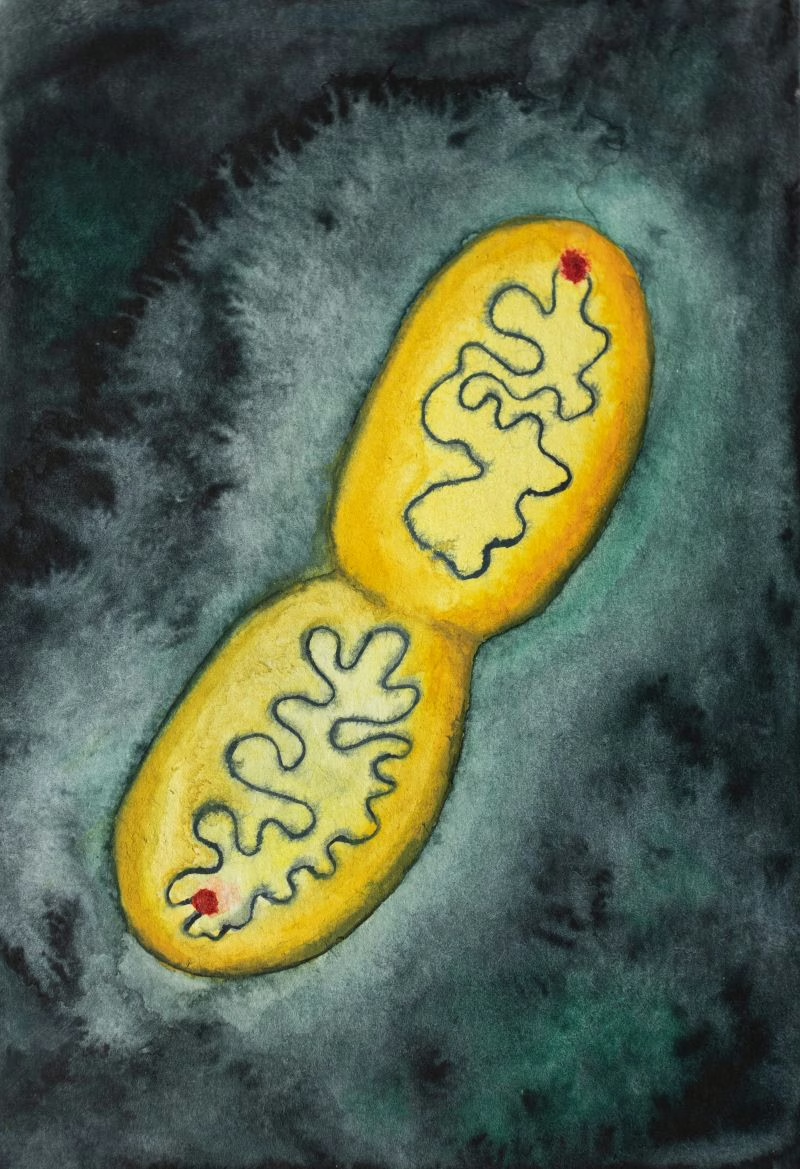
New model for reproduction of E. coli bacteria
With a new model, AMOLF researchers reveal how single celled organisms like bacteria coordinate growth, cell division and DNA replication. Bacteria reproduce via growth and cell division. During each cycle of growth and division, the so-called cell cycle, the cell needs to copy all cellular components exactly once. How the cell achieves this has been a long-standing question in the field. PhD student Mareike Berger and professor Pieter Rein ten Wolde have now developed a mathematical model that offers an explanation. They publish their findings on November 7 in Nature Communications.
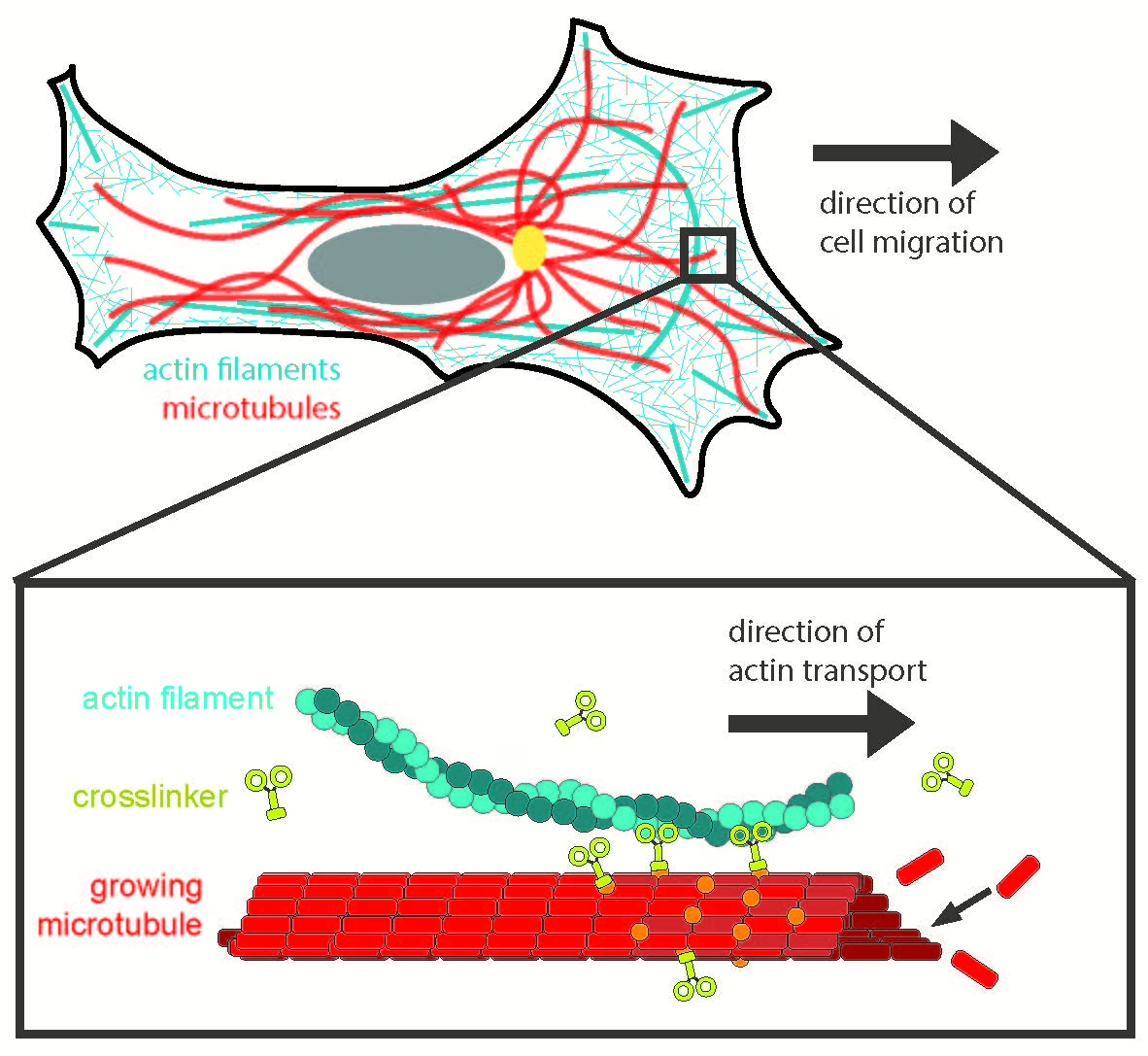
Cell unstuck: how a glue-like protein can make our cells move
An essential aspect of the cells in our body is their ability to move, to repair certain tissues or chase intruders, for example: but how do they do it? Scientists from TU Delft, AMOLF and Utrecht University reveal how glue-like proteins called crosslinkers cannot only help to hold the whole cell together passively, but surprisingly cause the cell to move as well. The research is now published in PNAS.
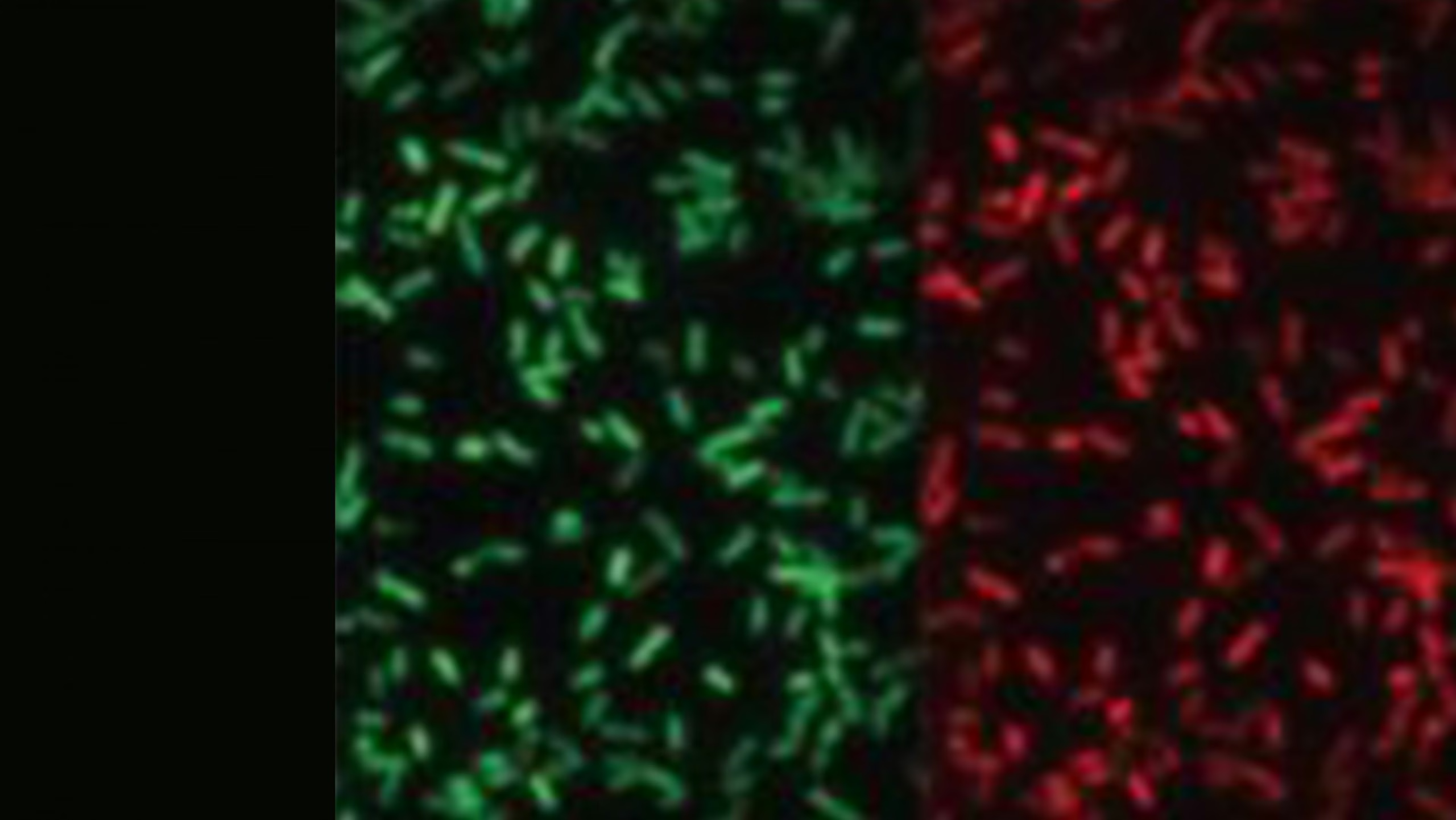
The optimal design of cellular sensing systems
To survive and prosper living cells continually have to respond and adapt to changes in their environment. To this end, they have developed sensing systems that rival the best man-made sensing devices. Yet, how accurately these systems can measure chemical concentrations remains poorly understood. Researchers from AMOLF have now developed a theory that predicts the optimal design that maximizes the sensing precision of these systems. An analysis of experimental data revealed that the sensing system of the bacterium E. coli obeys the design principles as predicted by their theory. The AMOLF team presented their work in the journal eLife.
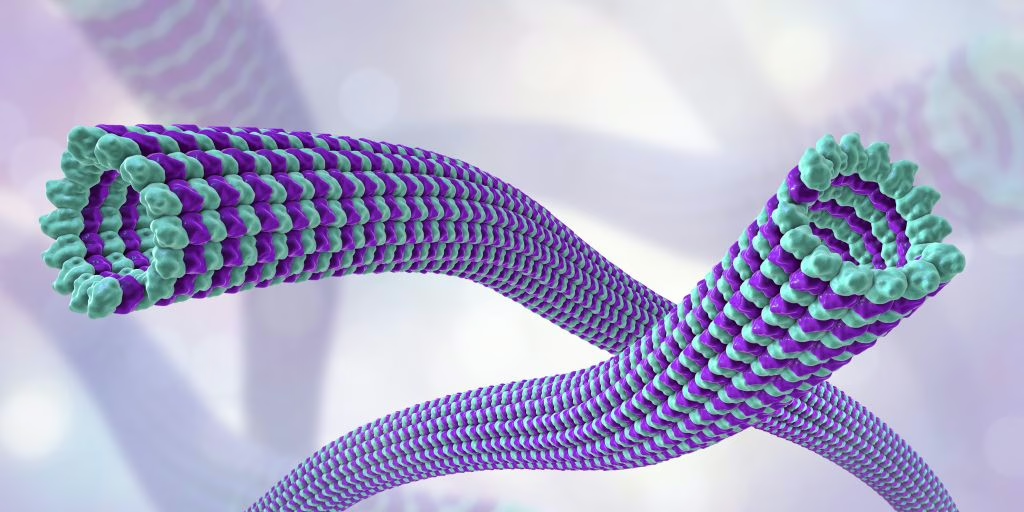
Exponential scaling of frictional forces in cells
AMOLF researchers present a theory that describes the friction between biological filaments that are crosslinked by proteins. Surprisingly, their theory predicts that the friction force scales highly non-linearly with the number of crosslinkers. The authors believe that cells use this scaling, not only to stabilize cellular structures but also to control their size. The new findings are important for our understanding of the dynamics of cellular structures such as the mitotic spindle, which pulls chromosomes apart during cell division.

ERC Advanced Grant for Pieter Rein ten Wolde
Today the European Research Council (ERC) announced that 185 scientists receive an Advanced Grant of 2.5 million euros. One of them is AMOLF group leader Pieter Rein ten Wolde. He will use the grant to determine how accurately single-celled organisms can predict changes in their environment.
Noise in the biorhythm: biological clocks respond differently to light fluctuations
Anybody who has experienced jet lag knows the power of the biological clock. Almost all organisms, from humans to the smallest of bacteria, have a built-in system that tells them whether it is time to rest or to be active. Most biological clocks ‘tick’ autonomously, but some bacteria depend on light to synchronize their clock every day. Using mathematical calculations, researchers from AMOLF and the University of Michigan have now demonstrated that an autonomous clock suffers far less from noise, such as fluctuations in sunlight due to clouds. The research results were published online on August 14th 2018 in the scientific journal Physical Review Letters.
Computational power of cells
How can molecular systems or cells be used to perform complex computational tasks? And what is the lowest amount of energy needed to execute such operations? Group leader Pieter Rein ten Wolde from AMOLF recently published two articles together with his colleague Thomas Ouldridge of the Imperial College London, in which they provide first clues on how to construct a biochemical system that is able to copy and transfer information in an energy efficient way.

Pieter Rein ten Wolde elected as APS Fellow
The American Physical Society (APS) has elected AMOLF group leader Pieter Rein ten Wolde as APS Fellow.