People and recognition

Vidi grant for Kristina Ganzinger

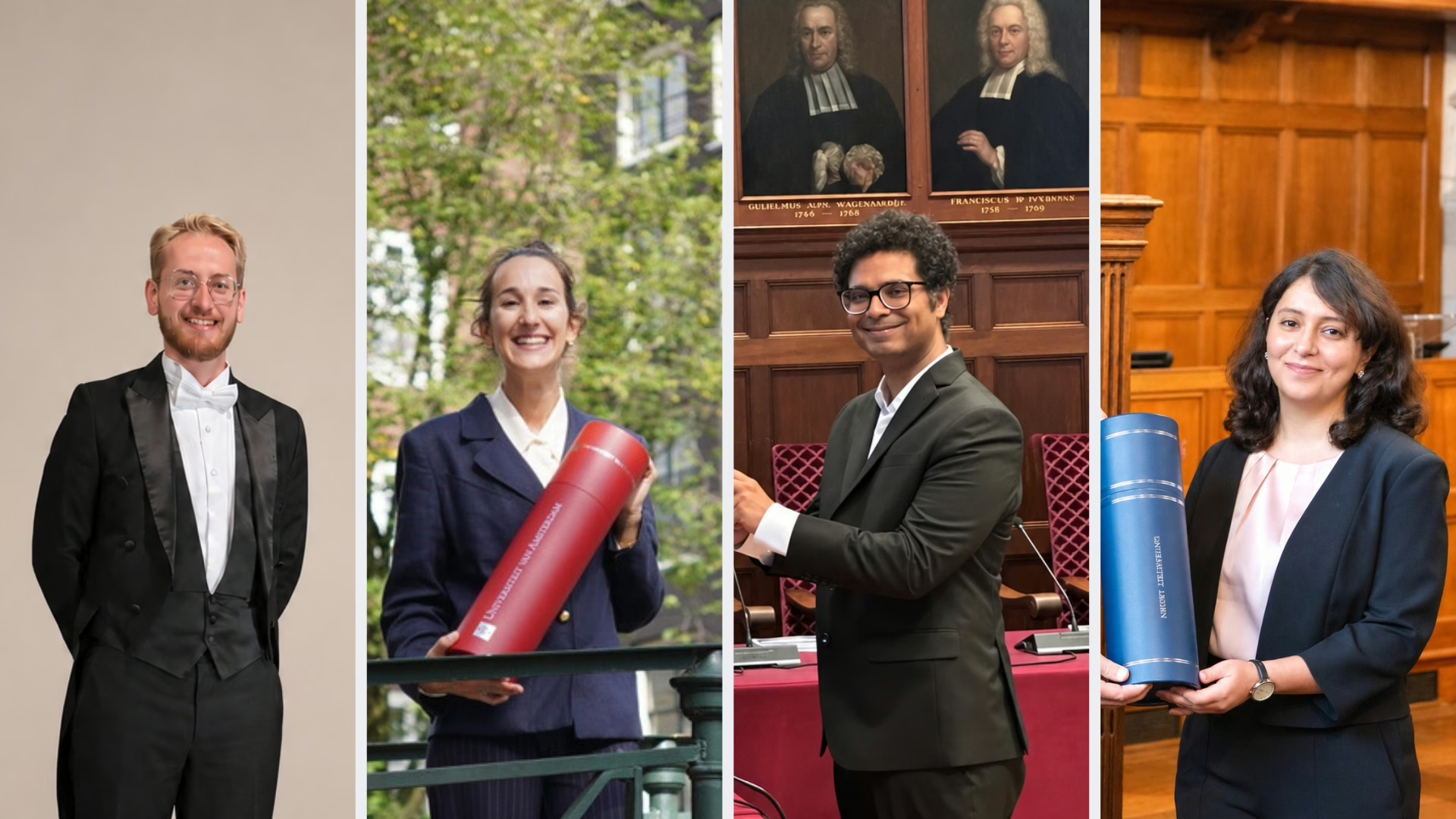
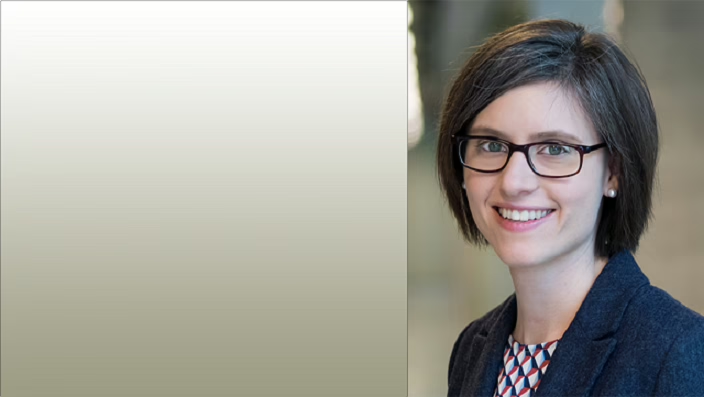
AMOLF group leader Kristina Ganzinger (Physics of Cellular Interactions) is one of the 78 researchers who received a NWO Vidi grant that is worth 800.000 euros. This grant allows Ganzinger to further expand her research on immune cell signaling using advanced microscopy and synthetic biology tools.

Re-wiring our immune cells to fight cancer
Our immune system not only safeguards us from infection, but also cancer: immune cells are constantly surveying our bodies to find – and kill – cells that carry mutations that could turn them into cancer cells. Unluckily though, some cancer cells can escape this immune cell detection.

Promising recent cancer therapies therefore equip our immune cells with additional receptors designed by scientists that enable these cells to also kill tumor cells that previously evaded detection. However, so far these therapies can only cure few cancer types. To find working receptor designs for other cancer types has proved to be difficult: we do not even understand how exactly the existing receptors work.

Ganzinger will use advanced microscopy to understand how these synthetic receptors – called chimeric antigen receptors, or CARs – re-program immune cells. The researchers will map their action in live cells, and rebuild the minimal signaling unit from the bottom-up to truly decipher how these molecules arrange in space and time to fulfill their function. Ultimately, a better understanding of how receptor design translates to their function should aid us in finding design principles to construct new receptors against different cancers.

NWO talent scheme
Vidi is aimed at experienced researchers who have carried out successful research for a number of years after obtaining their PhDs. Together with Veni and Vici, Vidi is part of the NWO Talent Programme. Researchers in the NWO Talent Programme are free to submit their own subject for funding. NWO thus encourages curiosity-driven and innovative research. NWO selects researchers based on the quality of the researcher, the innovative character of the research, the expected scientific impact of the research proposal and the possibilities for knowledge use.

More information on this year’s Vidi grants on the website of NWO.
Share article
What's happening

Most recent news items

All news items
Joining forces to study perovskite interfaces
People and recognition

Joining forces to study perovskite interfaces

AMOLF group leaders Professor Wiebke Albrecht and Professor Bruno Ehrler have received an NWO ENW-M2 grant for their joint research project, The Dynamic Atomic Interface between Halide Perovskites and Metals. The insights gained will pave the way for sustainable, high-performance solar energy and information technology. Wiebke and Bruno will each hire a PhD student for this project. The grant amounts to €800.000.

Read news item
Wim Noorduin and Arian van Asten presenting their scientific journey
People and recognition

Wim Noorduin and Arian van Asten presenting their scientific journey

On October 8, Professor Wim Noorduin and his collaborator Professor Arian van Asten (University of Amsterdam) presented their scientific journey in a video to the audience at the ‘Avond van Wetenschap en Maatschappij’. They did so alongside the other nominees for the Huibregtsen Prize.

Read news item
Natural phenomena ‘hyperuniform disorder’ enables highly efficient, thin silicon solar cells
Research highlights

Natural phenomena ‘hyperuniform disorder’ enables highly efficient, thin silicon solar cells

Silicon solar panels are rigid and heavy, and many rooftops cannot support them. This creates a need for thin, flexible solar cells that can be integrated into building materials. However, making silicon solar cells thinner makes it harder to trap light inside the material. Researchers in the 3D Photovoltaics group found a fascinating way to overcome this challenge using a phenomenon called hyperuniform disorder. They publish their findings in the journal ACS Photonics.

The researchers were able to make highly efficient silicon solar cell materials that are 30 times thinner than conventional ones. They managed to do this by integrating a layer of nanometer sized structures on top of the material. Up close, this pattern looks random, but it is remarkably when you step back: no clumps, no gaps, and no repeating pattern. This is called hyperuniform disorder (or HUD).

Read news item
Stay informed

Get the latest research highlights, events, and news from our institute delivered to your inbox