People and recognition

Two NWO Rubicon grants for AMOLF researchers

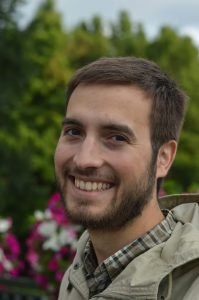
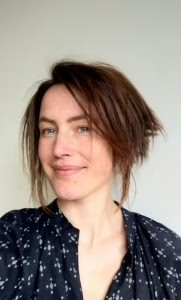
Former PhD students Anne Meeussen (Mechanical Metamaterials group) and Mario Avellaneda Sarrio (Biophysics group) are amongst the 31 researchers who have recently received a Rubicon grant from NWO. The Rubicon program gives young, highly promising researchers the opportunity to gain international research experience. With a Rubicon grant they can spend up to 24 months doing research at a foreign institution.

Mario Avellaneda Sarrio will use the grant to investigate bioelectric patrolling against pathogens at the Institute of Science and Technology Austria in Vienna. Immune cells need to navigate through the human body in search of pathogens, yet how they can migrate so efficiently remains unclear. The researcher will elucidate how local electric potential changes in cell membrane assist steering of immune cells during migration

Anne Meeussen will work on targeted design of shape-morphing materials at Harvard University in Boston. Shape-changing materials—from tents to solar sails—are useful, but hard to design. Based on experiments, the researcher models such shape-morphing materials. The researcher uses this model to map out design rules, which help scientists create new shape-morphing structures.

Read the NWO press release
Anne Meeussen
Mario Avellaneda Sarrio
Share article
What's happening

Most recent news items

All news items
Joining forces to study perovskite interfaces
People and recognition

Joining forces to study perovskite interfaces

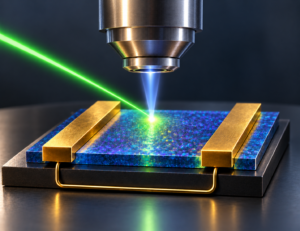
AMOLF group leaders Professor Wiebke Albrecht and Professor Bruno Ehrler have received an NWO ENW-M2 grant for their joint research project, The Dynamic Atomic Interface between Halide Perovskites and Metals. The insights gained will pave the way for sustainable, high-performance solar energy and information technology. Wiebke and Bruno will each hire a PhD student for this project. The grant amounts to €800.000.

Read news item
Wim Noorduin and Arian van Asten presenting their scientific journey
People and recognition

Wim Noorduin and Arian van Asten presenting their scientific journey

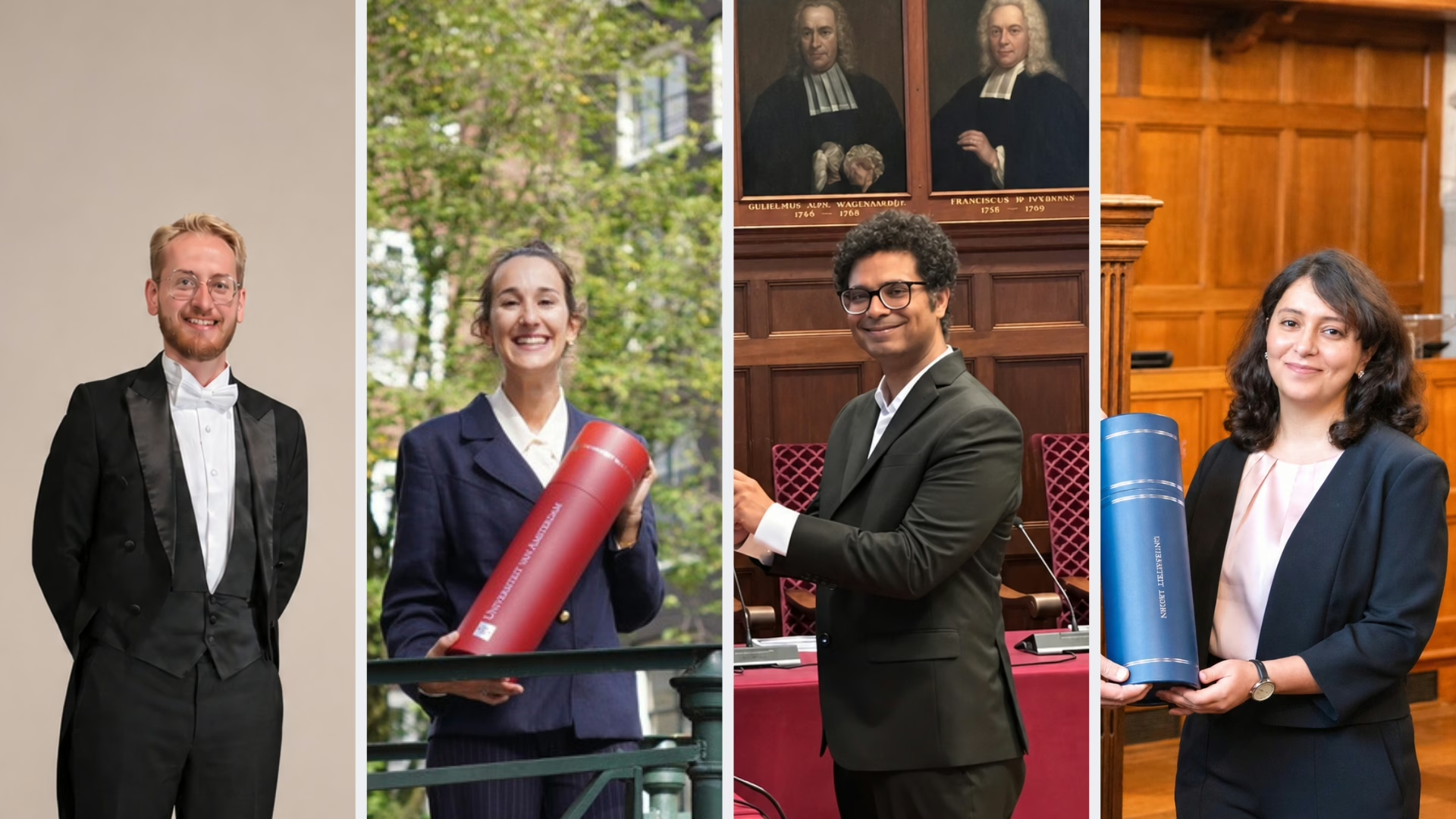
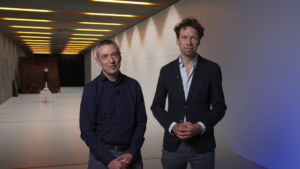
On October 8, Professor Wim Noorduin and his collaborator Professor Arian van Asten (University of Amsterdam) presented their scientific journey in a video to the audience at the ‘Avond van Wetenschap en Maatschappij’. They did so alongside the other nominees for the Huibregtsen Prize.

Read news item
Natural phenomena ‘hyperuniform disorder’ enables highly efficient, thin silicon solar cells
Research highlights

Natural phenomena ‘hyperuniform disorder’ enables highly efficient, thin silicon solar cells

Silicon solar panels are rigid and heavy, and many rooftops cannot support them. This creates a need for thin, flexible solar cells that can be integrated into building materials. However, making silicon solar cells thinner makes it harder to trap light inside the material. Researchers in the 3D Photovoltaics group found a fascinating way to overcome this challenge using a phenomenon called hyperuniform disorder. They publish their findings in the journal ACS Photonics.

The researchers were able to make highly efficient silicon solar cell materials that are 30 times thinner than conventional ones. They managed to do this by integrating a layer of nanometer sized structures on top of the material. Up close, this pattern looks random, but it is remarkably when you step back: no clumps, no gaps, and no repeating pattern. This is called hyperuniform disorder (or HUD).

Read news item
Stay informed

Get the latest research highlights, events, and news from our institute delivered to your inbox