About AMOLF

Tenure track group leader Esther Alarcon reinforces photovoltaics research

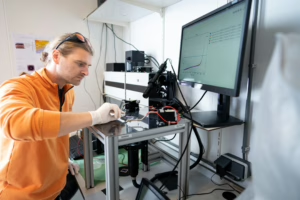
As of Februari 1st, Esther Alarcon starts as a tenure track group leader in the FOM focus group Light Management in New Photovoltaic Materials (LMPV). Alarcon is the third group leader in the LMPV focus group and with Alarcon the focus group has filled all of its tenure track positions.

3D Photovoltaics Esther Alarcon

Alarcon received her PhD from the University of Barcelona (2009). In 2010 she started as a postdoctoral Marie Curie fellow at the Ecole polytechnique fédérale de Lausanne (EPFL), which included two years at the Lawrence Berkeley National Laboratory. In 2014 she got an Ambizione Energy fellowship to lead a group focusing on next generation solar energy conversion into fuel.

With her AMOLF research group 3D Photovoltaics Alarcon will study solar cells with high efficiency. The group aims at exploiting the extended degrees of freedom offered in semiconductor nanostructures to fabricate new unconventional solar cell designs at low cost. Not only is she interested in high conversion efficiencies, but also in widening the range of functionalities, such as the integration of PV with small consumer electronics or large building components. For this, the group aims at extending the boundaries of 3D additive nano-manufacturing for the bottom-up fabrication of functional semiconductor nanostructures. Alarcon expects that the flexibility and low-cost of the fabrication method will open up a new range of possibilities for the generation of novel devices, in particular in t
LMPV logo

he domain of photonics and energy conversion.
Share article
What's happening

Most recent news items

All news items
Natural phenomena ‘hyperuniform disorder’ enables highly efficient, thin silicon solar cells
Research highlights

Natural phenomena ‘hyperuniform disorder’ enables highly efficient, thin silicon solar cells

Silicon solar panels are rigid and heavy, and many rooftops cannot support them. This creates a need for thin, flexible solar cells that can be integrated into building materials. However, making silicon solar cells thinner makes it harder to trap light inside the material. Researchers in the 3D Photovoltaics group found a fascinating way to overcome this challenge using a phenomenon called hyperuniform disorder. They publish their findings in the journal ACS Photonics.

The researchers were able to make highly efficient silicon solar cell materials that are 30 times thinner than conventional ones. They managed to do this by integrating a layer of nanometer sized structures on top of the material. Up close, this pattern looks random, but it is remarkably when you step back: no clumps, no gaps, and no repeating pattern. This is called hyperuniform disorder (or HUD).

Read news item
Off Road grant for a better understanding of intestinal cells that communicate with the immune system
People and recognition

Off Road grant for a better understanding of intestinal cells that communicate with the immune system

AMOLF postdoc Dr. Susanna Eli received an Off Road grant from ZonMw to investigate cells known as M cells in the gut lining that connect the intestine to the immune system. Understanding how M cells develop could ultimately contribute to better treatments for intestinal and immune-related diseases. The grant amounts to 100,000 euros.

Read news item
Science for all ages at Wetenschapsdag 2026
Events and outreach

Science for all ages at Wetenschapsdag 2026

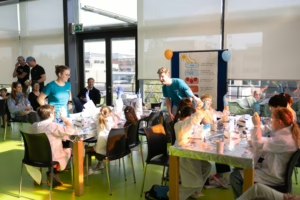
Each year during the national Weekend of Science, AMOLF opens its doors to visitors of all ages to share our enthusiasm for science. AMOLF organizes Wetenschapsdag together with four other research organizations at Amsterdam Science Park: ARCNL, Nikhef, CWI, and University of Amsterdam.

Read news item
About AMOLF

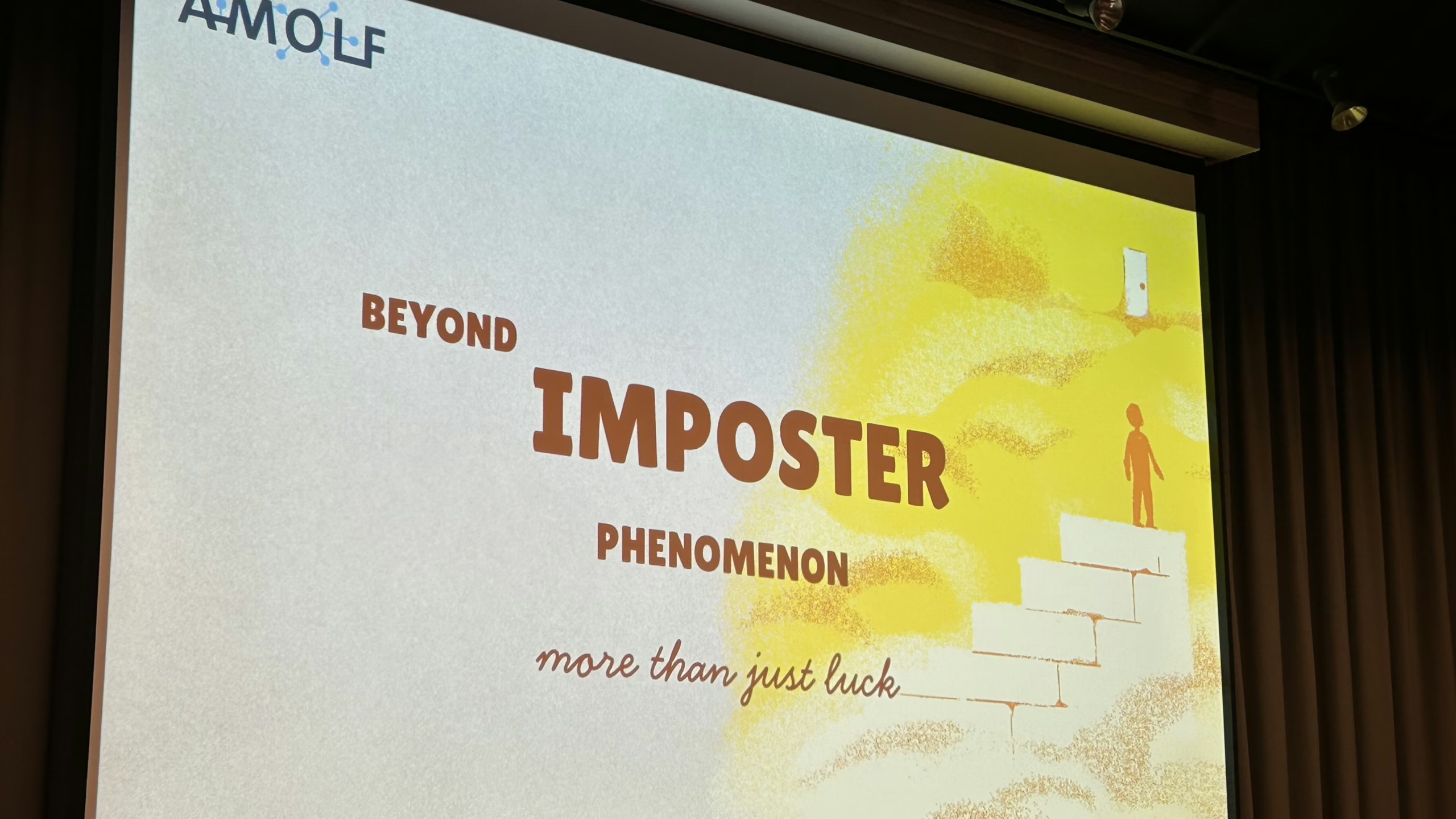
Annual AMOLF Diversity Day focuses on Impostor Phenomenon

Once a year, the AMOLF Inclusion and Diversity team organizes Diversity Day for all AMOLF employees. On October 1, this year’s event took place with the theme Beyond Impostor Phenomenon – More Than Just Luck.

Read news item
Stay informed

Get the latest research highlights, events, and news from our institute delivered to your inbox