People and recognition

Rubicon grant for Hugo Doeleman

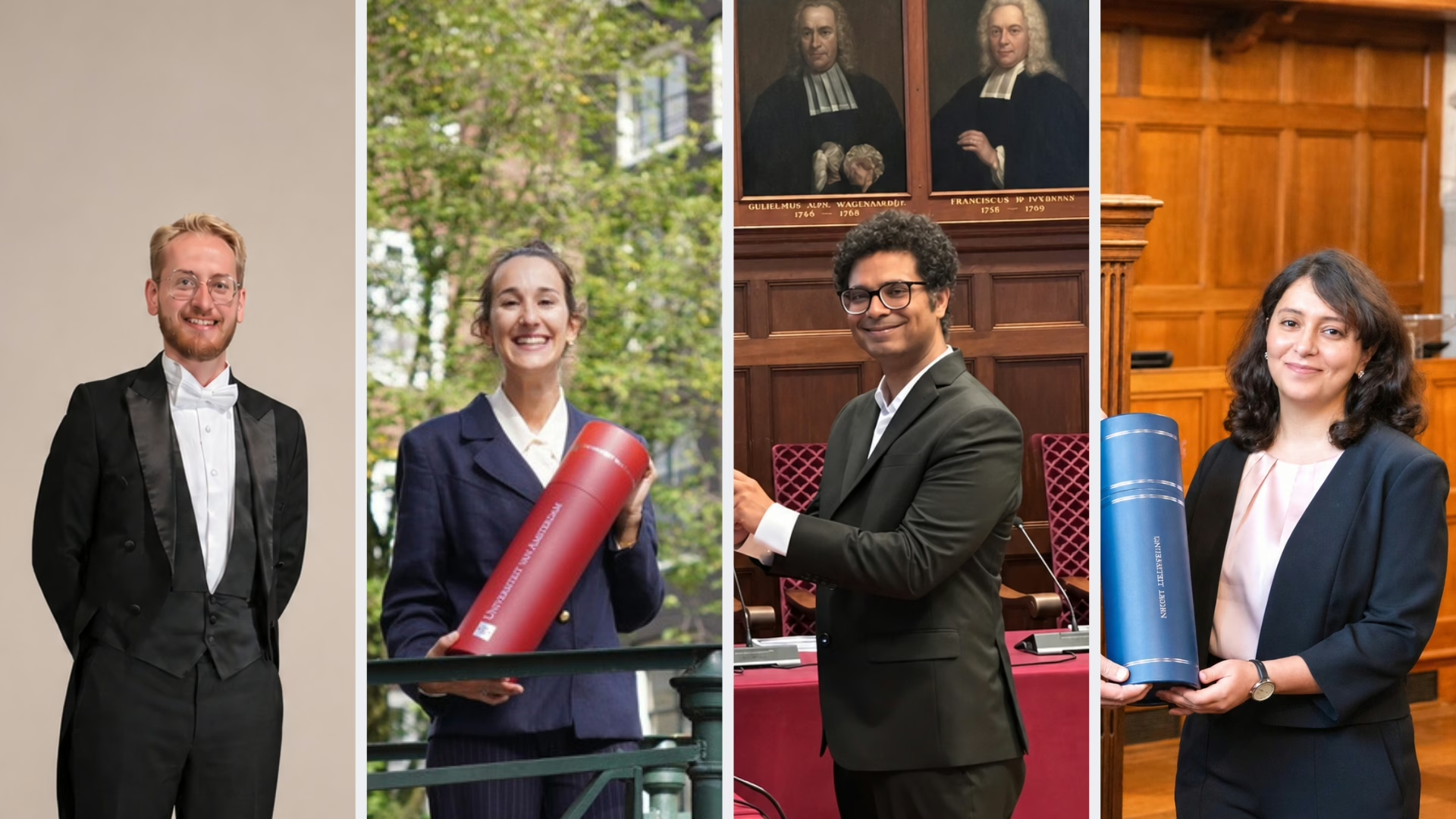
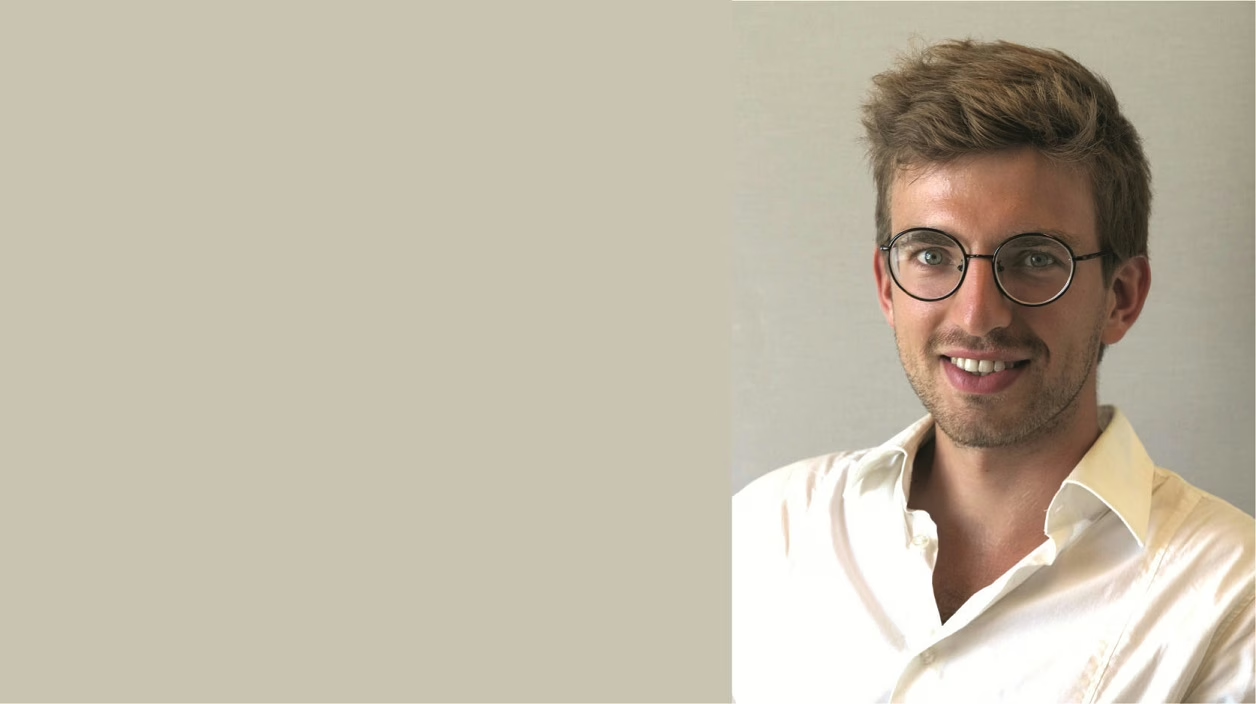
Former PhD student Hugo Doeleman has received a Rubicon grant from NWO to carry out his research proposal at ETH Zurich. At AMOLF Doeleman was a group member of the Resonant Nanophotonics group led by Femius Koenderink. His doctoral research was done in close collaboration with Ewold Verhagen (AMOLF) and Robert Spreeuw (UvA). Doeleman left AMOLF after defending his thesis ‘Hybrid Resonators for Light Trapping and Emission Control’, for which he obtained a cum laude degree.

Research plans
Quantum information processing (QIP) could be useful for solving problems that classical hardware cannot, with envisioned applications ranging from solving mathematical optimization problems to the rational design of organic molecules and functional materials. Superconducting circuits, operating at microwave frequencies and cooled to mK temperatures, have rapidly developed as one of the most advanced architectures for QIP, as highlighted, for example, by the recent demonstration by Google of ‘quantum supremacy’ – the exponential speed-up of a quantum computer over a classical computer. Optical photons, on the other hand, are ideally suited as long-distance carriers of quantum information.

This proposal aims to build an interface between microwaves and optical photons, which would help to develop a modular large-scale quantum computer by connecting multiple superconducting circuits in physically separate dilution refrigerators through optical photons. To mediate this microwave-to-optical conversion, I will use acoustic waves trapped in high-quality crystals, which have been recently shown to couple efficiently to both optical and microwave photons. In other words, I will use music as a bridge between light and microwaves.

NWO awarded 18 researchers with a Rubicon grant to enable them to carry out their research abroad. With the program NWO wishes to enable young and talented researchers to acquire international research experience.

Read the latest NWO Rubicon news
Share article
What's happening

Most recent news items

All news items
Joining forces to study perovskite interfaces
People and recognition

Joining forces to study perovskite interfaces

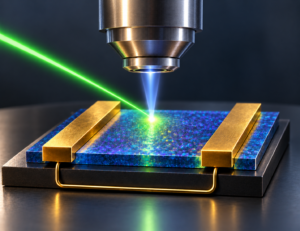
AMOLF group leaders Professor Wiebke Albrecht and Professor Bruno Ehrler have received an NWO ENW-M2 grant for their joint research project, The Dynamic Atomic Interface between Halide Perovskites and Metals. The insights gained will pave the way for sustainable, high-performance solar energy and information technology. Wiebke and Bruno will each hire a PhD student for this project. The grant amounts to €800.000.

Read news item
Wim Noorduin and Arian van Asten presenting their scientific journey
People and recognition

Wim Noorduin and Arian van Asten presenting their scientific journey

On October 8, Professor Wim Noorduin and his collaborator Professor Arian van Asten (University of Amsterdam) presented their scientific journey in a video to the audience at the ‘Avond van Wetenschap en Maatschappij’. They did so alongside the other nominees for the Huibregtsen Prize.

Read news item
Natural phenomena ‘hyperuniform disorder’ enables highly efficient, thin silicon solar cells
Research highlights

Natural phenomena ‘hyperuniform disorder’ enables highly efficient, thin silicon solar cells

Silicon solar panels are rigid and heavy, and many rooftops cannot support them. This creates a need for thin, flexible solar cells that can be integrated into building materials. However, making silicon solar cells thinner makes it harder to trap light inside the material. Researchers in the 3D Photovoltaics group found a fascinating way to overcome this challenge using a phenomenon called hyperuniform disorder. They publish their findings in the journal ACS Photonics.

The researchers were able to make highly efficient silicon solar cell materials that are 30 times thinner than conventional ones. They managed to do this by integrating a layer of nanometer sized structures on top of the material. Up close, this pattern looks random, but it is remarkably when you step back: no clumps, no gaps, and no repeating pattern. This is called hyperuniform disorder (or HUD).

Read news item
Stay informed

Get the latest research highlights, events, and news from our institute delivered to your inbox