Events and outreach

OrganoidNL 2026 brings together Dutch organoid research community

On April 17, around 250 researchers gathered at AMOLF in Amsterdam for the fourth edition of the annual OrganoidNL Symposium. Organoids, which are small, simplified models of organs grown from stem cells in the lab, are powerful tools to study, for example, how our bodies work and how diseases develop.

The event brought together scientists and students from across the Netherlands to share the latest advances in developing and applying organoid models – focusing on adult tissue organoids, while also covering embryonic stages such as blastuloids and gastruloids. The symposium aims to strengthen collaboration within the organoid community and to promote cutting-edge knowledge exchange in this rapidly growing field.
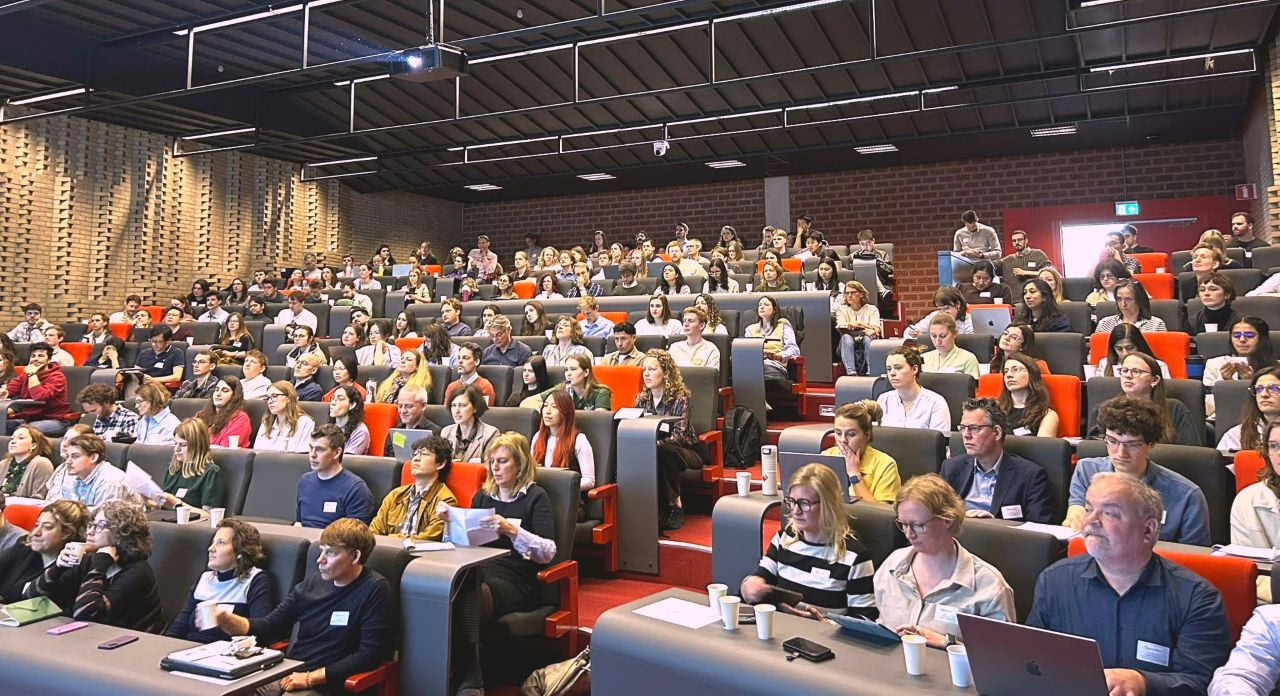
Audience seated in a lecture hall at AMOLF during the 2026 OrganoidNL Symposium, listening to presentations.
Around 250 researchers gathered at AMOLF for the 2026 OrganoidNL Symposium, bringing together the Dutch organoid research community.

Speakers

The program featured a series of keynote lectures by leading international researchers, including Jürgen Knoblich (IMBA Vienna), Emma Rawlins (University of Cambridge), Kim Jensen (University of Copenhagen), Gray Camp (IHB Basel), Jarno Drost (Princess Máxima Center), and Miki Ebisuya (TU Dresden). Their presentations, alongside contributed talks and poster sessions, highlighted cutting-edge developments and emerging directions in organoid biology.


Organoids enabling new research directions
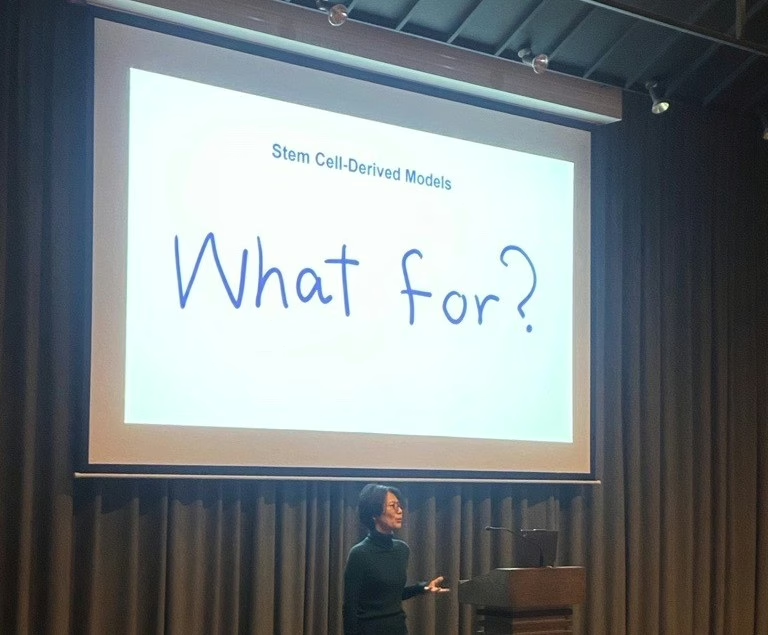
Keynote speaker Miki Ebisuya encouraged the audience to reflect on the immense possibilities and broader purpose of organoid research, posing a single, central question: “What for?”

Keynote speaker Miki Ebisuya encouraged the audience to reflect on the immense possibilities and broader purpose of organoid research, posing a single, central question: “What for?” Her message resonated across the program, as speakers highlighted diverse examples of when and how organoid models are useful.

Her talk, and others, highlighted how organoids enable research that is otherwise extremely challenging, if not impossible. Organoid systems allow researchers to study the development of human tissues in unprecedented detail, observing how different cell types interact and respond to their environment. This includes, for example, investigating how oxygen levels influence lung development or how tissues interact with pathogens (germs that cause disease) and immune cells.


Tumor biology and patient variability

Another key focus was tumor biology and patient variability. By growing tumor organoids from patient samples, researchers can uncover differences between patients and even within different regions of the same tumor, opening up new possibilities for studying disease mechanisms and testing personalized therapeutic strategies.


Comparison between species

Comparative studies across species also featured prominently. Techniques developed for human organoids are increasingly being applied to other organisms, enabling researchers to pinpoint subtle differences in cell types and developmental timing that underlie variations in tissue structure and function.

A growing community driving organoid innovation

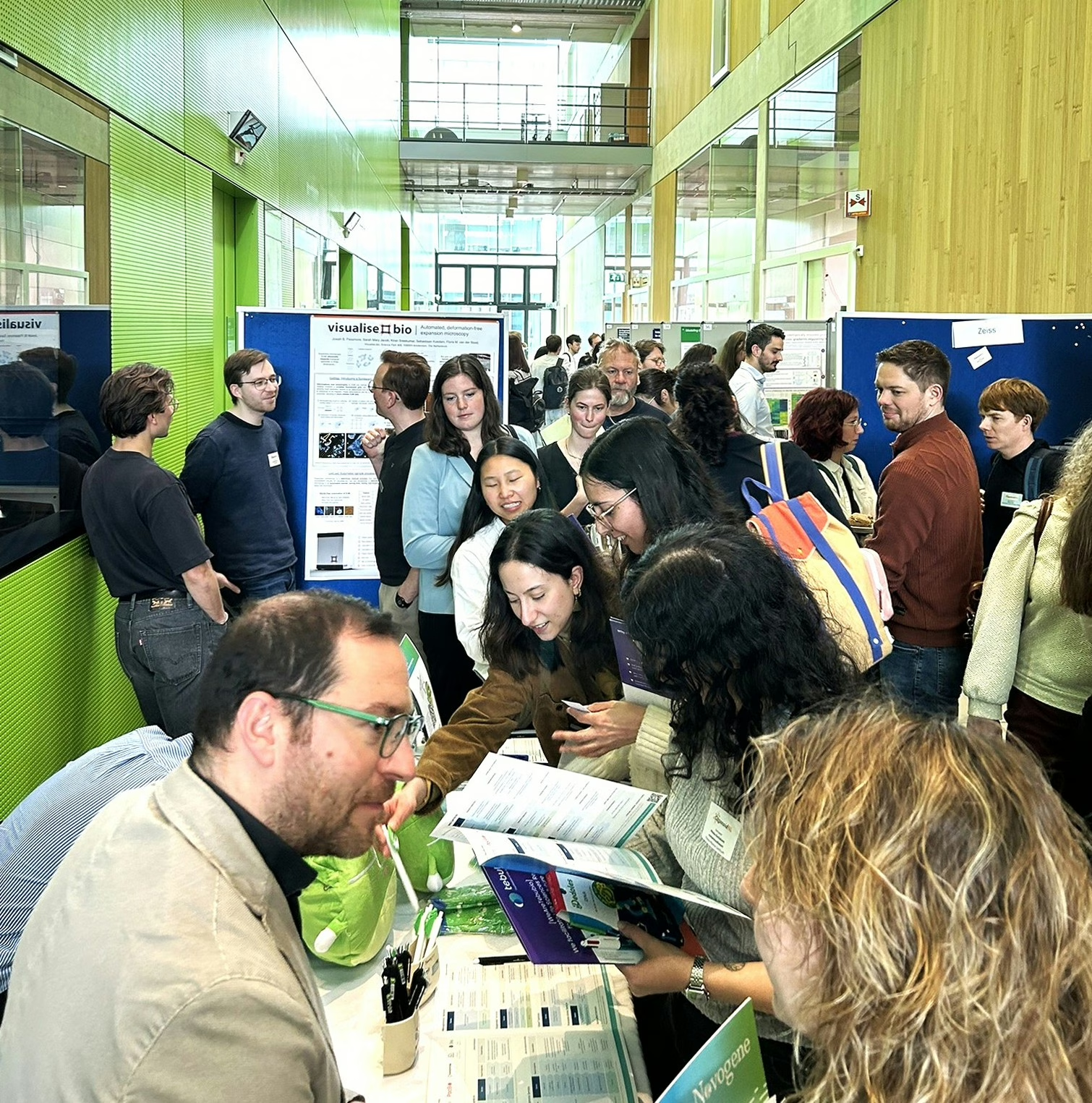
Organizing team member Sander Tans reflects: “It was amazing to host everyone again at AMOLF. OrganoidNL keeps getting bigger and better! The organoid field is so dynamic, both internationally and within the Netherlands. I saw a lot of eye-opening research, from tissue evolution to embryo implantation – now all accessible owing to organoids!”

Building on the success of previous editions, OrganoidNL continues to strengthen the Netherlands’ position as a leading hub for organoid research.


Contact

If you have any questions or suggestions, please contact Sander Tans at s.tans@amolf.nl.

Share article
What's happening

Most recent news items

All news items
Collaboration

Successful outcomes of international EBEAM program led by AMOLF

The EU Pathfinder project Electron Beams Enhancing Analytical Microscopy (EBEAM) that was recently completed has received a highly positive review of the European Innovation Council (EIC). EBEAM brought together eight European research institutions and companies, including AMOLF, that develop new concepts and instruments combining spectroscopic analysis with electron microscopy.

Read news item
Research highlights

Everything you need to know about organoids

Organoids are instrumental in improving our understanding of processes that are otherwise hidden inside the body. For instance, these small 3D organs can be used to test medicines on tissue grown from a patient’s own cells. AMOLF researchers carry out unique and complex experiments to follow organoids in time. In order to enable other researchers to benefit from their experiences, they now publish their methods in the prestigious journal Nature Protocols.

Read news item
Events and outreach

Minister Rianne Letschert wears hat and shoulder ornament inspired by Wim Noorduin’s research

This year at the opening of the parliamentary year (Prinsjesdag) Minister of Education, Culture and Science Rianne Letschert wears a spectacular hat and shoulder ornament. Both of them are inspired by the microscopic structures studied by group leader Wim Noorduin (AMOLF/UvA), which look remarkably like tiny flowers under a microscope. Artist and designer Malou Beemer translated these shapes, normally invisible to the naked eye, into wearable art.

Read news item
Nachi Stern, Group Leader Learning Machines at AMOLF
People and recognition

Nachi Stern awarded ERC Starting Grant to explore how matter learns

Why do brains learn, but rocks do not? Could a material one day adapt to its environment the way a living organism does? AMOLF group leader Dr. Nachi Stern has been awarded an ERC Starting Grant to investigate the physical laws of learning, in a project called, “Physical Learning in Dynamical Systems.”

Read news item
Stay informed

Get the latest research highlights, events, and news from our institute delivered to your inbox