People and recognition

Off Road grant for a better understanding of intestinal cells that communicate with the immune system

AMOLF postdoc Dr. Susanna Eli received an Off Road grant from ZonMw to investigate cells known as M cells in the gut lining that connect the intestine to the immune system. Understanding how M cells develop could ultimately contribute to better treatments for intestinal and immune-related diseases. The grant amounts to 100,000 euros.

What are M cells?

M cells are rare cells found in the gut lining. Changes in the number and activity of these cells are linked to conditions such as inflammation and immune dysfunction. Understanding which signals drive a cell to become an M cell, and when, is therefore crucial, both for understanding these conditions and for developing more effective oral vaccines.

Using mini-guts grown from stem cells (organoids), confocal microscopy, and AI-based cell tracking, Susanna will follow individual cells over several days to reveal how, when, and where these decisions are made.
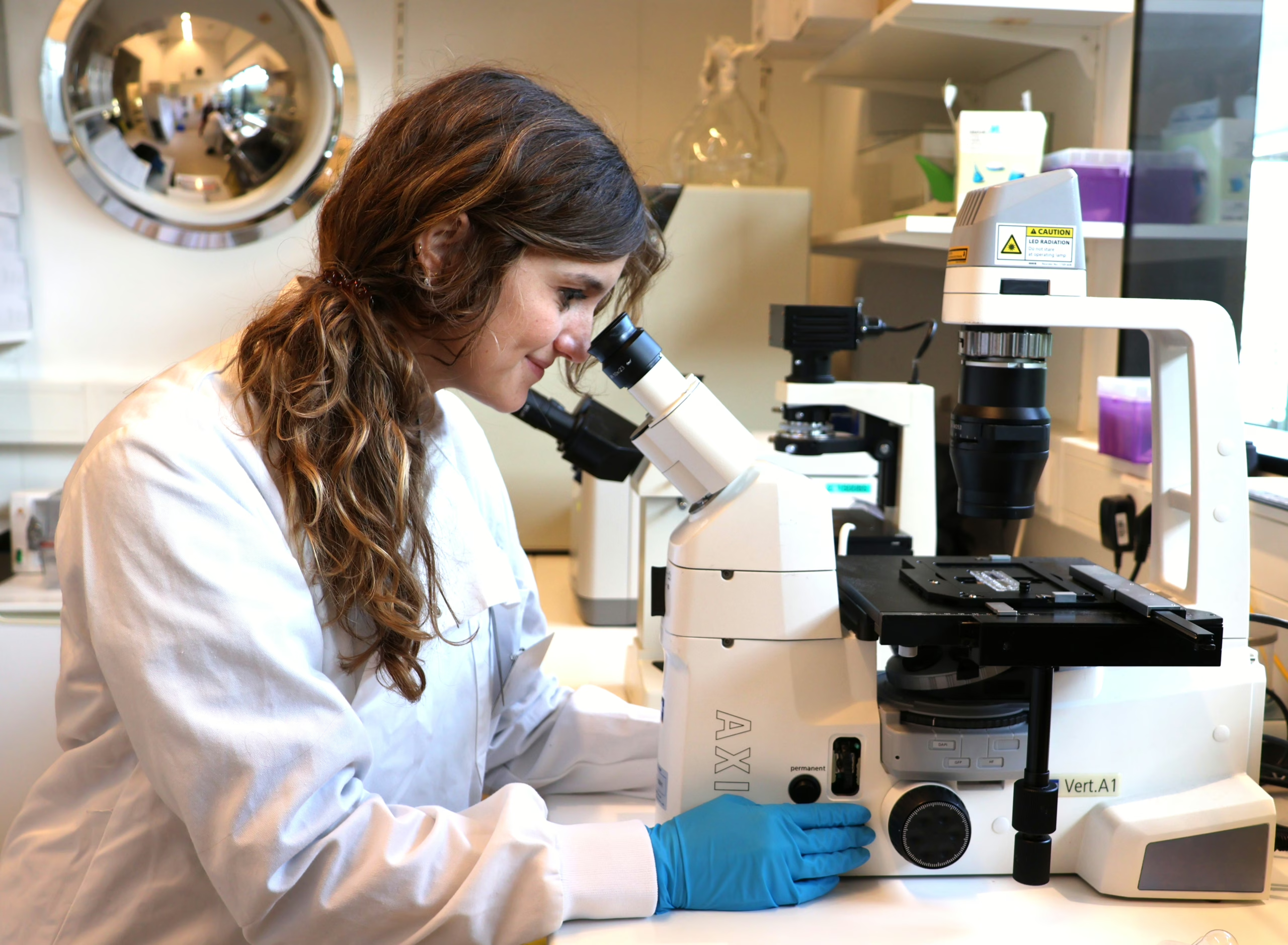
Susanna Eli in her lab

The project

In current models, the signals that trigger M-cell formation are delivered uniformly to the cells. The new model developed in this project will instead deliver these signals in a precise spatial pattern that mimics how the body controls M-cell formation. For the first time, this will make it possible to study how cells respond to signals in both time and space.

“I am thrilled to take on the challenge of uncovering how our intestine and immune system communicate, by expanding current in vitro models one step further.”.

Susanna Eli

Off Road program

The project was selected for the Off Road program, which supports bold, out-of-the-box ideas within the field of (bio)medical science and healthcare. Susanna will carry out her work in the research groups Quantitative Developmental Biology (Professor Jeroen van Zon), Biophysics (Professor Sander Tans) and Physics of Cellular Interactions (Dr. Kristina Ganzinger).

Learn more

To find out more about organoid research at AMOLF, read the news item ‘Everything you need to know about organoids’.
Share article
What's happening

Most recent news items

All news items
Joining forces to study perovskite interfaces
People and recognition

Joining forces to study perovskite interfaces

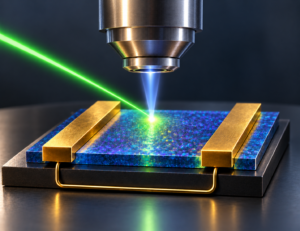
AMOLF group leaders Professor Wiebke Albrecht and Professor Bruno Ehrler have received an NWO ENW-M2 grant for their joint research project, The Dynamic Atomic Interface between Halide Perovskites and Metals. The insights gained will pave the way for sustainable, high-performance solar energy and information technology. Wiebke and Bruno will each hire a PhD student for this project. The grant amounts to €800.000.

Read news item
Wim Noorduin and Arian van Asten presenting their scientific journey
People and recognition

Wim Noorduin and Arian van Asten presenting their scientific journey

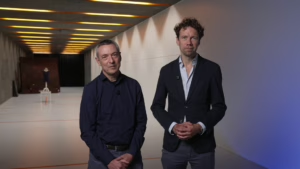
On October 8, Professor Wim Noorduin and his collaborator Professor Arian van Asten (University of Amsterdam) presented their scientific journey in a video to the audience at the ‘Avond van Wetenschap en Maatschappij’. They did so alongside the other nominees for the Huibregtsen Prize.

Read news item
Natural phenomena ‘hyperuniform disorder’ enables highly efficient, thin silicon solar cells
Research highlights

Natural phenomena ‘hyperuniform disorder’ enables highly efficient, thin silicon solar cells

Silicon solar panels are rigid and heavy, and many rooftops cannot support them. This creates a need for thin, flexible solar cells that can be integrated into building materials. However, making silicon solar cells thinner makes it harder to trap light inside the material. Researchers in the 3D Photovoltaics group found a fascinating way to overcome this challenge using a phenomenon called hyperuniform disorder. They publish their findings in the journal ACS Photonics.

The researchers were able to make highly efficient silicon solar cell materials that are 30 times thinner than conventional ones. They managed to do this by integrating a layer of nanometer sized structures on top of the material. Up close, this pattern looks random, but it is remarkably when you step back: no clumps, no gaps, and no repeating pattern. This is called hyperuniform disorder (or HUD).

Read news item
Stay informed

Get the latest research highlights, events, and news from our institute delivered to your inbox