About AMOLF

New publication showcases highlights from AMOLF in 2025

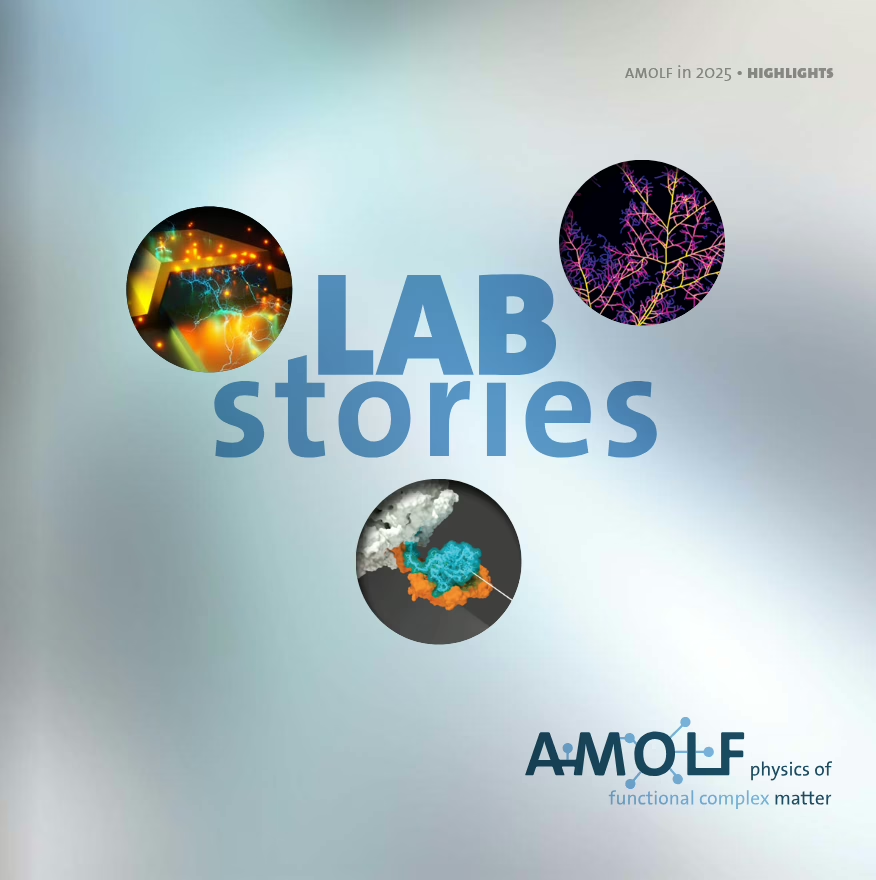
AMOLF has launched the first edition of Lab Stories, a new publication presenting a selection of scientific achievements and technical innovations from 2025. It offers a broad overview of the diversity of research at AMOLF, ranging from sustainable energy materials and information processing in matter to autonomous and adaptive systems. It also highlights the people, technical expertise, and collaborations that enable the institute’s science.

Cover of Lab stories - AMOLF 2025

“2025 really was an ‘oogstjaar,’ a year of results,” says former AMOLF director Huib Bakker in the publication. “We saw many publications, a record number of PhD defenses, and major projects delivering impact.”

Among the highlights featured in Lab Stories are:

  • A light sensor that processes information, inspired by the human brain
  • A Nature publication revealing how underground fungal networks transport and store CO₂
  • A new Hybrid Heart that combines soft robotics with advanced biomaterials to mimic the body’s natural rhythm

The publication also showcases the crucial role of AMOLF’s technical departments in enabling cutting-edge science. Institute Manager Paula van Tijn says: “Researchers and technical staff work hand in hand to develop the custom equipment and infrastructure that drive our science.”

Several stories illustrate how curiosity-driven physics can lead to broader societal impact. Sustainable Energy Materials Research Department Leader Esther Alarcón Lladó notes: “The beauty of this field is that deep scientific curiosity directly leads to real-world impact.”

The publication further reflects on the importance of collaboration and adaptability in a rapidly changing scientific landscape. AMOLF director Bruno Ehrler says: “It’s about strengthening connections, with partners outside AMOLF, and also internally. Everyone who contributes should feel part of what we achieve together: scientists, technicians, and support staff.”

Lab Stories is intended for anyone interested in AMOLF, including researchers, potential collaborators in academia and industry, policymakers, prospective employees, and anyone curious about developments in science and technology.

This is the first edition of an annual publication that offers a selection of activities and achievements emerging from the research labs at AMOLF. From scientific publications to new technical facilities and developments in our research programs, Lab Stories highlights milestones that reflect the diversity and impact of our work and people. It also presents key facts and figures about our institute.

This publication is intended for anyone interested in AMOLF – as a potential research partner in academia, government, or industry, as a prospective employer, or simply out of curiosity about science.

Read Lab Stories – AMOLF in 2025 highlights

View the digitally accessible version of Lab Stories – AMOLF in 2025 highlights.

Share article
What's happening

Most recent news items

All news items
Collaboration

Successful outcomes of international EBEAM program led by AMOLF

The EU Pathfinder project Electron Beams Enhancing Analytical Microscopy (EBEAM) that was recently completed has received a highly positive review of the European Innovation Council (EIC). EBEAM brought together eight European research institutions and companies, including AMOLF, that develop new concepts and instruments combining spectroscopic analysis with electron microscopy.

Read news item
Research highlights

Everything you need to know about organoids

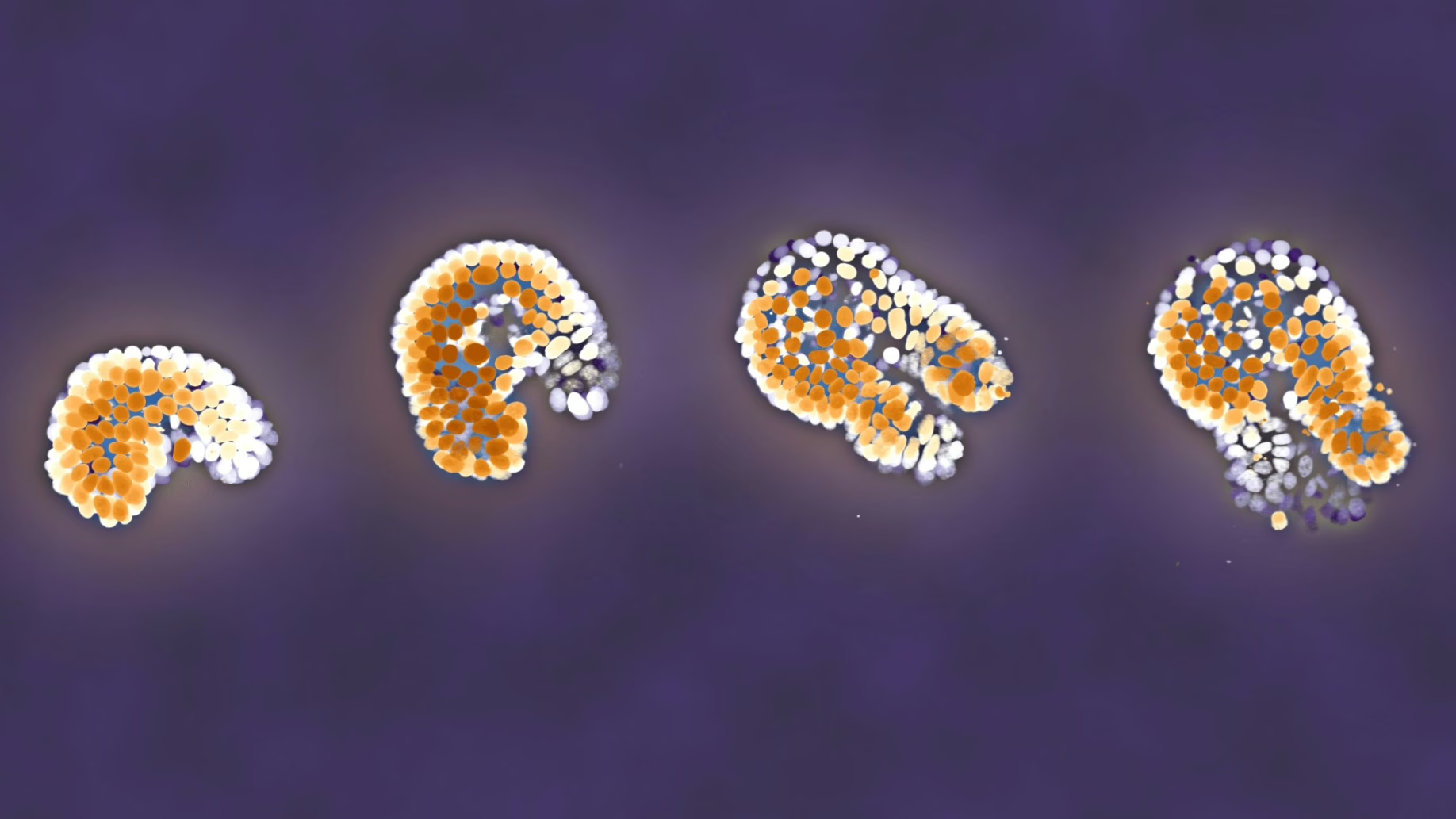
Organoids are instrumental in improving our understanding of processes that are otherwise hidden inside the body. For instance, these small 3D organs can be used to test medicines on tissue grown from a patient’s own cells. AMOLF researchers carry out unique and complex experiments to follow organoids in time. In order to enable other researchers to benefit from their experiences, they now publish their methods in the prestigious journal Nature Protocols.

Read news item
Events and outreach

Minister Rianne Letschert wears hat and shoulder ornament inspired by Wim Noorduin’s research

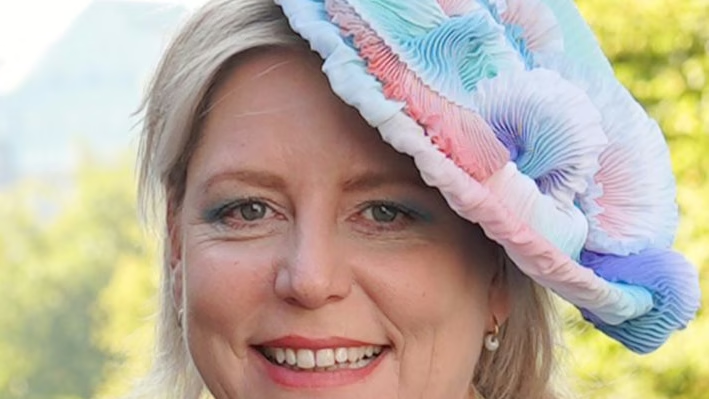
This year at the opening of the parliamentary year (Prinsjesdag) Minister of Education, Culture and Science Rianne Letschert wears a spectacular hat and shoulder ornament. Both of them are inspired by the microscopic structures studied by group leader Wim Noorduin (AMOLF/UvA), which look remarkably like tiny flowers under a microscope. Artist and designer Malou Beemer translated these shapes, normally invisible to the naked eye, into wearable art.

Read news item
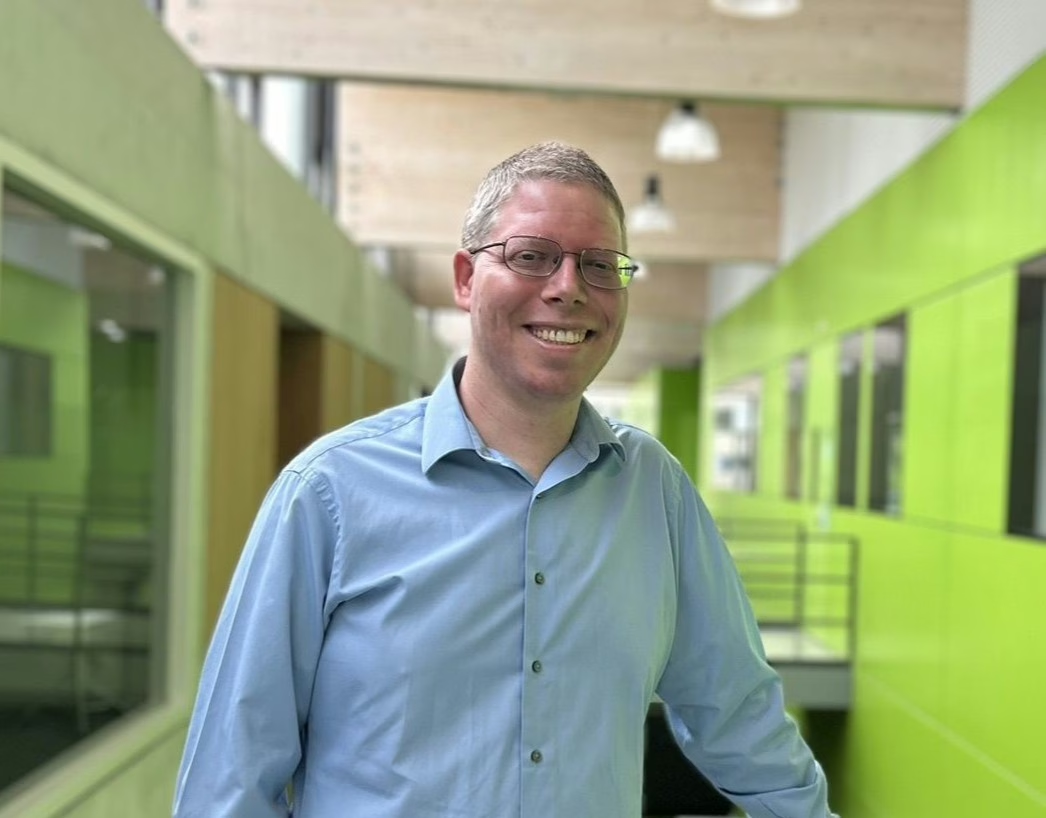
Nachi Stern, Group Leader Learning Machines at AMOLF
People and recognition

Nachi Stern awarded ERC Starting Grant to explore how matter learns

Why do brains learn, but rocks do not? Could a material one day adapt to its environment the way a living organism does? AMOLF group leader Dr. Nachi Stern has been awarded an ERC Starting Grant to investigate the physical laws of learning, in a project called, “Physical Learning in Dynamical Systems.”

Read news item
Stay informed

Get the latest research highlights, events, and news from our institute delivered to your inbox