
People and recognition

Kristina Ganzinger connected to Oncode Institute as Junior Investigator

AMOLF group leader Kristina Ganzinger has been selected by the Oncode Institute to join as Junior Investigator. The institute selected 10 junior investigators out of 72 applicants. The researchers were selected based on the quality of their science, expertise and potential to contribute to the mission of Oncode Institute: to accelerate breakthrough discoveries and speed up their translation into new diagnostics and treatments for cancer patients. Ganzinger will also continue her work at AMOLF leading the group Physics of Cellular Interactions.

Ganzinger’s work revolves around developing high end microscopy to image cell membranes at a single molecule resolution. This allows her to reveal mechanisms of signal transduction and activation in immune cells. She plans to study temporal and spatial regulation of immune cell signalling at molecular detail in cell – membrane or cell – cell contacts. Being an Oncode Young Investigator gives her the freedom to pursue some more explorative projects related to cancer research. Her Oncode affiliation also facilitates valorization of results and connects her group and AMOLF more closely to the Dutch Oncology Research community across academia and industry.

Share article

What's happening

Most recent news items

All news items
Collaboration

Successful outcomes of international EBEAM program led by AMOLF

The EU Pathfinder project Electron Beams Enhancing Analytical Microscopy (EBEAM) that was recently completed has received a highly positive review of the European Innovation Council (EIC). EBEAM brought together eight European research institutions and companies, including AMOLF, that develop new concepts and instruments combining spectroscopic analysis with electron microscopy.

Read news item
Research highlights

Everything you need to know about organoids

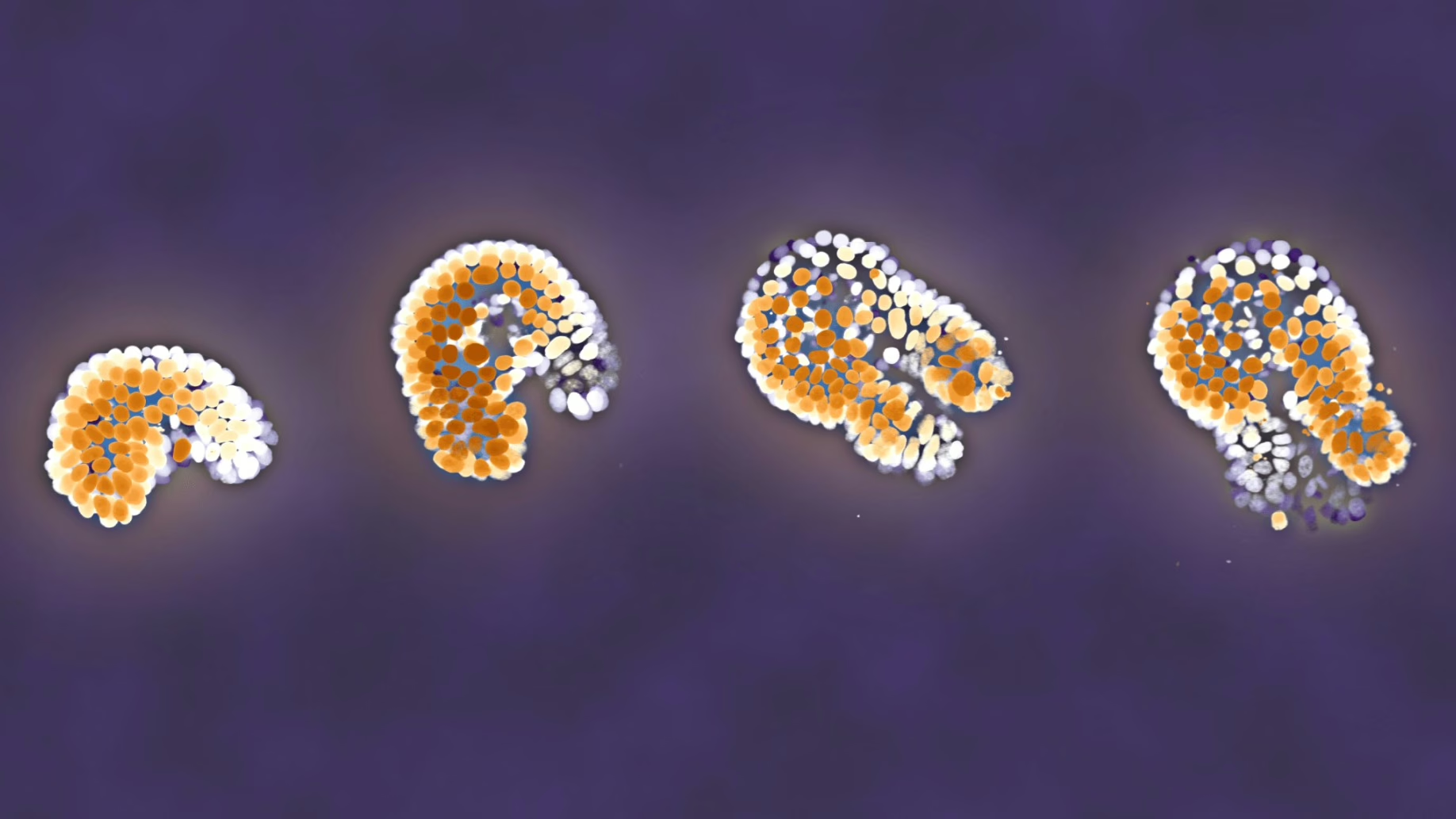
Organoids are instrumental in improving our understanding of processes that are otherwise hidden inside the body. For instance, these small 3D organs can be used to test medicines on tissue grown from a patient’s own cells. AMOLF researchers carry out unique and complex experiments to follow organoids in time. In order to enable other researchers to benefit from their experiences, they now publish their methods in the prestigious journal Nature Protocols.

Read news item
Events and outreach

Minister Rianne Letschert wears hat and shoulder ornament inspired by Wim Noorduin’s research

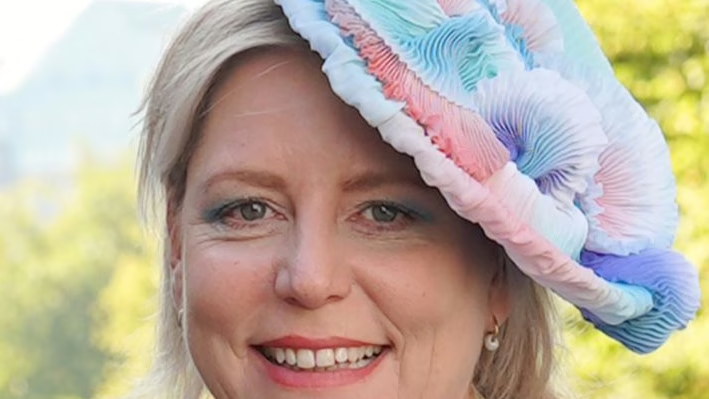
This year at the opening of the parliamentary year (Prinsjesdag) Minister of Education, Culture and Science Rianne Letschert wears a spectacular hat and shoulder ornament. Both of them are inspired by the microscopic structures studied by group leader Wim Noorduin (AMOLF/UvA), which look remarkably like tiny flowers under a microscope. Artist and designer Malou Beemer translated these shapes, normally invisible to the naked eye, into wearable art.

Read news item
Nachi Stern, Group Leader Learning Machines at AMOLF
People and recognition

Nachi Stern awarded ERC Starting Grant to explore how matter learns

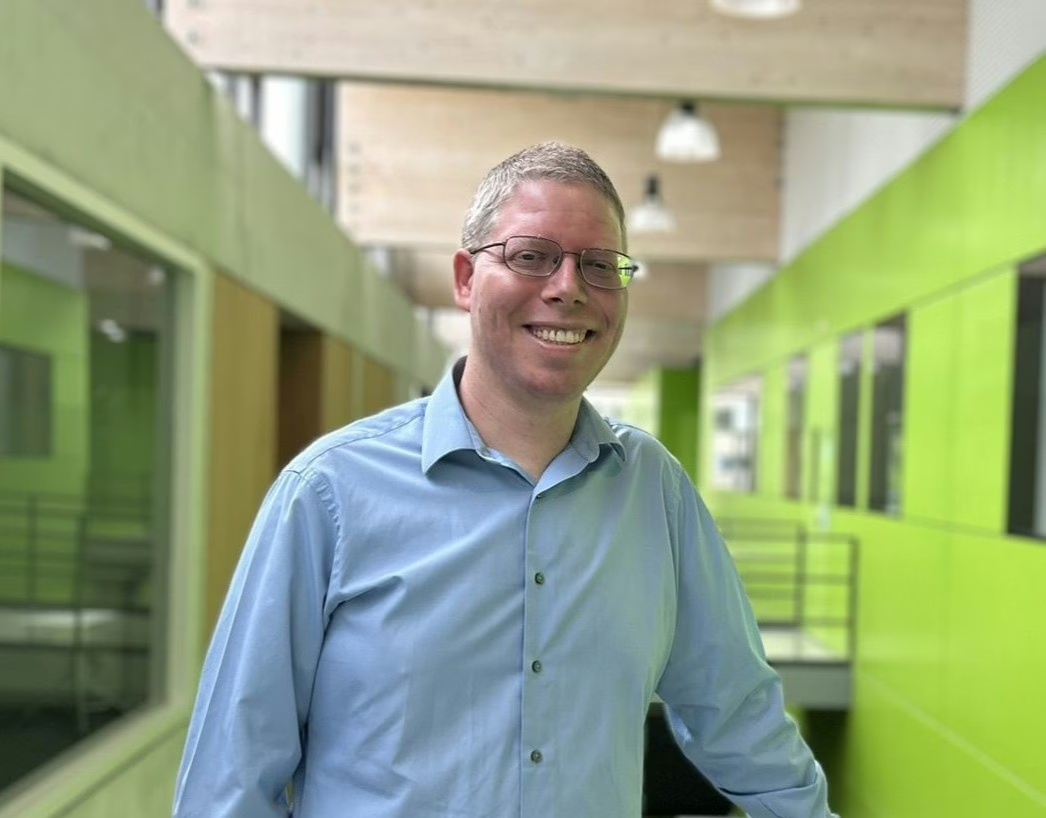
Why do brains learn, but rocks do not? Could a material one day adapt to its environment the way a living organism does? AMOLF group leader Dr. Nachi Stern has been awarded an ERC Starting Grant to investigate the physical laws of learning, in a project called, “Physical Learning in Dynamical Systems.”

Read news item
Stay informed

Get the latest research highlights, events, and news from our institute delivered to your inbox