About AMOLF

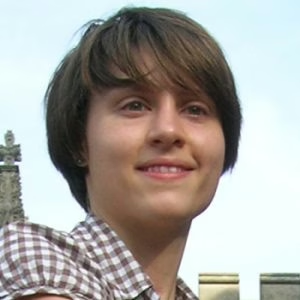
Kristina Ganzinger appointed at AMOLF as WISE tenure track group leader

NWO has awarded three talented female scientists a WISE grant. Dr Kristina Ganzinger has received an appointment at the Netherlands Institute for the Physics of Functional Complex Matter AMOLF, Dr Larissa Juschkin at the Advanced Research Centre for Nanolithography ARCNL, and Dr Aurora Simionescu at the Netherlands Institute for Space Research SRON. With the WISE program, NWO wants to increase the percentage of female researchers at its institutes.

Kristina Ganzinger comes from the Max Planck Institute of Biochemistry in Martinsried near Munich. At AMOLF she will use biophysical and system biology techniques to study the physical principles of complex information transfer and processing in the immune system. By combining synthetic biology tools with advanced single molecule microscopy, she will pioneer a completely new and truly unique ‘synthetic immunology’ approach that promises to have an enormous impact by providing quantitative insights in the biophysics of cell-cell communication and predictive models to aid diagnosis and therapy of immune disease.

AMOLF director Huib Bakker: “Dr. Ganzinger is beyond doubt an ideal candidate for the WISE fellowship. I think she will be a great asset to AMOLF and Dutch biophysics as a whole. She clearly has the potential to become a leader in her field.”

About the NWO WISE program
NWO has several dedicated programs for talented researchers. To improve the gender balance among its research staff, NWO decided in 2015 to establish a tenure-track programme for female researchers at NWO institutes, Women In Science Excel (WISE). This programme offers excellent female researchers the possibility to develop their own research group or to continue such a research group at one of the NWO institutes.

Read the NWO press release
Share article
What's happening

Most recent news items

All news items
Joining forces to study perovskite interfaces
People and recognition

Joining forces to study perovskite interfaces

AMOLF group leaders Professor Wiebke Albrecht and Professor Bruno Ehrler have received an NWO ENW-M2 grant for their joint research project, The Dynamic Atomic Interface between Halide Perovskites and Metals. The insights gained will pave the way for sustainable, high-performance solar energy and information technology. Wiebke and Bruno will each hire a PhD student for this project. The grant amounts to €800.000.

Read news item
Wim Noorduin and Arian van Asten presenting their scientific journey
People and recognition

Wim Noorduin and Arian van Asten presenting their scientific journey

On October 8, Professor Wim Noorduin and his collaborator Professor Arian van Asten (University of Amsterdam) presented their scientific journey in a video to the audience at the ‘Avond van Wetenschap en Maatschappij’. They did so alongside the other nominees for the Huibregtsen Prize.

Read news item
Natural phenomena ‘hyperuniform disorder’ enables highly efficient, thin silicon solar cells
Research highlights

Natural phenomena ‘hyperuniform disorder’ enables highly efficient, thin silicon solar cells

Silicon solar panels are rigid and heavy, and many rooftops cannot support them. This creates a need for thin, flexible solar cells that can be integrated into building materials. However, making silicon solar cells thinner makes it harder to trap light inside the material. Researchers in the 3D Photovoltaics group found a fascinating way to overcome this challenge using a phenomenon called hyperuniform disorder. They publish their findings in the journal ACS Photonics.

The researchers were able to make highly efficient silicon solar cell materials that are 30 times thinner than conventional ones. They managed to do this by integrating a layer of nanometer sized structures on top of the material. Up close, this pattern looks random, but it is remarkably when you step back: no clumps, no gaps, and no repeating pattern. This is called hyperuniform disorder (or HUD).

Read news item
Stay informed

Get the latest research highlights, events, and news from our institute delivered to your inbox