Collaboration

AMOLF-ARCNL PhD collaboration brings to light new nanostructure metrology technique

The joint PhD program between AMOLF and ARCNL continues to prove its strength in combining fundamental physics with industrial relevance. Falco Bijloo’s research, recently published in ACS Nano, showcases the power of this partnership. This December, two such joint AMOLF-ARCNL PhD candidates will both defend their PhD theses on the same day, highlighting the close-knit collaboration between the two institutes and the fertile research environment it creates for young scientists.

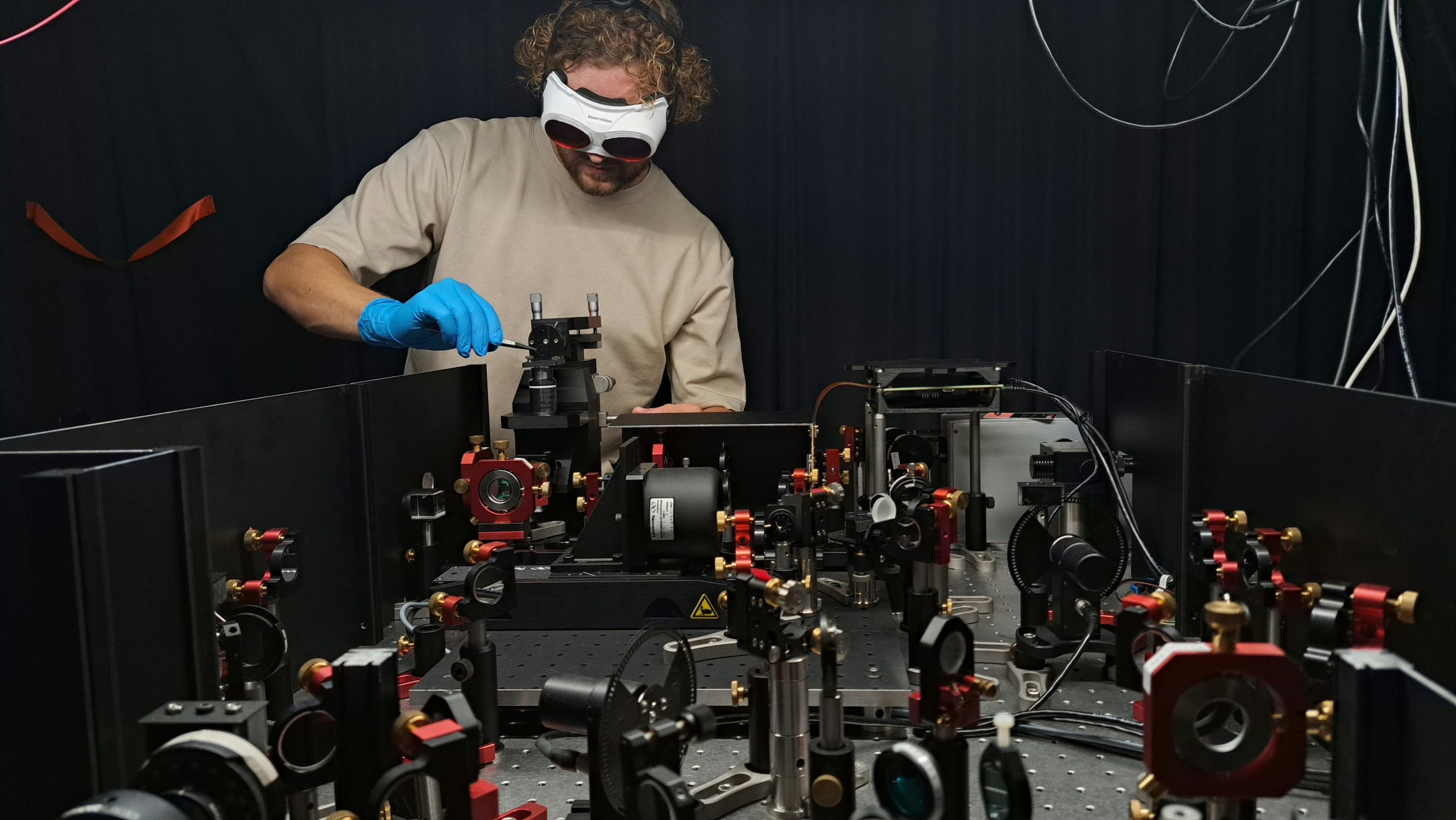
Falco Bijloo adjusts experimental setup.

A BIC breakthrough 

Working at the interface of nanophotonics and semiconductor metrology, joint AMOLF-ARCNL PhD candidate Falco Bijloo developed a new optical technique to measure structures far smaller than the wavelength of light. His work focuses on dielectric metasurfaces, which are artificially structured surfaces that manipulate light in unique ways.  

By carefully patterning nanoscopic disks with tiny voids, he and his collaborators created a surface that supports a so-called quasi-bound state in the continuum (quasi-BIC). This special optical resonance is extremely sensitive to minute structural changes, allowing the detection of variations as small as a few nanometers. Such sensitivity is essential for next-generation semiconductor manufacturing, where measuring critical dimensions quickly and accurately is a key challenge. 
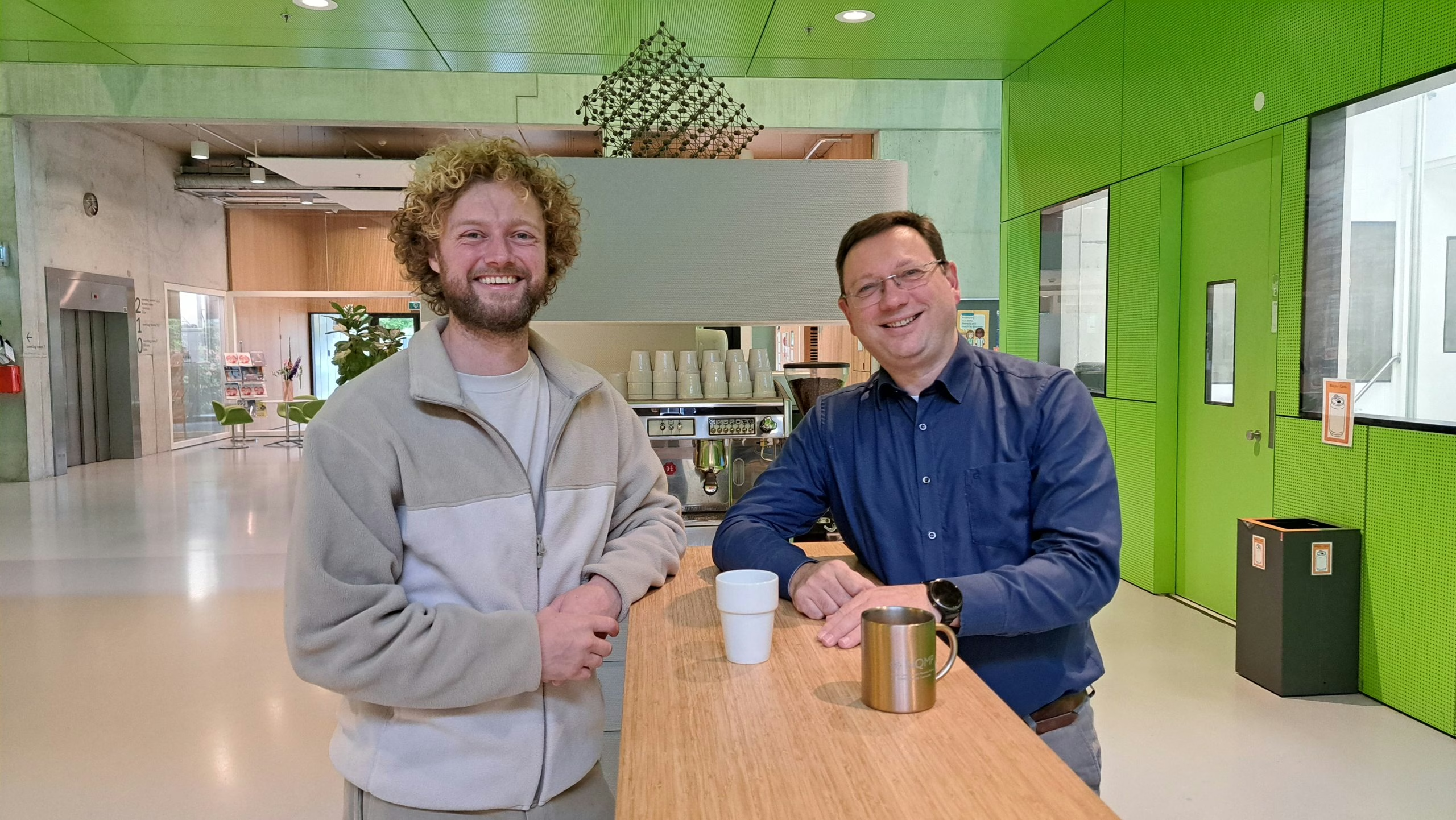
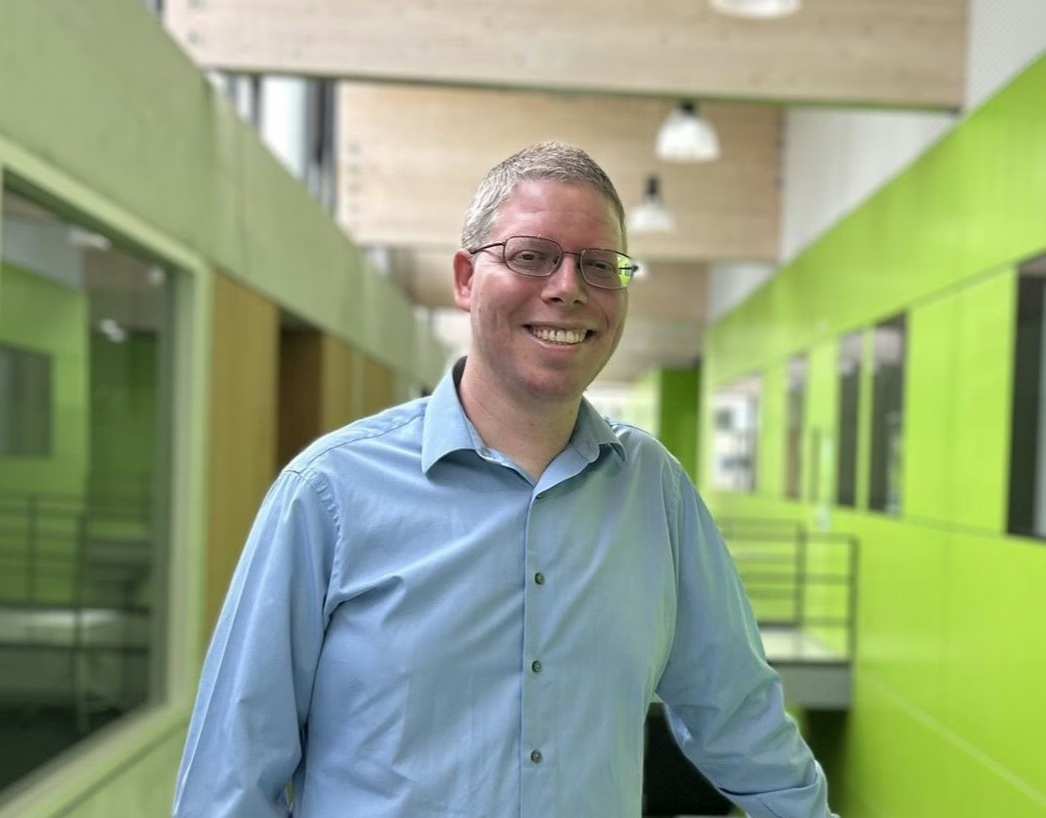
Femius Koenderink en Frank Bijloo (AMOLF)
Falco and Femius at the AMOLF coffee corner.

Fruitful collaboration 

Doing a PhD at both AMOLF and ARCNL simultaneously gave Falco the opportunity to explore fundamental photonic concepts while keeping an eye on practical applications for the semiconductor industry. “The combination of AMOLF’s expertise in nanophotonics and ARCNL’s focus on industrial metrology makes it possible to tackle problems neither institute could solve alone,” says supervisor Femius Koenderink, leader of the Resonant Nanophotonics group at AMOLF. At ARCNL, Falco’s research is supervised by Peter Kraus, whose group specializes in the development of extreme ultraviolet light sources for nanometrology and ultrafast dynamics measurements. 

Fellow AMOLF-ARCNL PhD candidate Nick Feldman, who will defend his thesis on the same day, benefited from the same environment of shared knowledge and state-of-the-art facilities. As Falco and Nick prepare for their December defenses, their achievements highlight how joint training programs can produce both high-impact science and researchers ready to bridge the gap between academia and industry. The AMOLF-ARCNL partnership continues to nurture exactly the kind of multidisciplinary talent that future nanotechnology breakthroughs will require. 

Learn more 

Read more about the new metrology technique in the paper published in ACS Nano. If you have questions about this study or the joint AMOLF-ARCNL PhD program, please contact Femius Koenderink (email: F.Koenderink@amolf.nl) or Falco Bijloo (email: F.Bijloo@amolf.nl).  

Reference 

Falco Bijloo, Arie J. den Boef, Peter M. Kraus, A. Femius Koenderink, Structure-in-Void Quasi-Bound State in the Continuum Metasurface for Deeply Subwavelength Nanostructure Metrology, ACS Nano (2025). 

Share article
What's happening

Most recent news items

All news items
Collaboration

Successful outcomes of international EBEAM program led by AMOLF

The EU Pathfinder project Electron Beams Enhancing Analytical Microscopy (EBEAM) that was recently completed has received a highly positive review of the European Innovation Council (EIC). EBEAM brought together eight European research institutions and companies, including AMOLF, that develop new concepts and instruments combining spectroscopic analysis with electron microscopy.

Read news item
Research highlights

Everything you need to know about organoids

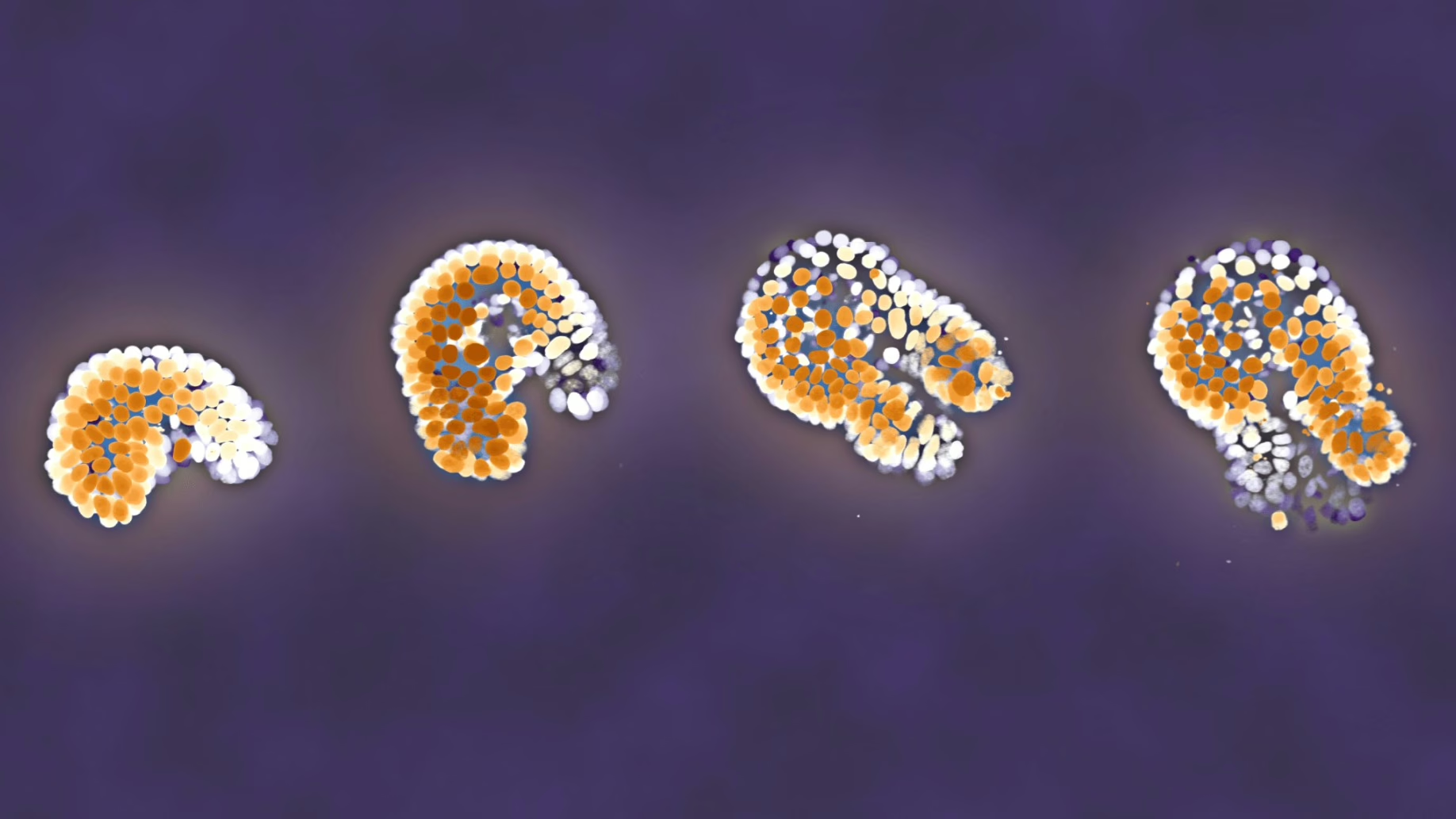
Organoids are instrumental in improving our understanding of processes that are otherwise hidden inside the body. For instance, these small 3D organs can be used to test medicines on tissue grown from a patient’s own cells. AMOLF researchers carry out unique and complex experiments to follow organoids in time. In order to enable other researchers to benefit from their experiences, they now publish their methods in the prestigious journal Nature Protocols.

Read news item
Events and outreach

Minister Rianne Letschert wears hat and shoulder ornament inspired by Wim Noorduin’s research

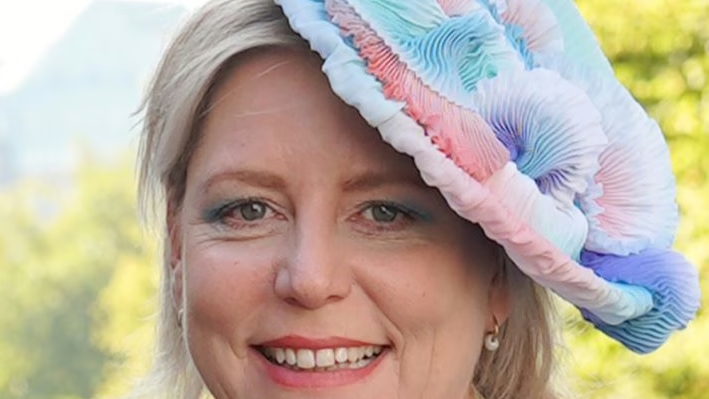
This year at the opening of the parliamentary year (Prinsjesdag) Minister of Education, Culture and Science Rianne Letschert wears a spectacular hat and shoulder ornament. Both of them are inspired by the microscopic structures studied by group leader Wim Noorduin (AMOLF/UvA), which look remarkably like tiny flowers under a microscope. Artist and designer Malou Beemer translated these shapes, normally invisible to the naked eye, into wearable art.

Read news item
Nachi Stern, Group Leader Learning Machines at AMOLF
People and recognition

Nachi Stern awarded ERC Starting Grant to explore how matter learns

Why do brains learn, but rocks do not? Could a material one day adapt to its environment the way a living organism does? AMOLF group leader Dr. Nachi Stern has been awarded an ERC Starting Grant to investigate the physical laws of learning, in a project called, “Physical Learning in Dynamical Systems.”

Read news item
Stay informed

Get the latest research highlights, events, and news from our institute delivered to your inbox