The European Research Council uses the ERC Advanced grants to allow outstanding research leaders to pursue ground-breaking, high-risk projects in Europe. Read the ERC press release here.
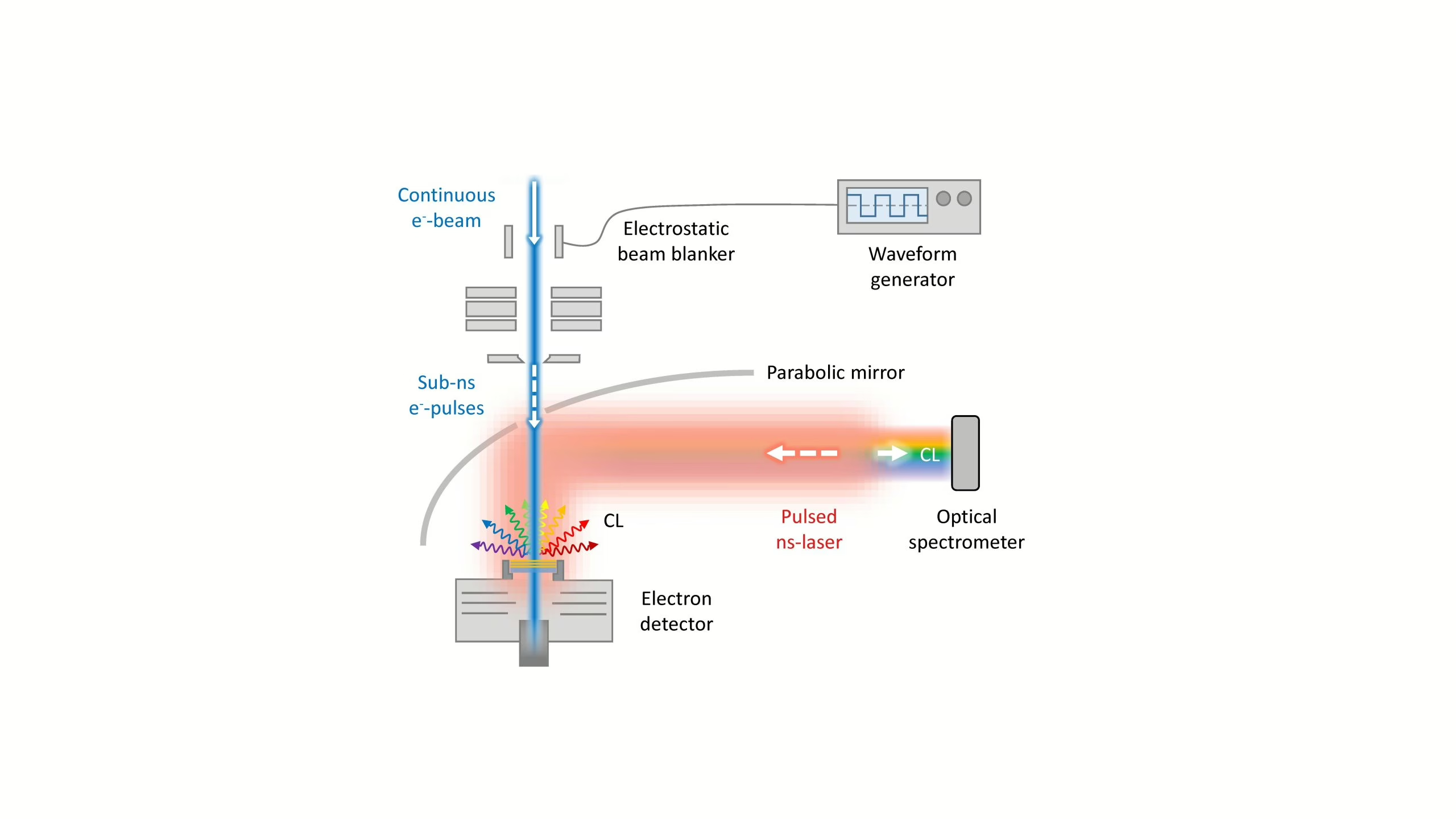
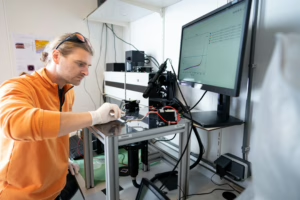
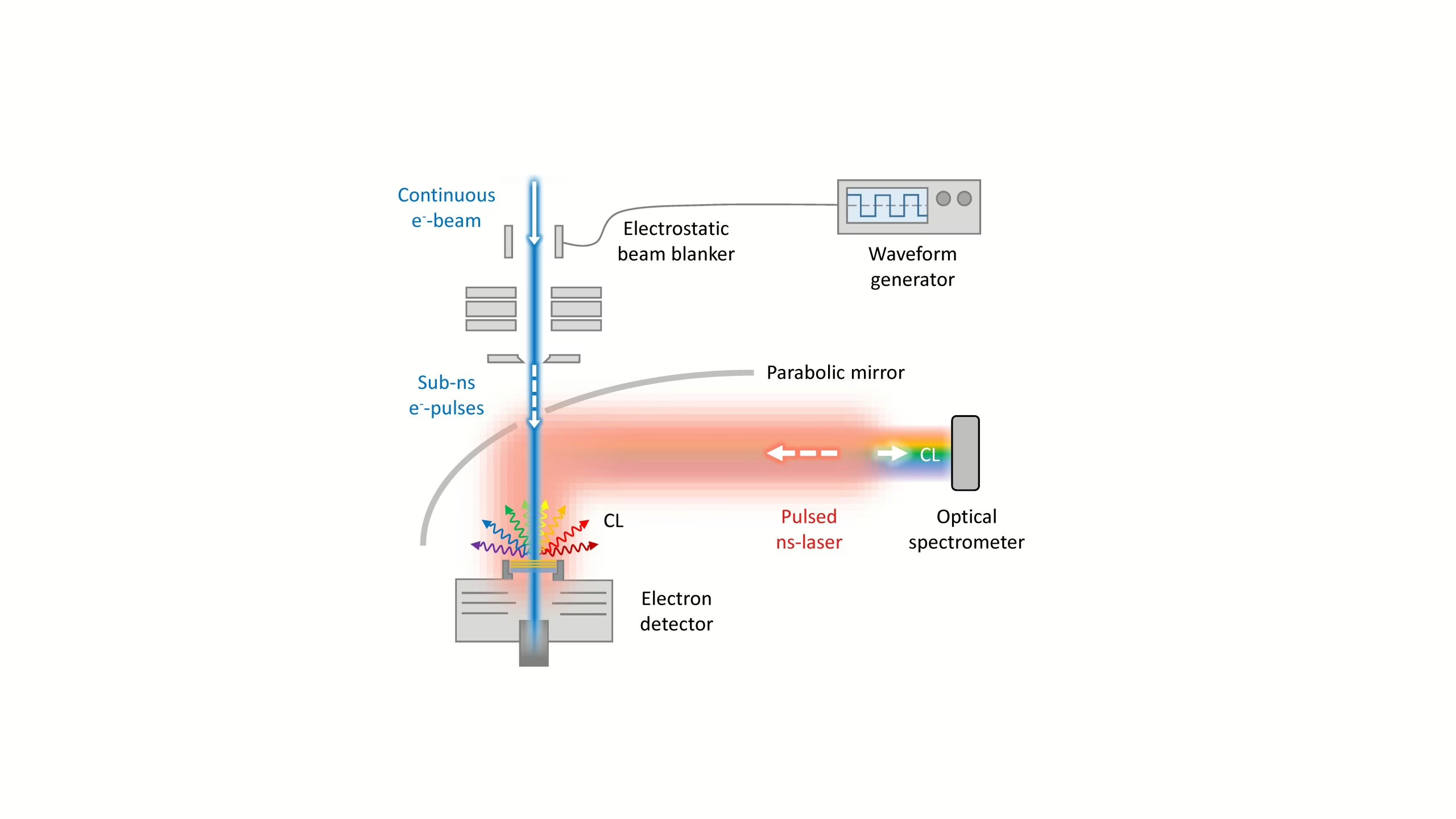
AMOLF program leader Albert Polman receives an Advanced Research Grant of 2.5 million euros from the European Research Council (ERC). He will use the ERC Advanced Grant to develop a new type of quantum electron microscope. He will use intense laser pulses to tailor the energy spectrum of high-energy electrons in a scanning electron microscope. This provides a unique way to control the quantum-mechanical electron wave packet in space and time. By combining materials excitation using these wavepackets and the detection of light that is emitted (cathodoluminescence) this creates an entirely new way of analytical electron microscopy. The new instrument will play a key role in AMOLF’s nanophotonics and nanophotovoltaics research program.
The European Research Council uses the ERC Advanced grants to allow outstanding research leaders to pursue ground-breaking, high-risk projects in Europe. Read the ERC press release here.
Silicon solar panels are rigid and heavy, and many rooftops cannot support them. This creates a need for thin, flexible solar cells that can be integrated into building materials. However, making silicon solar cells thinner makes it harder to trap light inside the material. Researchers in the 3D Photovoltaics group found a fascinating way to overcome this challenge using a phenomenon called hyperuniform disorder. They publish their findings in the journal ACS Photonics.
The researchers were able to make highly efficient silicon solar cell materials that are 30 times thinner than conventional ones. They managed to do this by integrating a layer of nanometer sized structures on top of the material. Up close, this pattern looks random, but it is remarkably when you step back: no clumps, no gaps, and no repeating pattern. This is called hyperuniform disorder (or HUD).
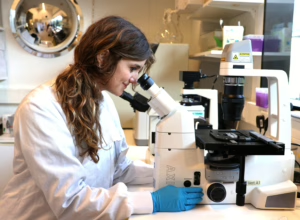
AMOLF postdoc Dr. Susanna Eli received an Off Road grant from ZonMw to investigate cells known as M cells in the gut lining that connect the intestine to the immune system. Understanding how M cells develop could ultimately contribute to better treatments for intestinal and immune-related diseases. The grant amounts to 100,000 euros.
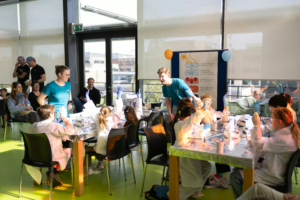
Each year during the national Weekend of Science, AMOLF opens its doors to visitors of all ages to share our enthusiasm for science. AMOLF organizes Wetenschapsdag together with four other research organizations at Amsterdam Science Park: ARCNL, Nikhef, CWI, and University of Amsterdam.
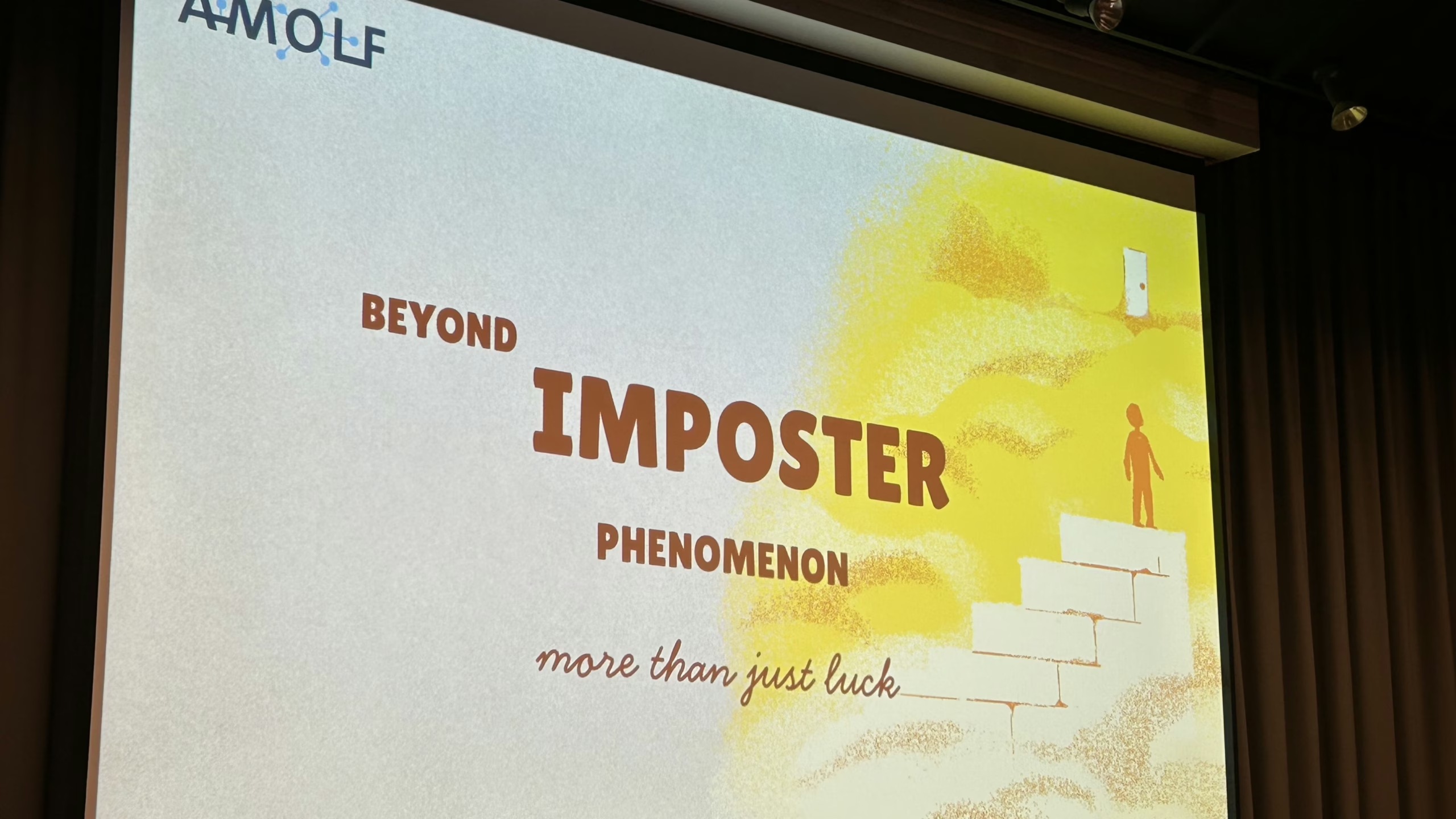
Once a year, the AMOLF Inclusion and Diversity team organizes Diversity Day for all AMOLF employees. On October 1, this year’s event took place with the theme Beyond Impostor Phenomenon – More Than Just Luck.
Get the latest research highlights, events, and news from our institute delivered to your inbox