
News & updates
Latest developments from our institute
Stay informed about new research results, awards, events, and collaborations across our scientific community.
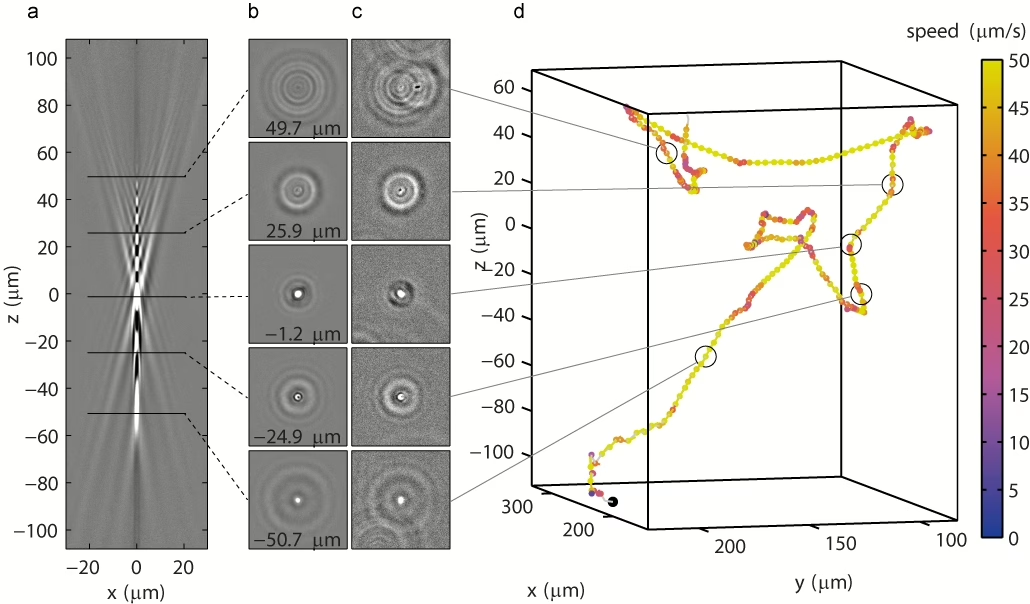
New 3D tracking technique “for the masses” reveals individuality of bacterial behavior
Microscopy techniques used to study the movement of swimming microbes are limited to two dimensions (2D) or require sophisticated devices. In a paper to be published online on 2 November, AMOLF researchers present a new method to track the movement of bacteria swimming in three dimensions (3D) using simple microscopes that are standard in biological laboratories.

Pieter Rein ten Wolde elected as APS Fellow
The American Physical Society (APS) has elected AMOLF group leader Pieter Rein ten Wolde as APS Fellow.

FOM Physics Thesis Award 2015 goes to Said Rodriguez
The FOM Physics Thesis Award 2015 goes to AMOLF alumnus Said Rodriguez for his thesis Coupling light and matter in metallic nanoparticle arrays. Rodriguez received the prize in January 2016 at the annual conference Physics@FOM Veldhoven. The prize consists of a 10.000 euro payment.
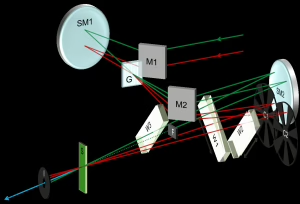
Observation of quantum molecular motions at work in next-generation solar cells
Researchers from AMOLF, Cambridge, Lund and Kiel have revealed that molecular vibrations drive the process known as singlet fission.
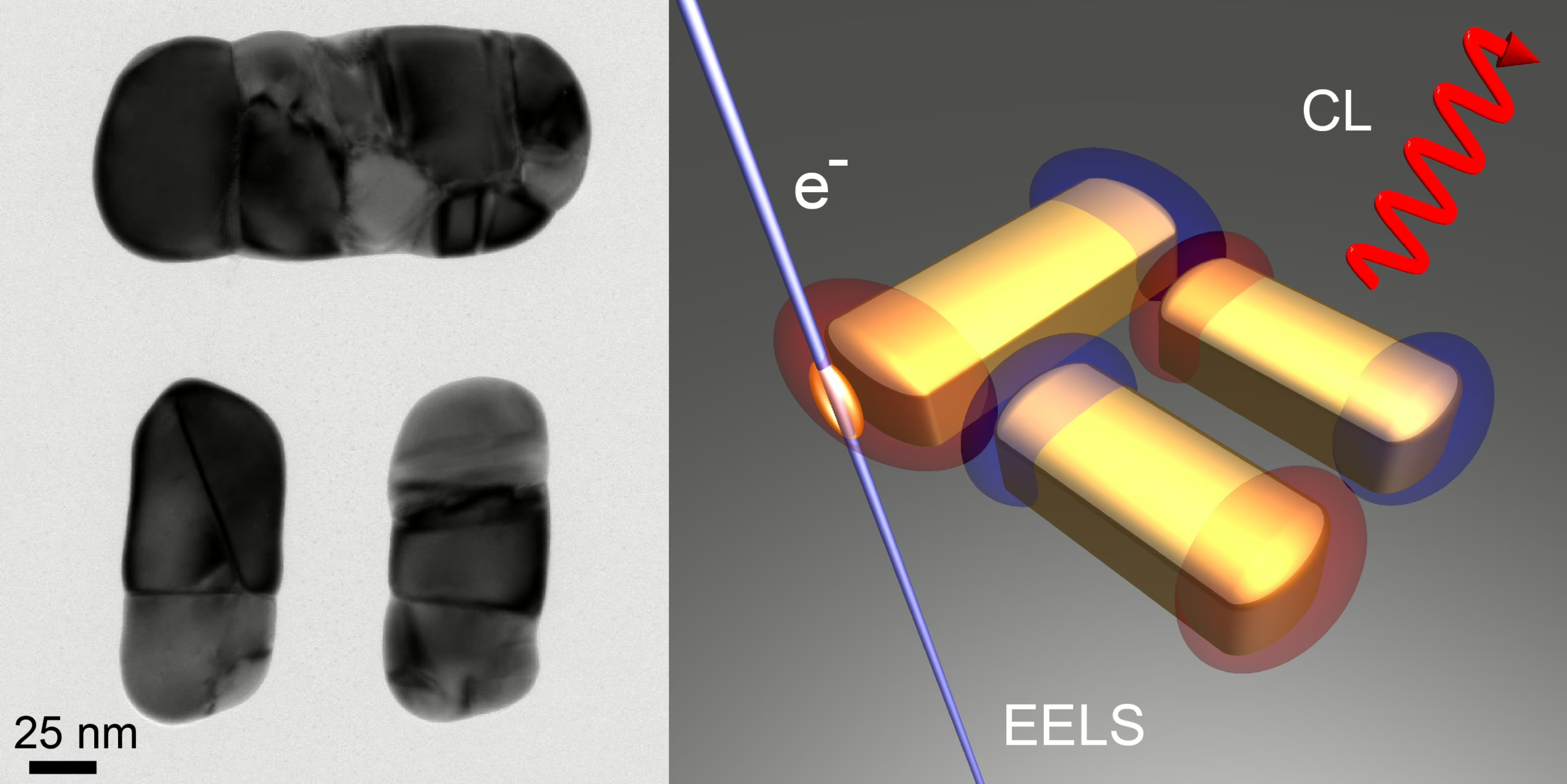
Electron beam controls artificial optical molecule at the nanoscale
Metallic nanoparticles have the ability to confine light to volumes much smaller than the wavelength. If such particles are arranged in a special configuration they can show interesting optical phenomena, similar to a molecule consisting of multiple atoms. Such coupled particle systems are therefore referred to as metamolecules. Due to their small size, it is difficult to control and study their optical response. To address this problem, researchers from the FOM institute AMOLF and Stanford University have used an electron beam to control the optical behavior of such a metamolecule in a novel way by carefully positioning it with respect to the structure. The research was published in Nanoletters on October 12th, 2015.

Tom Shimizu appointed professor at VU University Amsterdam
As of September 1st, 2015 AMOLF group leader Tom Shimizu has been appointed professor of ‘Experimental Physics of Behavior’ at the VU University Amsterdam.
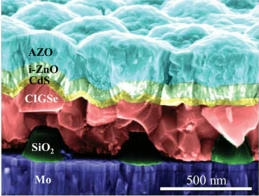
Triple PV highlights: three articles on light management in thin-film solar cells
Within a relatively short time span three leading scientific journals published papers on solar cell research carried out at AMOLF in the Light Management in New Photovoltaic Materials (LMPV) research program. The first author of these three papers is former AMOLF PhD student Claire van Lare. She demonstrates new scattering patterns for efficient light management in ultrathin solar cells. Van Lare graduated in October 2014 on a PhD thesis “Light-trapping in thin-film solar cells using dielectric and metallic nanostructures”.

Wim Noorduin starts new research group on Self-Organizing Matter
As of August 1st, Wim Noorduin has been appointed as AMOLF group leader. Noorduin is the second group leader hired in the Designer Matter group, a recently started line of research at AMOLF. His Self-Organizing Matter group focuses on the dynamic interplay between chemical reactions and crystallization phenomena to control the emergence of complexity in the solid state. In particular, the group aims to develop physical-chemical schemes to rationally self-organize microscale devices and functional molecules.