
News & updates
Latest developments from our institute
Stay informed about new research results, awards, events, and collaborations across our scientific community.
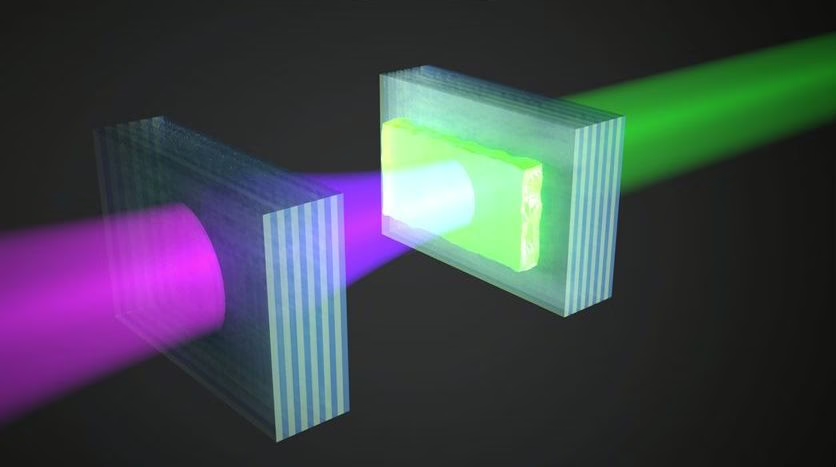
The properties of your microscope do matter
The coupling of light and matter is relevant to many emerging technologies like lasers, LEDs, sensors, and more. To observe this coupling researchers use optical microscopes, and the signatures of light-matter coupling are then evidenced by measuring the transmission of different colors of light (i.e. the spectrum). Typically, the measured spectrum is assumed to be independent of the microscope’s properties. However, scientists at AMOLF have discovered that the microscope’s properties can profoundly impact those measurements. The results raise awareness about a hitherto ignored source of error in optical experiments, and pave the way for the correct characterization of optical systems. The researchers published this study in the journal ACS Photonics on May 4th.

Perovskites under pressure: hot electrons cool faster
In solar cells, about two third of the energy of sunlight is lost. Half of this loss is due to a process called ‘hot carrier cooling’ where high energy photons lose their excess energy in the form of heat before being converted to electricity. Scientists at AMOLF have found a way to manipulate the speed of this process in perovskites by applying pressure to the material. This paves the way for making perovskites more versatile, not only for use in solar cells but also in a variety of other applications, from lasers to thermoelectric devices. The researchers will publish their study in the Journal of Physical Chemistry Letters on 23 April.
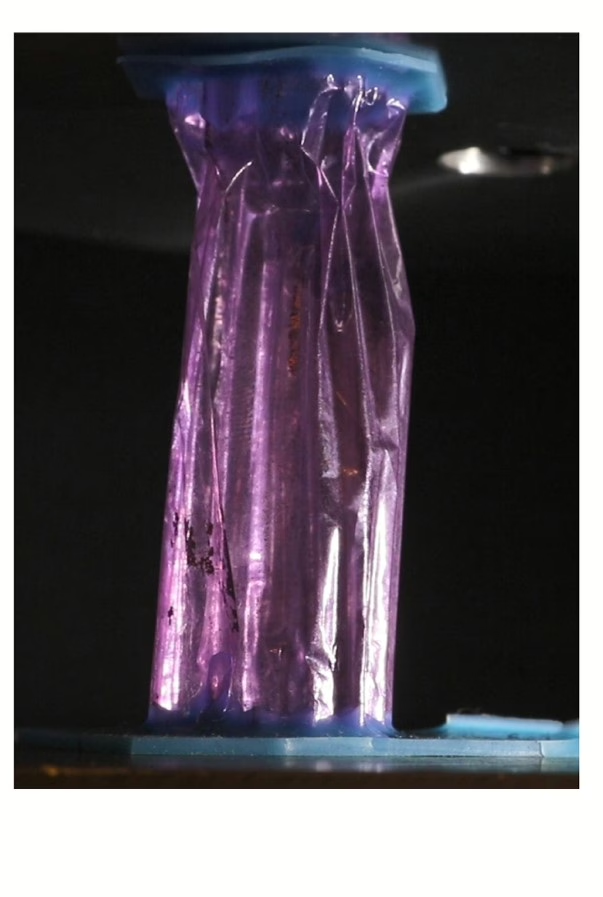
Martin van Hecke receives ERC Advanced Grant
Martin van Hecke (Mechanical Metamaterials group at AMOLF and Leiden University) receives a 2.5 million euro ERC Advanced Grant for research into information processing materials. The European Research Council uses the ERC Advanced grants to allow outstanding research leaders to pursue ground-breaking, high-risk projects in Europe.
Albert Polman receives ERC Advanced Research Grant
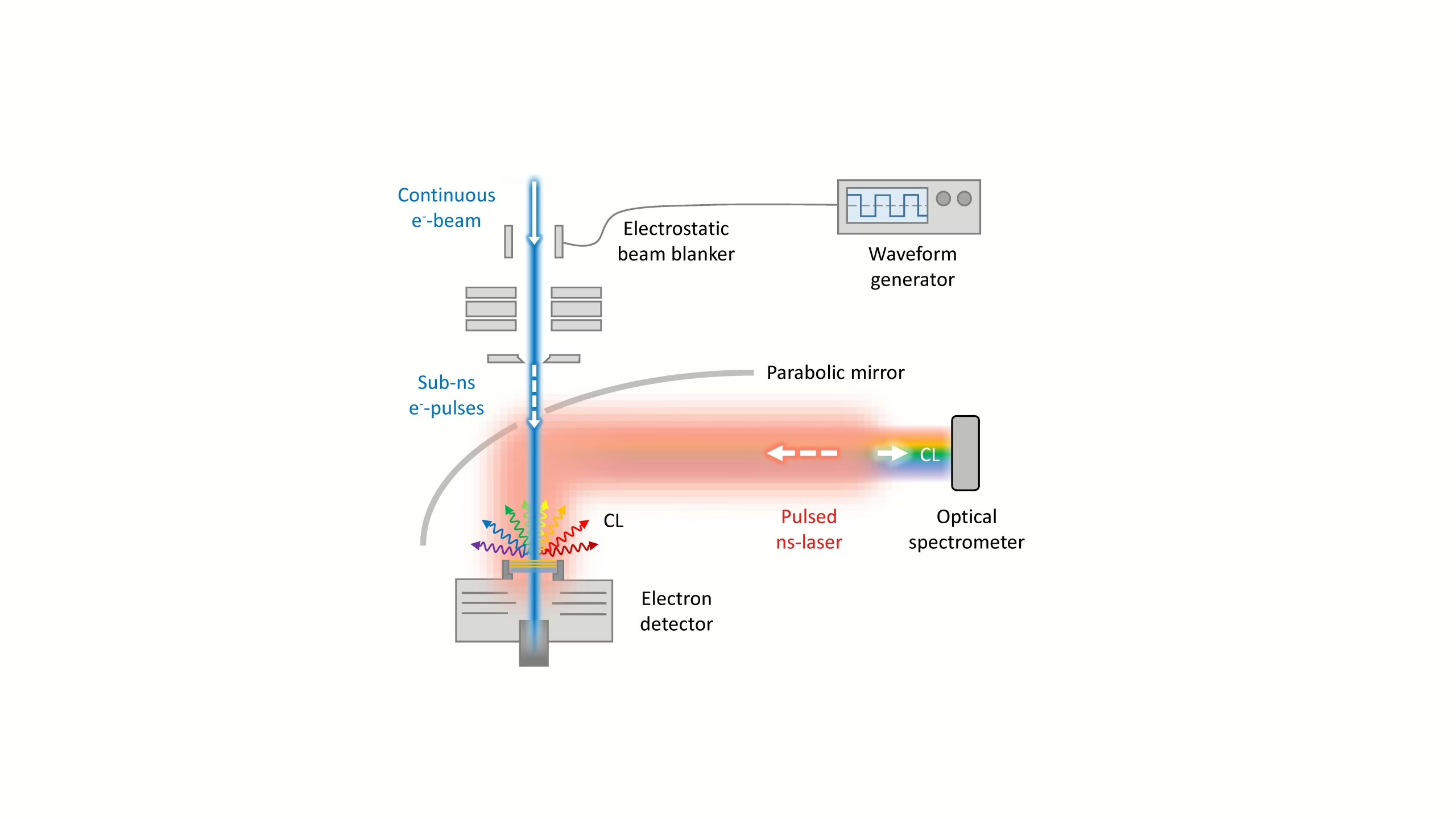
AMOLF program leader Albert Polman receives an Advanced Research Grant of 2.5 million euros from the European Research Council (ERC). He will use the ERC Advanced Grant to develop a new type of quantum electron microscope. He will use intense laser pulses to tailor the energy spectrum of high-energy electrons in a scanning electron microscope. This provides a unique way to control the quantum-mechanical electron wave packet in space and time. By combining materials excitation using these wavepackets and the detection of light that is emitted (cathodoluminescence) this creates an entirely new way of analytical electron microscopy. The new instrument will play a key role in AMOLF’s nanophotonics and nanophotovoltaics research program.
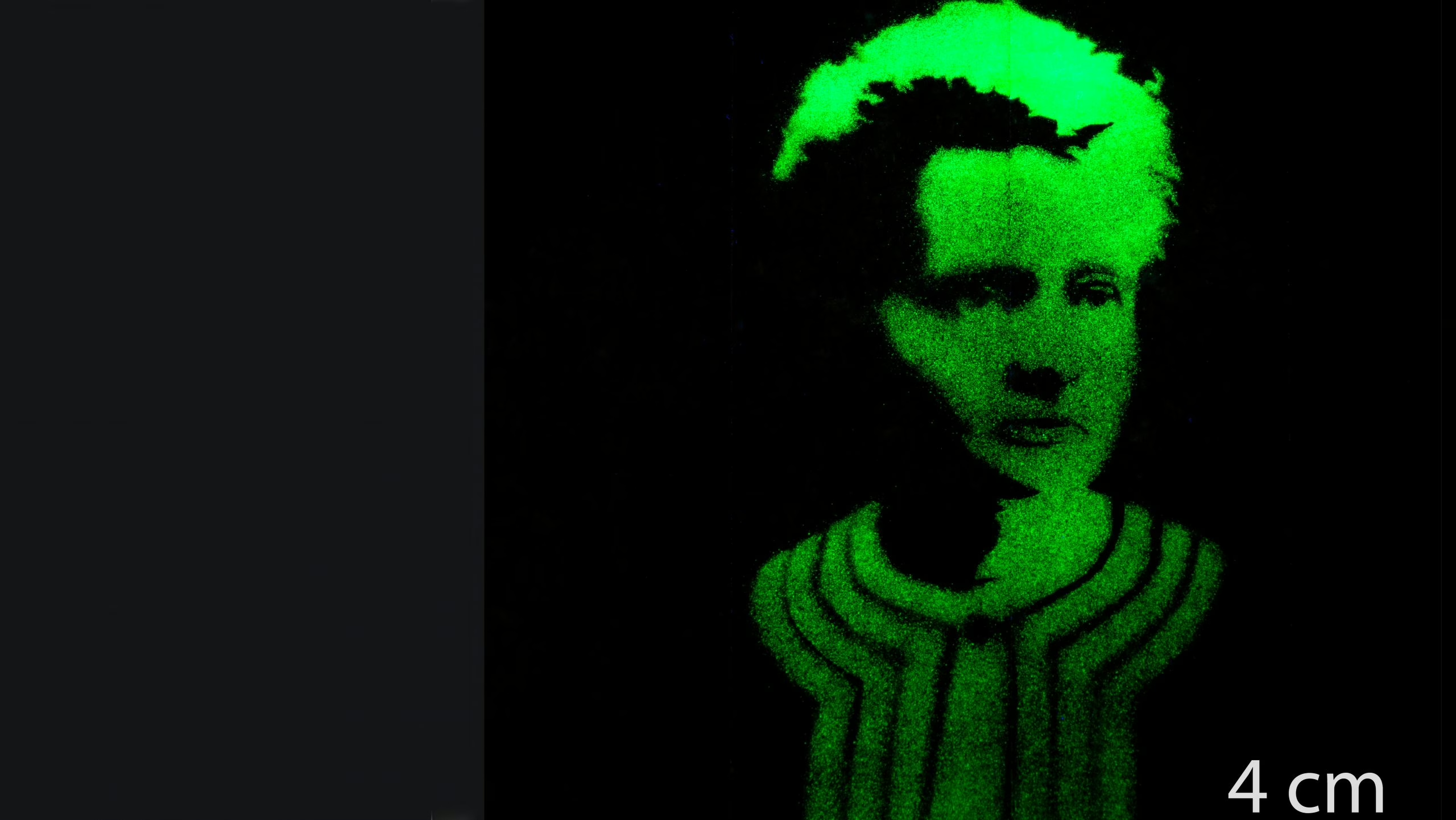
Painting with semiconductors
AMOLF researchers Lukas Helmbrecht and Wim Noorduin have developed a reactive ink that can be painted on an equally reactive canvas. The ink reacts with the material on the canvas to become a semiconductor that emits colored light, an essential part of electronic components such as LEDs. Consequently, a new way of producing these electronic components is now within reach. The results of the research, a collaboration between the AMOLF groups Self-Organizing Matter and Hybrid Solar Cells, are published this week in the journal ‘Advanced Materials’.
The optimal design of cellular sensing systems
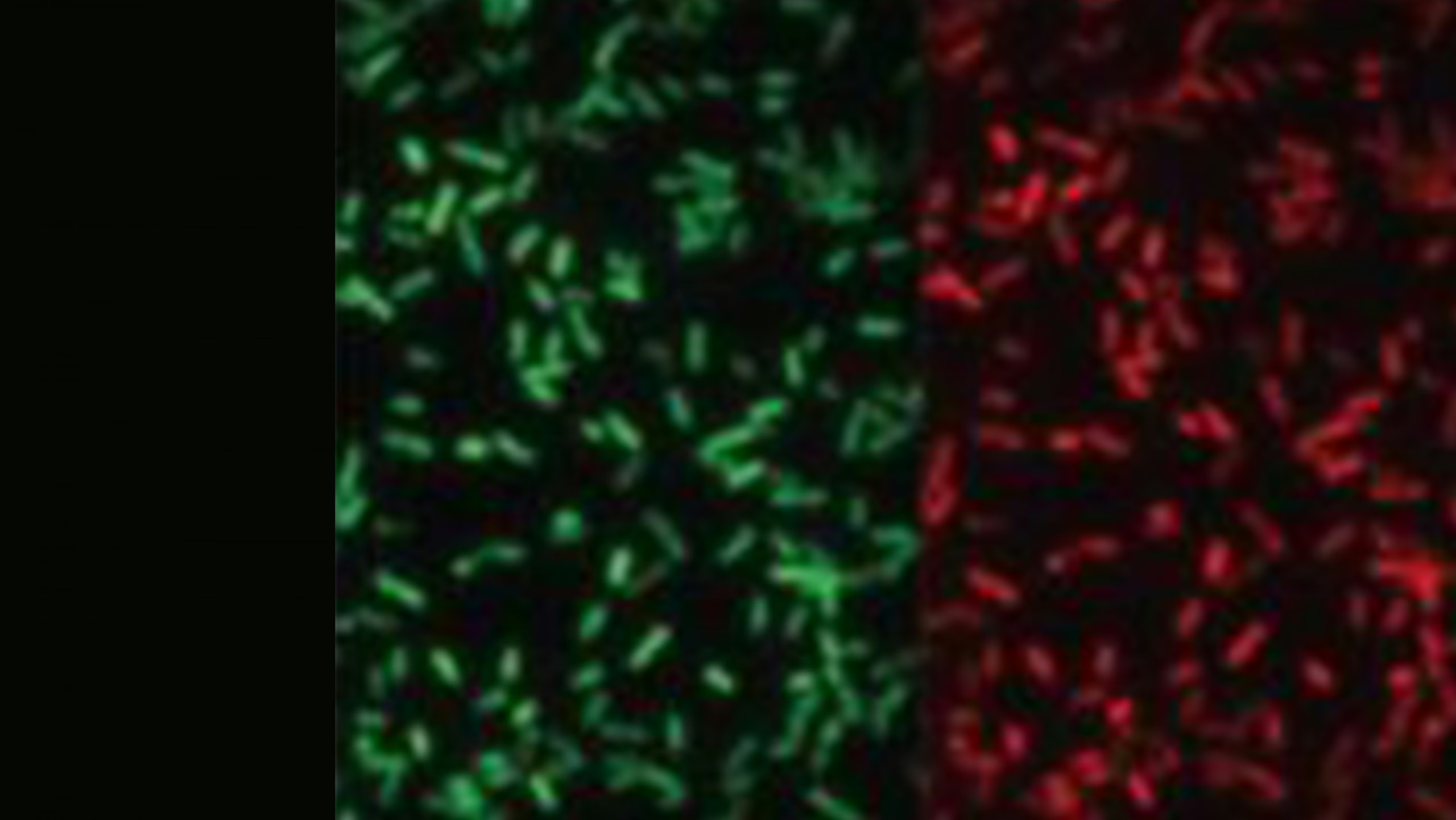
To survive and prosper living cells continually have to respond and adapt to changes in their environment. To this end, they have developed sensing systems that rival the best man-made sensing devices. Yet, how accurately these systems can measure chemical concentrations remains poorly understood. Researchers from AMOLF have now developed a theory that predicts the optimal design that maximizes the sensing precision of these systems. An analysis of experimental data revealed that the sensing system of the bacterium E. coli obeys the design principles as predicted by their theory. The AMOLF team presented their work in the journal eLife.
Mystery of amorphous perovskite solved
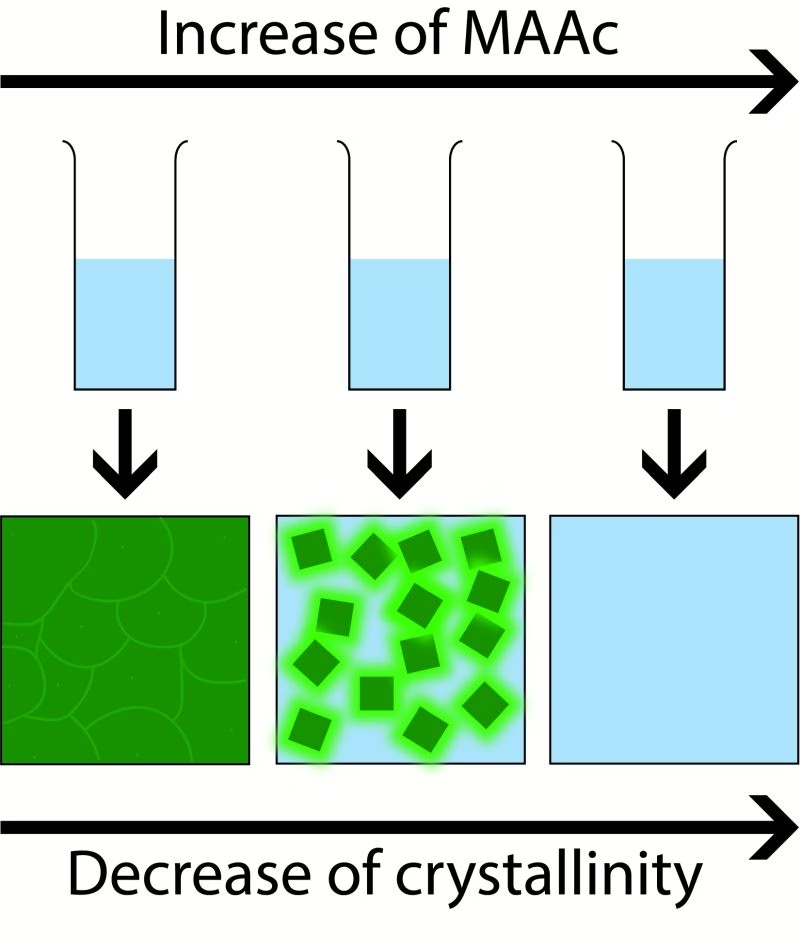
AMOLF researchers Erik Garnett, Susan Rigter, and colleagues are the first to have irrefutably demonstrated that amorphous perovskite exists. The material can significantly increase the efficiency of solar cells produced from perovskite. The research is published today online in the journal Advanced Functional Materials.

AMOLF welcomes Wiebke Albrecht
On May 1st, Wiebke Albrecht will start at AMOLF as tenure track group leader. Her research group Hybrid Nanosystems will be embedded in the Designer Matter research theme at AMOLF. With her group, Albrecht will investigate the interaction between different components in complex hybrid nanosystems, such as metal-semiconductor nanostructures. By combining advanced electron microscopy and single particle optical spectroscopy on the same nanoparticle, she will be able to unravel the interplay of morphology and underlying charge and energy transfer processes. The ultimate goal is to develop new concepts of hybrid architectures, responsive to external stimuli, with properties specifically tailored for applications in solar energy harvesting and quantum information processing.