
News & updates
Latest developments from our institute
Stay informed about new research results, awards, events, and collaborations across our scientific community.
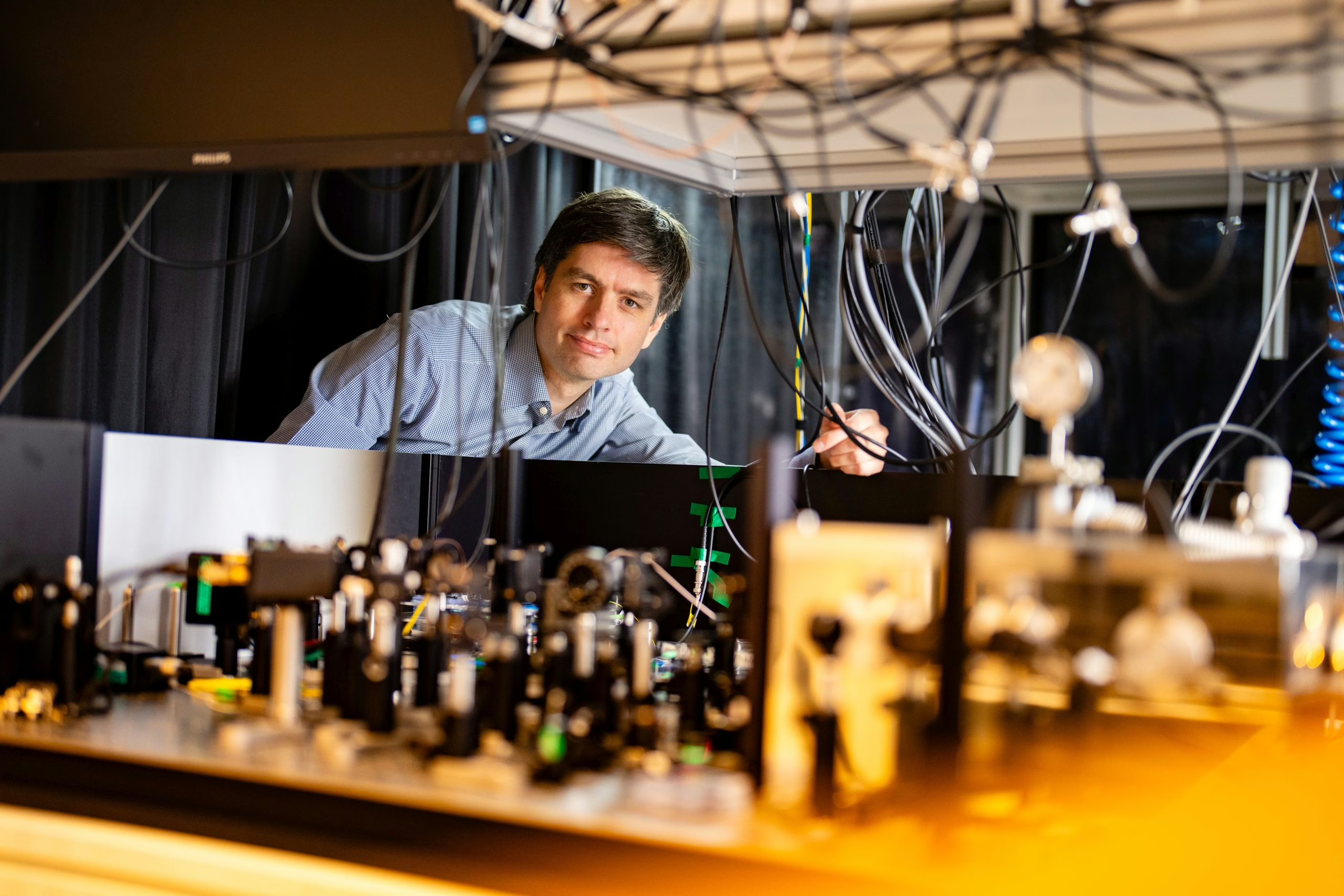
Ewold Verhagen elected as Optica Fellow
Optica (formerly OSA) has elected AMOLF group leader Ewold Verhagen as Fellow. Optica elected Verhagen for “outstanding contributions to nanophotonics and optomechanics, and to the understanding of photonic systems with broken spatiotemporal symmetries.” Optica Fellows are selected based on several factors, including outstanding contributions to research, business, education, engineering and service to Optica and the community. Candidates for Fellow Membership are nominated by current Optica Fellow members.

Albert Polman appointed as Fellow of the Netherlands Academy of Engineering (NAE)
After being officially launched on May 22, the Netherlands Academy of Engineering (NAE) today announced that AMOLF group leader Albert Polman has been appointed as Fellow. With the appointment of in total 62 Fellows, the NAE is ready to start fulfilling its mission of stimulating innovation in the Netherlands by offering engineering based solutions for major societal challenges. Innovation is thus used to create societal and economic value. Polman feels very honored to be appointed in the new Netherlands Academy of Engineering. He says, “the foundation of the new academy reflects the value we give to engineering, complementary to scientific research, in order to make impact in the world.”
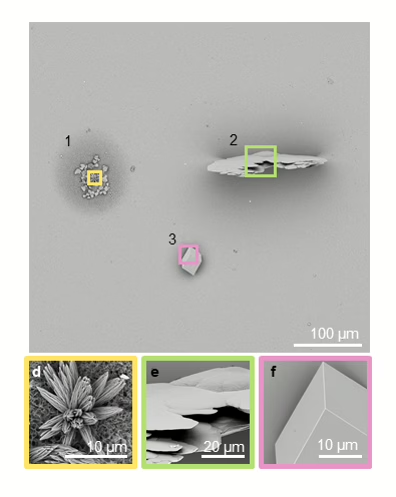
Hot crystals through laser light
Shells, skeletons, and bones are all made of crystals. To function properly these crystals need to grow at the right time and place. Inspired by these natural processes, AMOLF researchers have developed a new method to control crystallization under artificial conditions using near-infrared laser light.
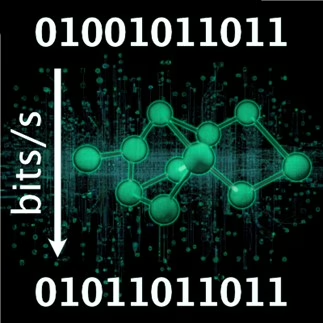
Algorithm now available to exactly compute information rate
This year it is 75 years ago that Claude Shannon, the ’father of information theory’, showed how information transmission can be quantified mathematically, namely via the so-called information transmission rate. Yet, until now this quantity could only be computed approximately. AMOLF researchers Manuel Reinhardt and Pieter Rein ten Wolde, together with a collaborator from Vienna, have now developed a simulation technique that—for the first time—makes it possible to compute the information rate exactly for any system. The researchers publish the results on October 26th in the journal Physical Review X.
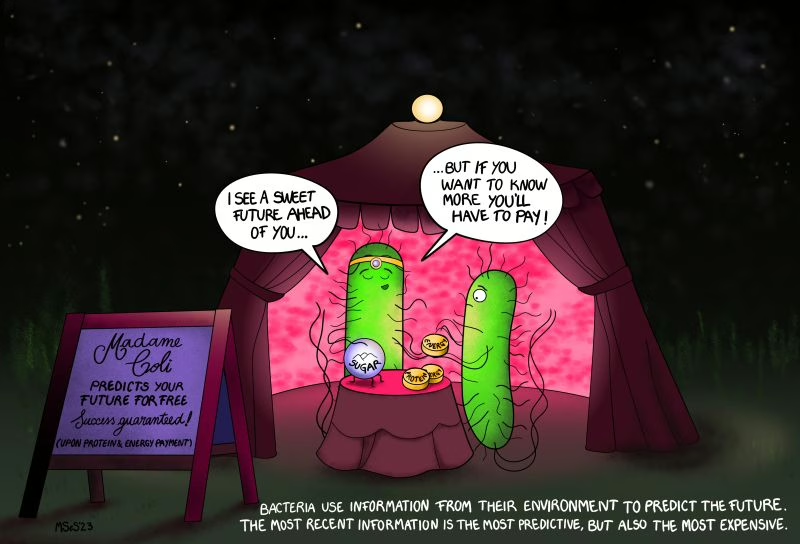
Bacteria opt for the best price-to-quality ratio to predict the future
Predicting the future can be a matter of life or death. Just think, every time you cross the street, you predict whether this is possible without being run over. Experiments show that even single-celled organisms such as bacteria can predict the future. The better bacteria can predict changes in their environment, the greater their chances of survival. AMOLF researchers from the theory group of Pieter Rein ten Wolde discovered that E. coli bacteria collect the information with the best price-to-quality ratio to predict the future. The researchers publish the results on October 4th in the journal PNAS.
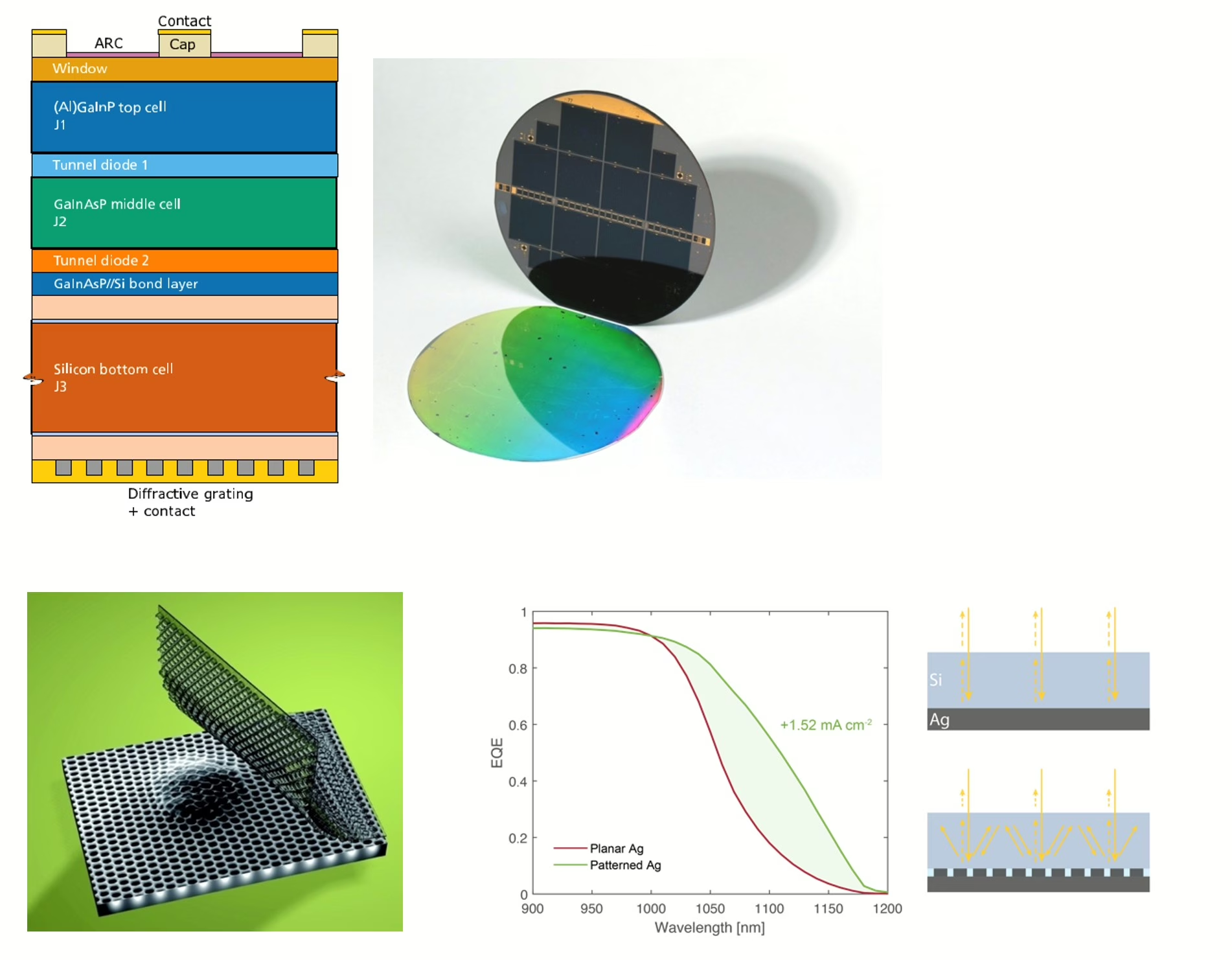
Efficiency of silicon-based multijunction solar cells breaks 36% barrier
A team of researchers of the Fraunhofer Institute for Solar Energy Research (ISE, Freiburg) and AMOLF (Amsterdam) have fabricated a multijunction solar cell with an efficiency of 36.1%, the highest efficiency ever reached for a solar cell based on silicon. The team presented the new record at the European Photovoltaic Solar Energy Conference (PVSEC) in Lisbon on Thursday, September 21, 2023.
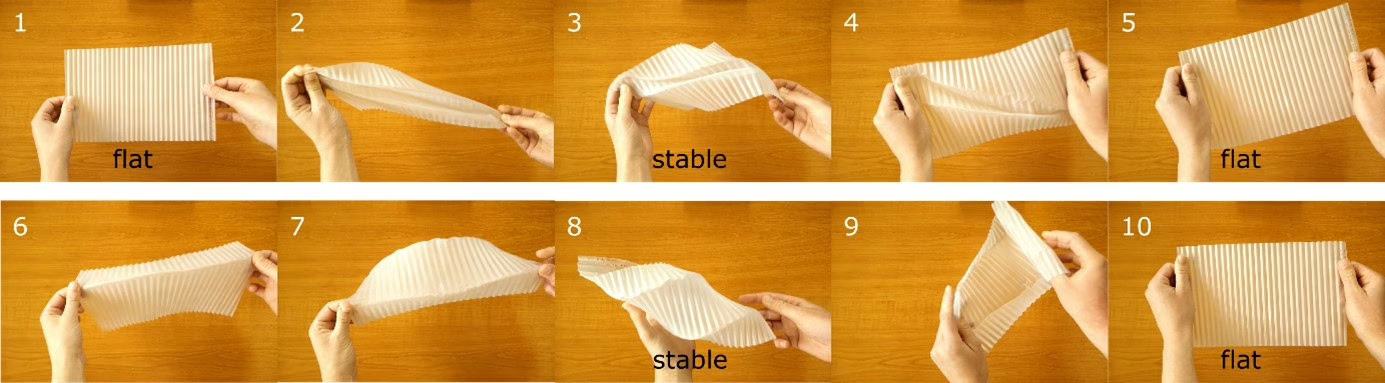
Corrugated plastic unveils a new design principle for programmable materials
Corrugated plastic turns out to be exemplary of a new class of ‘multistable’ metamaterials that can reversibly change shape. This insight can lead to new applications, from robots to medical devices. Physicists Anne Meeussen (previously AMOLF/Leiden University, now Harvard University) and Martin van Hecke (AMOLF/Leiden University) describe these materials in a Nature publication that is published on 20 September 2023.
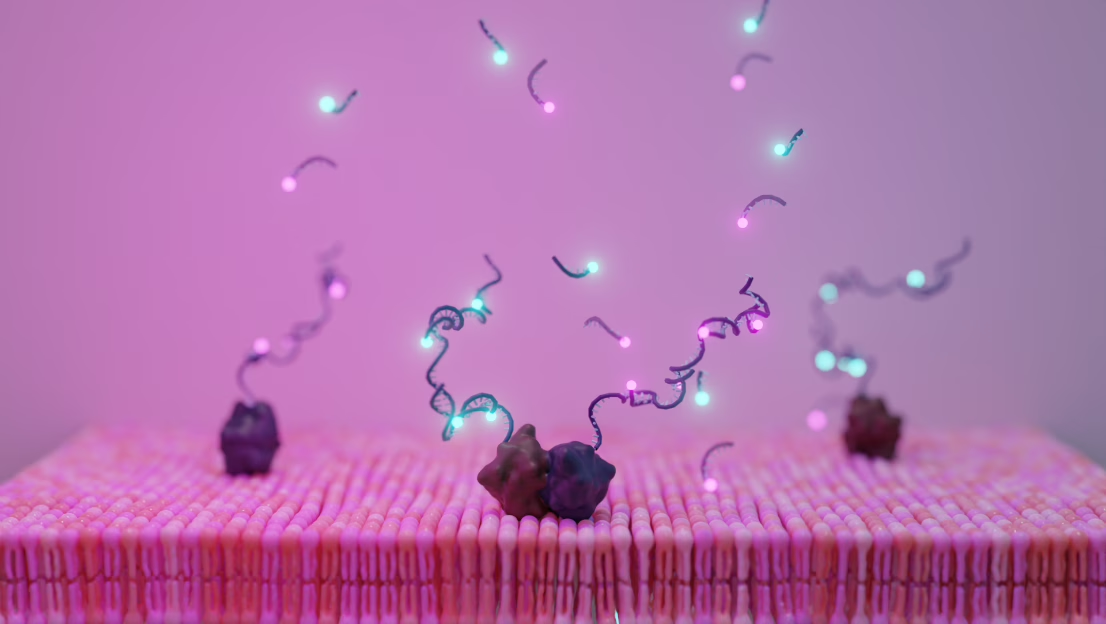
Studying individual molecules to understand how a cell’s inner life makes cells function
To understand the fundamental processes of life we need to understand the language that cells use to communicate with each other and to orchestrate their joint behavior. This is important for vital processes such as DNA replication, protein synthesis and signal transmission. Since cells communicate through interactions of molecules, researchers at AMOLF and the Max-Planck Institute of Biochemistry in Munich developed a technique to study individual molecules in model membranes. They first published the results in 2021 (see reference below). Using self-renewing DNA-based fluorescent labels, they were able to observe them for extended times. Overcoming the constraints of conventional fading fluorescent markers, the new technique enables unprecedented quantitative studies of molecular interactions in living systems. Now, their latest advancements on this DNA-PAINT based single-particle tracking method (DNA-PAINT-SPT) also enables them to see individual molecules binding to each other in live cells. This study was published in Nature Communications on July 19th (see reference below).