
News & updates
Latest developments from our institute
Stay informed about new research results, awards, events, and collaborations across our scientific community.
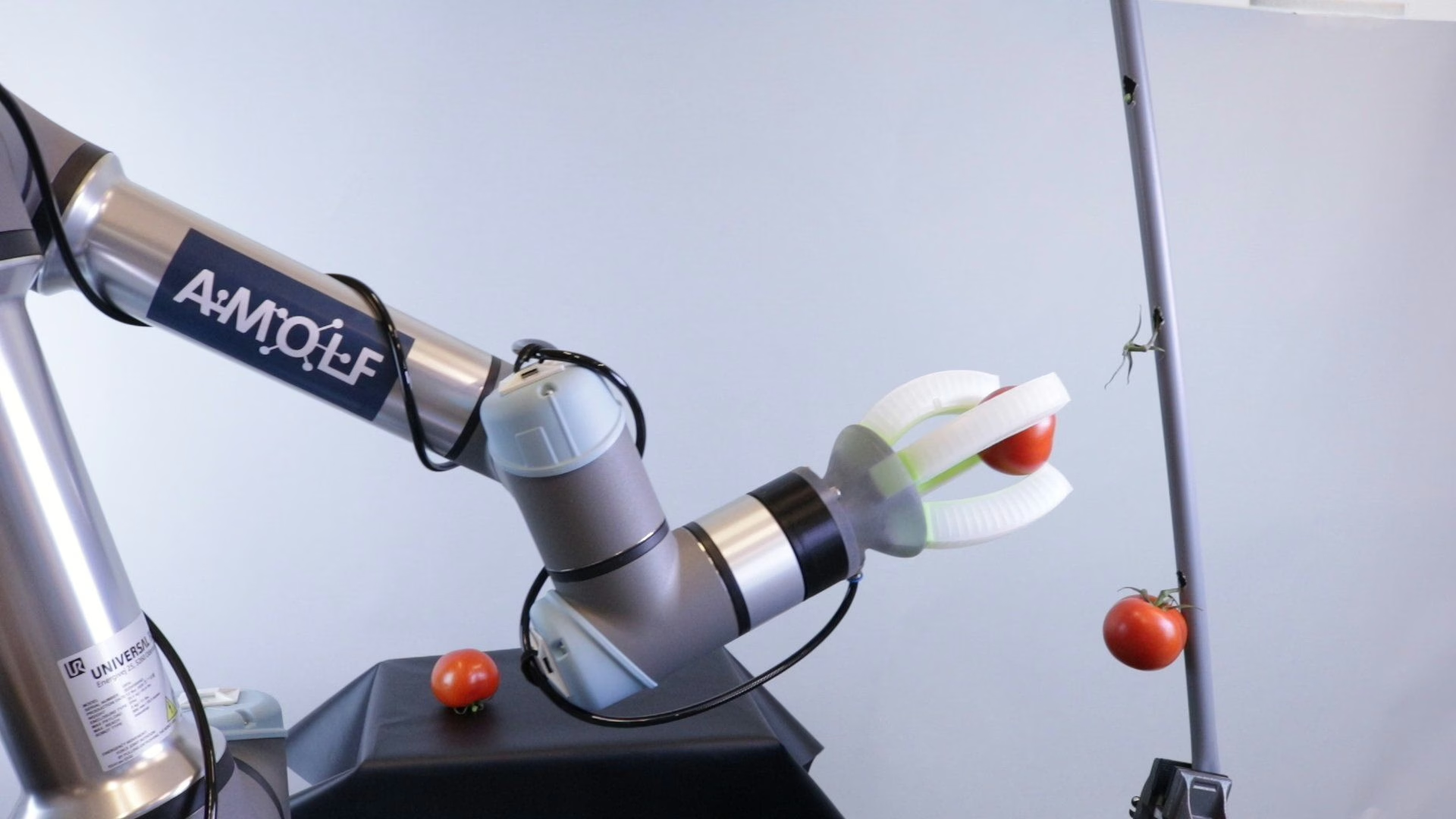
Soft robot fingers carefully squeeze without sensors
With a brief squeeze, you know whether an avocado, peach or tomato is ripe. This is what a soft robot hand also does, for example, during automated harvesting. However, up until now, such a gripper needed sensors in its ‘fingers’ to determine whether the fruit was ripe enough. Shibo Zou and Bas Overvelde from the AMOLF Soft Robotic Matter Group have developed an external method to measure the interaction of soft robots with their environment that does not require built-in sensors. Furthermore, the technique can be easily applied to a range of existing soft robots. The research was published on January 15, 2024, in the scientific journal Nature Communications.
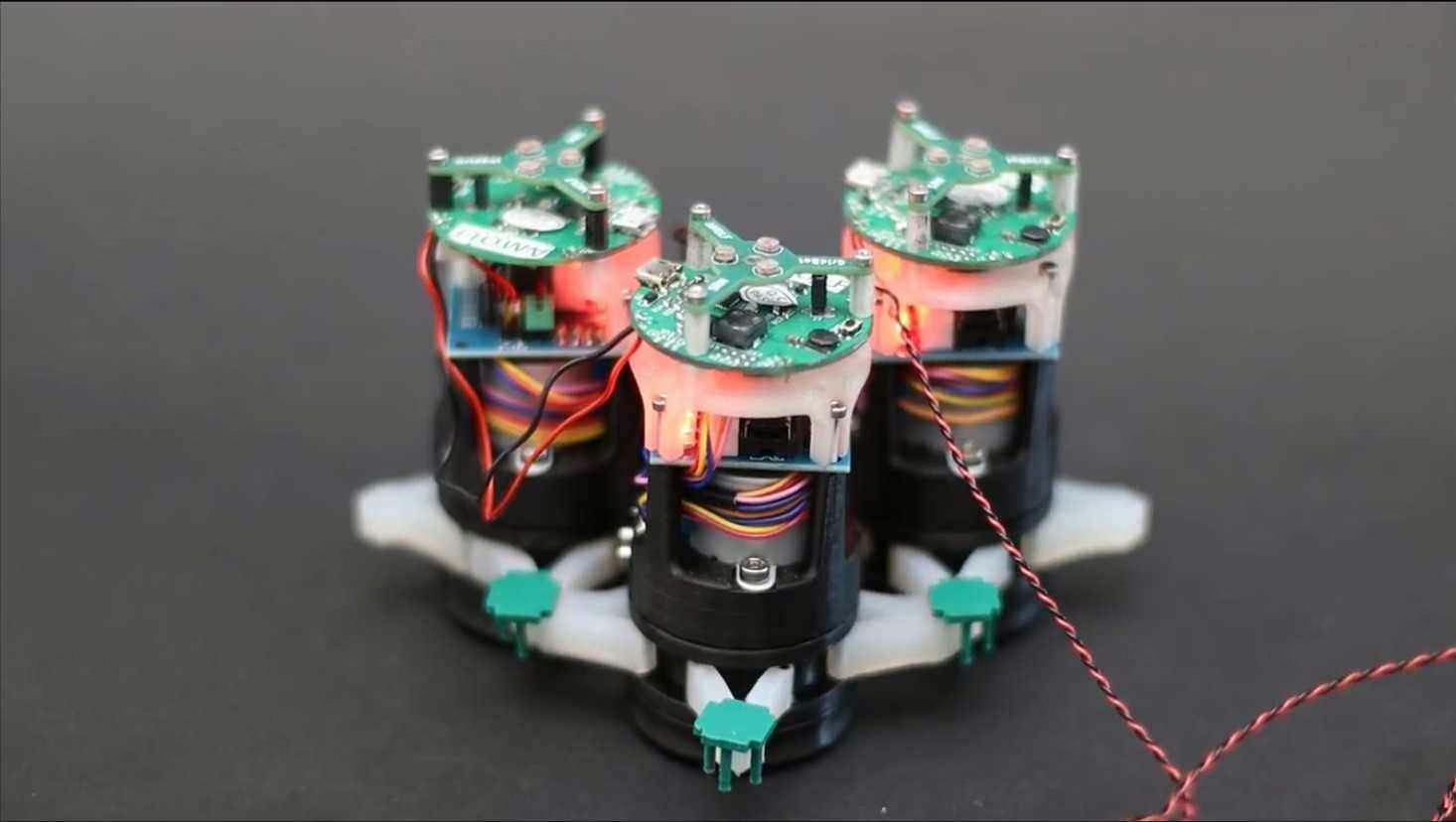
Soft robots that learn to follow the light
Soft robots made of simple, identical building blocks can learn to move toward a light source without a central controller or explicit communication, according to new research published in Advanced Functional Materials. The study shows how phototaxis, directed movement in response to light, can emerge from local sensing and learning alone. This finding is relevant because it demonstrates how adaptive, goal-oriented behavior can arise in robotic systems without centralized control.
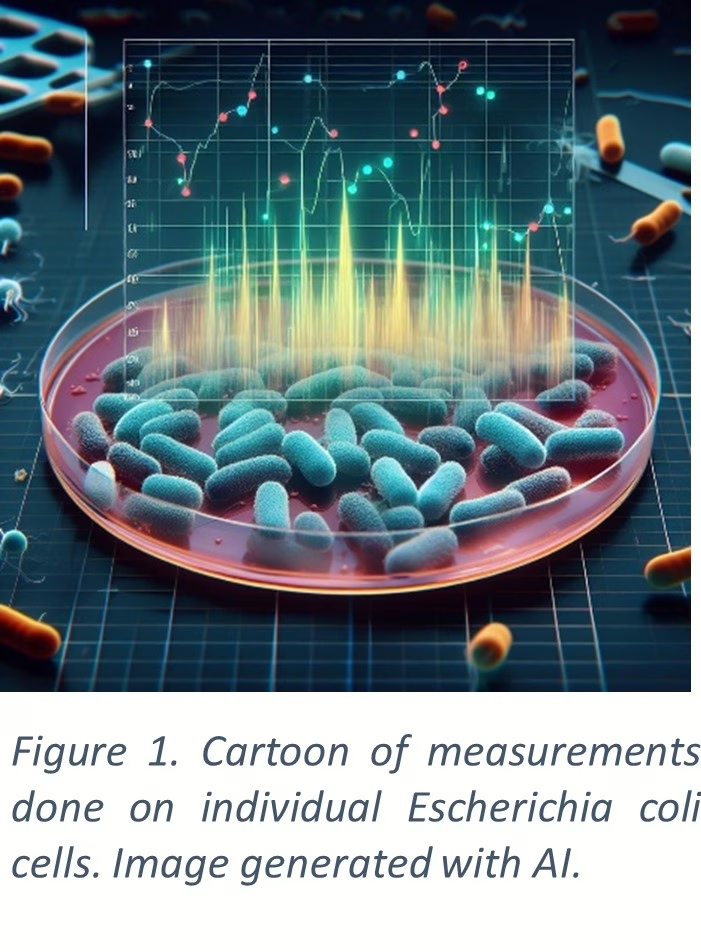
How bacteria cope with randomness
Bacterial behavior is profoundly influenced by continuous random perturbances in their regulatory pathways. Researchers from institute AMOLF and Utrecht University found a new way by which bacteria cope with these perturbances. By performing microscopy measurements on individual bacteria, and mathematical modeling, they found that a regulatory mechanism well-studied for its response to external conditions also has a previously unrecognized role in dealing with metabolic fluctuations. The study yields new insights into cellular homeostasis and regulatory interactions. The results were published in the journal Cell Reports.
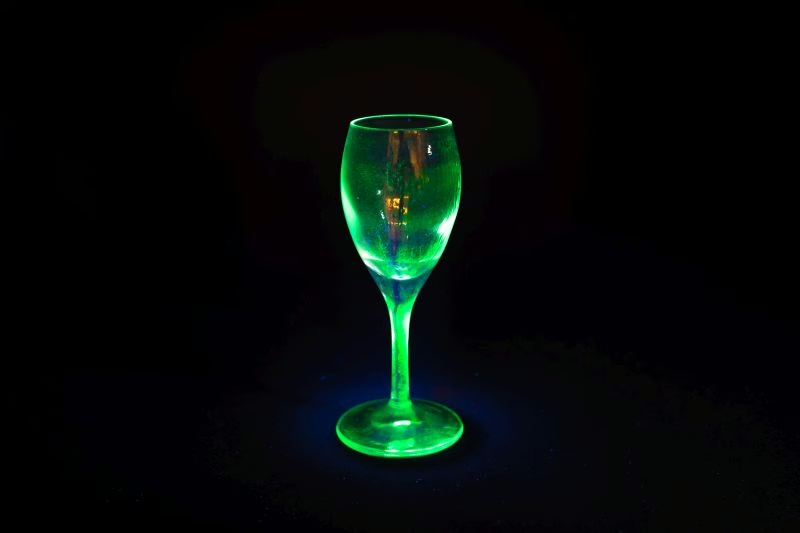
A lead test based on solar cell technology
AMOLF researchers have used the special properties of perovskite semiconductors to develop a simple spray test to demonstrate the presence of lead. Perovskite is a material suitable for use in LEDs and solar cells, for example. A lead-containing surface shines bright green when it is sprayed with the test. This test is 1000 times more sensitive than existing tests and the researchers found no false positive or false negative results. The study was published on November 27th in the scientific journal Environmental Science and Technology.
Hot crystals through laser light
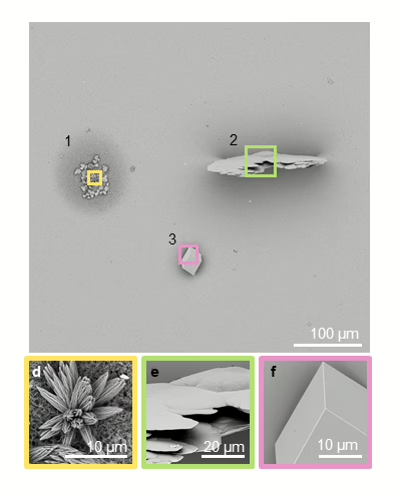
Shells, skeletons, and bones are all made of crystals. To function properly these crystals need to grow at the right time and place. Inspired by these natural processes, AMOLF researchers have developed a new method to control crystallization under artificial conditions using near-infrared laser light.
Algorithm now available to exactly compute information rate
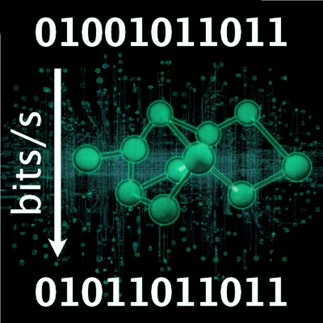
This year it is 75 years ago that Claude Shannon, the ’father of information theory’, showed how information transmission can be quantified mathematically, namely via the so-called information transmission rate. Yet, until now this quantity could only be computed approximately. AMOLF researchers Manuel Reinhardt and Pieter Rein ten Wolde, together with a collaborator from Vienna, have now developed a simulation technique that—for the first time—makes it possible to compute the information rate exactly for any system. The researchers publish the results on October 26th in the journal Physical Review X.
Bacteria opt for the best price-to-quality ratio to predict the future
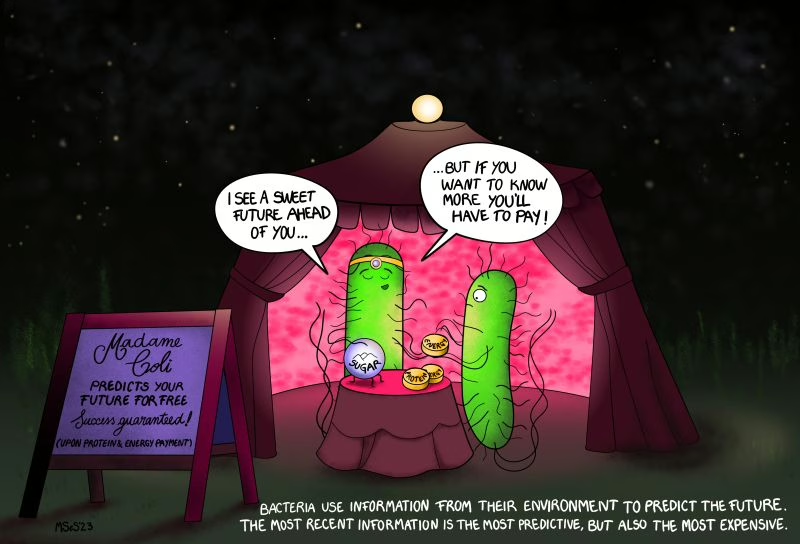
Predicting the future can be a matter of life or death. Just think, every time you cross the street, you predict whether this is possible without being run over. Experiments show that even single-celled organisms such as bacteria can predict the future. The better bacteria can predict changes in their environment, the greater their chances of survival. AMOLF researchers from the theory group of Pieter Rein ten Wolde discovered that E. coli bacteria collect the information with the best price-to-quality ratio to predict the future. The researchers publish the results on October 4th in the journal PNAS.
Efficiency of silicon-based multijunction solar cells breaks 36% barrier
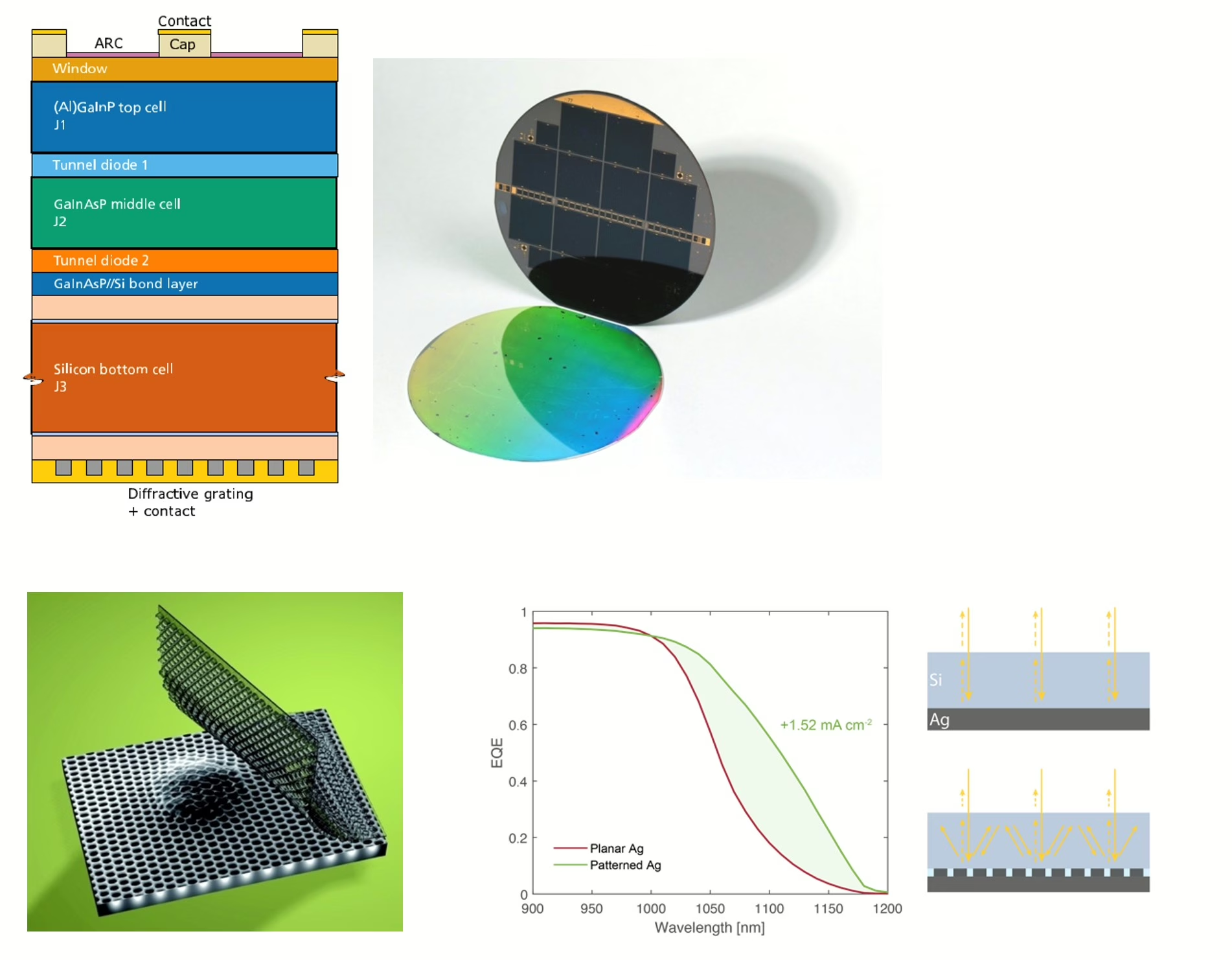
A team of researchers of the Fraunhofer Institute for Solar Energy Research (ISE, Freiburg) and AMOLF (Amsterdam) have fabricated a multijunction solar cell with an efficiency of 36.1%, the highest efficiency ever reached for a solar cell based on silicon. The team presented the new record at the European Photovoltaic Solar Energy Conference (PVSEC) in Lisbon on Thursday, September 21, 2023.