
News & updates
Latest developments from our institute
Stay informed about new research results, awards, events, and collaborations across our scientific community.
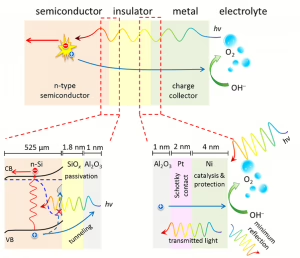
Cheap, efficient and stable photoelectrode could improve water splitting with solar energy
Water splitting with solar energy could provide an efficient route for large scale renewable energy conversion and storage. Scientists from TU Delft and AMOLF have now engineered a very efficient and stable photoelectrode, a material that absorbs light and directly splits water into hydrogen and oxygen. Furthermore, they use silicon wafers as the light absorbing material, so the system is also cheap. They report on their findings in Nature Communications on Thursday, June 29th.
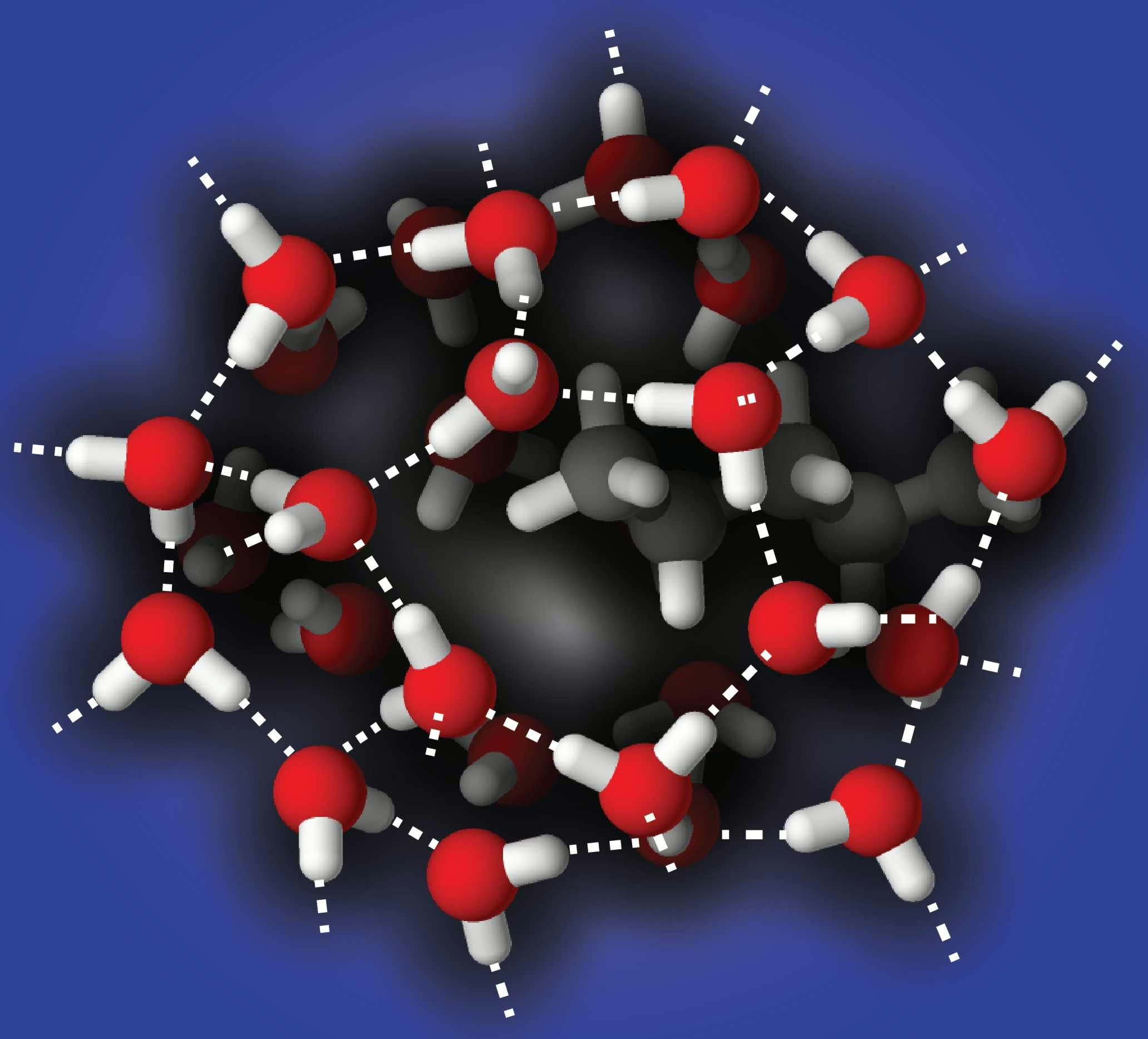
Water is surprisingly ordered at the nanoscale
Researchers from AMOLF and Swiss EPFL have shown that the surface of minuscule water drops surrounded by a hydrophobic substance such as oil is surprisingly ordered. At room temperature, the surface water molecules of these droplets have much stronger interactions than at a normal water surface. This may shed new light on a variety of atmospheric, biological and even geological processes.
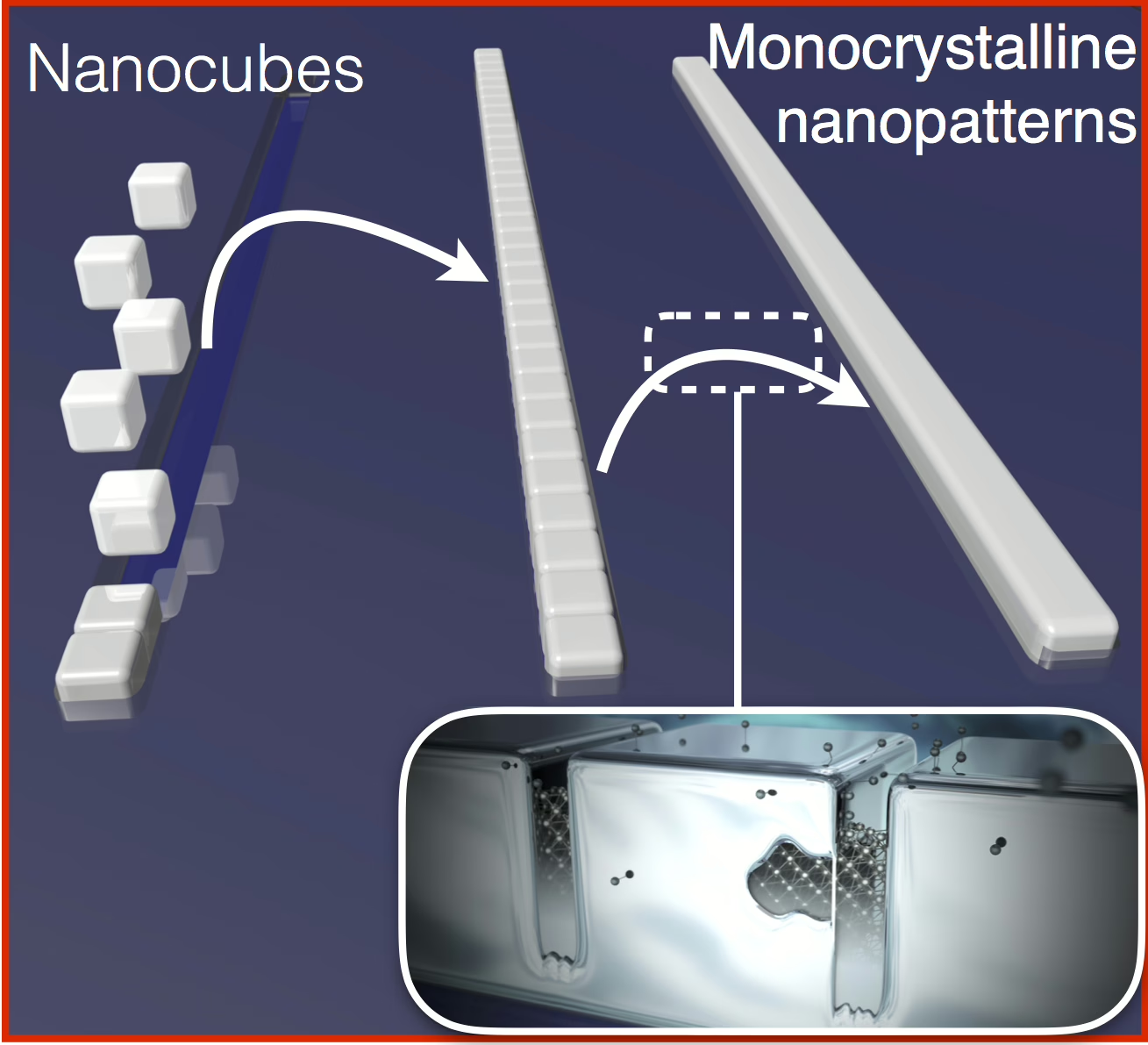
A crucial step towards better performing solar cells
Solar cells need monocrystalline materials to work optimally. But the traditional way to build monocrystalline materials is highly time consuming. AMOLF physicists in the Nanoscale Solar Cells group have found a new way of building them, which is at least a hundred times more efficient. This research has been published in the journal Advanced Materials on 3 May 2017.
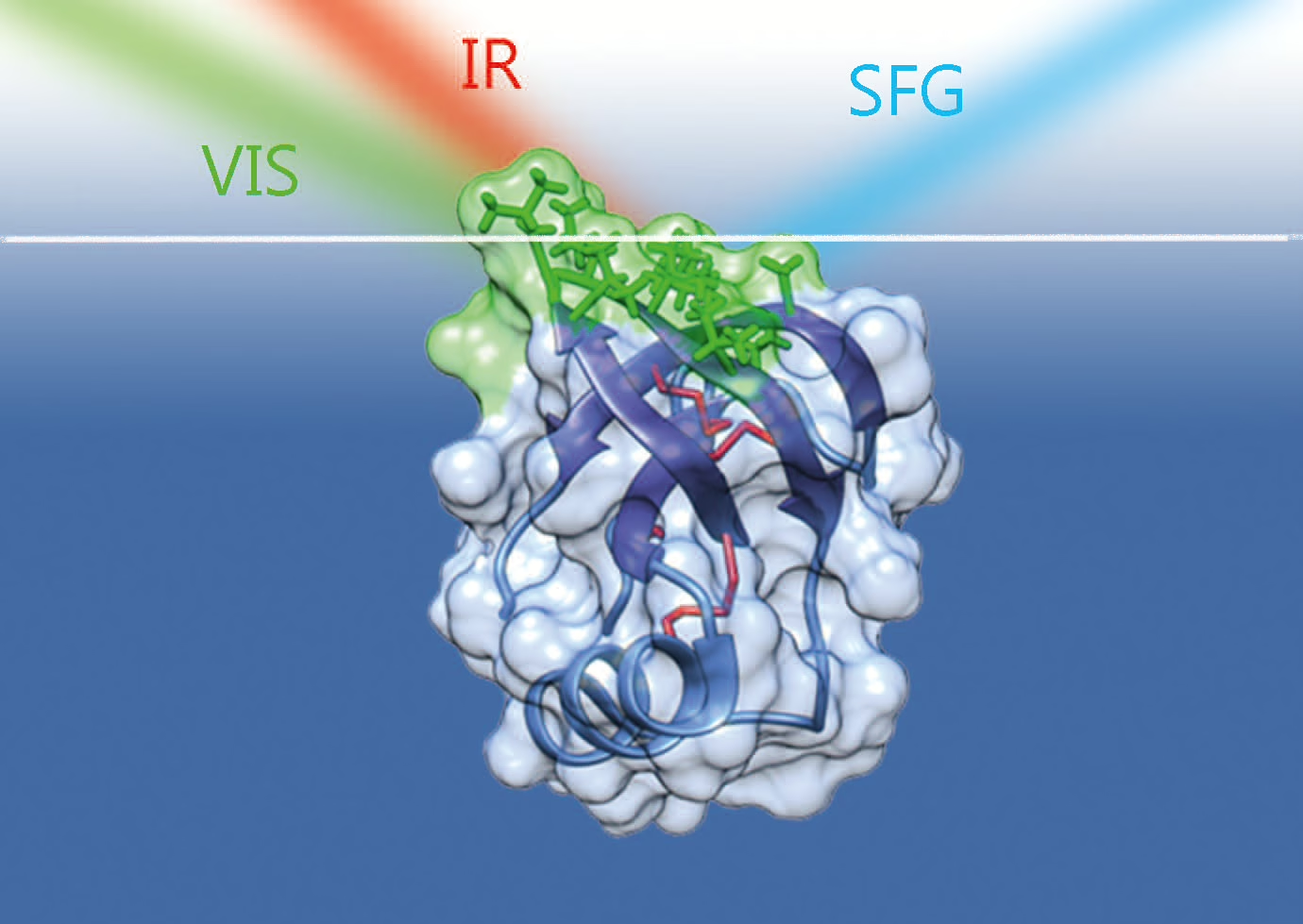
Shining Light on Nature’s Raincoat
The skin of a fungus consists of protein molecules called hydrophobins that together form a protective film. These hydrophobin films show an exceptionally large elasticity and are highly water-repellent, thus forming a natural rain coat. The origin of these special properties are a mystery. Researchers from AMOLF have succeeded to study the properties of hydrophobin films at the molecular-level using advanced interfacial spectroscopy. Together with colleagues from Finland and a research group of the University of Amsterdam (UvA), the researchers describe their findings in the Journal of Physical Chemistry Letters.
Computational power of cells
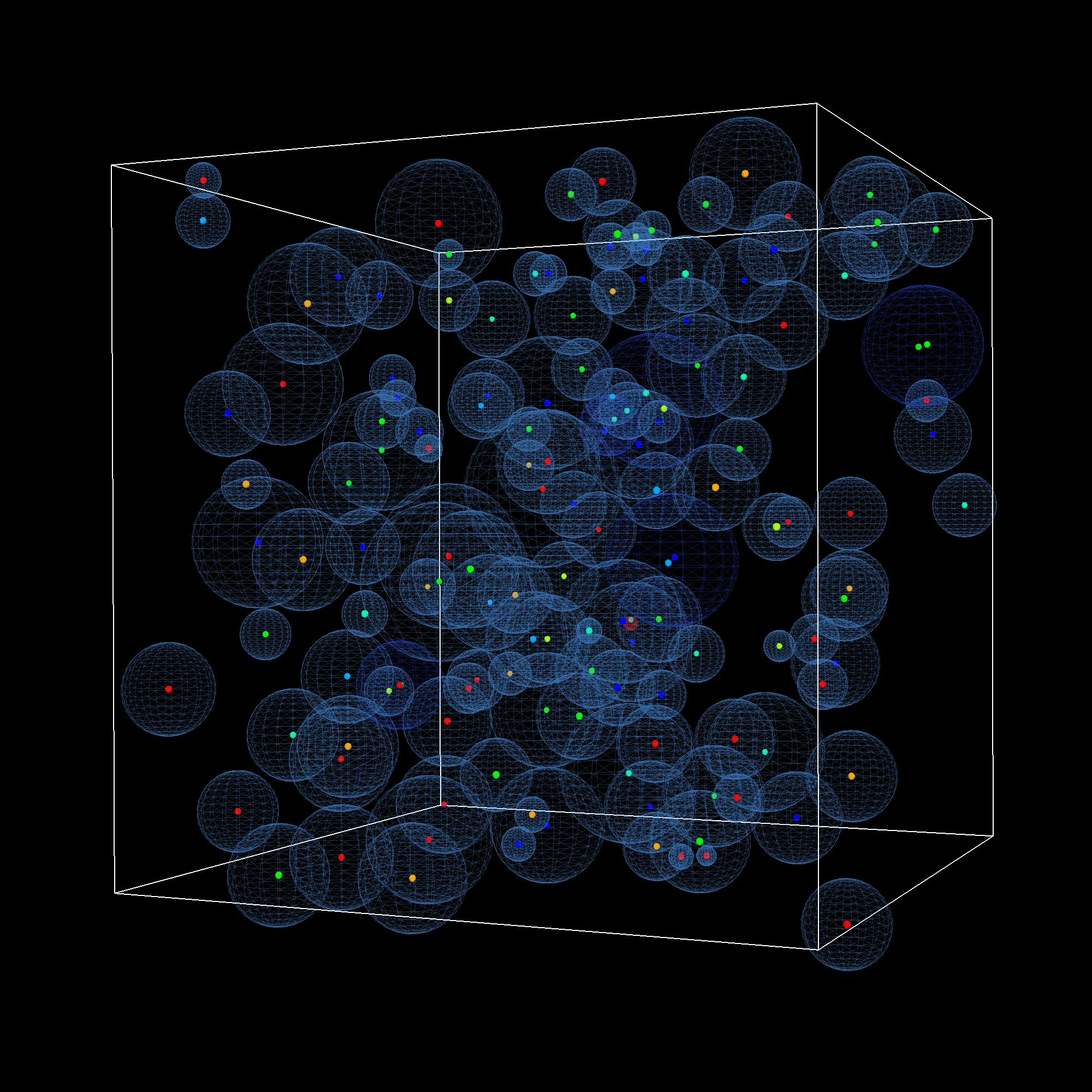
How can molecular systems or cells be used to perform complex computational tasks? And what is the lowest amount of energy needed to execute such operations? Group leader Pieter Rein ten Wolde from AMOLF recently published two articles together with his colleague Thomas Ouldridge of the Imperial College London, in which they provide first clues on how to construct a biochemical system that is able to copy and transfer information in an energy efficient way.
Perspective in ACS Photonics on Single Photon Nano-antennas
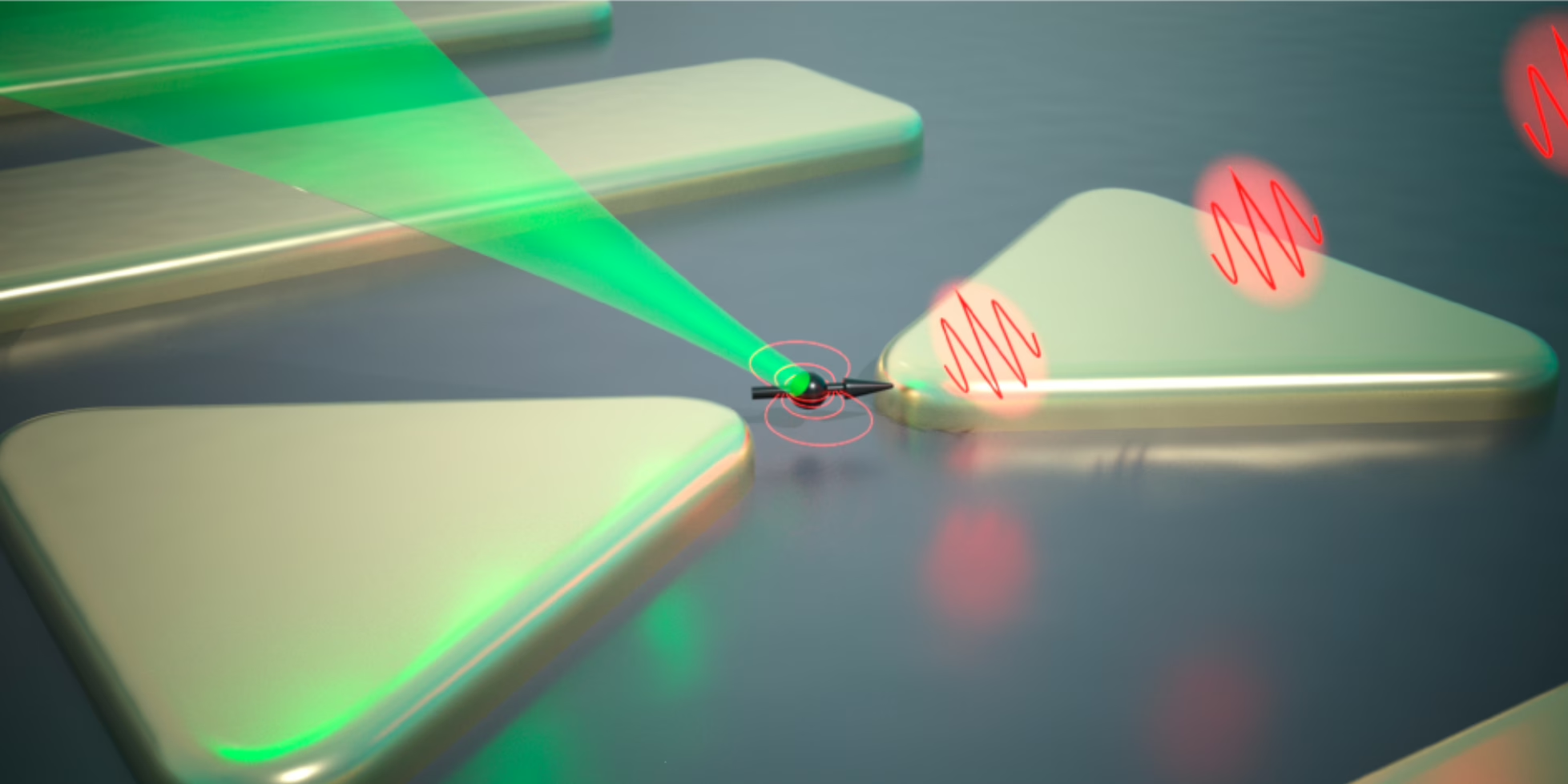
The Perspective paper “single photon nano-antennas” in ACS Photonics reviews the use of plasmon antennas for single-photon applications. The idea to use plasmon antennas for single-photon sources was first conceived…
Versatile crystal growth for functional materials
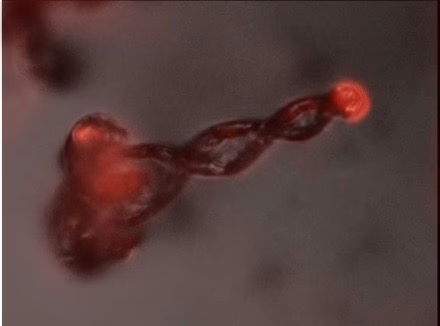
AMOLF researcher Wim Noorduin and fellow scientists Nadir Kaplan, Joanna Aizenberg and L. Mahadevan of Harvard University have developed a model that can be used to accurately describe and predict the formation of a broad range of exquisite three-dimensional crystal structures. This provides the basis for a new, cheap and versatile production method for the manufacture of functional materials, such as light guides for solar cells. The research team presents its results on March 31st in Science.
Adolescent worm provides insights into cell development : Canalisation of developing cells unravelled for the first time
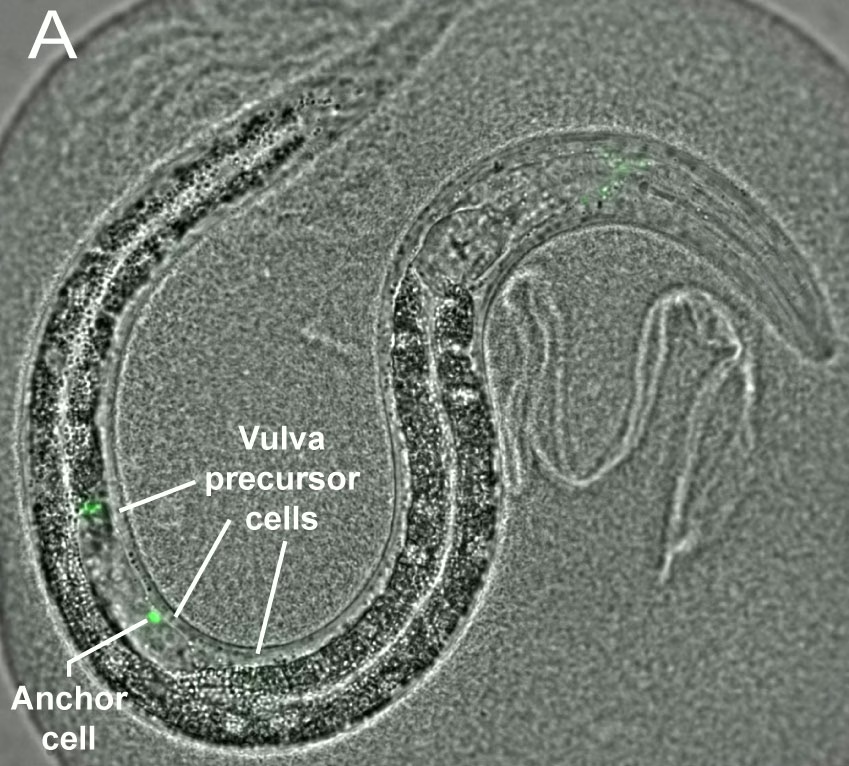
How embryos develop into complex, adult organisms is still a mystery, but researchers at AMOLF have managed to clarify a small part of it. While studying the nematode C. elegans, they discovered how a group of cells always develops into the same organ despite considerable variations at the cell level. With their experiments, group leader Jeroen van Zon and PhD researcher Guizela Huelsz-Prince have made the responsible feedback mechanism, also referred to as canalisation, visible for the first time. They published their results on February 22nd in the journal Cell Systems.