
News & updates
Latest developments from our institute
Stay informed about new research results, awards, events, and collaborations across our scientific community.
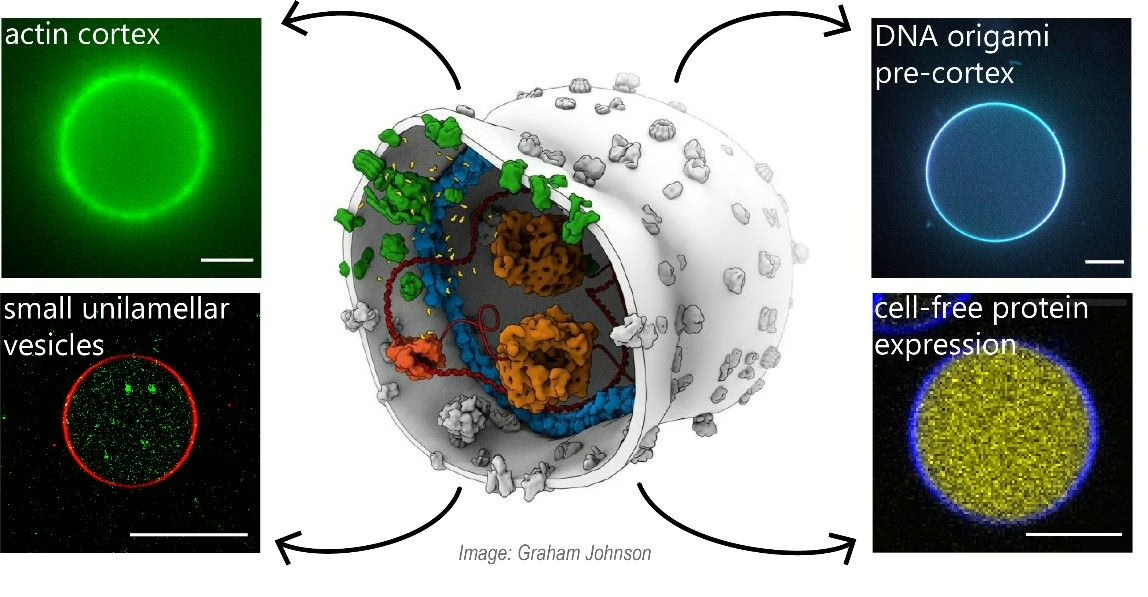
A new spin on making minimal cells
The ability of a cell to separate its own matter from its surroundings is a basic requirement for life. A team of researchers at AMOLF and Delft University of Technology have managed to create a synthetic container, or lipid vesicle, that is able to hold a range of different biological systems: from a cytoskeleton to entire E.coli bacteria. Their findings on this optimized cDICE method, which has the potential to reveal the inner workings of life, are published in ACS Synthetic Biology on June 29, 2021.
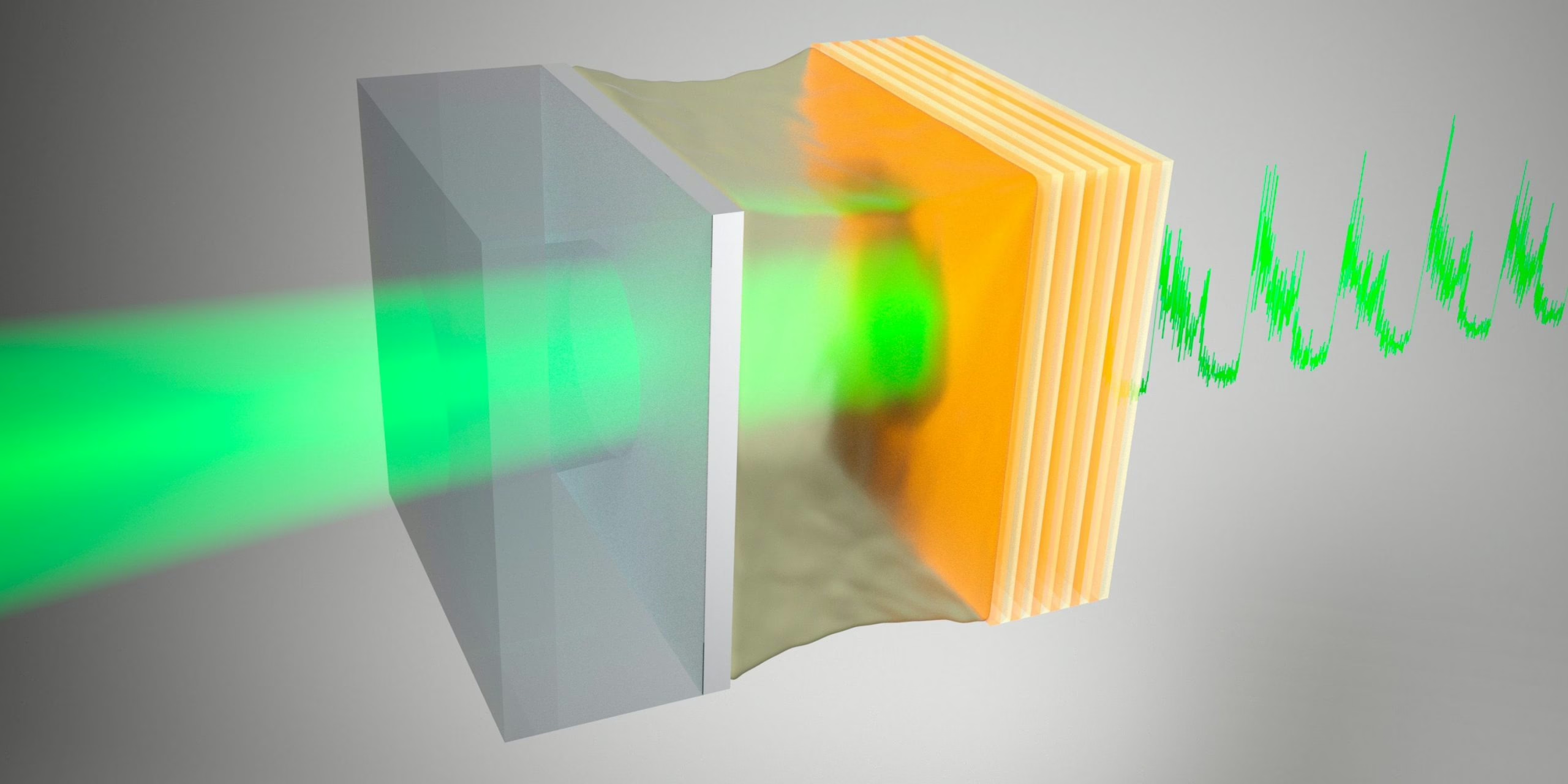
AMOLF scientists unravel noise-assisted signal amplification in systems with memory
Signals can be amplified by an optimum amount of noise, but this so-called stochastic resonance is a rather fragile phenomenon. Researchers at AMOLF were the first to investigate the role of memory for this phenomenon in an oil-filled optical microcavity. The effects of slow non-linearity (i.e. memory) on stochastic resonance were never considered before, but these experiments suggest that stochastic resonance becomes robust to variations in the signal frequency when systems have memory. This has implications in many fields of physics and energy technology. In particular, the scientists numerically show that introducing slow non-linearity in a mechanical oscillator harvesting energy from noise can increase its efficiency by tenfold. They publish their findings in Physical Review Letters on May 27th.
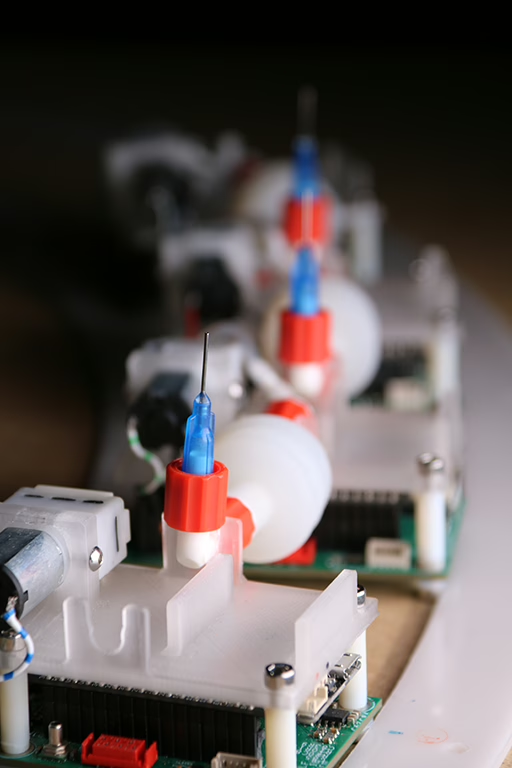
Self-learning robots go full steam ahead
Researchers from AMOLF’s Soft Robotic Matter group have shown that a group of small autonomous, self-learning robots can adapt easily to changing circumstances. They connected these simple robots in a line, after which each individual robot taught itself to move forward as quickly as possible. The results were published today in the scientific journal PNAS.
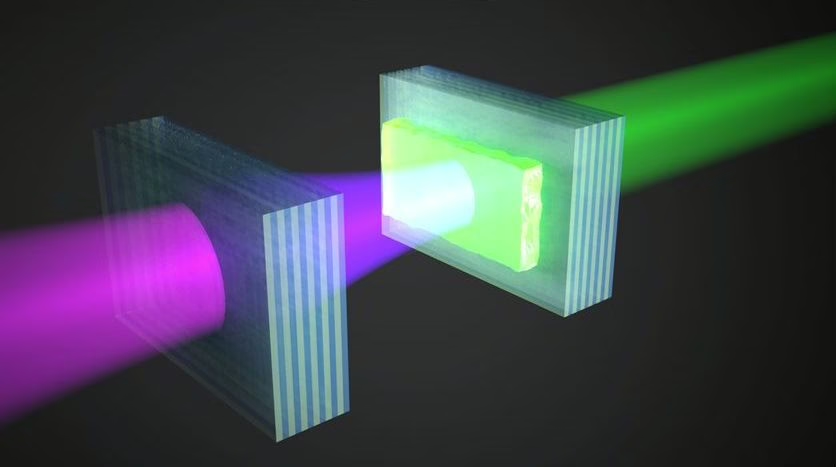
The properties of your microscope do matter
The coupling of light and matter is relevant to many emerging technologies like lasers, LEDs, sensors, and more. To observe this coupling researchers use optical microscopes, and the signatures of light-matter coupling are then evidenced by measuring the transmission of different colors of light (i.e. the spectrum). Typically, the measured spectrum is assumed to be independent of the microscope’s properties. However, scientists at AMOLF have discovered that the microscope’s properties can profoundly impact those measurements. The results raise awareness about a hitherto ignored source of error in optical experiments, and pave the way for the correct characterization of optical systems. The researchers published this study in the journal ACS Photonics on May 4th.

Perovskites under pressure: hot electrons cool faster
In solar cells, about two third of the energy of sunlight is lost. Half of this loss is due to a process called ‘hot carrier cooling’ where high energy photons lose their excess energy in the form of heat before being converted to electricity. Scientists at AMOLF have found a way to manipulate the speed of this process in perovskites by applying pressure to the material. This paves the way for making perovskites more versatile, not only for use in solar cells but also in a variety of other applications, from lasers to thermoelectric devices. The researchers will publish their study in the Journal of Physical Chemistry Letters on 23 April.
Painting with semiconductors
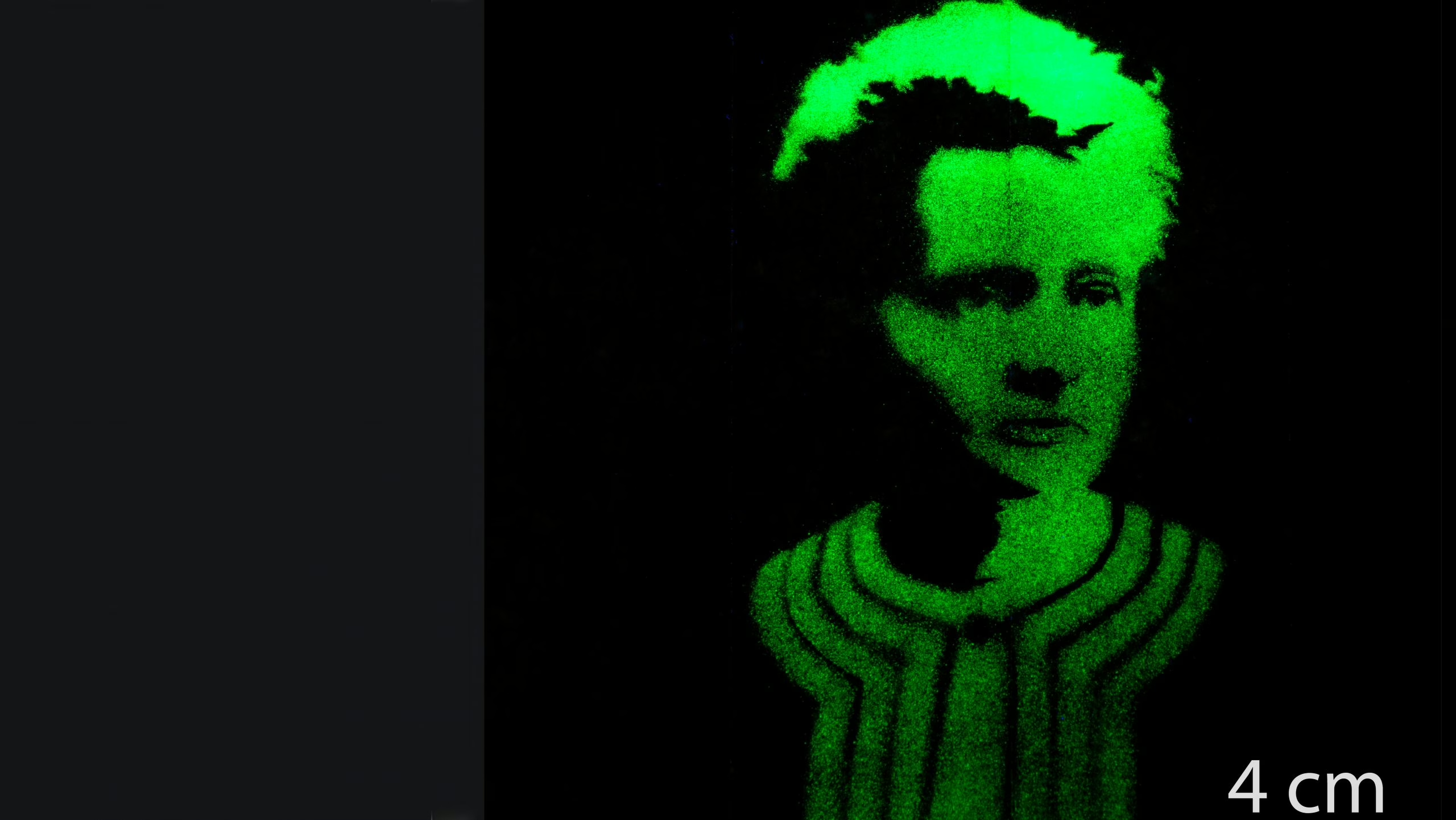
AMOLF researchers Lukas Helmbrecht and Wim Noorduin have developed a reactive ink that can be painted on an equally reactive canvas. The ink reacts with the material on the canvas to become a semiconductor that emits colored light, an essential part of electronic components such as LEDs. Consequently, a new way of producing these electronic components is now within reach. The results of the research, a collaboration between the AMOLF groups Self-Organizing Matter and Hybrid Solar Cells, are published this week in the journal ‘Advanced Materials’.
The optimal design of cellular sensing systems
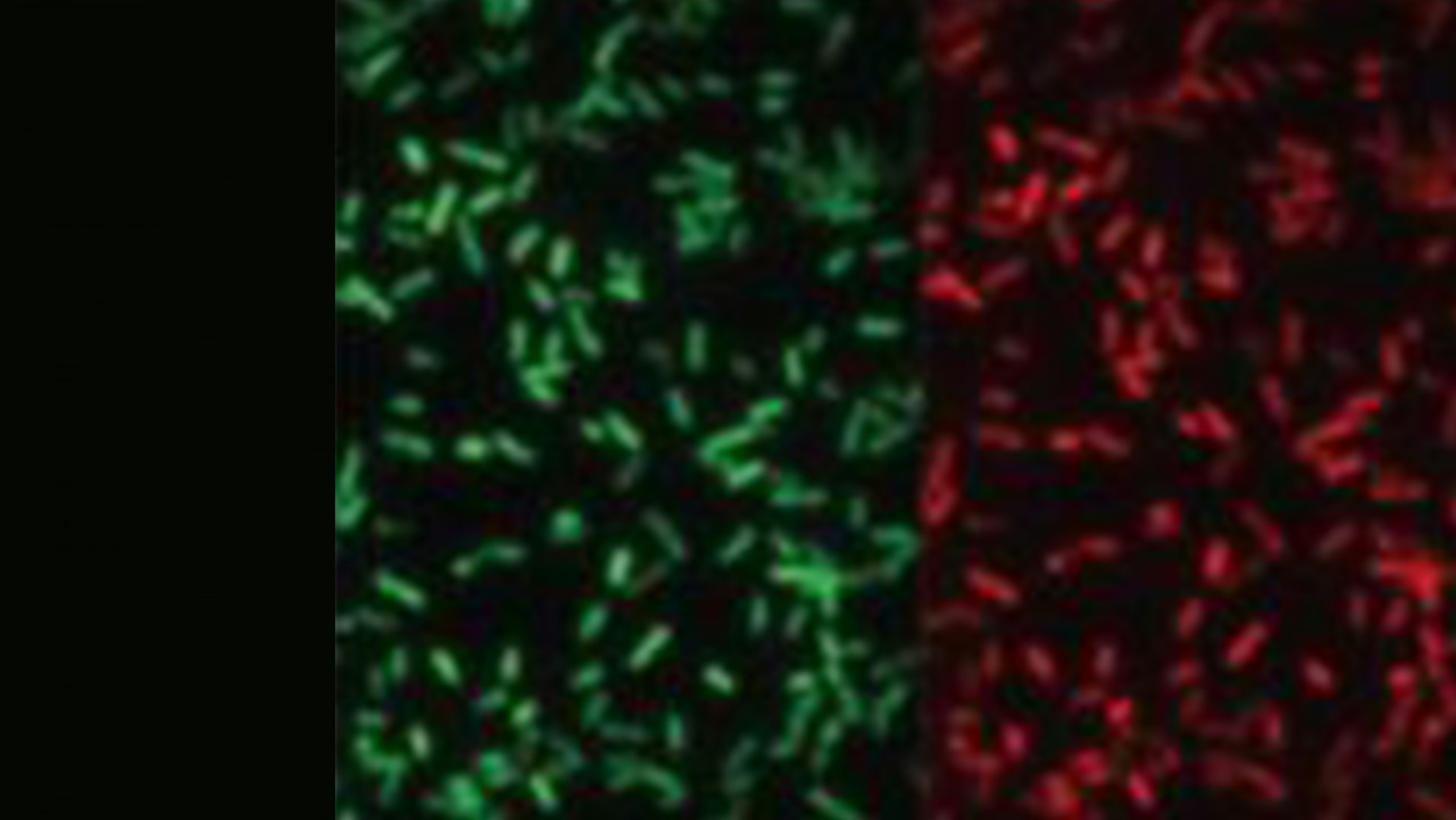
To survive and prosper living cells continually have to respond and adapt to changes in their environment. To this end, they have developed sensing systems that rival the best man-made sensing devices. Yet, how accurately these systems can measure chemical concentrations remains poorly understood. Researchers from AMOLF have now developed a theory that predicts the optimal design that maximizes the sensing precision of these systems. An analysis of experimental data revealed that the sensing system of the bacterium E. coli obeys the design principles as predicted by their theory. The AMOLF team presented their work in the journal eLife.
Mystery of amorphous perovskite solved
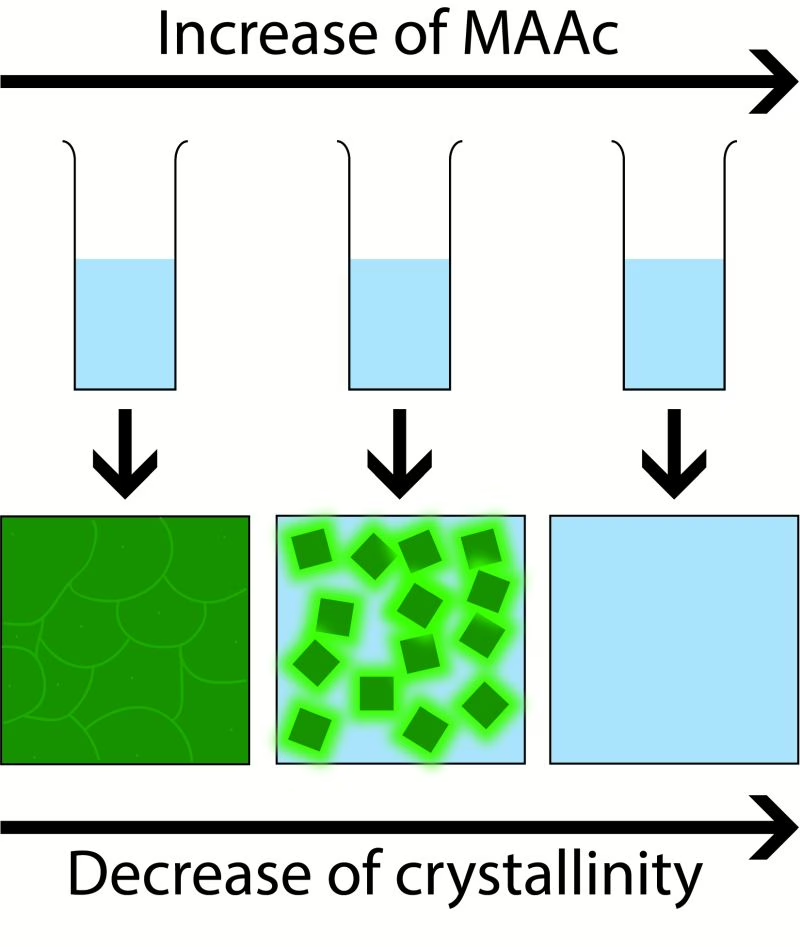
AMOLF researchers Erik Garnett, Susan Rigter, and colleagues are the first to have irrefutably demonstrated that amorphous perovskite exists. The material can significantly increase the efficiency of solar cells produced from perovskite. The research is published today online in the journal Advanced Functional Materials.