
News & updates
Latest developments from our institute
Stay informed about new research results, awards, events, and collaborations across our scientific community.
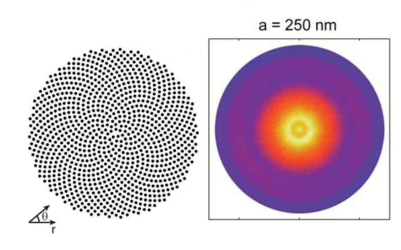
Vogel spirals for lighting
Periodic arrays of plasmonic nanoantennas can enhance the directionality of light emission of nearby fluorophores. Unfortunately, their narrow spectral bandwidth and the anisotropy of their optical resonances limit the use…
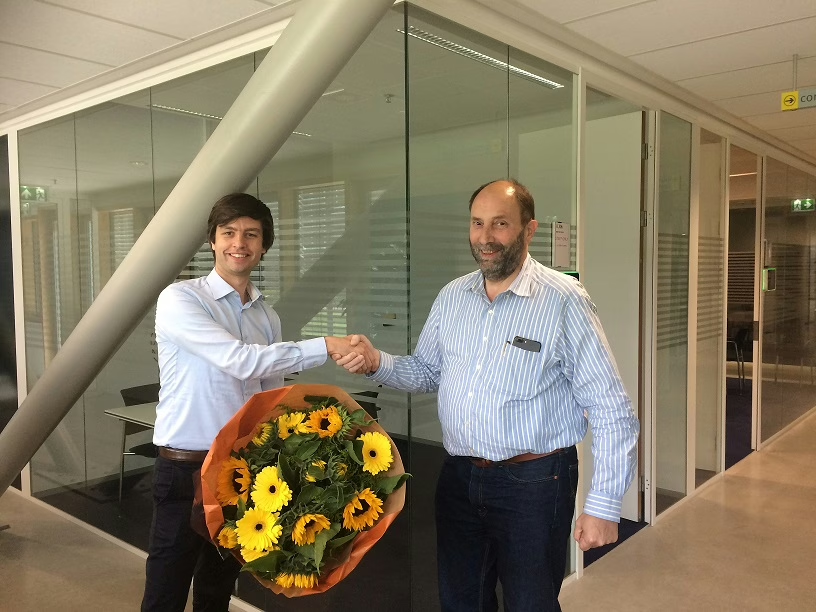
Ewold Verhagen appointed professor at Eindhoven University of Technology
On July 1st, Ewold Verhagen was appointed professor of Nano-optomechanics at Eindhoven University of Technology (TU/e). At TU/e Verhagen is part of the research group Photonics and Semiconductor Nanophysics (PSN) within the department of Applied Physics. Verhagen will continue working at AMOLF as group leader of the Photonic Forces group. AMOLF and TU/e expect the appointment to further strengthen their research collaboration.
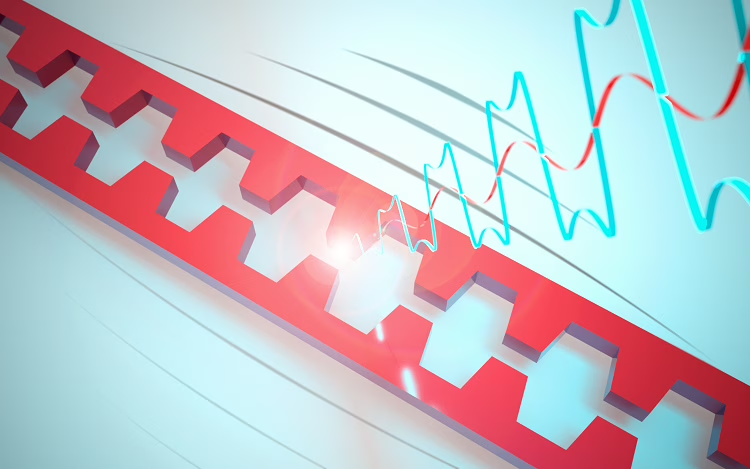
Nanoscale motion sends light into overdrive
Researchers demonstrate record strong conversion of motion into light AMOLF researchers have developed nanoscale strings whose motion can be converted to light signals with unprecedented strength. This could allow for extremely precise sensors and comes with an important side-effect. “Analogous to a guitar amplifier in overdrive producing distorted sound waves, our strong motion-to-light conversion leads to distorted light signals”, says group leader Ewold Verhagen. “But these signals actually carry information about the motion that may lead to new ways of measuring quantum mechanical motion.” The researchers published their results on 7 July 2017 in Nature Communications.
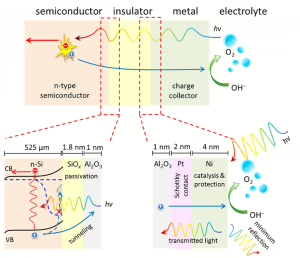
Cheap, efficient and stable photoelectrode could improve water splitting with solar energy
Water splitting with solar energy could provide an efficient route for large scale renewable energy conversion and storage. Scientists from TU Delft and AMOLF have now engineered a very efficient and stable photoelectrode, a material that absorbs light and directly splits water into hydrogen and oxygen. Furthermore, they use silicon wafers as the light absorbing material, so the system is also cheap. They report on their findings in Nature Communications on Thursday, June 29th.
NWO Vidi grant awarded to Bruno Ehrler
AMOLF group leader Bruno Ehrler has been awarded with an NWO Vidi grant. The grant enables Ehrler to study a promising new material for solar cells. NWO has awarded a total of 89 experienced researchers a Vidi grant that is worth 800.000 euros.
Water is surprisingly ordered at the nanoscale
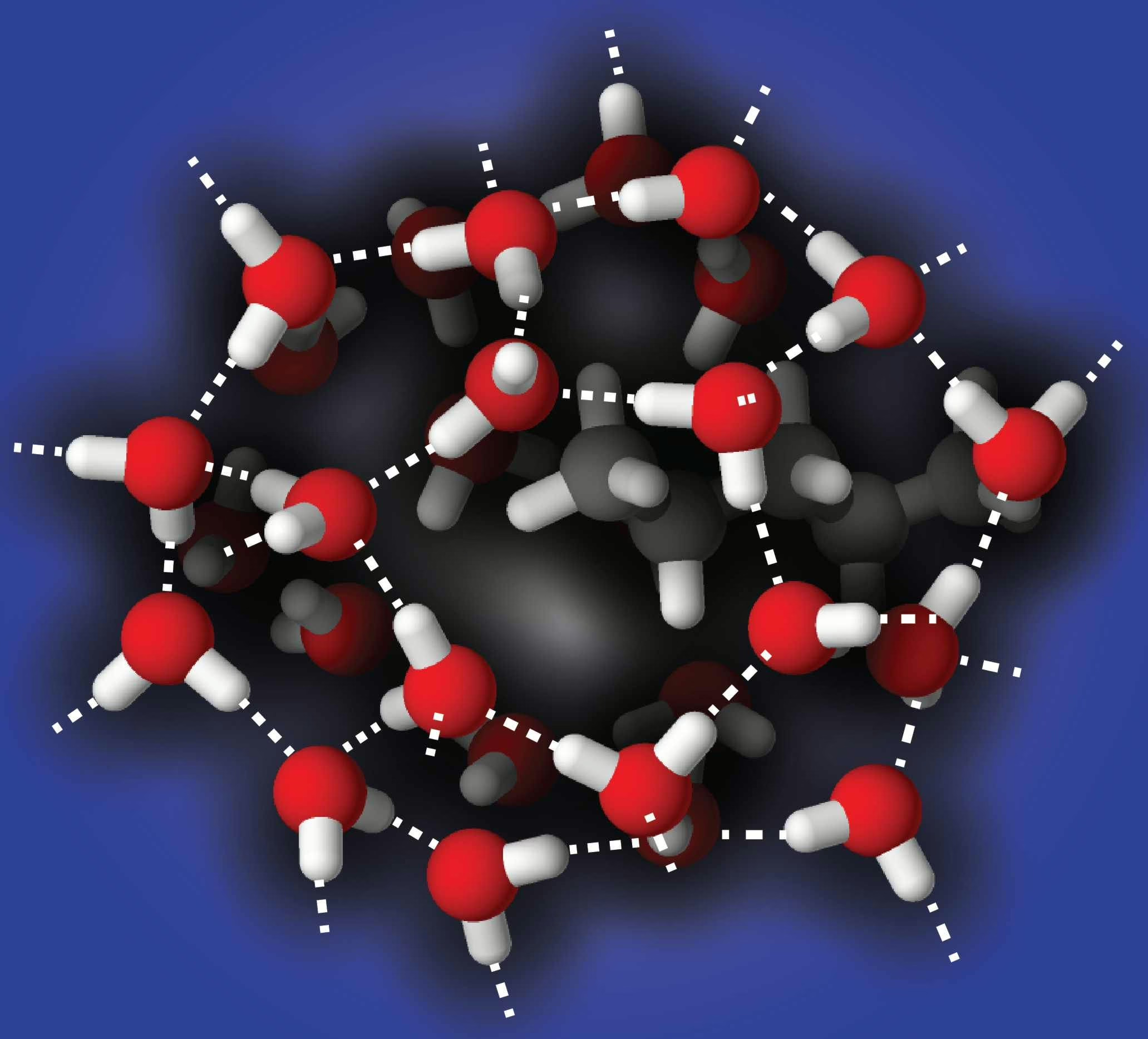
Researchers from AMOLF and Swiss EPFL have shown that the surface of minuscule water drops surrounded by a hydrophobic substance such as oil is surprisingly ordered. At room temperature, the surface water molecules of these droplets have much stronger interactions than at a normal water surface. This may shed new light on a variety of atmospheric, biological and even geological processes.
A crucial step towards better performing solar cells
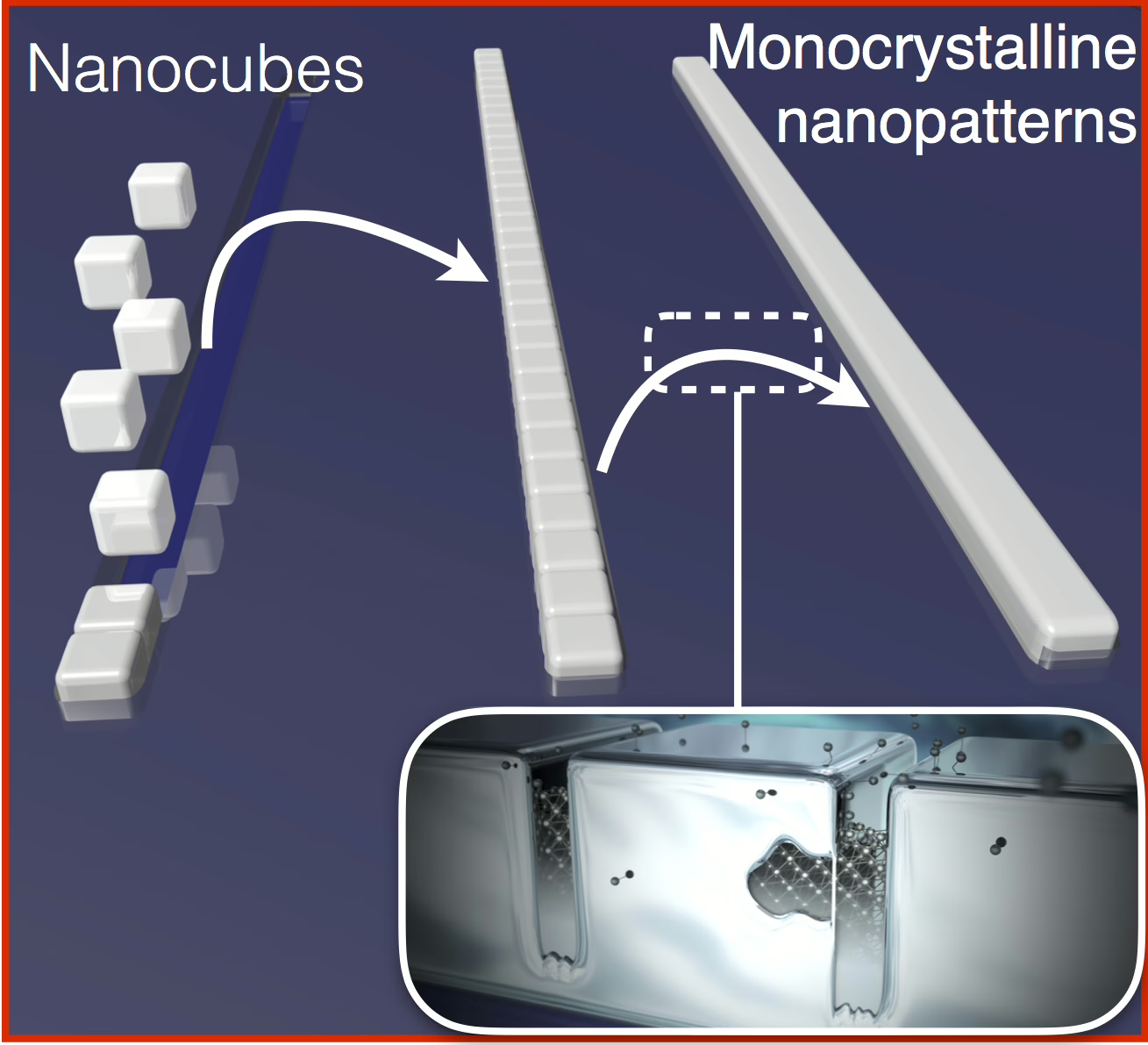
Solar cells need monocrystalline materials to work optimally. But the traditional way to build monocrystalline materials is highly time consuming. AMOLF physicists in the Nanoscale Solar Cells group have found a new way of building them, which is at least a hundred times more efficient. This research has been published in the journal Advanced Materials on 3 May 2017.
Dutch researchers join forces to build synthetic cell
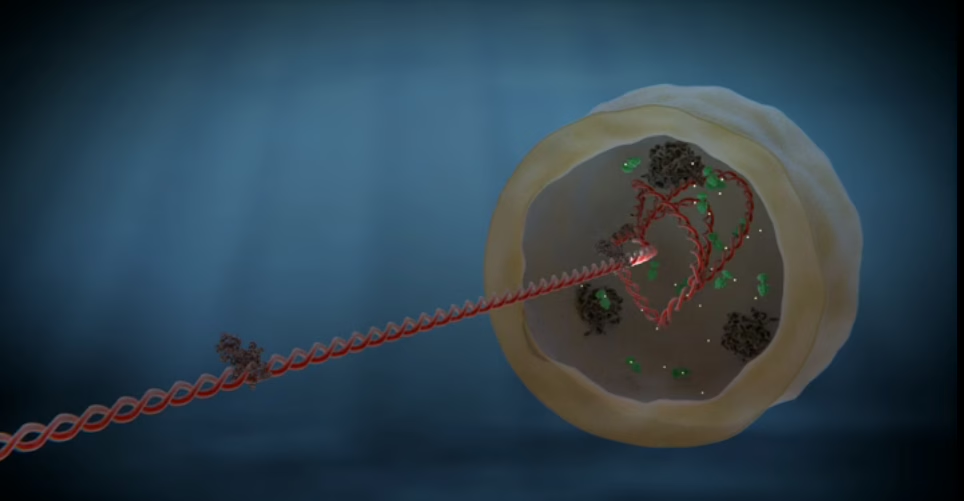
The Dutch research consortium BaSyC is taking on the challenge of building a synthetic biological cell. For part of its funding, it has received a grant worth almost € 19 million from the Gravitation programme of the Netherlands Organisation for Scientific Research (NWO). The research partners will themselves be funding the remaining six million of the total of over € 25 million that the research programme will cost. AMOLF, together with five universities, is taking part in the consortium that is led by TU Delft. ‘A fundamental understanding of life within a cell will bring huge intellectual, scientific and technological rewards.’