
News & updates
Latest developments from our institute
Stay informed about new research results, awards, events, and collaborations across our scientific community.
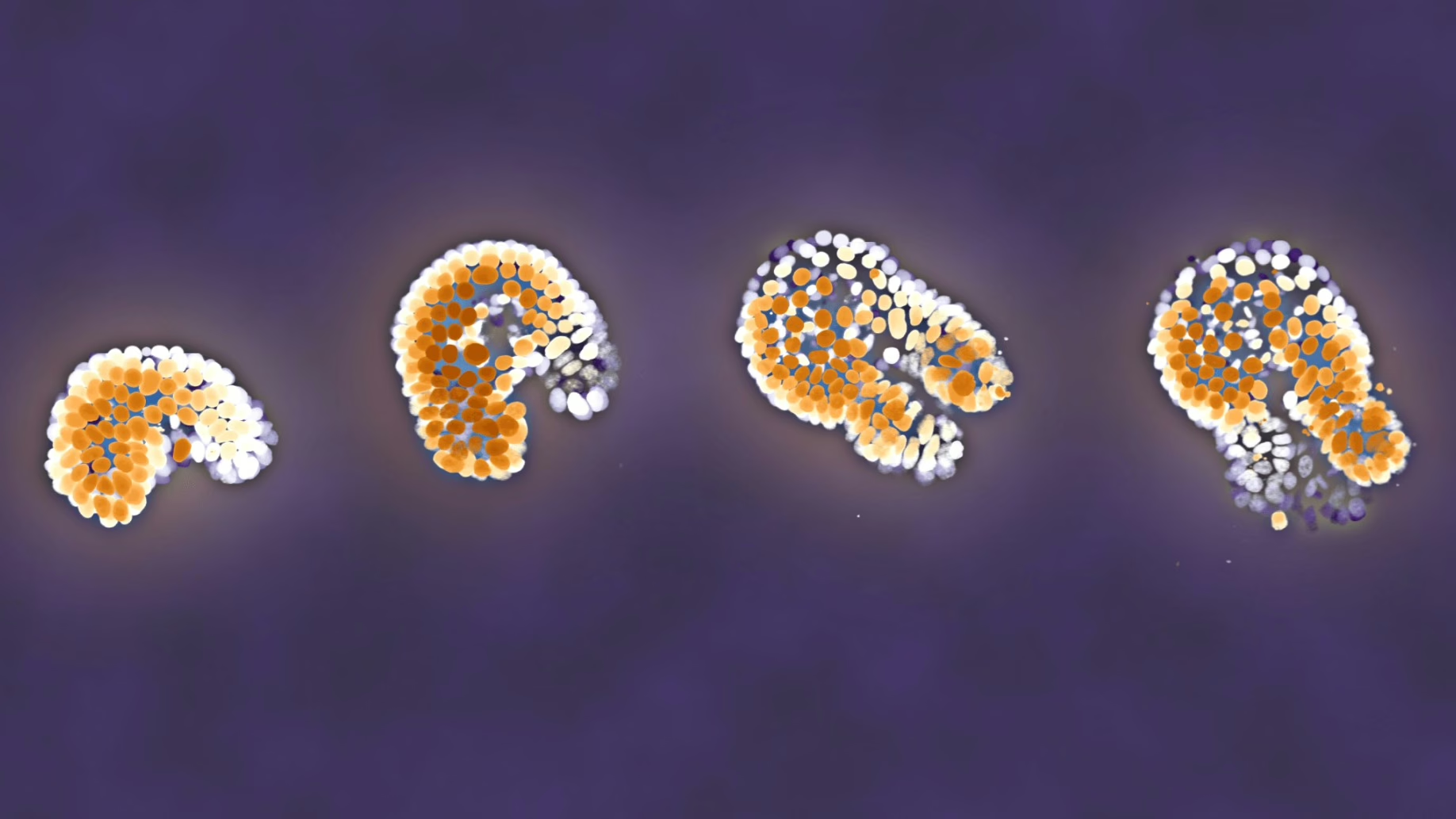
Everything you need to know about organoids
Organoids are instrumental in improving our understanding of processes that are otherwise hidden inside the body. For instance, these small 3D organs can be used to test medicines on tissue grown from a patient’s own cells. AMOLF researchers carry out unique and complex experiments to follow organoids in time. In order to enable other researchers to benefit from their experiences, they now publish their methods in the prestigious journal Nature Protocols.
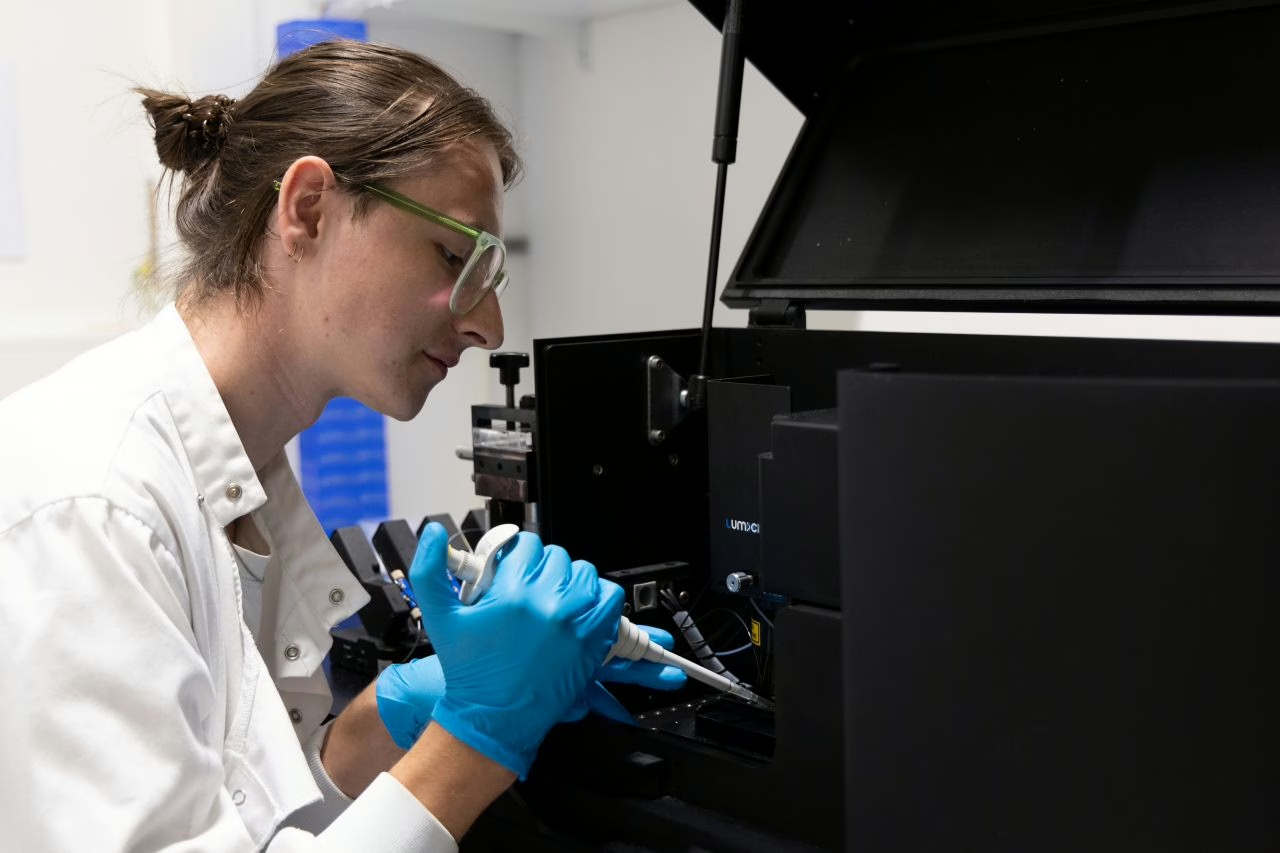
First direct observation of protein recycling: a key process for healthy cells
AMOLF researchers report in Nature Communications that they followed in real time how the cellular protein recycling system selects and dismantles proteins. Using single molecule manipulation, they found that the protein recycling system acts as a motor that threads proteins through a central pore. They also discovered energy-driven fluctuations that may help it recognize the correct target, revealing how cells avoid mistakes and prevent diseases such as Alzheimer’s.
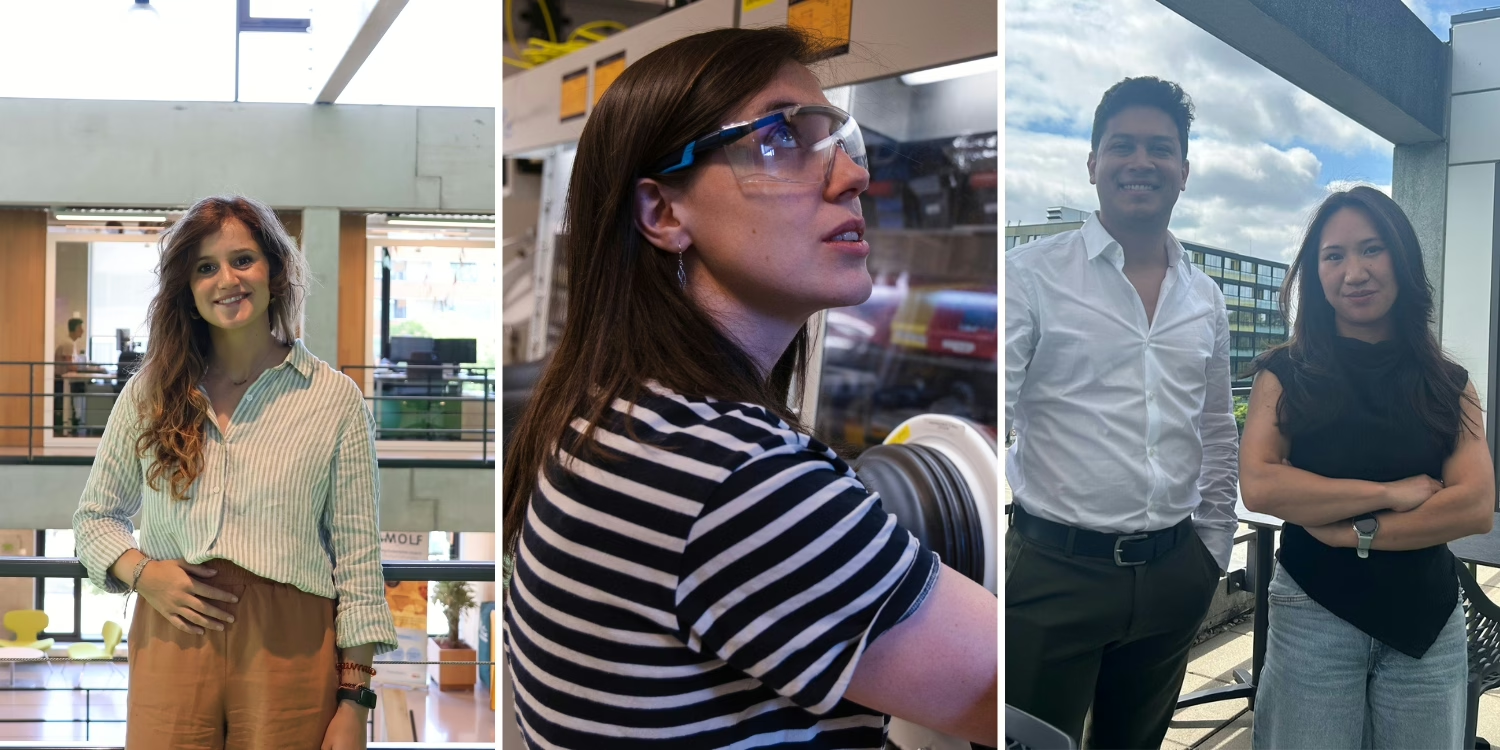
AMOLF researchers with granted NWO XS projects
Last week, three AMOLF researchers learned that their research projects had been awarded funding through the Open Competition Domain Science-XS call. They are Dr. Susanna Eli (Biophysics, Quant. Dev. Biology & Physics of Cellular Interactions), Dr. Sarah Gillespie (Nanoscale Solar Cells), and Dr. Sergio Rey Puentes (Hybrid Nanosystems).
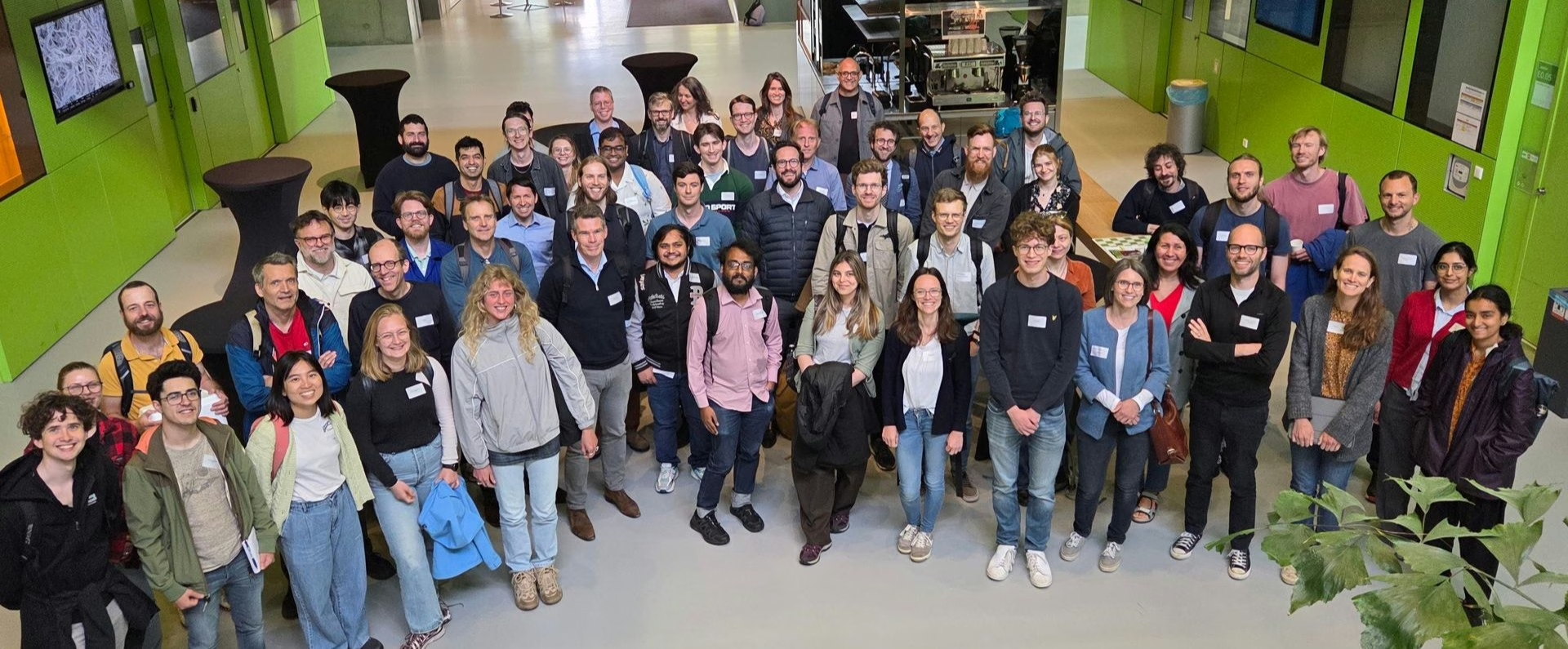
‘Autonomy’ takes center stage at symposium
On June 11, researchers gathered at the Autonomous Matter Symposium to discuss the concept of autonomy from different perspectives. Professor Jay Groves (UC Berkeley) argued that autonomy may not begin with decision-making, but with amplification. Professor Elisabetta Chicca (University of Groningen) offered a complementary perspective from the field of neuromorphic engineering.
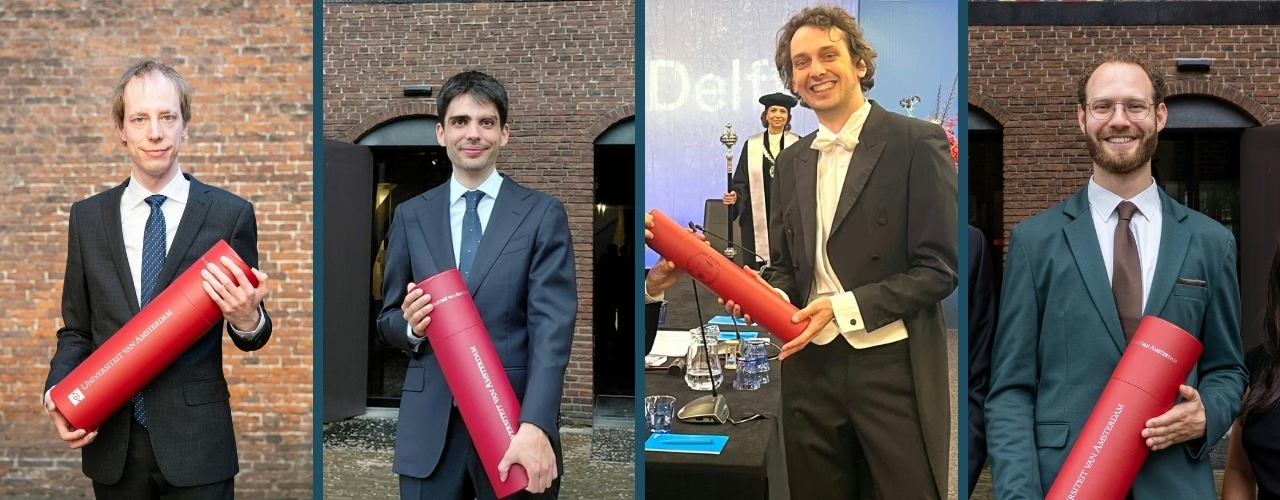
Four PhD candidates close their AMOLF chapter
[caption id="" align="alignnone" width="1280"] Left to right: Sjoerd van Dongen (cum laude), Paul Ducarme, Max Betjes (cum laude), and Mees Dieperink.[/caption] Sjoerd van Dongen (cum laude) At AMOLF, Sjoerd worked…
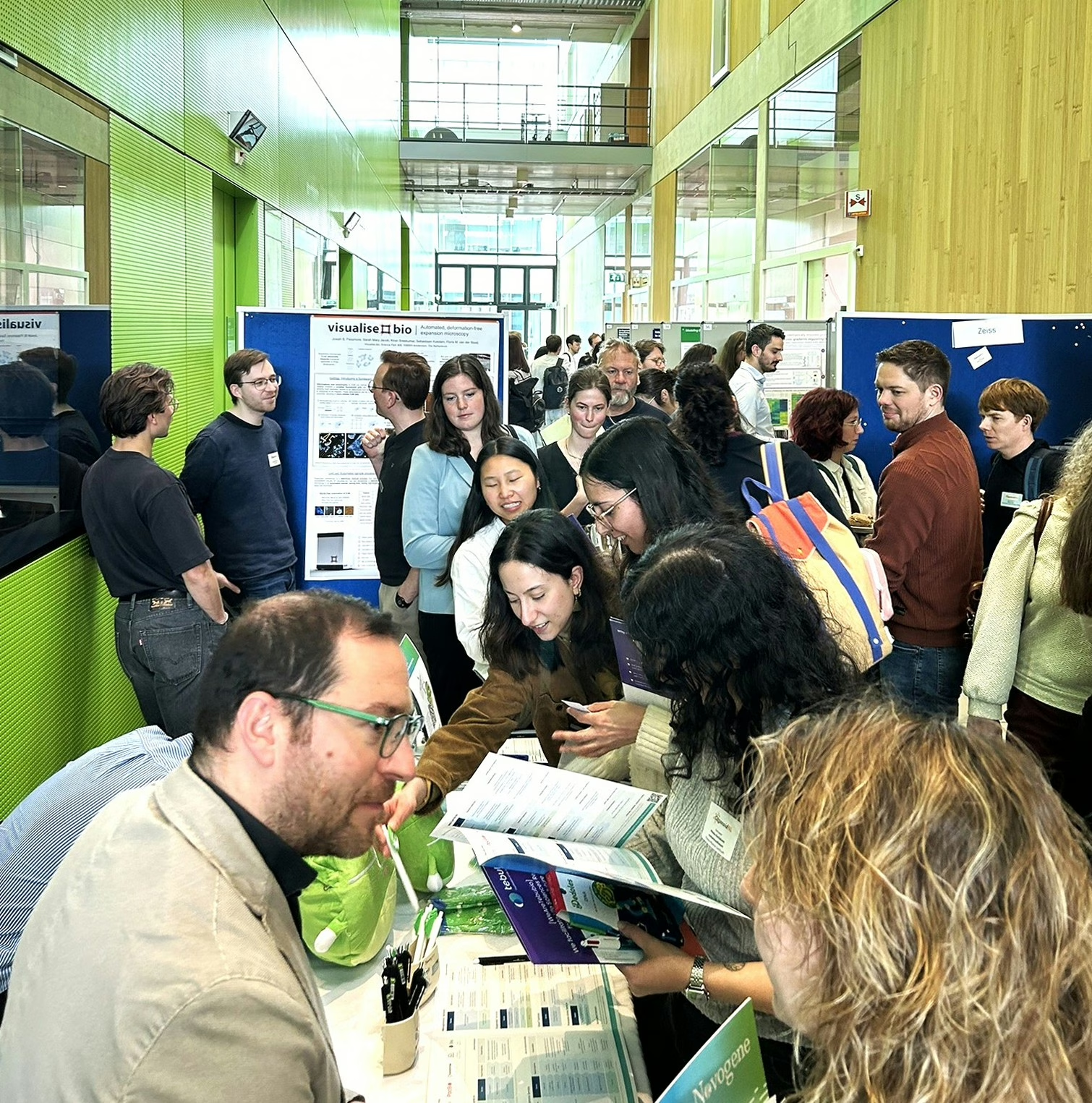
OrganoidNL 2026 brings together Dutch organoid research community
On April 17, around 250 researchers gathered at AMOLF in Amsterdam for the fourth edition of the annual OrganoidNL Symposium. Organoids, which are small, simplified models of organs grown from stem cells in the lab, are powerful tools to study, for example, how our bodies work and how diseases develop.
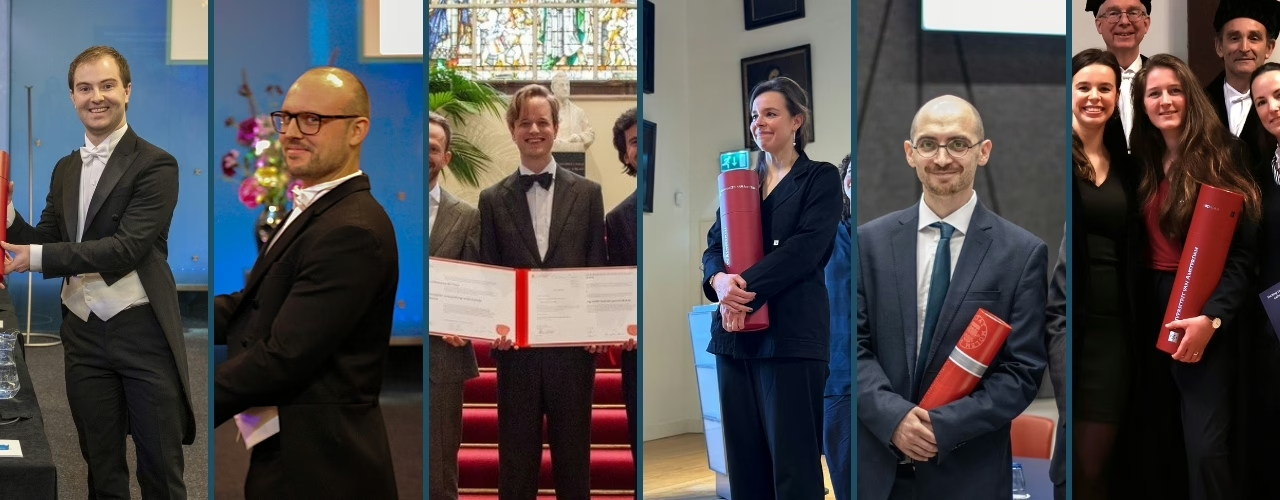
AMOLF kicking off 2026 with six PhD defenses
Left to right: Kasper Spoelstra, Luca Gross, Jeroen de Boer, Nika van Nielen, Sergio Picella, Evelijn Akerboom.Kasper Spoelstra (cum laude) Title: Shedding light on dynamic…
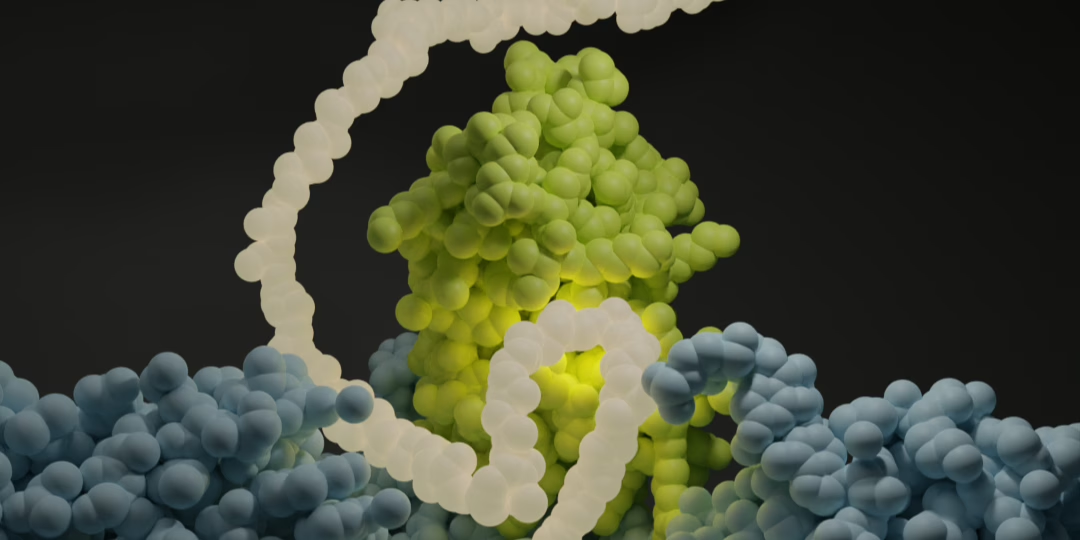
Scientists uncover the earliest steps of protein folding in human cells
Four research groups joined forces to reveal the very first moments of a protein’s life in human cells. They found that as soon as an amino acid chain exits from the ribosome, a protein called NAC binds and folds it into the correct structure. This finding fundamentally rewrites our textbook knowledge on how human cells suppress diseases caused by protein folding errors. The researchers published their findings in the journal Molecular Cell on March 23.