Events and outreach

‘Autonomy’ takes center stage at symposium

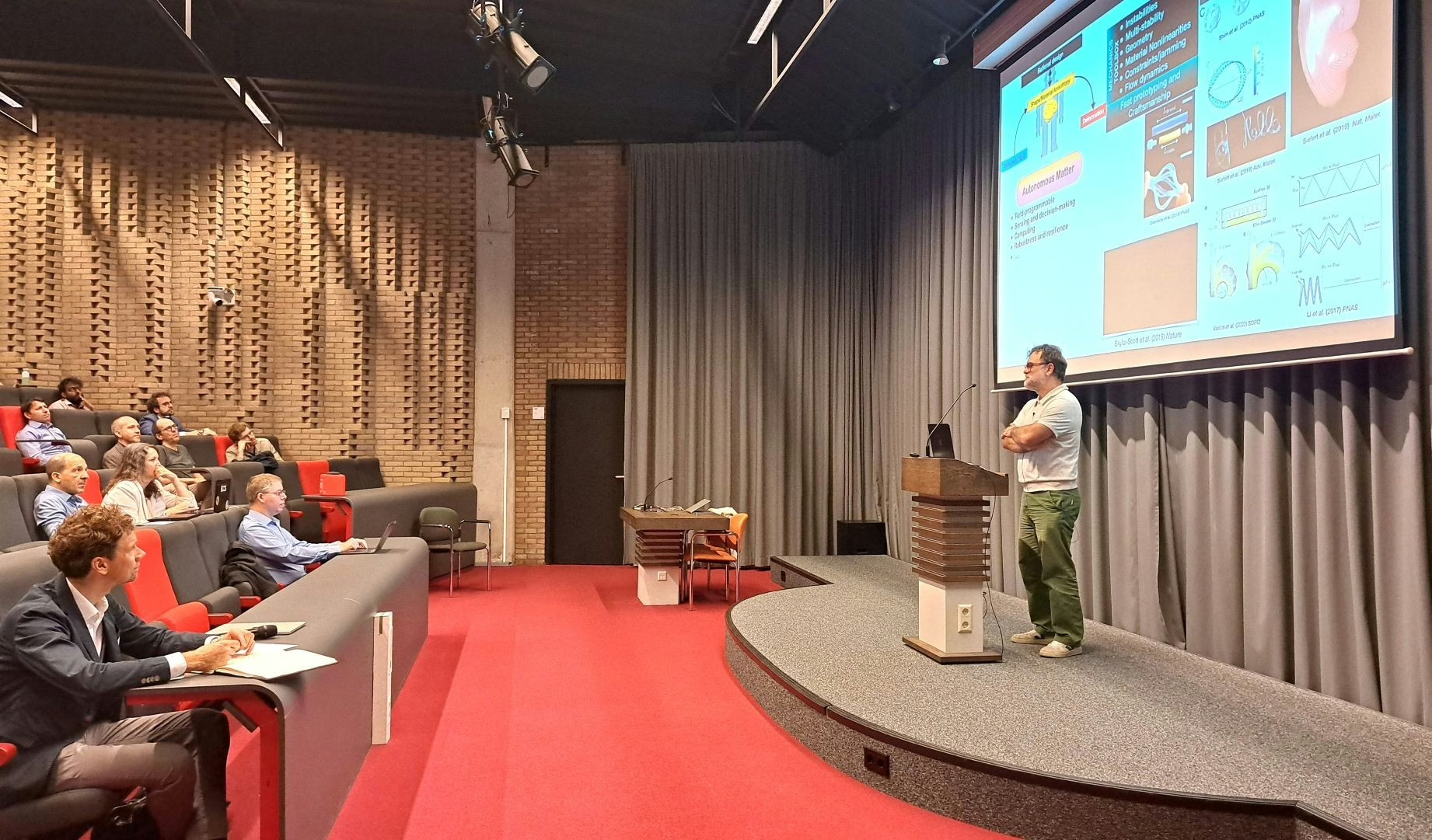
On June 11, researchers gathered at the Autonomous Matter Symposium to discuss the concept of autonomy from different perspectives. Professor Jay Groves (UC Berkeley) argued that autonomy may not begin with decision-making, but with amplification. Professor Elisabetta Chicca (University of Groningen) offered a complementary perspective from the field of neuromorphic engineering.

Professor Pierre-Thomas Brun (KU Leuven)

Turning tiny signals into meaningful action

A particularly striking insight came from Groves (UC Berkeley). He argues that part of autonomy lies in a system’s ability to take a small signal and amplify it so that the entire system responds to it. What often happens instead is that a weak input signal produces only a weak local response. Everything farther away remains unaffected because it never receives the signal. In this view, part of autonomy is the ability to amplify very small pieces of information. In a sense, the system functions as an amplifier.

AMOLF group leader Dr. Nachi Stern thinks that this idea is a surprising insight because it is not what we usually think of when we think about autonomy.

Neuromorphic Engineering

Professor Elisabetta Chicca (University of Groningen) brought a different perspective from neuromorphic engineering. Chicca emphasizes that autonomy is not only about computation or learning, but fundamentally about how systems engage with the world through sensing.

While much of artificial intelligence focuses on learning rules and internal representations, Chicca highlighted that biological systems operate differently. They continuously integrate sensing, computation, and action in tightly coupled, dynamic loops. In her work, this is reflected in event-based sensing: systems that respond only to changes in their environment, rather than passively processing all incoming data.

Broader relevance
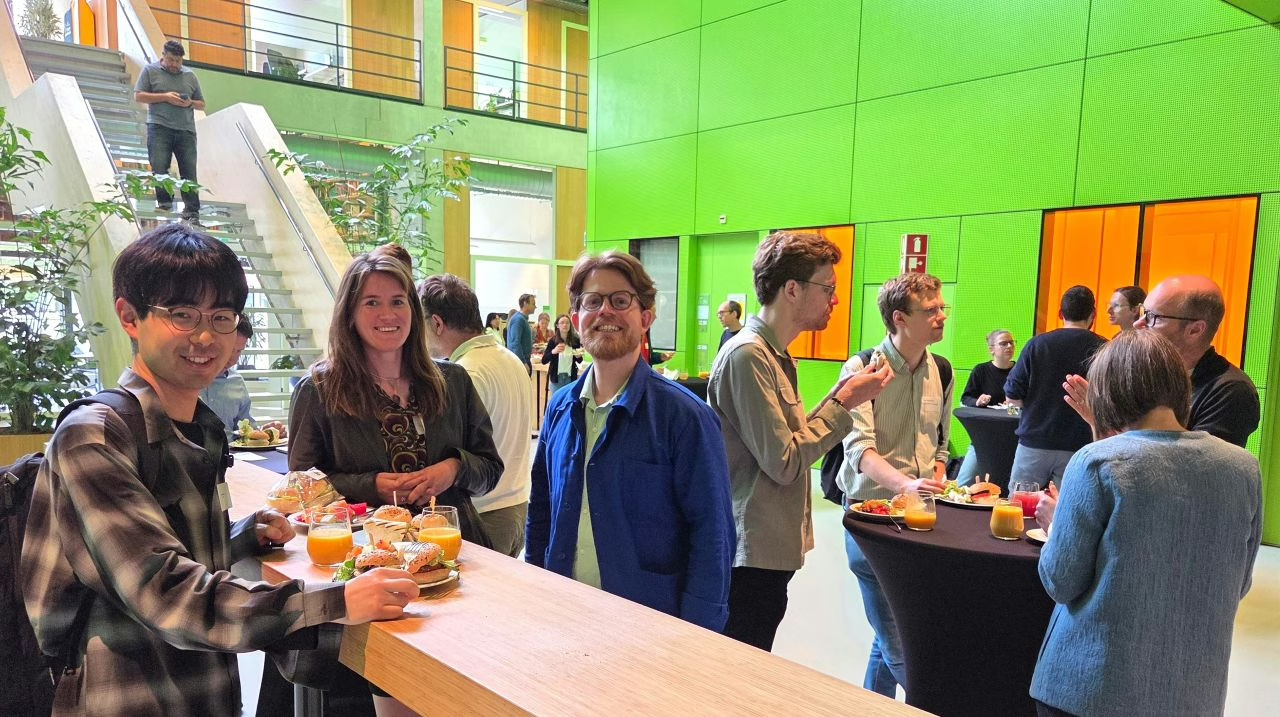
Tess Heeremans and other participants during the lunch
Tess Heeremans and fellow participants during the lunch break

AMOLF PhD candidate Tess Heeremans enjoyed the symposium. She says: ’The Autonomous Matter symposium encouraged me to think beyond disciplinary boundaries: about the broader relevance of my own research, and how to communicate it clearly to colleagues from other fields.”

Looking back, Nachi Stern is satisfied with what was accomplished. He says: “We think of autonomous matter not as a fixed concept, but as a question we’re still shaping. Today helped us take a step toward asking it more clearly.”

Learn more

Find out more about Autonomous Matter on the Autonomous Matter research theme page.
Share article
What's happening

Most recent news items

All news items
Collaboration

Successful outcomes of international EBEAM program led by AMOLF

The EU Pathfinder project Electron Beams Enhancing Analytical Microscopy (EBEAM) that was recently completed has received a highly positive review of the European Innovation Council (EIC). EBEAM brought together eight European research institutions and companies, including AMOLF, that develop new concepts and instruments combining spectroscopic analysis with electron microscopy.

Read news item
Research highlights

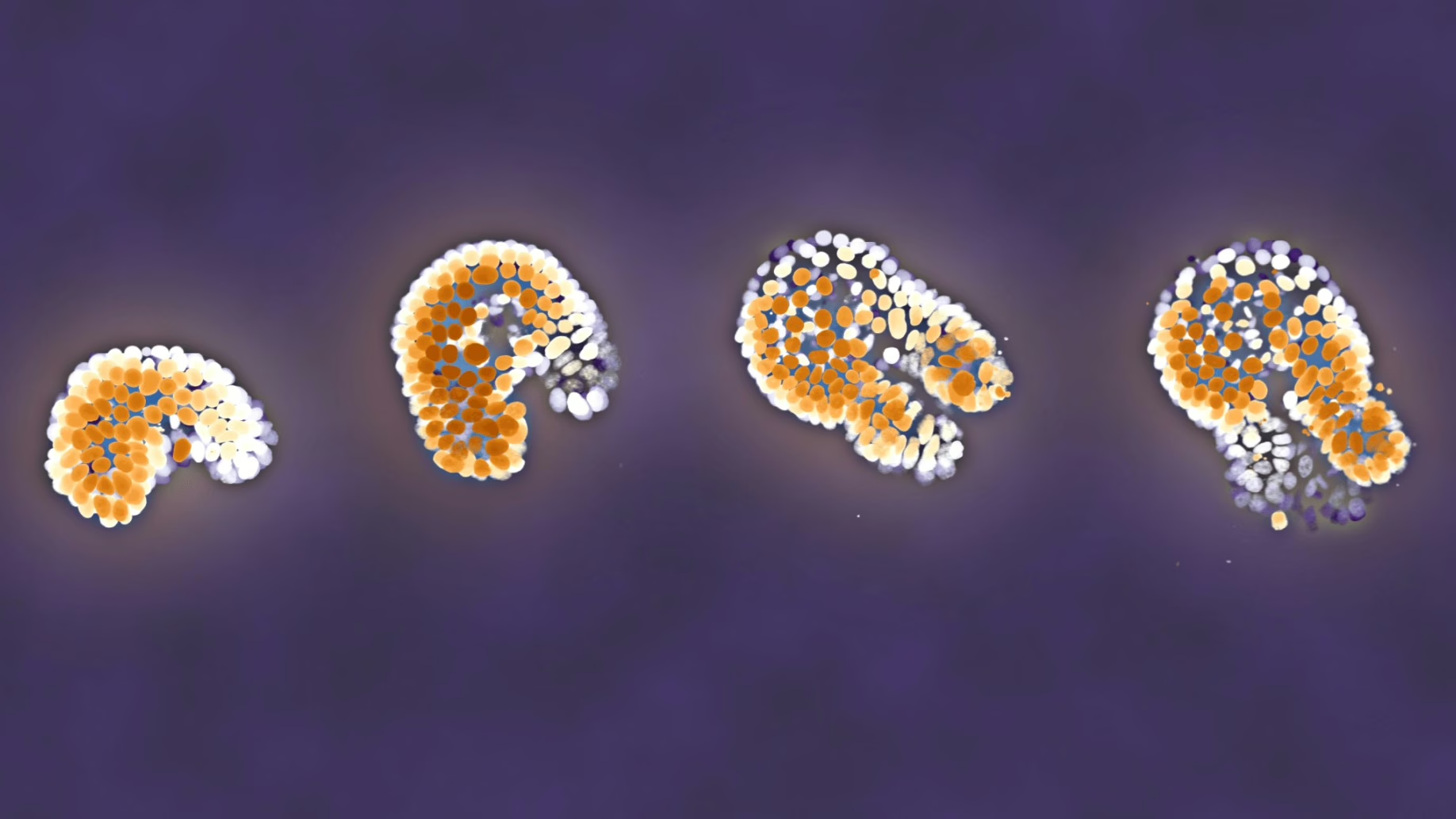
Everything you need to know about organoids

Organoids are instrumental in improving our understanding of processes that are otherwise hidden inside the body. For instance, these small 3D organs can be used to test medicines on tissue grown from a patient’s own cells. AMOLF researchers carry out unique and complex experiments to follow organoids in time. In order to enable other researchers to benefit from their experiences, they now publish their methods in the prestigious journal Nature Protocols.

Read news item
Events and outreach

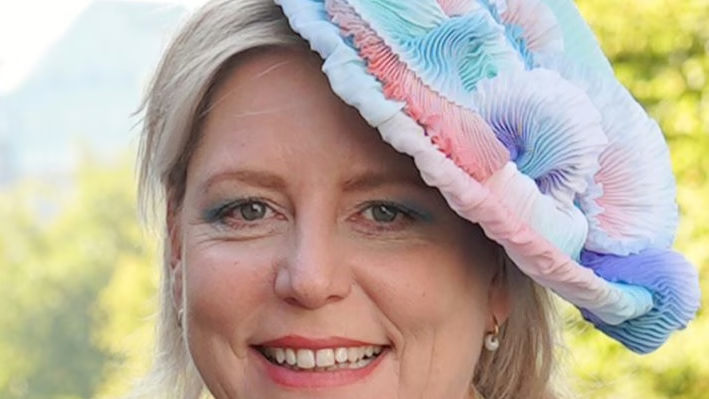
Minister Rianne Letschert wears hat and shoulder ornament inspired by Wim Noorduin’s research

This year at the opening of the parliamentary year (Prinsjesdag) Minister of Education, Culture and Science Rianne Letschert wears a spectacular hat and shoulder ornament. Both of them are inspired by the microscopic structures studied by group leader Wim Noorduin (AMOLF/UvA), which look remarkably like tiny flowers under a microscope. Artist and designer Malou Beemer translated these shapes, normally invisible to the naked eye, into wearable art.

Read news item
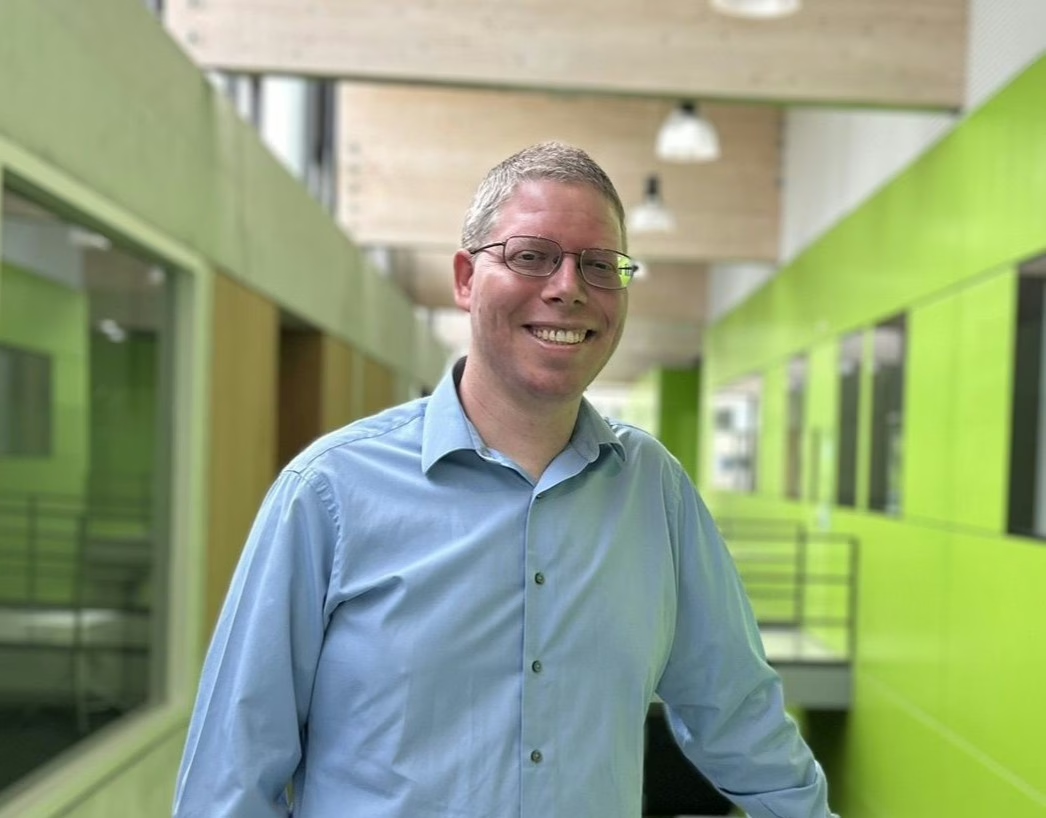
Nachi Stern, Group Leader Learning Machines at AMOLF
People and recognition

Nachi Stern awarded ERC Starting Grant to explore how matter learns

Why do brains learn, but rocks do not? Could a material one day adapt to its environment the way a living organism does? AMOLF group leader Dr. Nachi Stern has been awarded an ERC Starting Grant to investigate the physical laws of learning, in a project called, “Physical Learning in Dynamical Systems.”

Read news item
Stay informed

Get the latest research highlights, events, and news from our institute delivered to your inbox