Events and outreach

WomenNetPhysics symposium fosters inclusivity in the physics community

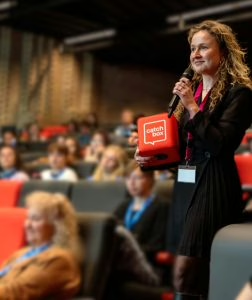
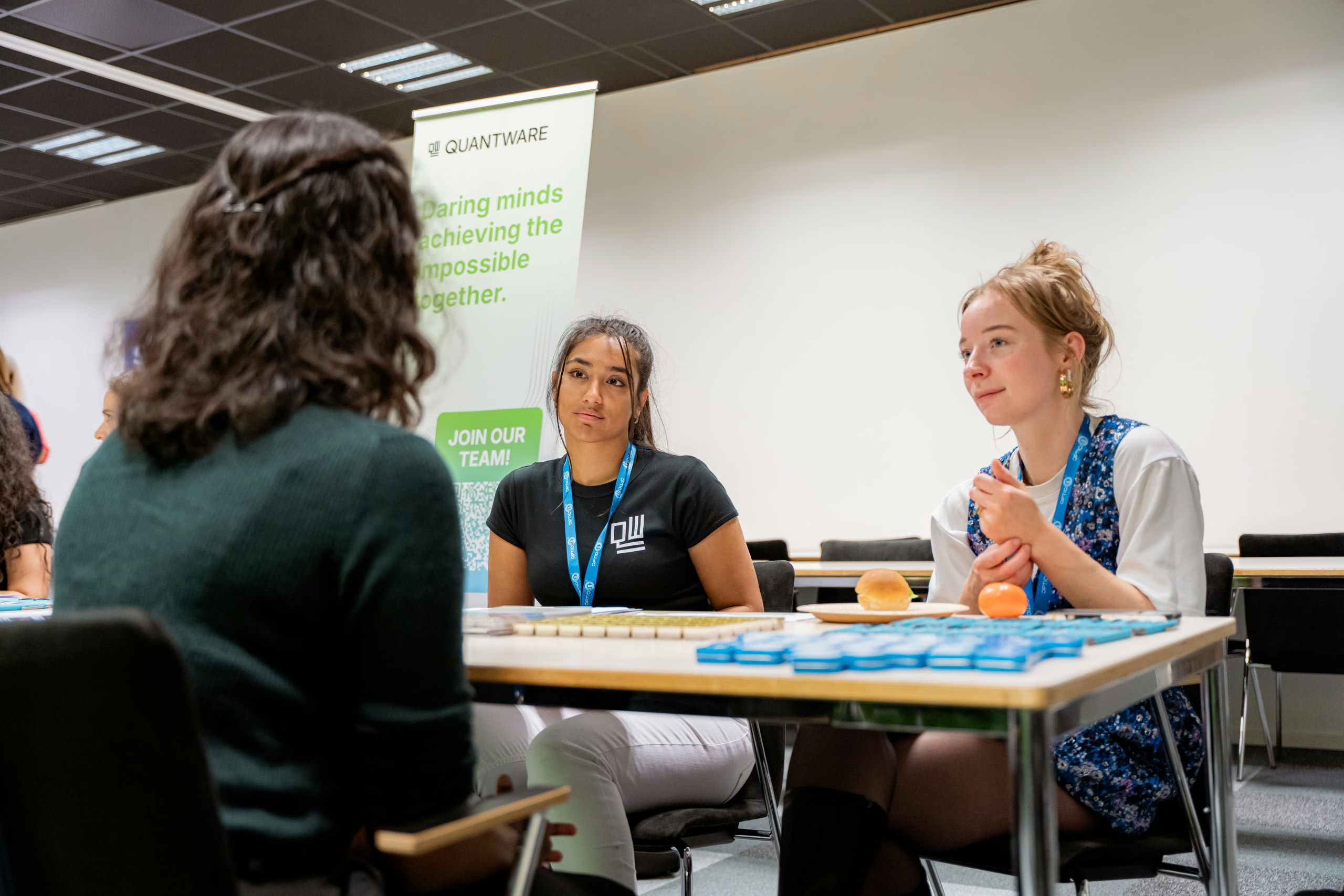
On May 8, a group of 120 young researchers came to Amsterdam Science Park for the third edition of WomenNetPhysics (WNP), the largest Dutch networking event for women in physics. Bringing together both women and men, the event united participants through a shared interest in improving the position of women in the field.  WomenNetPhysics 2026 was organized by: AMOLF, UvA IoP, ARCNL, and NIKHEF.

Participant WomenNetPhysics event

Talks and networking opportunities

The program consisted of four plenary talks by:

– Noushine Shahidzadeh (UvA): The path from research to professorship. Takeaway message: “Take breaks and don’t feel guilty about it.”

– Anna Watts (UvA): The educational pathways in physics. Takeaway message: “A physics career is very nonlinear. The choices that you make now do not define your future.”

 – Genevieve Martin (ASML): Leadership in industry positions. Takeaway message: “Be brave enough to step into a room, even if it was not made for you. Find your north star.”

– Marijn Wiersma (author): Allyship, confidence and parenting. Takeaway message: “Supporting the underrepresented groups can only be achieved if everyone works together.”

In addition to these four talks, the event provided room for an exchange of ideas during poster, panel and career booster sessions.
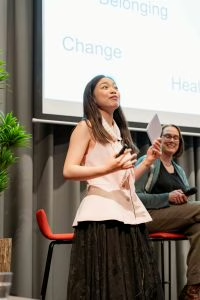
Kim Bui (AMOLF)

AMOLF contributions

Two AMOLF researchers were part of the organizing committee of this year’s event:  Wiebke Albrecht and PhD student Kim Bui. For Kim, this was the first time she attended the WNP event. She enjoyed the plenary talks and the thought-provoking ideas exchanged during the panel discussion.

What especially stayed with Kim was the response from participants afterwards. “Hearing that people felt heard, and that they recognized themselves in the stories being shared. That, to me, is what makes an event like this valuable: creating space for reflection, connection, and recognition.”

WomenNetPhysics 2027

WNP is looking for a location and an organizing committee for next year’s event. If you are interested in organizing the event – or have another question – send an e-mail to: info@womennetphysics.com
Share article
What's happening

Most recent news items

All news items
Joining forces to study perovskite interfaces
People and recognition

Joining forces to study perovskite interfaces

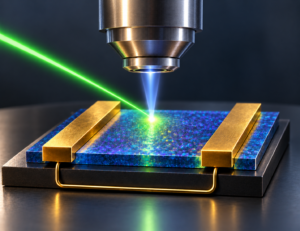
AMOLF group leaders Professor Wiebke Albrecht and Professor Bruno Ehrler have received an NWO ENW-M2 grant for their joint research project, The Dynamic Atomic Interface between Halide Perovskites and Metals. The insights gained will pave the way for sustainable, high-performance solar energy and information technology. Wiebke and Bruno will each hire a PhD student for this project. The grant amounts to €800.000.

Read news item
Wim Noorduin and Arian van Asten presenting their scientific journey
People and recognition

Wim Noorduin and Arian van Asten presenting their scientific journey

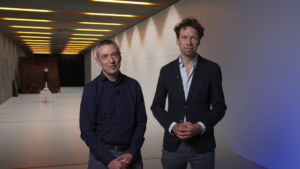
On October 8, Professor Wim Noorduin and his collaborator Professor Arian van Asten (University of Amsterdam) presented their scientific journey in a video to the audience at the ‘Avond van Wetenschap en Maatschappij’. They did so alongside the other nominees for the Huibregtsen Prize.

Read news item
Natural phenomena ‘hyperuniform disorder’ enables highly efficient, thin silicon solar cells
Research highlights

Natural phenomena ‘hyperuniform disorder’ enables highly efficient, thin silicon solar cells

Silicon solar panels are rigid and heavy, and many rooftops cannot support them. This creates a need for thin, flexible solar cells that can be integrated into building materials. However, making silicon solar cells thinner makes it harder to trap light inside the material. Researchers in the 3D Photovoltaics group found a fascinating way to overcome this challenge using a phenomenon called hyperuniform disorder. They publish their findings in the journal ACS Photonics.

The researchers were able to make highly efficient silicon solar cell materials that are 30 times thinner than conventional ones. They managed to do this by integrating a layer of nanometer sized structures on top of the material. Up close, this pattern looks random, but it is remarkably when you step back: no clumps, no gaps, and no repeating pattern. This is called hyperuniform disorder (or HUD).

Read news item
Stay informed

Get the latest research highlights, events, and news from our institute delivered to your inbox